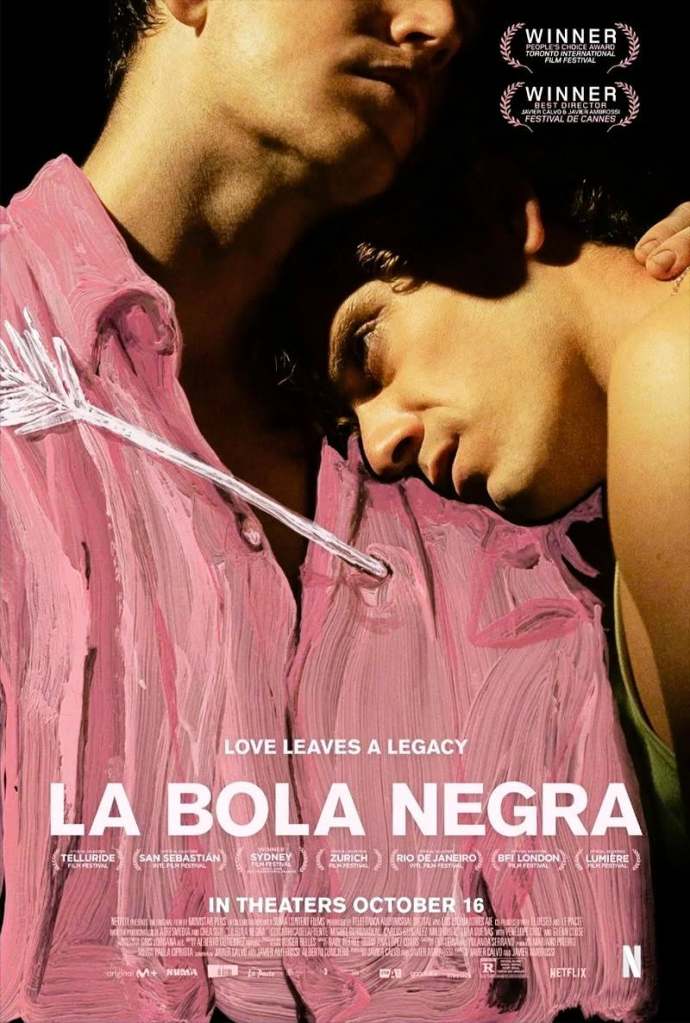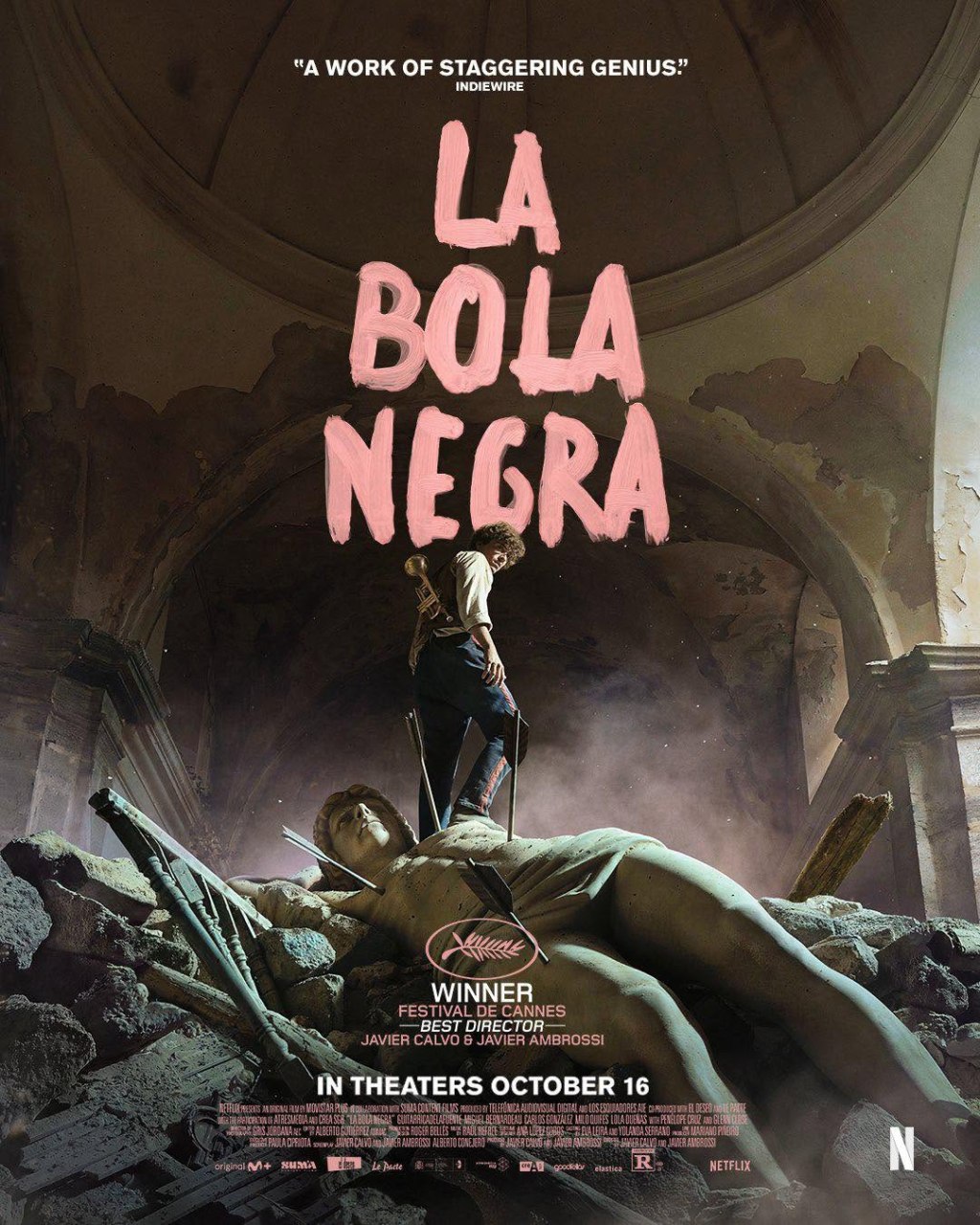
Spanish filmmakers Javier Calvo and Javier Ambrossi, known as Los Javis, return with La Bola Negra, a feature film exploring homosexuality, fascism and historical memory through three interconnected stories set in Spain in 1932, 1937 and 2017. The film draws on four surviving pages of an unfinished play by Federico García Lorca and develops the directors’ ongoing interest in identity, and lives shaped by social expectations. It’s of course their response to the growth of fascism around the world.
The narrative follows Carlos, a young man whose application to an exclusive men’s club is repeatedly rejected because of suspicions about his sexuality; Sebastián, a trumpet player conscripted into the Nationalist army during the Spanish Civil War who falls in love with a wounded Republican prisoner; and Alberto, a contemporary historian whose unexpected inheritance leads him to investigate a family history connected to Lorca. The three stories gradually converge, linking individual experiences to a broader history of queer life in Spain and the horrors of the Civil War.
The title refers to Lorca’s unfinished play, which centres on a young man excluded through the black-ball voting system used by private clubs. Lorca was murdered in 1936, before completing the work. Calvo and Ambrossi use the surviving pages as a starting point, imagining how the play might have developed while incorporating historical figures and fictional characters. To this day, no one knows where his body is buried.
The project follows La Mesías (2023), the directors’ acclaimed television series about a family shaped by religious fanaticism and the lasting effects of childhood trauma. Starring Macarena García, Lola Dueñas who also plays in La Bola Negra, and Carmen Machi, among others, the series examined the consequences of extreme religious beliefs and the struggle to escape an oppressive family environment. Like La Bola Negra, it combines personal stories with wider questions about belief, identity and freedom.
Los Javis previously explored these themes in Veneno (2020), their series about transgender Spanish television personality Cristina Ortiz Rodríguez, and La Llamada (2017), their feature-film debut, which centres on two teenagers attending a religious summer camp. Across their work, the directors have brought LGBTQ+ experiences into mainstream Spanish film and television, moving between comedy, musical theatre, melodrama and historical drama.
With La Bola Negra, they turn to the Spanish Civil War and the persecution of queer people, examining how silence and shame can be transmitted between generations. The film also reflects on the importance of recovering histories that have been marginalised or forgotten. As Calvo and Ambrossi have explained in interviews, their interest lies in connecting contemporary audiences with earlier generations whose experiences helped shape the rights and freedoms enjoyed today.
The film stars Guitarricadelafuente, Miguel Bernardeau, Milo Quifes and Carlos González, with Penélope Cruz appearing as a wartime cabaret performer and Glenn Close in a supporting role. It received the Best Director award for Calvo and Ambrossi at the 2026 Cannes Film Festival and was selected as Spain’s submission for the Academy Awards.
By bringing Lorca’s unfinished work into dialogue with three periods of Spanish history, La Bola Negra extends the concerns that have run through Los Javis’ career: the relationship between personal identity and social control, the consequences of repression, and the role of storytelling in recovering lives that history has left behind. All very current in the world we live in right now.
–