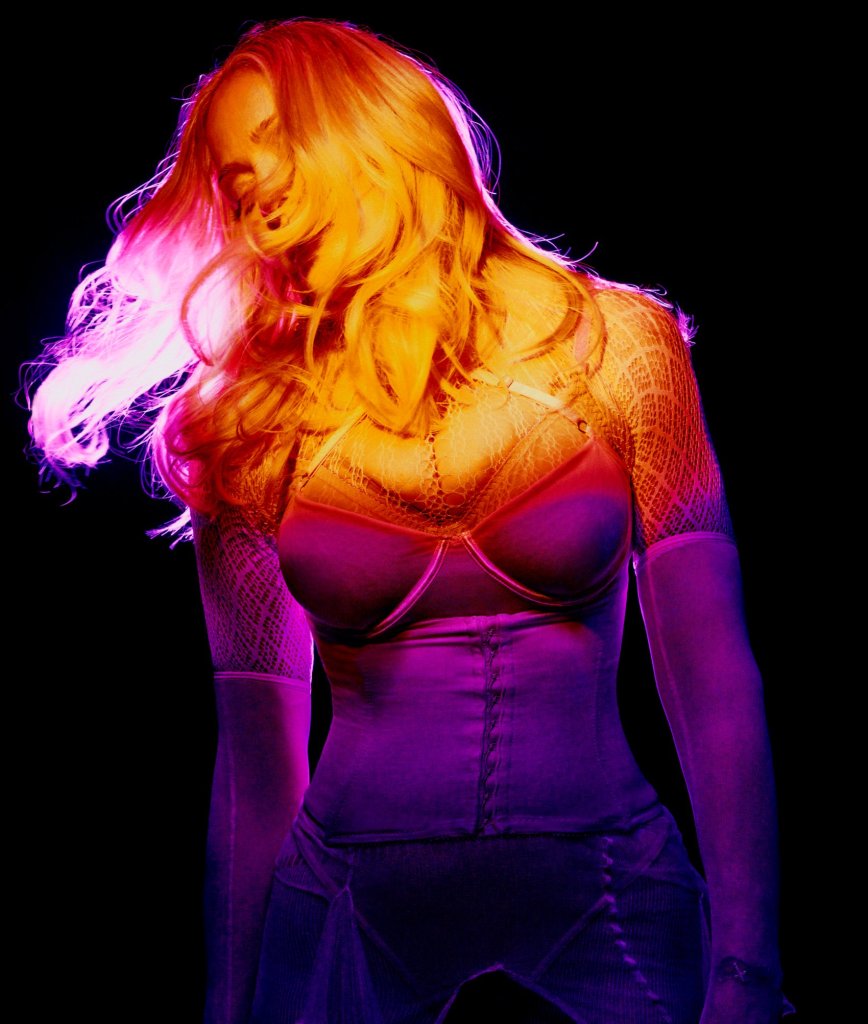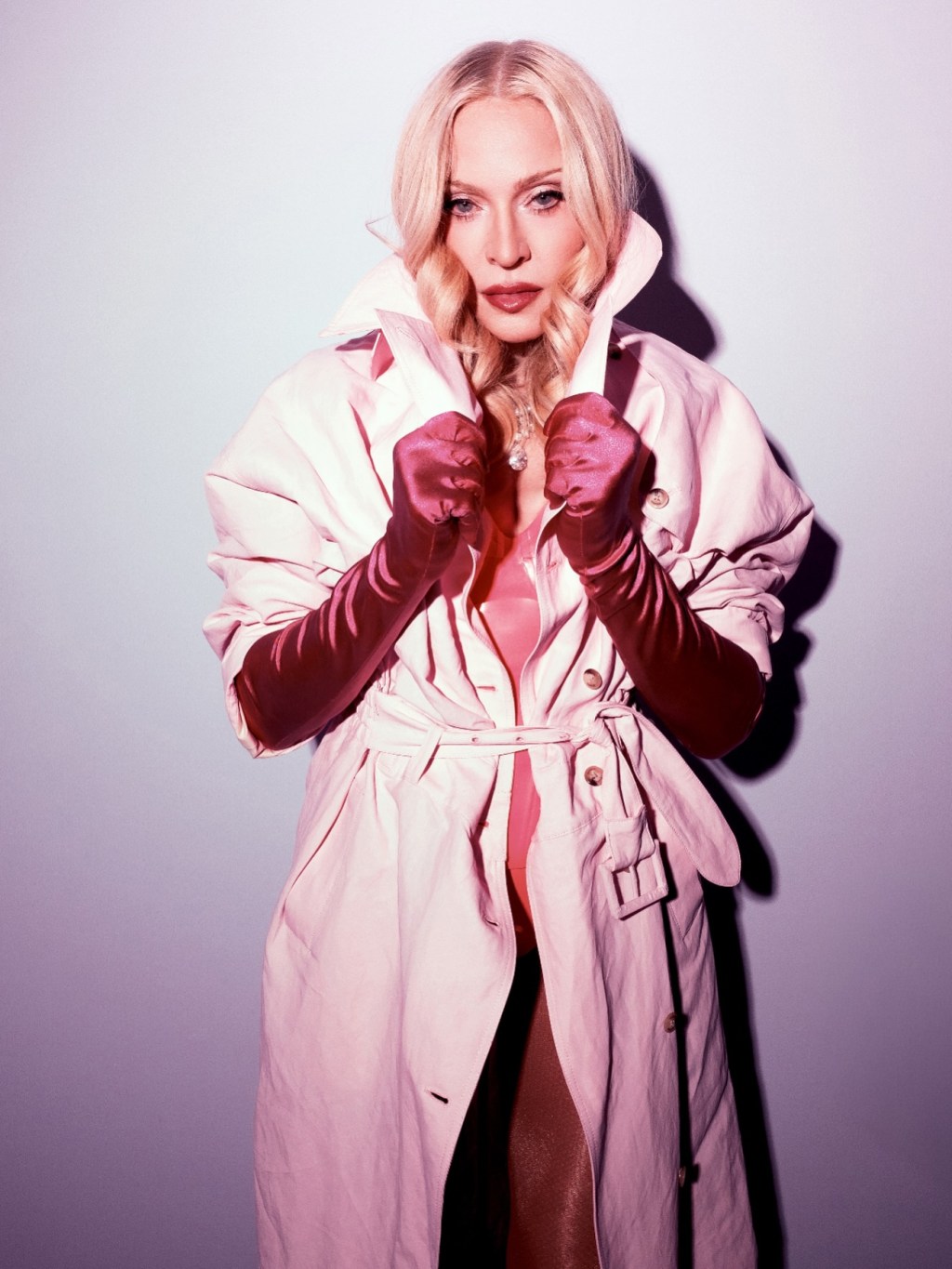
Madonna has spent more than four decades pioneering music, art and culture. In 2026, she is once again demonstrating why her influence extends so far beyond pop music. From an extraordinary new album and an ambitious cinematic project to collaborations with Sabrina Carpenter, Charli XCX, Kylie Minogue, Honey Dijon and Peggy Gou, Madonna is reinforcing her position as one of the most important, independent-minded and culturally influential artists of our time.
What makes this particular moment so fascinating is that it isn’t about a comeback, a revival or a nostalgic exercise. She’s been consistently releasing new projects since the 1980s. Madonna has never needed to return to anything. She has always operated according to her own rules, refusing to accept the boundaries imposed on women, artists or popular culture. If anything, 2026 is another demonstration of her enduring commitment to artistic freedom, experimentation and the right to constantly reinvent oneself.
At the centre of it all is Confessions II, her extraordinary new album, released on 3 July, and a record that reconnects with the electronic energy and club culture that made its 2005 predecessor, Confessions on a Dance Floor, such a defining moment in contemporary music with promotion started back in April 2026. Reuniting with producer Stuart Price, Madonna has created a body of work that celebrates the dancefloor not simply as a place of pleasure, but as a space for liberation, connection, expression and transformation.
Yet the music is only one part of the story. Madonna has always understood that an album can be an entire artistic universe, bringing together sound, image, fashion, performance and ideas. This is precisely what she has achieved with Confessions II.
The accompanying film, Confessions II – The Film, premiered at the Tribeca Festival in June and is a visually ambitious extension of the album. Directed by David Toro and Solomon Chase, known collectively as TORSO, it brings together an extraordinary cast, including Sabrina Carpenter, Kate Moss, Benedict Cumberbatch, Richard E. Grant, Julia Garner, Gwendoline Christie, Shygirl, Arca, Honey Dijon and Madonna’s daughter Lourdes Leon. The result is a cinematic exploration of the album’s universe, with Madonna once again demonstrating her instinctive understanding of the relationship between music, fashion, performance and visual art.
The film also underlines something that has always distinguished her: her refusal to separate popular entertainment from artistic ambition. Whether working with celebrated photographers, fashion designers, filmmakers or emerging musicians, Madonna approaches every project as an opportunity to create a visual and cultural statement.
Her partnership with Sabrina Carpenter on Bring Your Love has been one of the year’s most exciting pop moments. Their appearance together at Coachella in April brought two generations of pop into the same space, with Carpenter’s contemporary pop sensibility meeting Madonna’s unmistakable command of the dancefloor. It is a collaboration that feels both playful and significant, demonstrating Madonna’s openness to new voices without ever compromising her own identity.
The relationship with Charli XCX is equally compelling, perhaps even more revealing of Madonna’s artistic instincts. Their collaboration on Danceteria Afterhours, a reworking of the Confessions II track Danceteria, one of the best tracks on the album, brings together two artists who have consistently challenged the expectations of mainstream pop. Charli’s relationship with underground electronic music, experimental pop, fashion and youth culture makes her a particularly interesting counterpart to Madonna.
The track is a conversation between artists who understand the importance of nightlife as a creative environment and who recognise that the club has always been a place where new ideas emerge. The original Danceteria references the legendary New York nightclub that formed part of Madonna’s early creative world (Maripol, Basquiat and Haring were all part of this world), while the new version brings that history into dialogue with Charli’s generation (Myspace and East London). Their connection also extends beyond the recording studio, following their joint CLUB CONFESSIONS party with Saint Laurent during Paris Fashion Week.
Honey Dijon brings another important dimension to the album’s wider universe. One of the most respected figures in contemporary house music, she represents the underground club culture that has always been central to Madonna’s artistic identity. Her remixes bring a fresh perspective to the material while acknowledging the communities and musical traditions that have shaped dance music.
Then there is Peggy Gou, whose interpretation of I Feel So Free adds another layer of contemporary electronic energy. Madonna’s willingness to collaborate with DJs and producers who are actively shaping international club culture demonstrates that she is not simply revisiting sounds from her past. She remains interested in what is happening now, in the people pushing music forward and in the possibilities of bringing different creative worlds together.
And, naturally, Kylie Minogue. Their appearance together in Amsterdam during the Club Confessions event at WorldPride was one of those genuinely joyous pop-cultural moments that seemed almost too good to be true. Two women who have spent decades defining dance-pop joined forces for Love Sensation, followed by the release of Love Sensation (Afterhours Mix) which is probably the best of the best of the album. It was a celebration of female independence, longevity and the extraordinary power of dance music to unite generations.
September brought another major moment when Madonna returned to the MTV Video Music Awards, opening the 2026 ceremony with a spectacular performance. Her appearance alongside Sabrina Carpenter and Charli XCX brought together the central figures of this extraordinary musical year. The performance was a reminder of the importance Madonna has always attached to the visual and theatrical possibilities of pop, and of her own role in transforming the MTV stage into a platform for artistic provocation.
The awards also recognised the impact of Confessions II, with Madonna collecting seven trophies, including Artist of the Year, Best Album and Best Collaboration for Bring Your Love with Sabrina Carpenter. It was a remarkable evening for an artist whose relationship with MTV stretches back to the very beginnings of the channel with discussions with Charli and Troye Sivan who recently remixed Music by Madonna into his newly-released song.
But perhaps the most significant announcement came with the news that Madonna will perform at Coachella 2027, returning to the festival’s Dance Tent, where she appeared in 2006 following the original Confessions on a Dance Floor. The connection is beautifully symbolic. More than two decades after that defining album, she is returning to the same musical territory with a new record and a fresh generation of collaborators and admirers.
There is, of course, another dimension to Madonna that deserves particular attention: her relationship with art.
Her admiration for Frida Kahlo has been longstanding, and it is not difficult to understand the connection. Kahlo was an artist who refused to conform to expectations, transforming her personal experiences, identity, physical suffering and emotional life into a singular visual language. She made herself the subject of her art, challenging traditional representations of women and creating an image that remains one of the most recognisable in modern art history.
Madonna has often been drawn to women who have lived and created on their own terms. Her interest in Kahlo is part of a much wider fascination with artists who challenge convention and use their work to assert their individuality. She has owned important works by Kahlo, including My Birth and Self-Portrait with Monkey, and has spoken about discovering the artist through her early interest in Mexican art and Diego Rivera. Madonna also recently went to visit Tracey Emin in Margate to discover her spaces and meet a young generation of artists.
This is perhaps the most important thread running through her entire career, and one that makes her current work so relevant. Madonna is not simply a musician. She is a misunderstood artist whose work has consistently crossed boundaries between disciplines, from music and cinema to fashion, photography, dance and contemporary visual culture. She has championed freedom of expression, challenged censorship and given generations of women and LGBTQ+ artists permission to be more adventurous, more provocative and more unapologetically themselves.
In a cultural landscape increasingly shaped by algorithms, trends and the pressure to remain commercially relevant, Madonna’s insistence on artistic independence feels more important than ever.
–