At Toklas, the Frieze-founded restaurant tucked behind the Strand, the menu has become something closer to an artist’s edition. The latest artist invited to contribute an image is Magali Reus, whose work joins a growing series of commissions that bring contemporary art into the everyday ritual of dining. Earlier contributors include John Stezaker, Gary Hume, Daniel Sinsel and Helen Marten, an informal roll call of artists reflecting the breadth of the contemporary art scene.
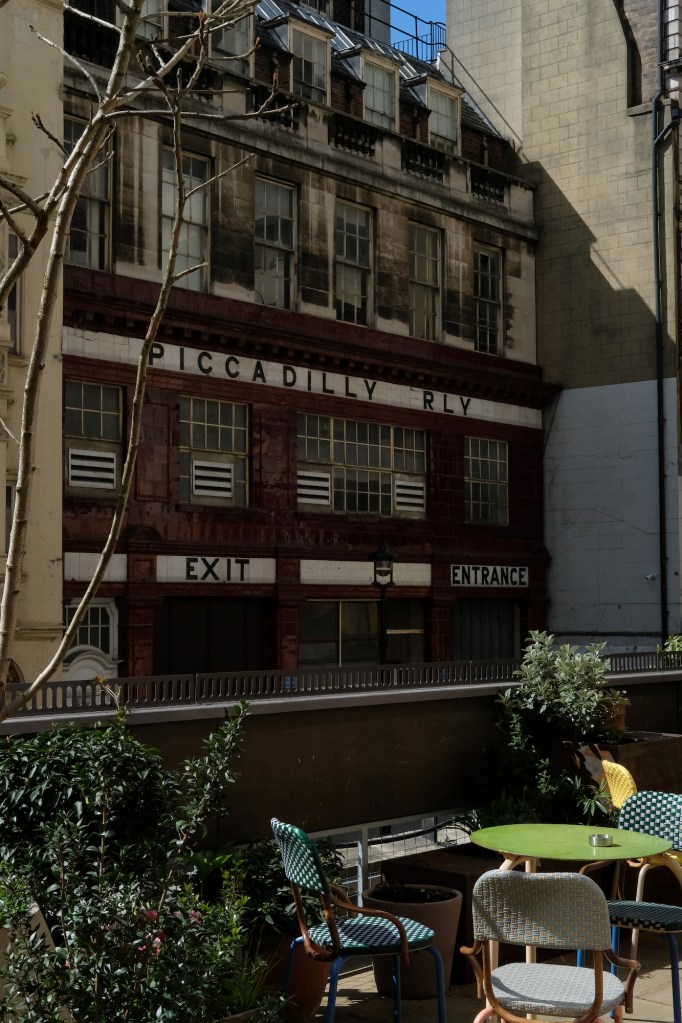
Opened in autumn 2021, Toklas was the first restaurant from Amanda Sharp and Matthew Slotover, the charismatic founders of Frieze magazine and the Frieze art fairs. It occupies part of 180 The Strand, the 1970s Brutalist building that also houses Frieze’s offices and an exhibition space, with its entrance on Surrey Street and 2 mins from 180 Strand and other creative headquarters.
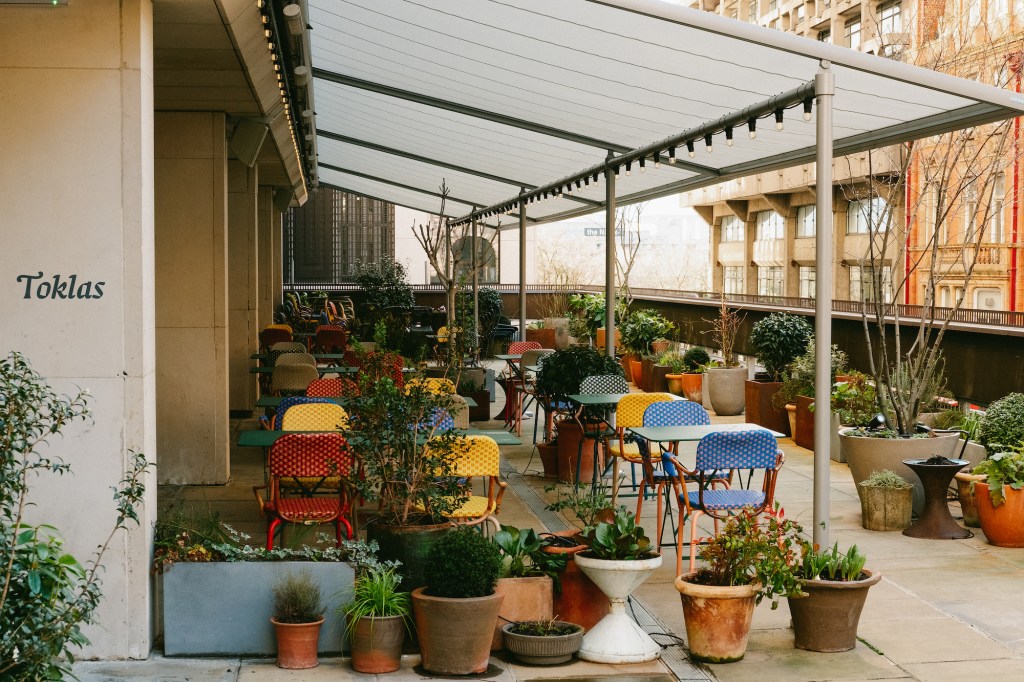
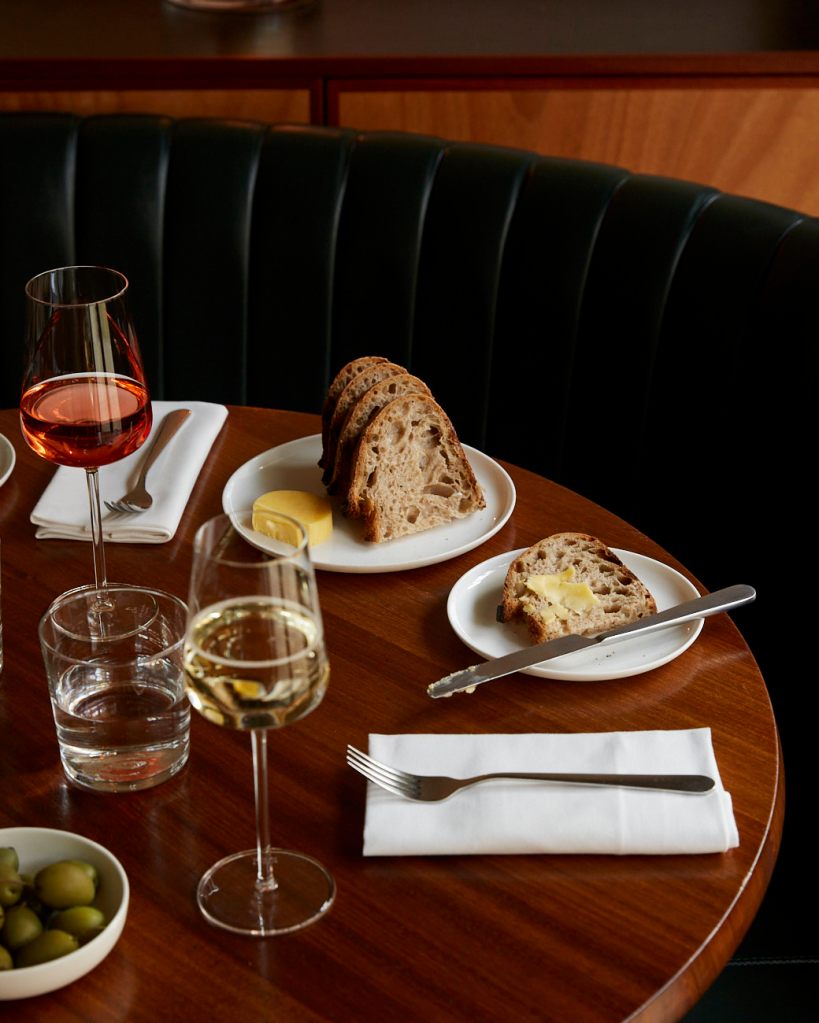
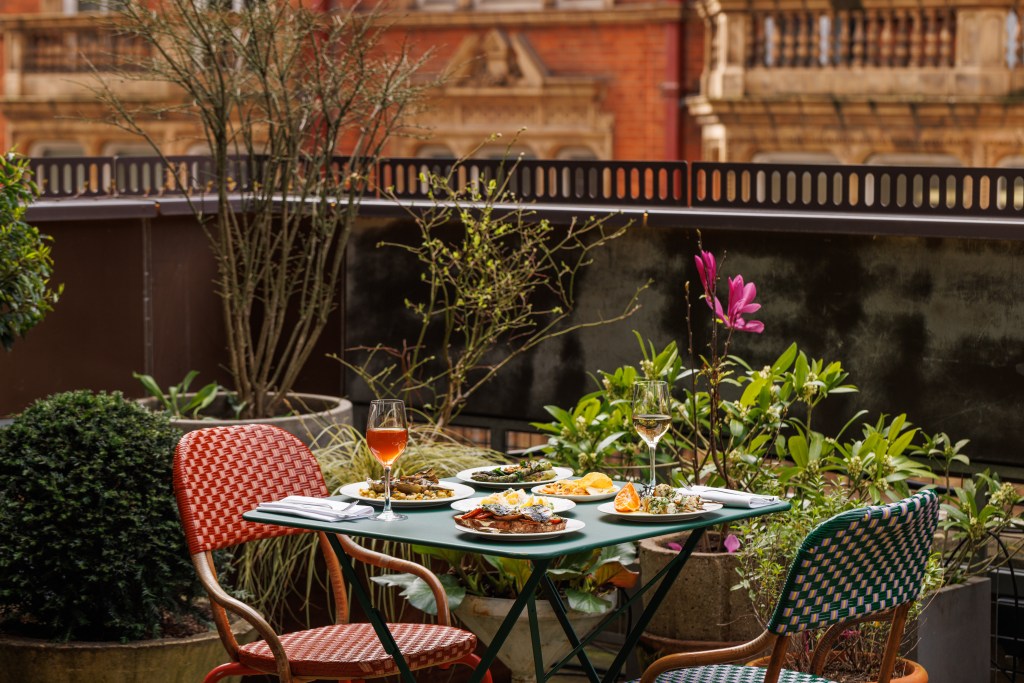
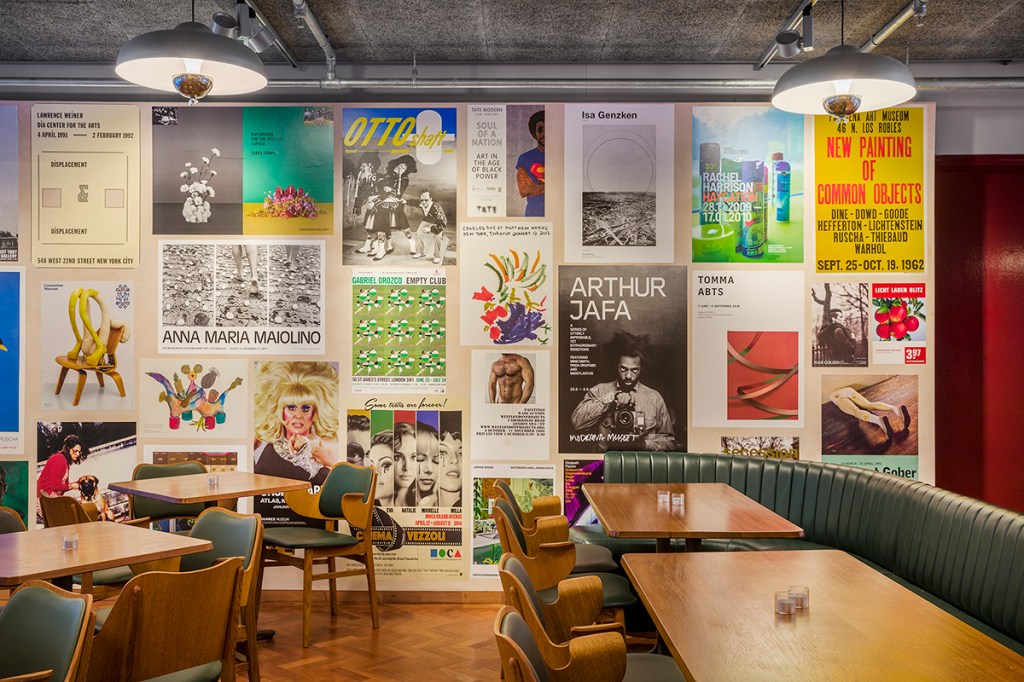
From the street, a short flight of steps leads to a generous planted terrace; inside, the atmosphere is closer to a contemporary private members’ dining room than a conventional restaurant. Reclaimed parquet floors, iroko tables and counters, vintage Børge Mogensen chairs and green leather banquettes soften the building’s concrete architecture. A series of exhibition posters, including Soul of a Nation at Tate and Arthur Jafa at Moderna Museet, brings the surrounding art world into the dining room. The effect is considered but unpretentious, with art woven into the room rather than set apart from it.
The name references Alice B. Toklas, the writer and partner of Gertrude Stein, whose 1954 cookbook offers a glimpse into the culinary and artistic circles of Paris. It is an apt namesake for a restaurant conceived around the pleasures of eating, looking and gathering. Head chef Martyn Lyons draws on Italian, French and Spanish traditions, with a Mediterranean menu that privileges seasonal produce. The bakery and bar extend the offering beyond the dining room, while the terrace has become a natural meeting point for London’s artistic community, particularly during Frieze week and the rest of the year with a great programme of events.
The artists selected for the menus bring markedly different sensibilities to the project. John Stezaker is known for collages that combine found photographs, film stills and postcards into unexpected, often uncanny compositions. Gary Hume, associated with the Young British Artists generation, is celebrated for his bold, simplified forms and glossy household-paint surfaces. Daniel Sinsel’s meticulous paintings and enigmatic imagery introduce a quieter, more elusive visual language, while Helen Marten, winner of the 2016 Turner Prize, creates intricate works that draw on the forms, materials and visual codes of everyday life.
Reus, born in the Netherlands and based in London, is a great choice. Her sculptural practice transforms familiar industrial and domestic objects into forms that are at once recognisable and mysterious, often drawing attention to their surfaces, mechanisms and finishes. Her work asks us to look again at things that might otherwise escape our attention. That sensibility finds a natural context in a restaurant menu: Reus’s image focuses on details of fruit, bringing familiar forms into close-up and inviting a more attentive way of looking.
The menu features seasonal Italian-inspired dishes, from spinach and chickpea soup, beetroot with stracciatella and wild bass crudo to ravioli with cavolo nero, pappardelle with rabbit, red mullet with clams and grilled lamb. Larger plates include grilled chicken, John Dory and Cornish bluefin tuna. Desserts range from tiramisu and panna cotta with figs to torta tenerina with sour cherries and house-made ice creams and sorbets. Delicious!
Toklas coherently brings together architecture, design, contemporary art and seasonal cooking without insisting on a grand statement about their relationship. The interiors are tactile rather than theatrical; the food is produce-led rather than overworked; and the menus offer an encounter with an artist’s work in an everyday setting. Each new commission introduces a different visual language into the same environment, making the restaurant feel less like a static showcase than an evolving conversation between art and hospitality.
–