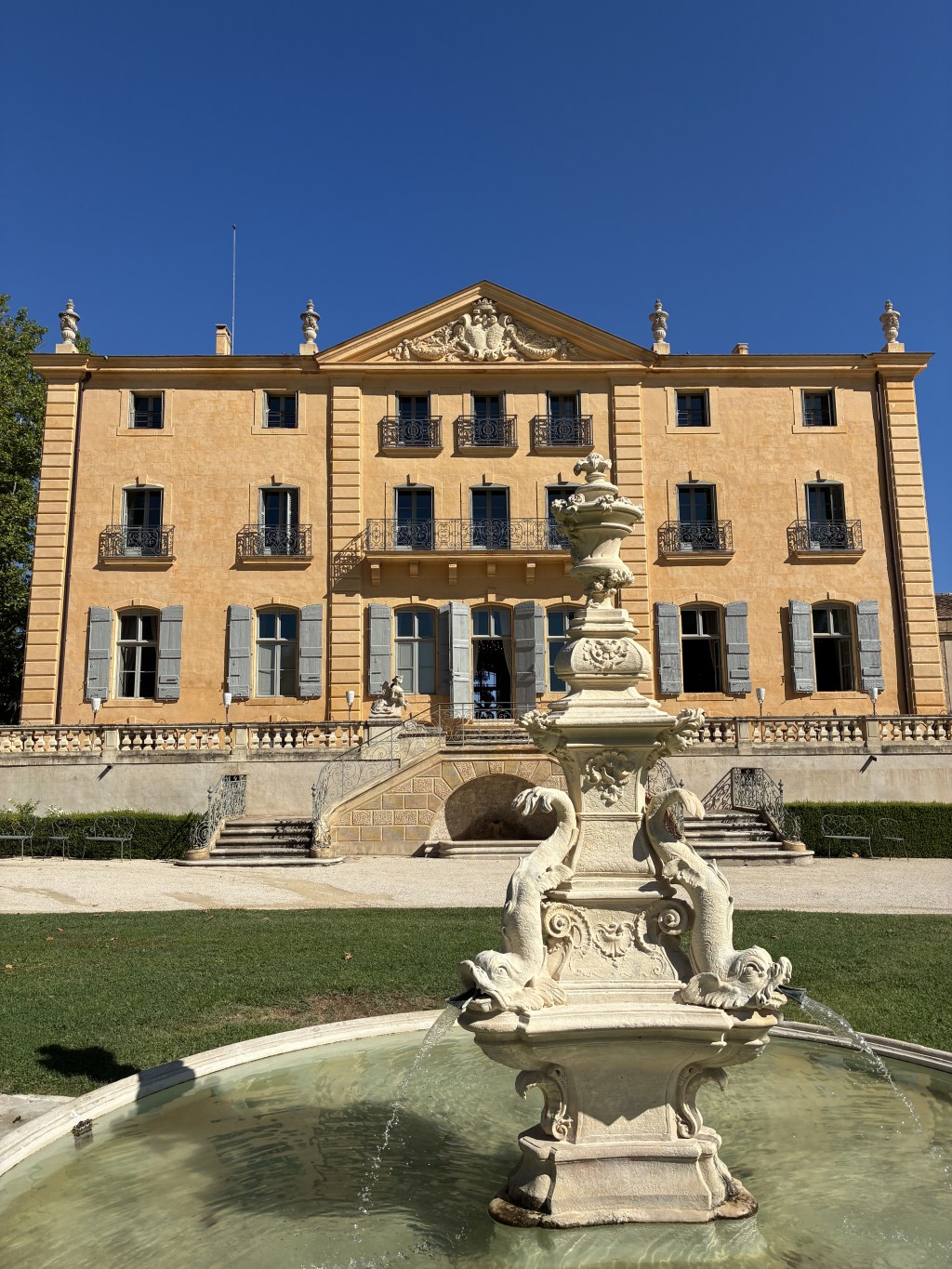
There are places in Provence that seem to exist outside of time, and Château de Fonscolombe is one of them. Set among vineyards, gardens and ancient trees in the countryside surrounding Aix-en-Provence and the Luberon, it offers a particularly graceful, and practical, introduction to the region, one in which architecture, history, wellness, gastronomy, wine and landscape feel entirely inseparable from the amazing experience of staying there. This is a beautiful place to slow down, certainly, but it is also a place from which to understand Provence: its culture and that particular quality of light that has drawn artists here for centuries. Château de Fonscolombe is, quite simply, perfect.
The estate’s story begins in 1714, when it was acquired by the Boyer de Fonscolombe family. De Fonscolombe, the estate’s first owner, was a fabric trader in Aix-en-Provence and a supplier to the King, and he spent five months of each year living within the château’s walls. According to Patrick Monnerais, the House’s chief historian, this arrangement gave him “a life enabling him to encounter educated people and scientists”, a life built on commerce and exchange.
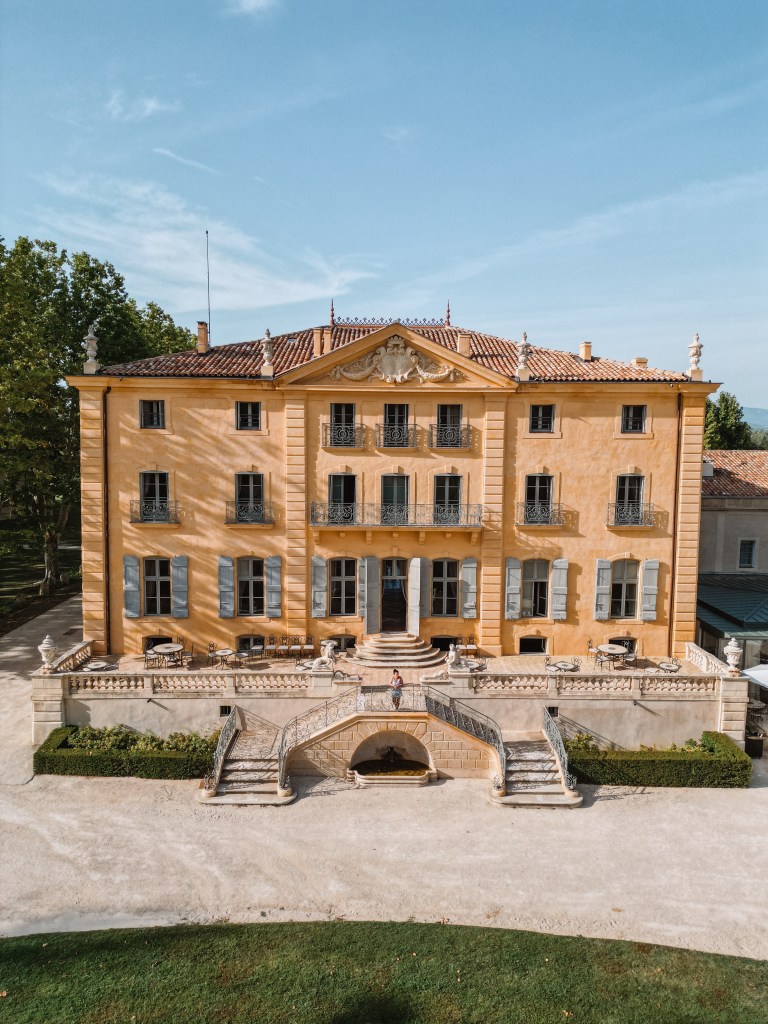
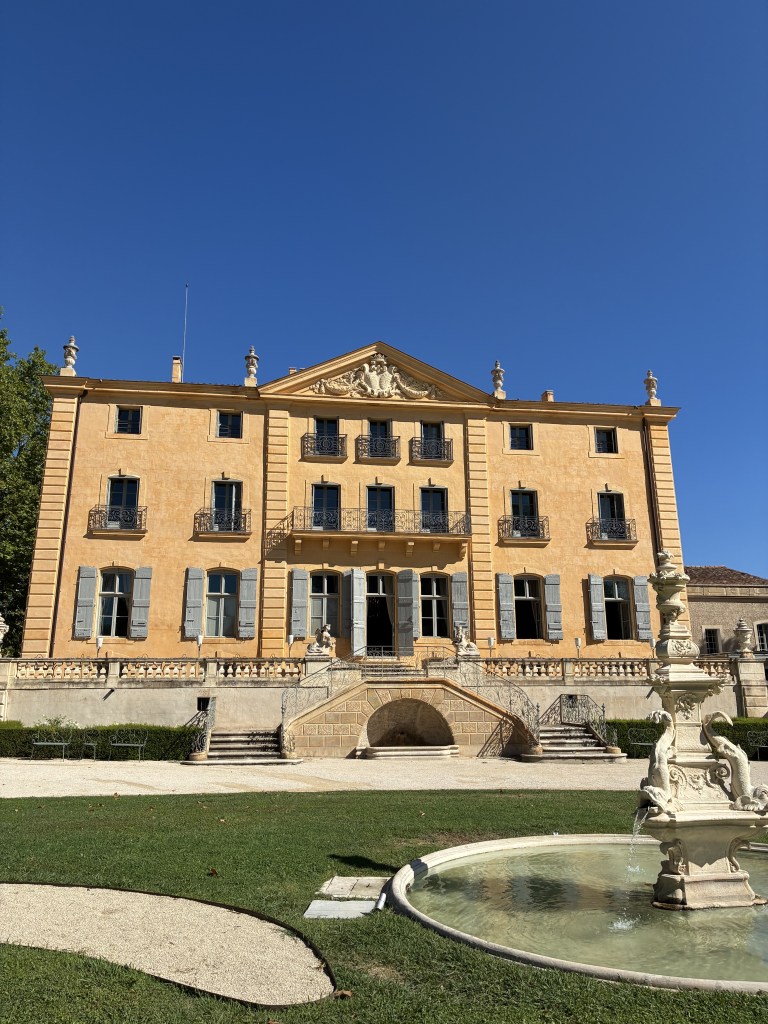
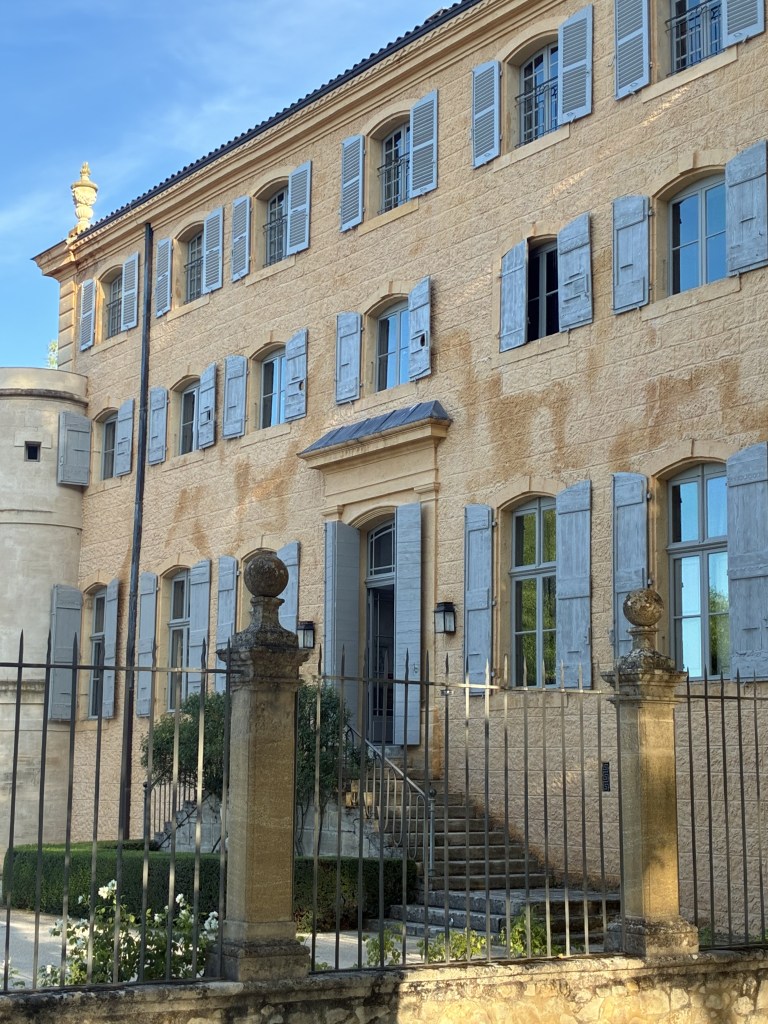
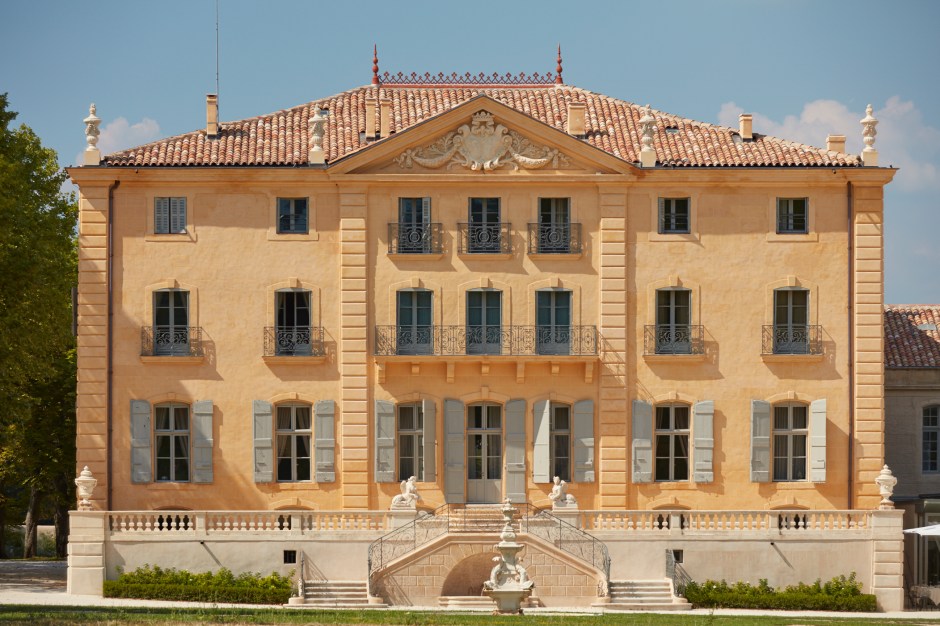
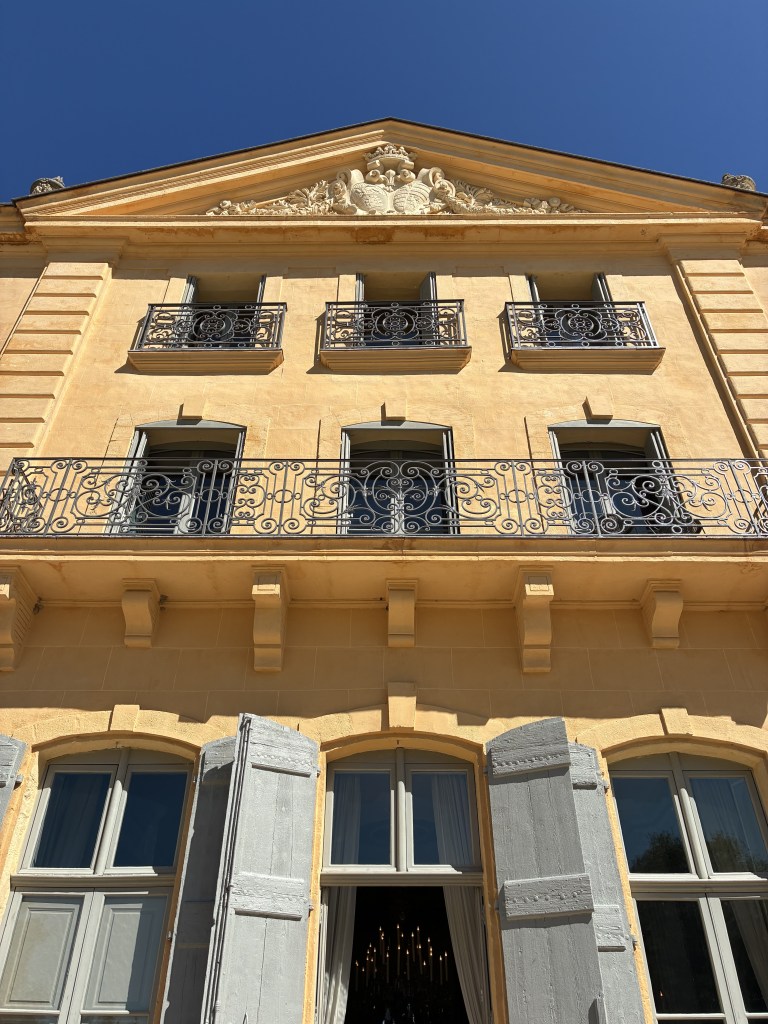
What started life in 1730 as a modest bastide, a simple Provençal country house, was transformed in 1810 following the marriage of the family’s sole heiress to the Marquis de Saporta, who added the upper two floors and the pair of turrets that earned the property the right to call itself a château.
Gaston de Saporta brought a new passion for botany to the estate. He built the greenhouses, laid out the French garden at the château’s entrance, and worked with industry experts to establish a genuine research laboratory on the grounds. A friend of Rabelais and a longtime correspondent of Charles Darwin, Saporta went on to introduce more than 180 species of trees and plants gathered from around the world.
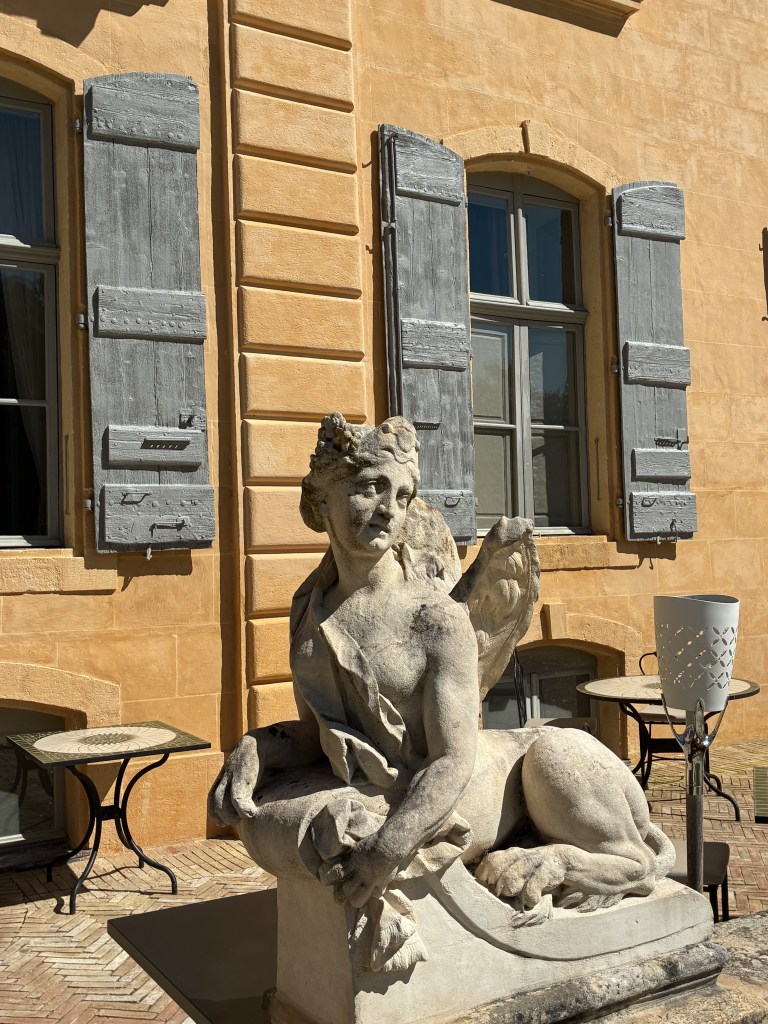
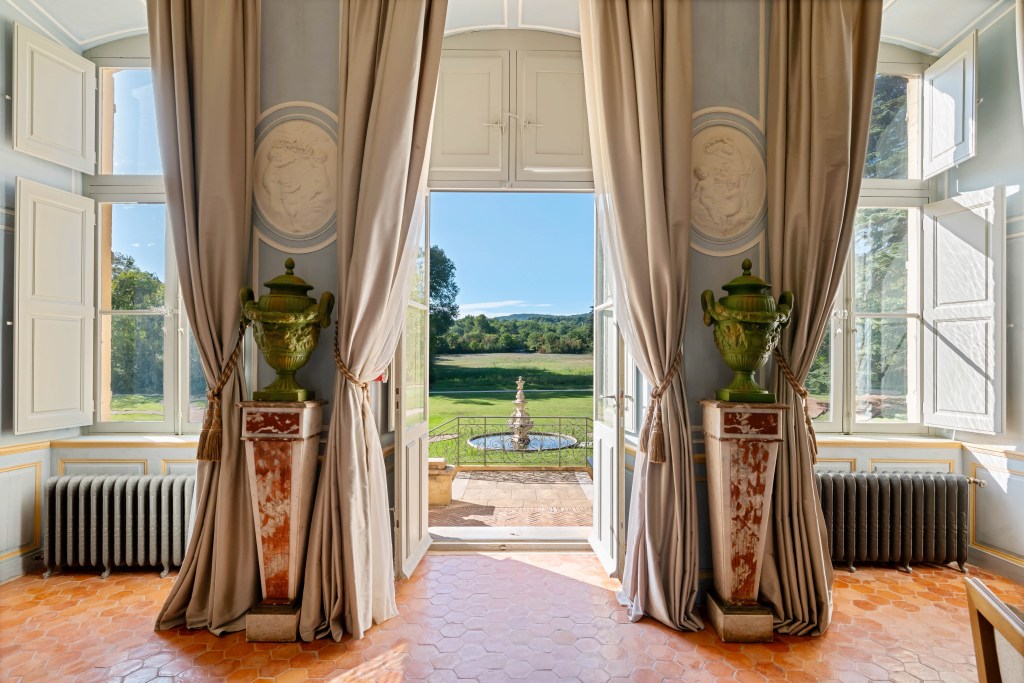
With its Italianate Quattrocento facade, its line of balconies and tall windows, Château de Fonscolombe carries echoes of a pre-Renaissance style. In the gardens, statues representing the four seasons pay tribute to nature, while Bacchus, the Roman god of wine, reclines over the basin set against the old outbuildings.
The Martel family’s vision for the estate has been shaped by a handful of notable architects and interior designers, including Corrado Giulu Morghen of Fabrica Traceorum, a heritage architect whose work spans numerous listed buildings and historic gardens, among them the Nice Orthodox Cathedral and the Estrine Museum in Saint-Rémy-de-Provence, as well as architect Vincent Bastie, working alongside Arnaud Behzadi and Cathy Crinon of Artefak.
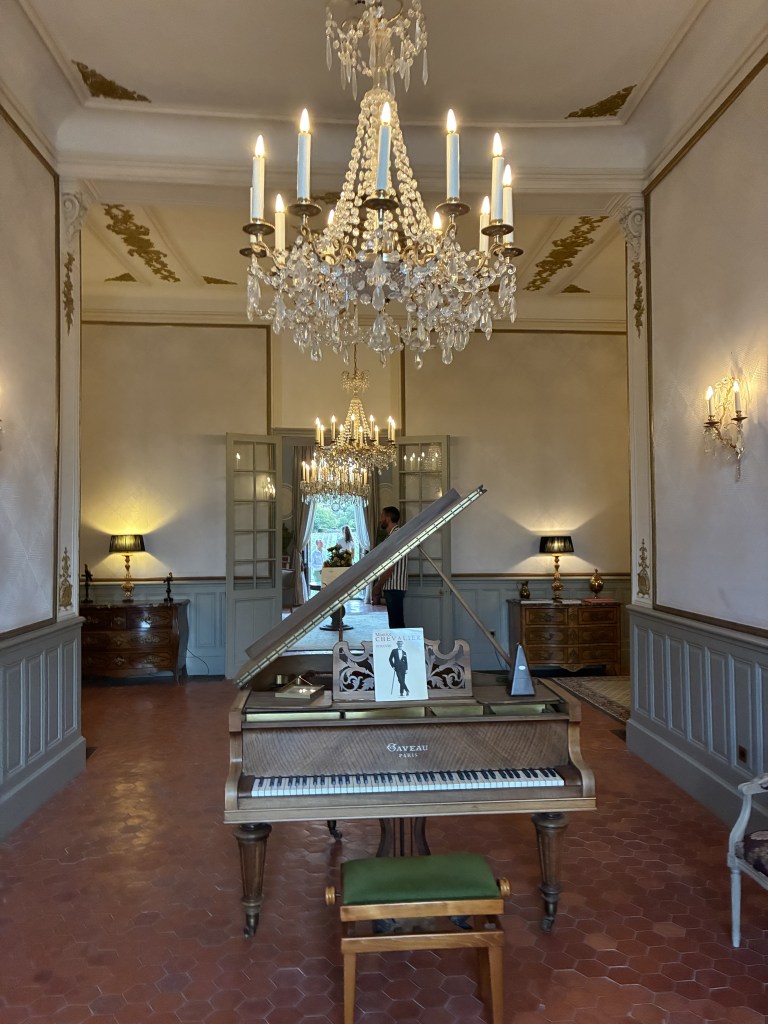
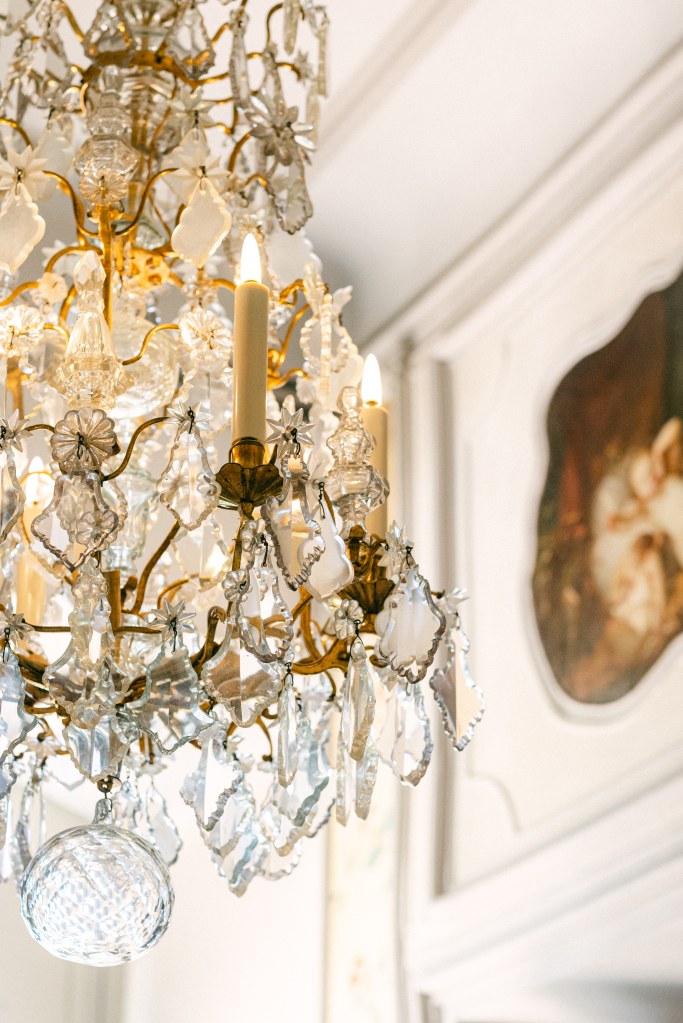
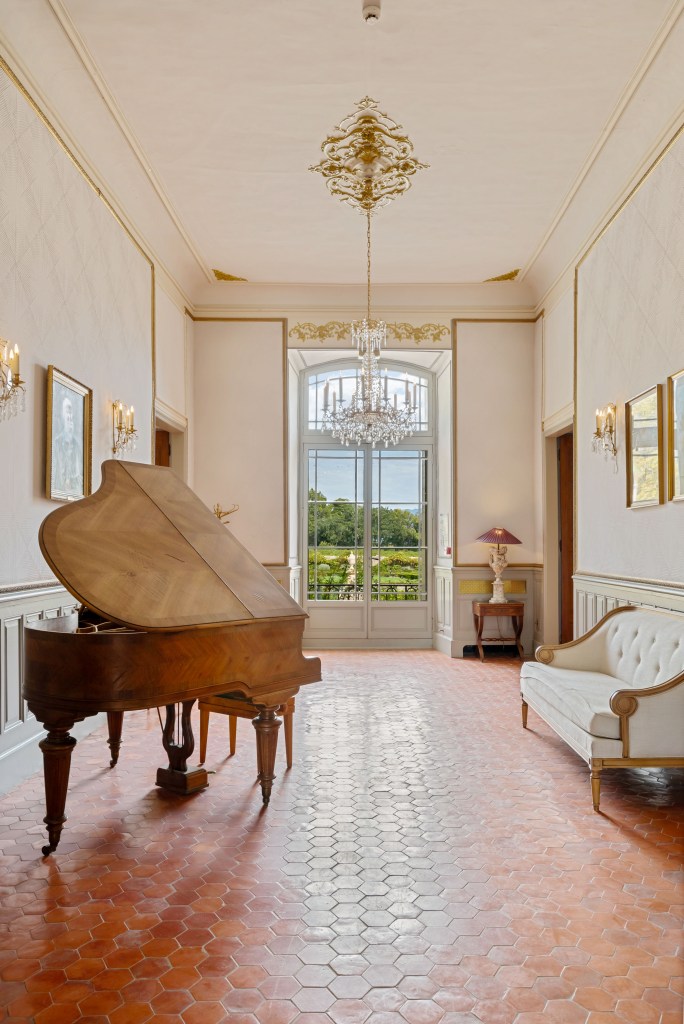
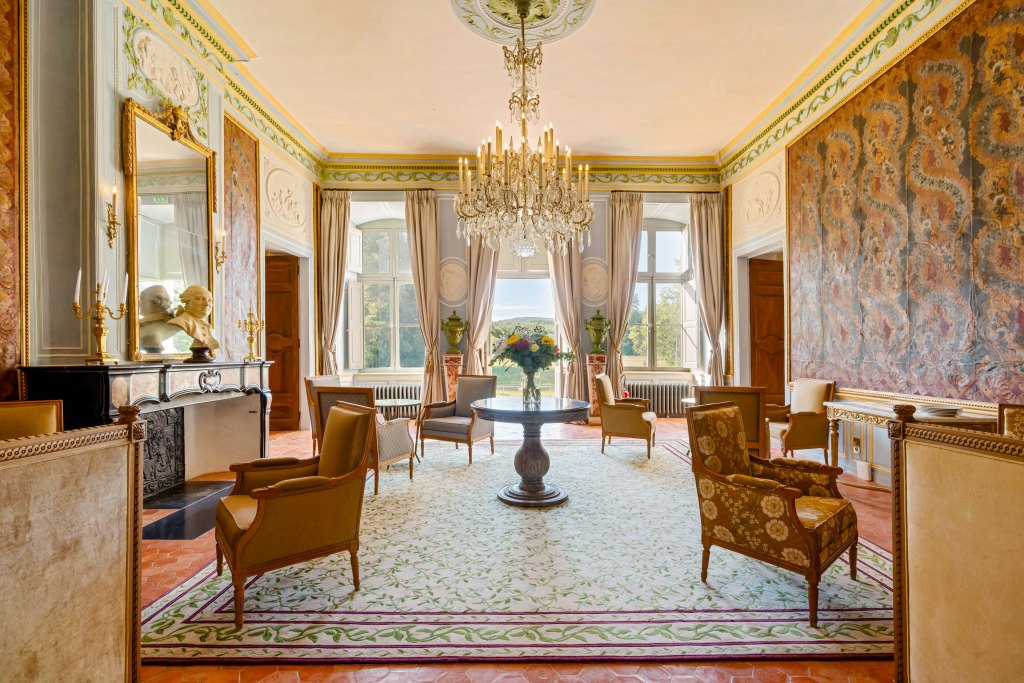
Now a five-star Relais & Châteaux hotel, the château underwent four years of restoration, including eighteen months of exacting work in which the original 18th-century terracotta tomettes were individually numbered, restored and relaid, tile by tile, in their exact original positions. The result is an interior that reads as genuinely historic rather than reproduction: a Leather Salon lined with 18th-century Genoa leather, a gift from Bishop Jauffret; a pair of period chandeliers still maintained by the Parisian firm Mathieu Lustrerie; a 19th-century American billiards table; a 1915 piano. The former stables have been converted into guest rooms and suites, the old staff quarters now house reception, and the historic salons hold the estate’s fine-dining restaurants, La Table de l’Orangerie, listed in the Michelin Guide. Magical!
The 12 hectares of protected parkland carry their own history. A newly planted lavender field shares the grounds with roe deer, and, thanks to de Saporta, a forest of centuries-old specimens brought back from his travels: a bald cypress over 300 years old, which has since self-seeded across the road; a 276-year-old cedar of Lebanon; and an Atlas cedar planted in 1965 by Queen Elizabeth The Queen Mother during her stay at the château.
Its location does much of the work. Fonscolombe sits close to Aix-en-Provence’s Sainte Victoire, and Mont Ventoux, but is also within easy reach of La Roque-d’Anthéron, known for its celebrated music festival; Bonnieux, home to the Louise Bourgeois Church; and, further afield, Cavaillon and Marseille. The result is a stunning property that feels wonderfully positioned while remaining plugged into one of Provence’s richest cultural landscapes.
Aix itself is the natural counterpoint to the château’s tranquillity. One of the most elegant cities in the south of France, it is defined by yellow-stone façades, fountains, elegant streets and an extraordinary quality of light, much of it owed to the ochre stone of the Bibémus Quarry, the very stone Cezanne painted obsessively. Aix is as much a city of water as a city of art, and for the culturally minded traveller, it rewards slow exploration. The Hôtel de Caumont and Hôtel de Gallifet host major exhibitions (Caumont currently features a Toulouse-Lautrec show, while Gallifet presents François Halard this summer), while the Musée des Tapisseries and Musée du Vieil Aix trace the city’s decorative and historical traditions. At the Pavillon de Vendôme, architecture, gardens and history converge; the Musée Granet remains essential, particularly for anyone tracing Cezanne’s footsteps. Did he ever visit Fonscolombe itself? Most likely. His presence runs through the landscape around Aix regardless, from the quarries that shaped his palette to Sainte-Victoire, the mountain that became one of the defining subjects of his life’s work. A stay at Fonscolombe unfolds within that same geography. The landscape isn’t simply beautiful; it carries an artistic history that still shapes how the region is seen.
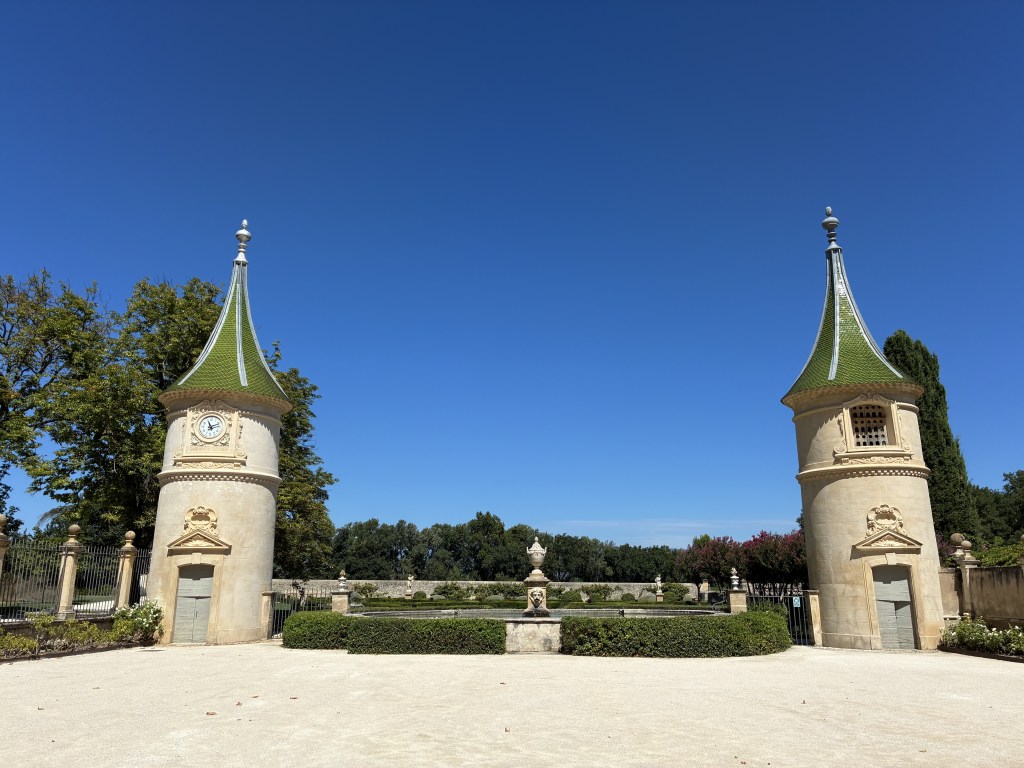
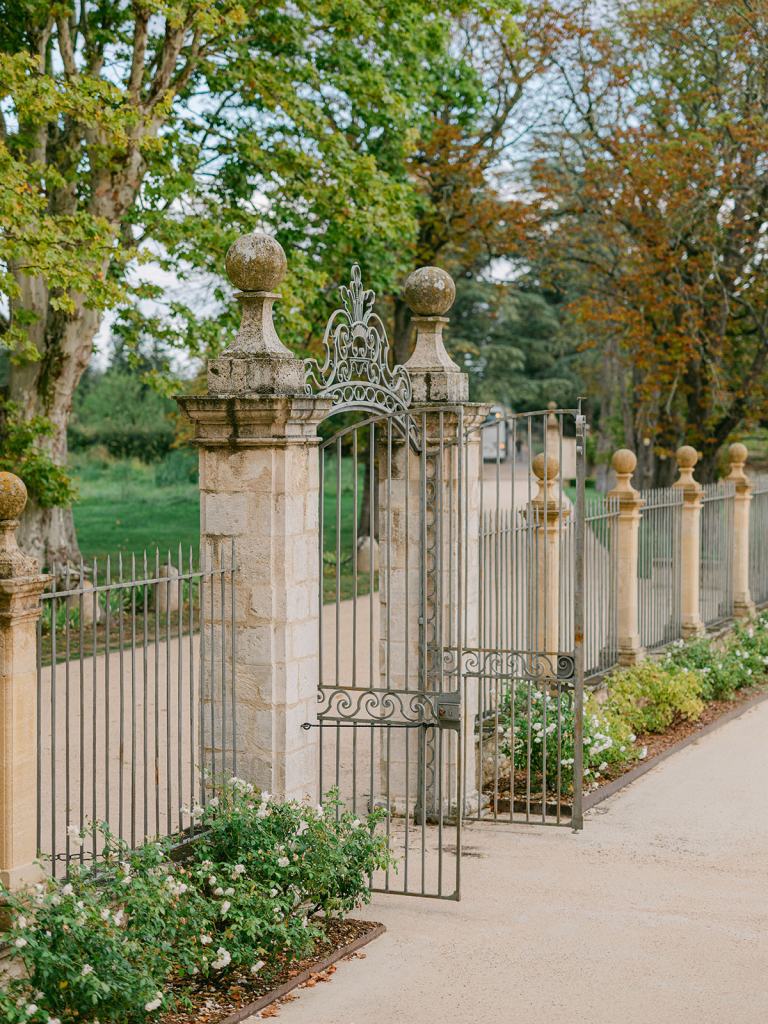
As guests approach, the scale of the property reveals itself gradually through vineyards, mature trees and gardens, before the château rises with the quiet grandeur of an old Provençal residence. A grand gate leads the estate’s two towers, one of them inscribed with the property’s motto: Carpe Diem and the beautiful French garden. What an entrance!
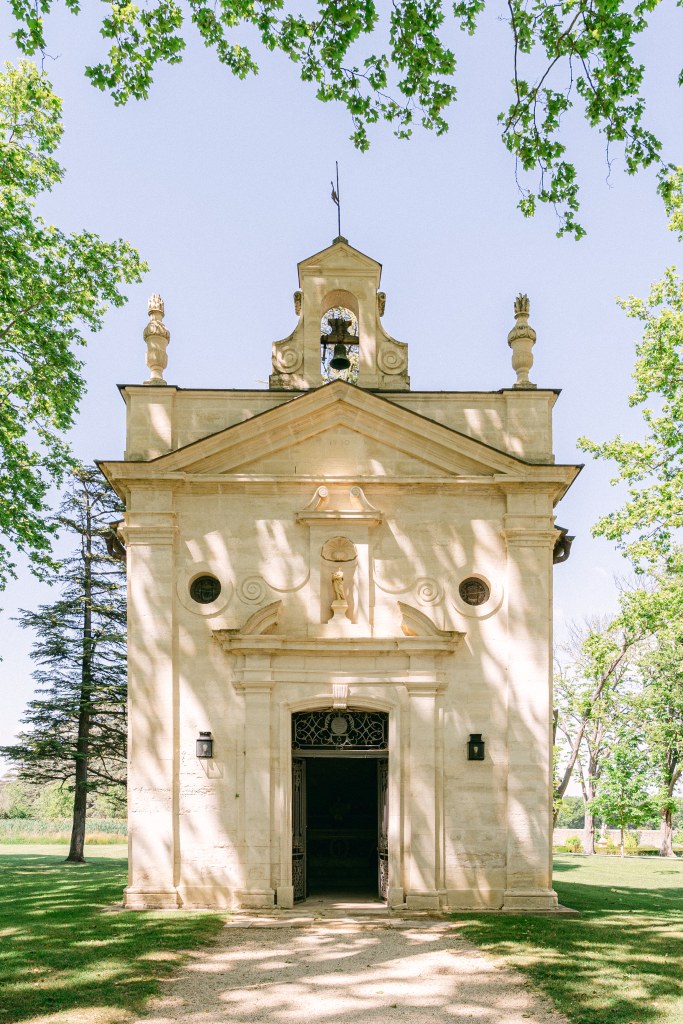
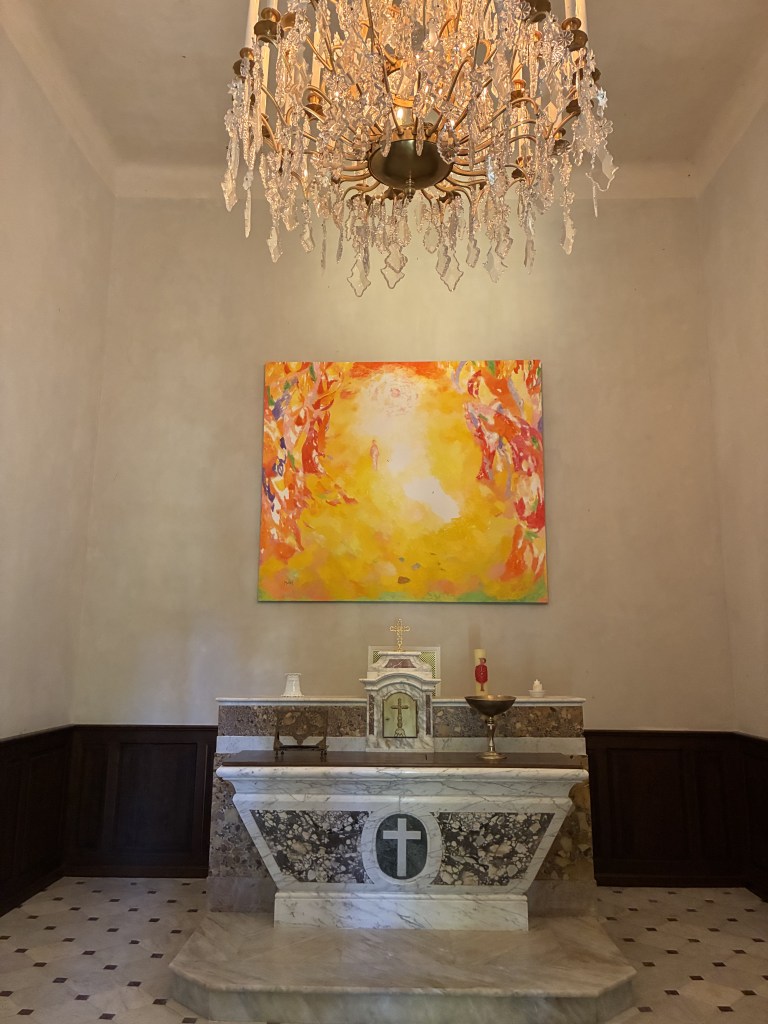
Upon arrival, on the left turret, a clock remains permanently stopped at 11:11, a pause deliberately preserved by the estate’s current owner, Madame Martel, who bought Fonscolombe in 2014 on behalf of the 2L Collection, as a small symbol of disconnection, of time standing still. Each day at 11:11, a bell rings to mark the moment. Elsewhere on the grounds, a gorgeous deconsecrated chapel stands there. The property brings to life 3 centuries of French History.
Its history is written into its architecture. Fonscolombe carries the marks of a long life, classical proportions, worn stonework, historic detailing, interiors that feel lived-in rather than staged. The effect is less that of entering a museum than of stepping into a house that has been inhabited, adapted and cared for across generations, and now welcomes families and guests from around the world.
At Fonscolombe, history is experienced through the rooms themselves too, in their proportions, their materials, their decorative details and the objects scattered through them. There’s a gentle theatricality to the place.
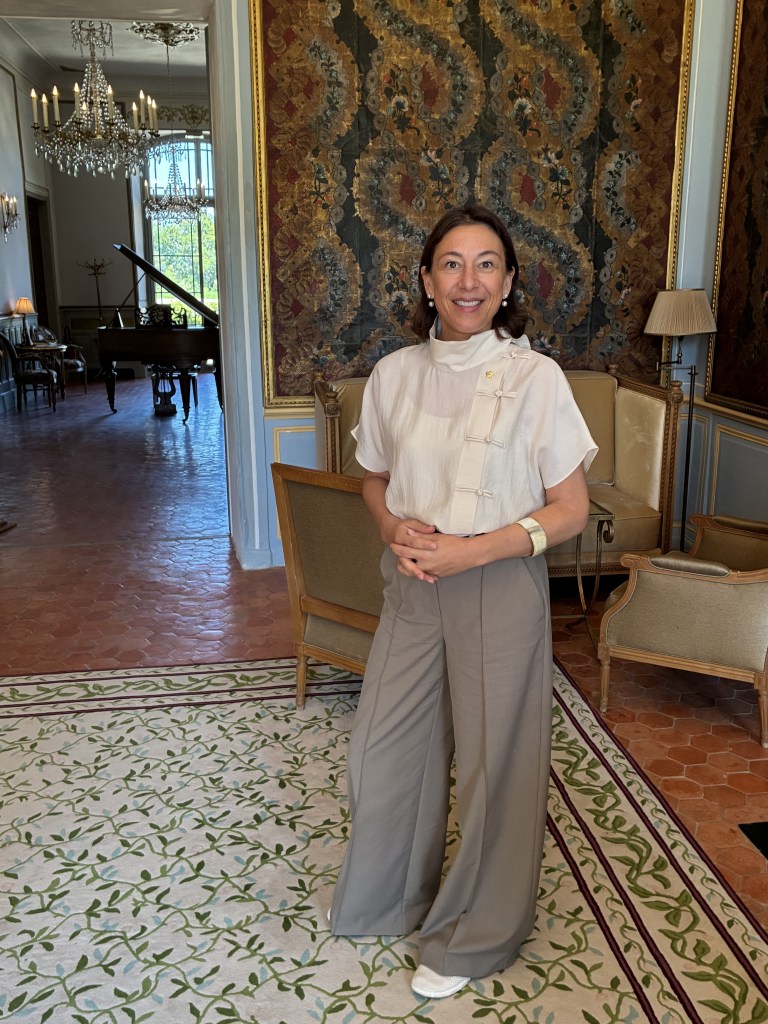
Céline de Labrousse, General Manager of Hospitality at Fonscolombe, has spent her career at the intersection of hospitality, wine, gastronomy and art, and it shows. Her relationship with hospitality began early: after five years at hotel school in La Rochelle, she developed what she describes as an early passion for hospitality and, more broadly, for anthropology and human connection, for the pleasure of meeting people and “making their eyes shine.” She also comes, by her own account, from “a family of hedonists,” which perhaps explains her instinct for great food, wine, culture and conviviality.
Her career has taken her through some of France’s most significant wine and hospitality addresses. She spent thirteen years alongside Jean-Michel Cazes at Château Cordeillan-Bages in Pauillac, in the Médoc, directing the entire hospitality operation, including the Relais & Châteaux property, which at the time held two Michelin stars. Her remit extended well beyond hotel and restaurant: château visits and wine tourism at Cordeillan-Bages and Château Ormes de Pez, the wine cellar, a concept store, a wine and cooking school, and a programme of events spanning wine and art. She remembers the Médoc as “very, very beautiful” and “magical,” and recalls Cazes as a pioneer of wine tourism, and as a mentor.
That period also introduced her to the relationship between hospitality and contemporary art. At Cordeillan-Bages, a friendship between Cazes and Daniel Lelong of Paris’s Galerie Lelong led to an annual exhibition, deliberately eclectic, featuring artists such as Emilio Pérez and Di Rosa, some of it exploring wine and hospitality directly.
At Fonscolombe, the emphasis falls on the spectacular property itself and its many assets. “For now, we are really focused on historical art,” Céline explains, “and on our art of welcoming and hosting guests.” It’s a framing that suits the château well. Here, she says, “everything is art”, and it’s true. The estate’s precious elements are things to conserve, but also things to transmit. “We are passers of time,” she says, describing the responsibility of keeping this historical art alive.
That sense of transmission runs through the whole property. The ceilings, exteriors, statues, towers, tiles and architectural details have undergone exceptional restoration, initiated by Madame Martel and completed in a remarkably short window, work that restored many of the elements that make the estate so precious today.
The Martel family remains deeply woven into the life of the château. Lorène and Pierre, Madame Martel’s children, return regularly and stay closely attentive to the property’s future. Theirs isn’t simply the relationship of owners to an asset, their own family history continues to unfold here. Céline recalls guests who married at Fonscolombe years ago now returning with their own children, describing the feeling of being at home. “Proposals, too, have become part of the château’s story, couples returning after the event and, later, bringing children born from those unions.” Céline adds.
The memories give the property another dimension entirely: a historic monument that doubles as a living family home, and a hotel where guests quietly begin writing their own histories.
For Céline, this connects directly to her idea of luxury. She describes Fonscolombe as offering “a very open, uncomplicated luxury,” but believes the essential quality of luxury, ultimately, is “sincerity”, a philosophy that comes through in the atmosphere of the château: refined without being intimidating, historic without feeling rigid, attentive without tipping into formality.
Her path to Fonscolombe ran through another remarkable chapter. After thirteen years at Cordeillan-Bages, she joined Maja Hoffmann’s LUMA Arles project. Passion, once again, decided it. Over eight years there, she was involved in an extraordinary stretch of cultural and hospitality development: Le Cloître was amplified under her watch; she worked through the development of L’Arlatan, with its Jorge Pardo project, as well as the acquisition of the Nord-Pinus and the Hôtel du Parc beside Frank Gehry’s tower. Her role eventually spanned four hotels, from operations, business planning, to new-property development, and she worked closely with LUMA, personally welcoming many of Maja Hoffmann’s VIP guests.
She recalls Maja Hoffmann as exceptionally visionary. The experience taught her that “everything is possible,” and broadened her sense of the relationship between wine tourism and tourism built around contemporary art.
Then came Fonscolombe. It was, by her account, a “coup de cœur”, she was drawn to the property (and who wouldn’t?), to its nature, to the people around it. She met Delphine Jaouen, General Manager of the wider group, 2L Collection, and Mme Martel, and felt an immediate connection.
Fonscolombe holds a substantial 50-hectare vineyard estate producing wines Céline believes deserve greater visibility within the château experience, and one of her current projects is deepening the relationship between hotel and vineyard, making wine tourism more tangible and building greater harmony between the two sides of the estate.
A wellness project is also underway, reflecting the growing importance of wellbeing to the guest experience. For Céline, “Fonscolombe’s future lies in letting these strands, heritage, wine, nature, hospitality, wellness, develop together”. The future is bright.
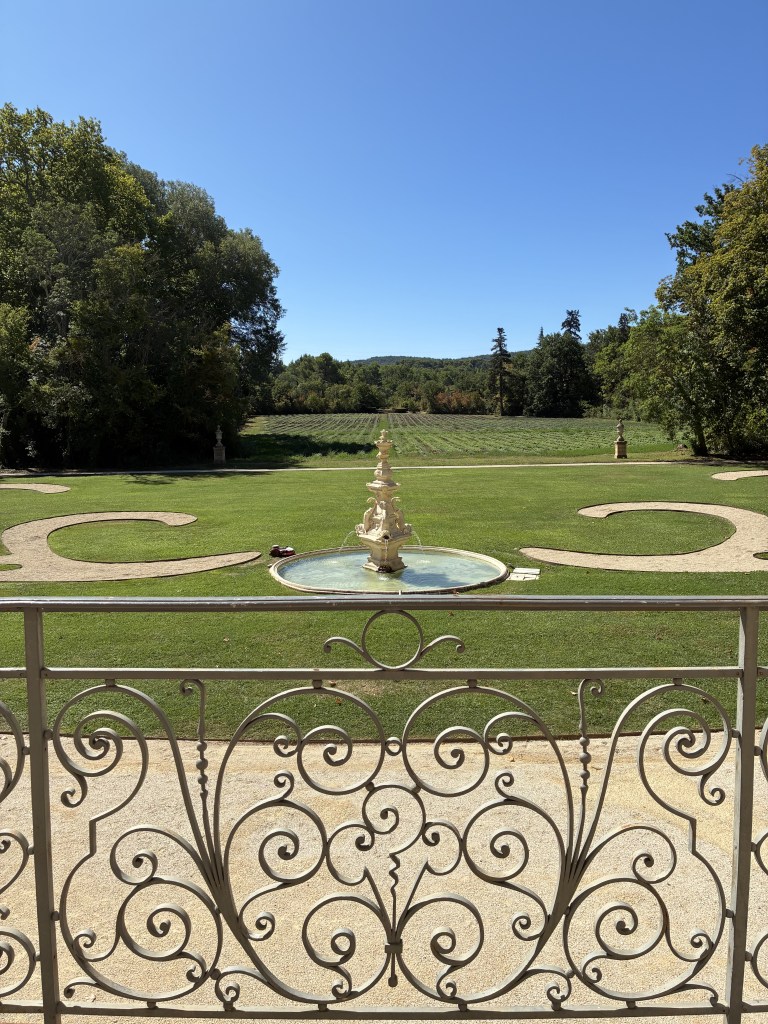
The estate itself seems built for exactly that. One of the most striking current projects is the restoration of the château’s monumental fountain; Céline describes its scale with obvious affection and talks about wanting to “make it live again.” Elsewhere, a newly planted lavender field is already transforming one of the property’s finest perspectives, at the end of the field, looking back across the estate, the view turns almost contemplative.In the vast ground, one can also encounter vestiges of an obelisk. The visuals will be spectacular!
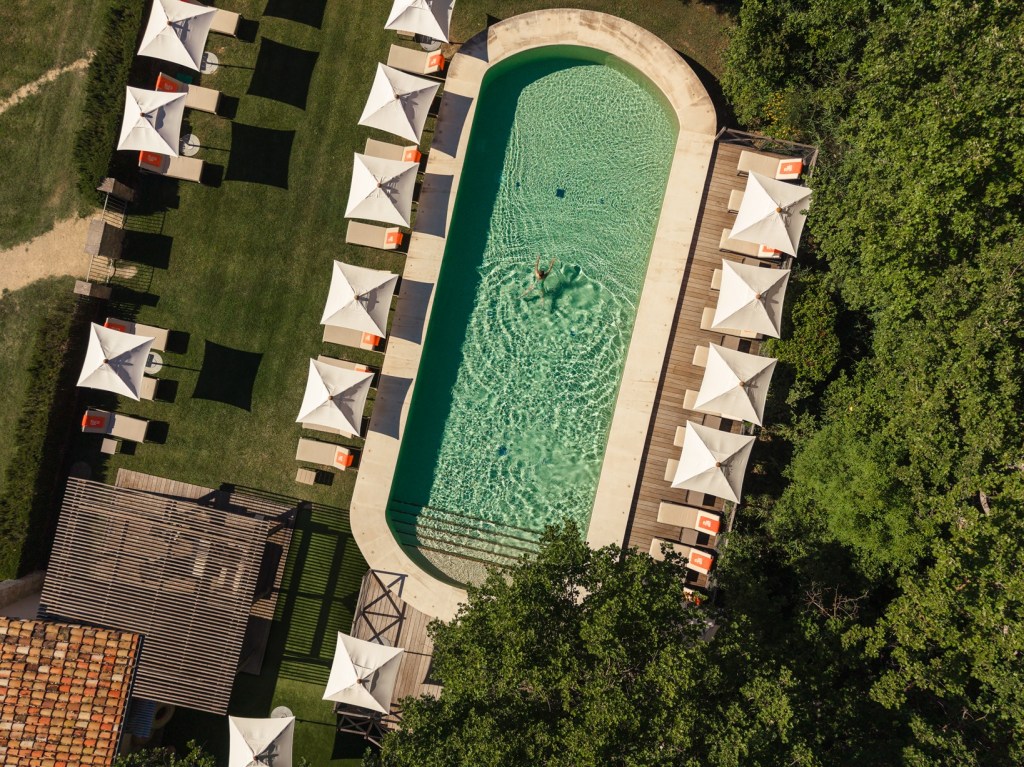
The natural environment gets the same care as the architecture. The surrounding forest is protected, and its fauna and flora are taken seriously, even the lighting has been considered carefully, particularly in relation to protecting bats. Near the olive trees beside the pool, two fields have deliberately been left uncultivated, supporting both pollination and a feeding ground for bats, a small but telling example of an approach in which landscape management, biodiversity and hospitality are treated as parts of the same ecosystem.
For Céline, nature itself is a form of art, an art of life and biodiversity. The estate holds remarkable specimens, including its centuries-old cedar of Lebanon and a bald cypress estimated at around 350 years old, and its philosophy of preservation connects to wider regional conservation efforts referencing Camargue. The result is a château where the natural world isn’t simply a backdrop, but part of the estate’s cultural and historical identity.
On 6 April 1965, the Queen Mother of England visited Château de Fonscolombe as a guest of the Marquis and Marquise de Saporta, then owners of the estate, staying in what is now Room 203. During her visit, Her Majesty planted an Atlas cedar in the park to mark the occasion and her connection to the family who hosted her, a tree that still stands today, commemorated by a small stele nearby. This obviously adds another layer of prestige to the beautiful property and attracts clients from Britain and beyond.
Inside, art forms part of the same continuous atmosphere. Paintings, antiques and decorative objects give the interiors the feeling of having evolved over time rather than being assembled to a single contemporary brief. There’s real pleasure in moving through the château without a fixed route, letting individual pieces, textures and architectural details reveal themselves gradually, an approach that echoes the cultural spirit of Aix itself, a city that has long drawn artists, writers (Emile Zola) and collectors, and whose institutions continue to put historical and contemporary work into conversation. Fonscolombe, meanwhile, offers the chance to experience all of that culture at a slower pace in a remarkable landscape.
The château has 50 rooms and suites, fitted with high-end amenities while retaining the property’s historic character. Bathrobes and discreet wellness touches bring contemporary comfort into the old architecture; meditation sessions are accessible through the in-room sound systems, extending the château’s idea of the present moment as something to be savoured.
There’s something genuinely evocative in the juxtaposition, the murmur of Provençal vineyards, the centuries-old soul of a family home, all wrapped in the comfort expected of a contemporary luxury hotel, and all of it just twenty minutes from Aix-en-Provence.
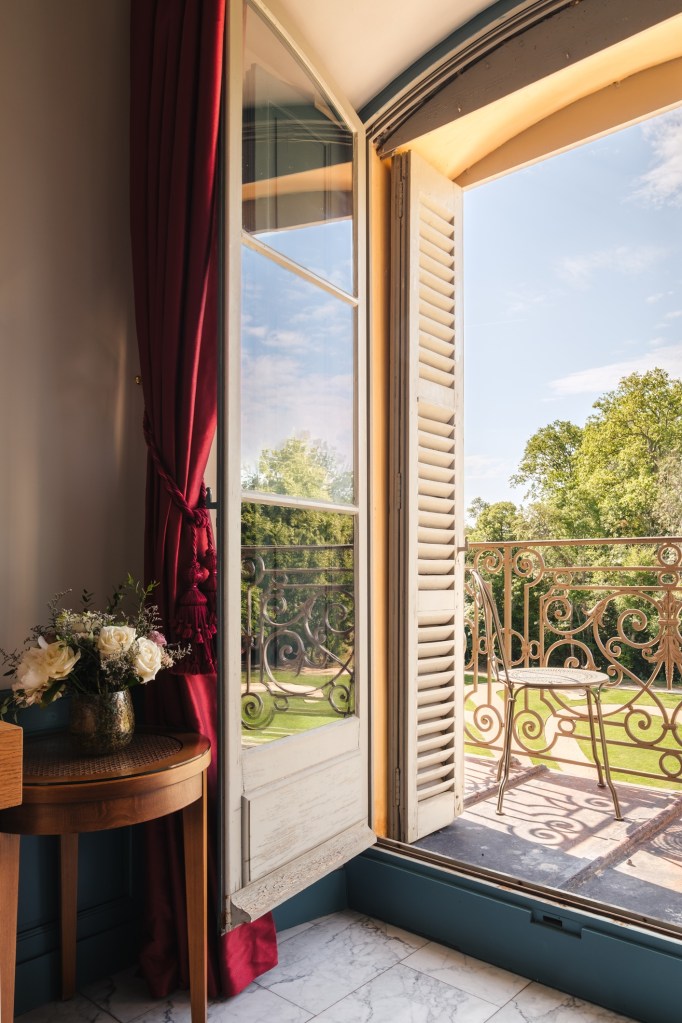
The fully renovated rooms and suites combine that contemporary comfort with the château’s historic character throughout: period details, noble materials and soft, understated tones preserve the residence’s Provençal elegance across the property.
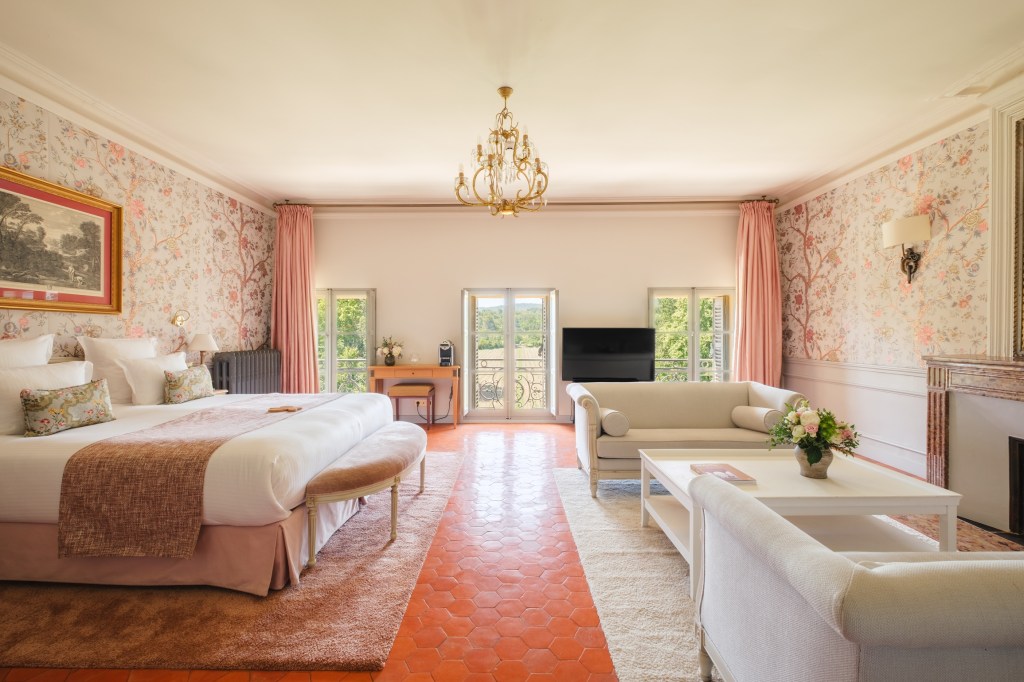
Accommodation runs from Traditional and Deluxe Rooms up to more spacious Prestige Rooms and Junior Suites, many overlooking the gardens, park or Cour d’Honneur, with interiors featuring antique terracotta tiles, period furniture, mouldings, canopy beds and other historic details. The Prestige Rooms offer particularly generous proportions with views over the park or courtyard.
For longer stays and families, the Junior, Historical and Prestige Suites add extra space without losing the château’s sense of history. The Historical Suite contains a distinctive marble bathtub concealing an ancient fountain from the Orangery. The Prestige Suite is among the château’s most emblematic rooms. A Family Junior Suite, made up of two connecting rooms, sleeps up to four.
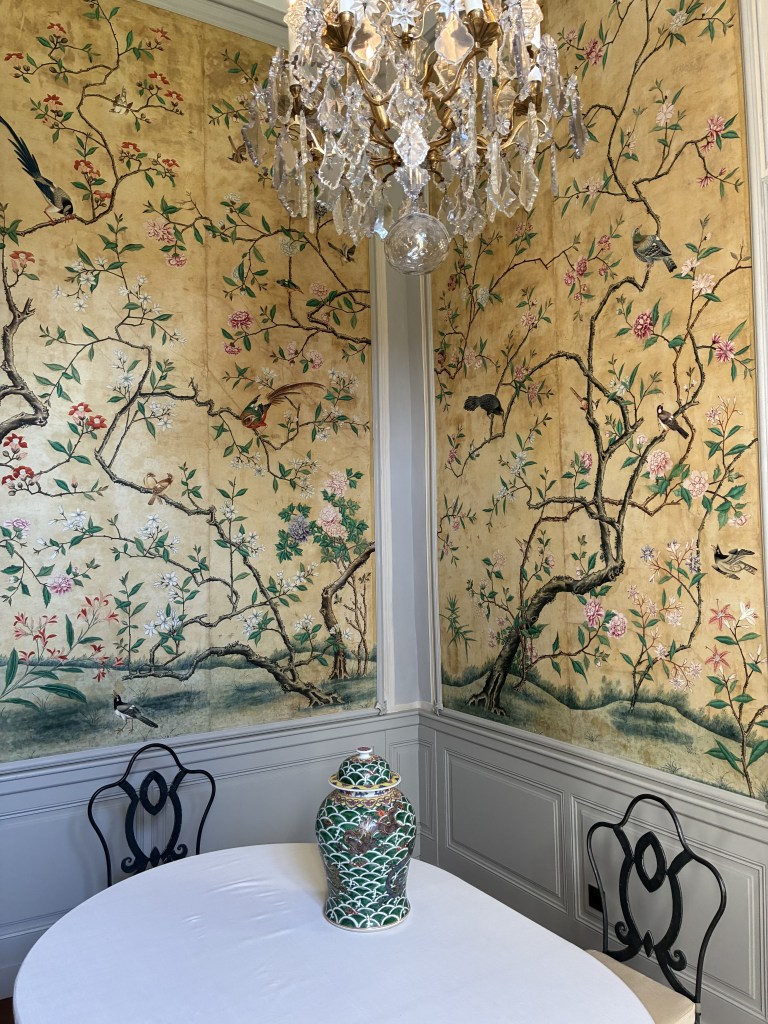
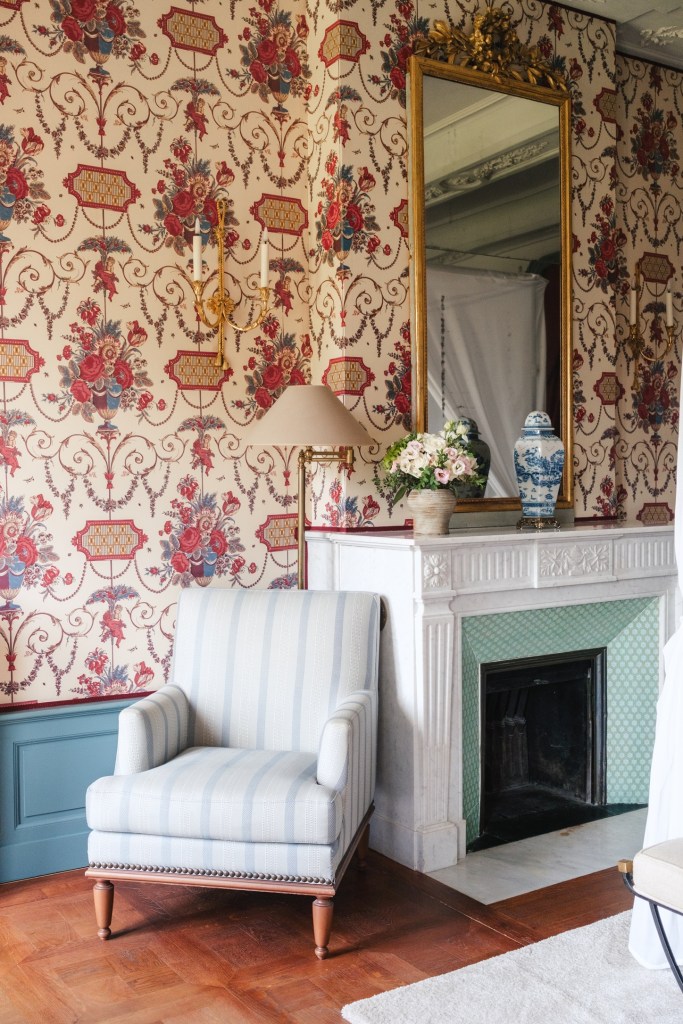
These rooms are not simply places to sleep, they read as another chapter in the building’s history, their proportions, materials and surviving architectural details allowing guests to experience the château from the inside out. The palette throughout is soft and deliberately calming, pale lilac, sage green, warm beige, set off by gilded wheat-sheaf sconces and hand-painted wall etchings depicting romantic 18th-century scenes. Wallpapers bloom with florals; chandeliers hang low in the corridors; beds sit beneath canopies. In the bathrooms, toiletries come from Rose et Marius, the Aix-en-Provence house, and a nice local touch, and are as understated and pleasing as everything else in the room.
The relationship between interior and exterior is central to a stay here. Vineyards stretch toward the Provençal countryside, gardens offer shaded places to sit, and the changing light gives the château an almost cinematic quality across the day, morning, afternoon and evening each revealing a subtly different version of the estate. Deers wander around the gardens often.
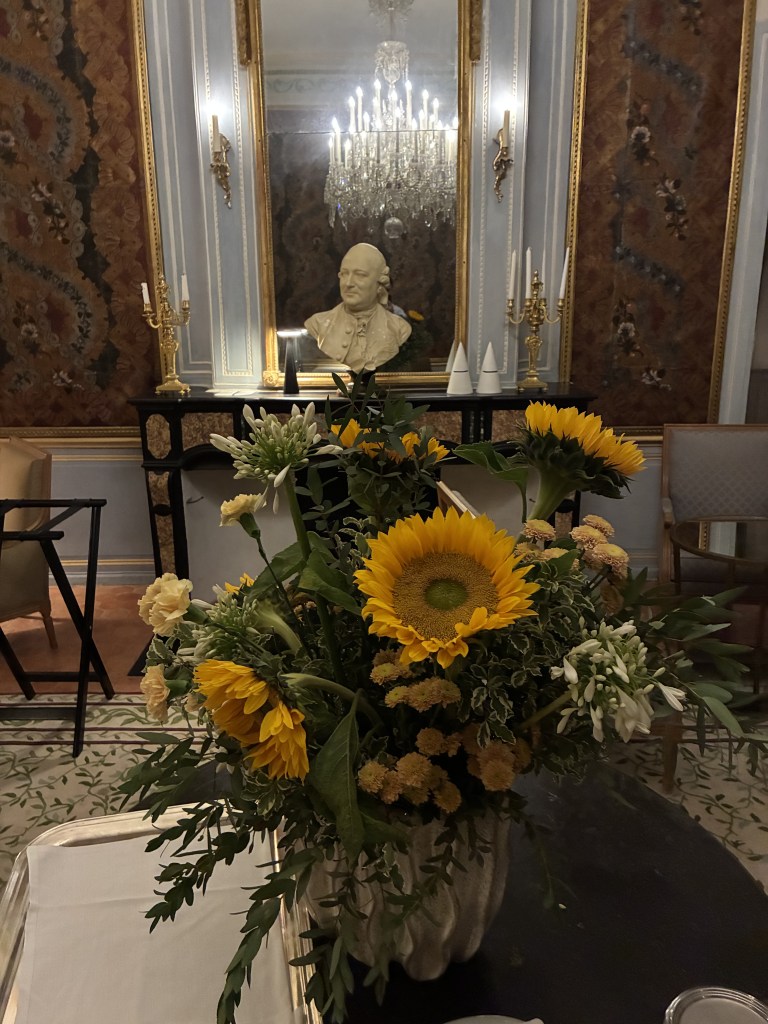
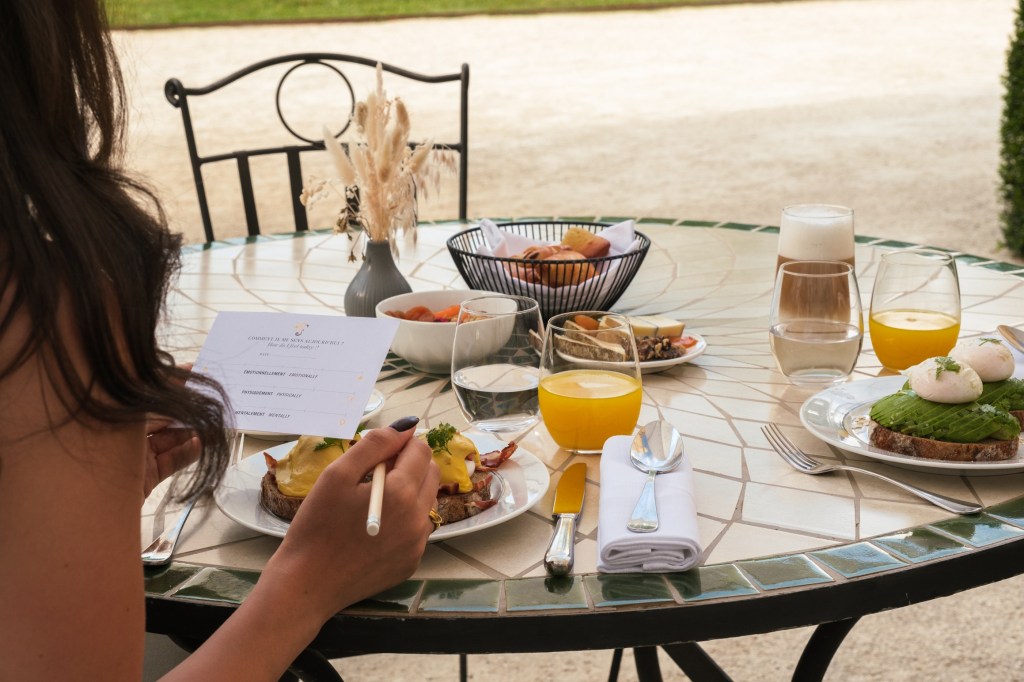
Breakfast is a genuine highlight: fresh bouquets on every table, riz au lait, pastries fresh from the oven, a savoury spread, fig tart, homemade madeleines, lemon drizzle and chocolate cakes, and more besides, the kind of spread worth lingering over rather than rushing through.
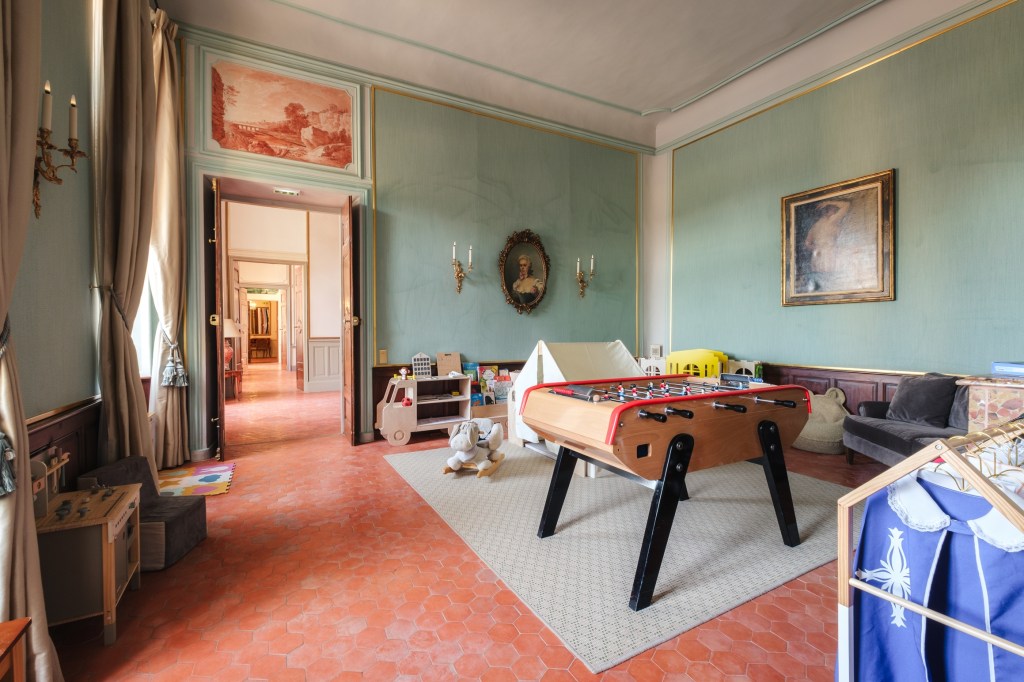
The piano nobile is the most stunning floor in the house: William Morris–upholstered sofas, an old grand piano, a room set aside entirely for children with games, toys and dress-up costumes, and a bathroom for guests arriving after check-in. The shared spaces are stacked with things to notice, a library stocked with books on Marseille, Arles, Van Gogh and a run of Victor Hugo titles, fresh flowers throughout, frescoed ceilings, chess sets laid out and waiting, framed photographs of Arles and of Cezanne’s paintings on the walls, a grey-toned snooker room hung with classical paintings, Louis XVI chairs carved with elaborate motifs, and marble-topped tables. Downstairs, an intimate bar pours an excellent range of drinks and whiskies. Fountains recur across the grounds, including one featuring dolphins, echoing the fountains of central Aix itself.
Wine sits at the heart of it all, connecting Fonscolombe directly to the land and to one of Provence’s oldest traditions; a glass enjoyed on the estate feels inseparable from the landscape around it, simple pleasure, but one that captures the region’s enduring art de vivre. Gastronomy follows the same philosophy: meals feel like an extension of the château rather than a separate hotel experience, built around the flavours and produce of Provence. Eating slowly here, surrounded by architecture, vineyards and gardens, becomes its own way of experiencing the region.
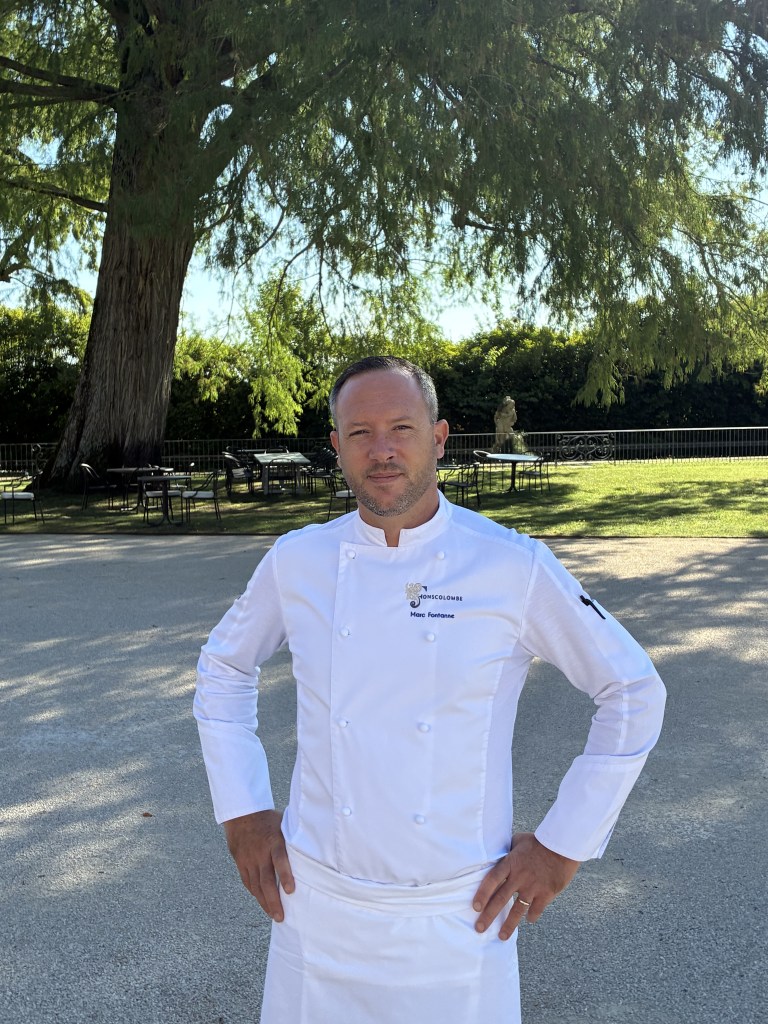
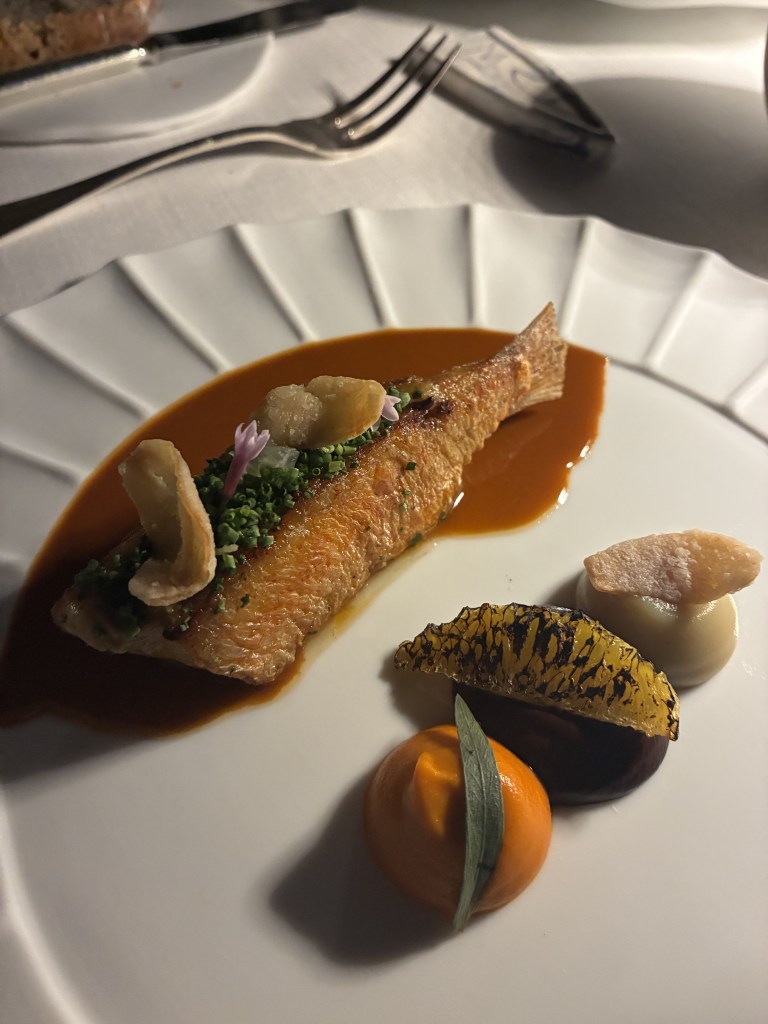
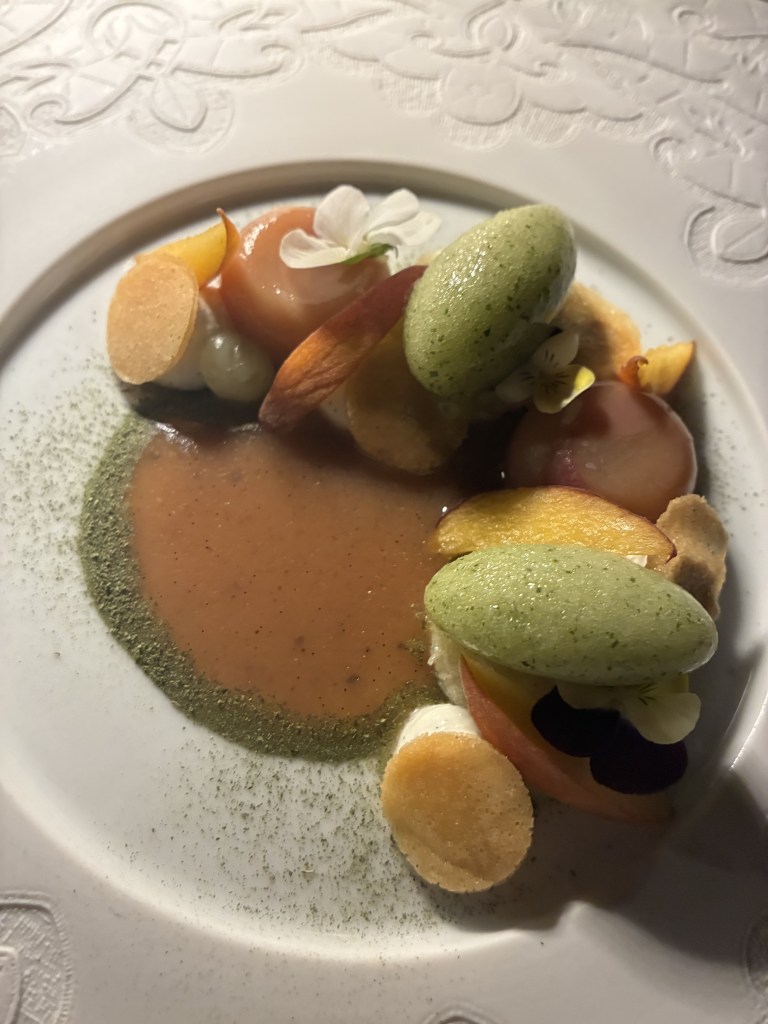
At Château de Fonscolombe, fine dining is an integral part of the experience, brought to life through two distinct culinary destinations led by Executive Chef Marc Fontanne. At La Table de l’Orangerie, the estate’s Michelin-starred restaurant, guests enjoy a sophisticated gastronomic journey in an intimate, luminous setting where Chef Fontanne’s refined, contemporary dishes showcase organic estate produce and local Provençal flavours with exceptional precision. Complementing this high-gastronomy offer is Le Temps Suspendu, a relaxed bistronomic restaurant set beneath century-old trees, offering a warm, sun-filled menu of seasonal classics, daily breakfast, and Sunday brunch designed around the château’s signature philosophy that time stands still. Together, these venues draw directly on the kitchen garden, historic grounds, and regional terroir to offer guests a complete culinary experience where authenticity, excellence, and emotion meet.
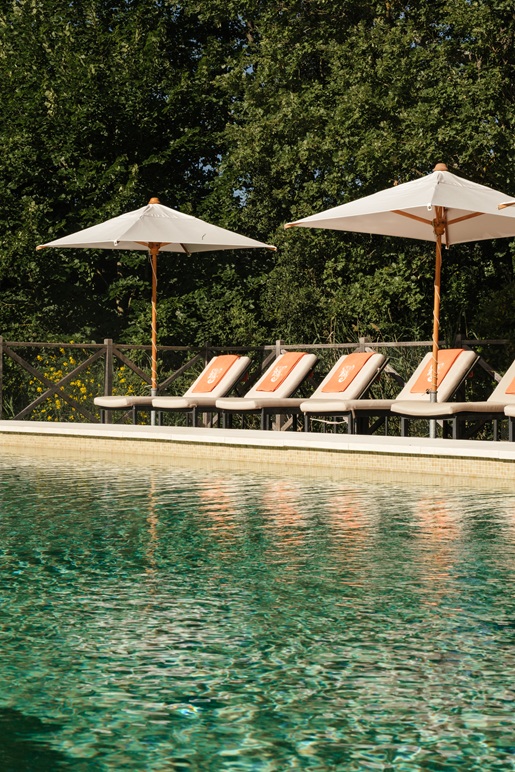
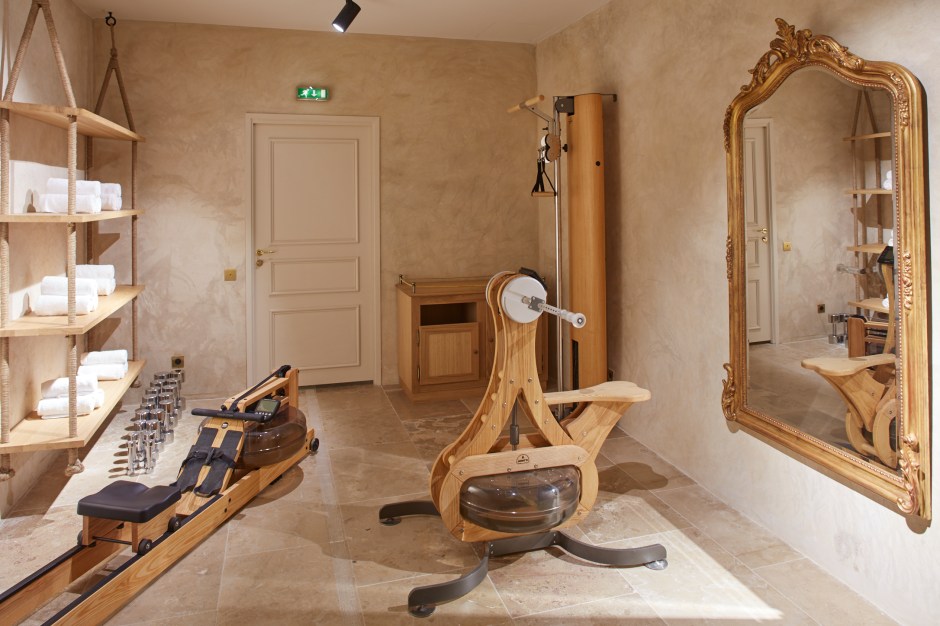
Wellness adds a further dimension. The hotel’s wellness area includes a hammam, massage room and fitness space, alongside a menu of body and facial treatments by Esthederm, all set against the château’s historic architecture and the natural sounds of the park. These spaces will be further developed in the future, Céline explains. At the centre of the estate, the heated outdoor pool sits within protected grounds, shaded by mature trees and open daily from 8am to 8pm, a place for swimming, sunbathing, or simply retreating into the shade, with refreshments and snacks available from the pool house. A game of pétanque is easily arranged near the recently planted olive trees, close to the deconsecrated chapel and its remarkable artworks.
Wellness extends well beyond the spa, out into the château’s hectares of gardens: meditative walks among fountains, statues and landscaped paths, outdoor yoga, and tailor-made activities such as sound baths. Even the rooms carry their own wellness touches, yoga mats, books, gratitude cards, weighted blankets, itineraries for everyday activities, with a Dream Machine or long-wave infrared mattress available on request. Together, these details build a genuinely holistic approach to wellbeing, folding spa treatments and physical activity in with quieter rituals of rest, reflection and time outdoors.
The city of Aix and the château complement each other beautifully. Fonscolombe supplies the retreat, gardens, vineyards, historic rooms, the quiet of the countryside. Together, they offer two halves of the same Provençal experience.
Hiking around it offers another way into a landscape that has inspired generations of artists, while the wider region opens onto vineyards, villages and, eventually, the Mediterranean.
Through the week, the estate also runs a programme of activities built around its heritage, cuisine and setting: a botanical walk through the protected park, a mixology workshop, wine tastings, an evening around a bonfire, an aperitif with pétanque, or yoga followed by brunch. Each is designed as an authentic encounter with the estate, its gardens, history, biodiversity, vineyards and traditions, rather than an activity simply bolted onto a hotel stay, whether you’re travelling as a couple, with family or with friends.
Château de Fonscolombe is also, unmistakably, a wedding venue of the first order. Choosing it for a wedding in Provence means giving guests the chance to celebrate somewhere steeped in pure beauty.. Many celebrities have celebrated their weddings there. From the majestic gardens to the historic salons, and a gourmet dinner crafted by the chef, every element can be built around the day. Whether intimate or large-scale, the château shapes a bespoke experience for each couple, in a timeless setting where every detail contributes to the memory of the day, and other professional events can be hosted here too.
Across its 31 hectares of vines, the estate holds two organic appellations, the Bouches-du-Rhône IGP and the Coteaux d’Aix-en-Provence AOC, with the latter’s first harvest expected in 2020. This is also so impressive!
In 2019, the Fonscolombe vineyard turned out more than 20,000 bottles, among them the organic Domaine de Fonscolombe IGP Bouches-du-Rhône Rosé (a blend of 60% Merlot and 40% Caladoc), notable for its pale pink hue, expressive bouquet and red-fruit character, alongside an organic IGP Bouches-du-Rhône white made from Sauvignon and Chardonnay, with a pale yellow colour, a pronounced nose and notes of yellow-fleshed fruit.
Fonscolombe belongs to 2L Collection, a portfolio of distinctive luxury properties bringing together historic châteaux, refined city hotels and intimate, design-led stays across France, including Château d’Audrieu, Les Lumières, Cinq Codet and Hôtel Atmosphères, among others, each with its own character and setting, sharing a common emphasis on heritage, design and hospitality.
There’s real satisfaction, too, in how past and present coexist here. The château carries the grandeur of another era, yet it remains a place to inhabit rather than simply admire, rooms are lived in, gardens are walked through, wine is produced and served, meals are eaten at an unhurried pace.
That, perhaps, is Fonscolombe’s greatest pleasure: its ability to turn the region’s cultural heritage into something tangible. Sometimes, it’s just outside the window overlooking the great French garden of the property that will make you shine.
To stay at Château de Fonscolombe is to experience Provence as a dialogue, of history and landscape, art and architecture, wine and gastronomy. Its greatest luxury isn’t simply the beauty of the estate, but the sense of plenitude it creates and the professionalism of its staff: the feeling of inhabiting a landscape shaped by centuries of culture, and still, today, creatively alive.
Aix may be the city of fountains, light and art. Fonscolombe is the countryside beyond it, quieter, slower, and just as deeply connected to the same spirit. Beauty surrounds you, quietly and beautifully, in every room, garden, vineyard and changing ray of Provençal light.
–
With thanks to Céline de Labrousse, Marc Fontanne, Capucine Bouillie and Émilie Delbos at Pascale Venot.

