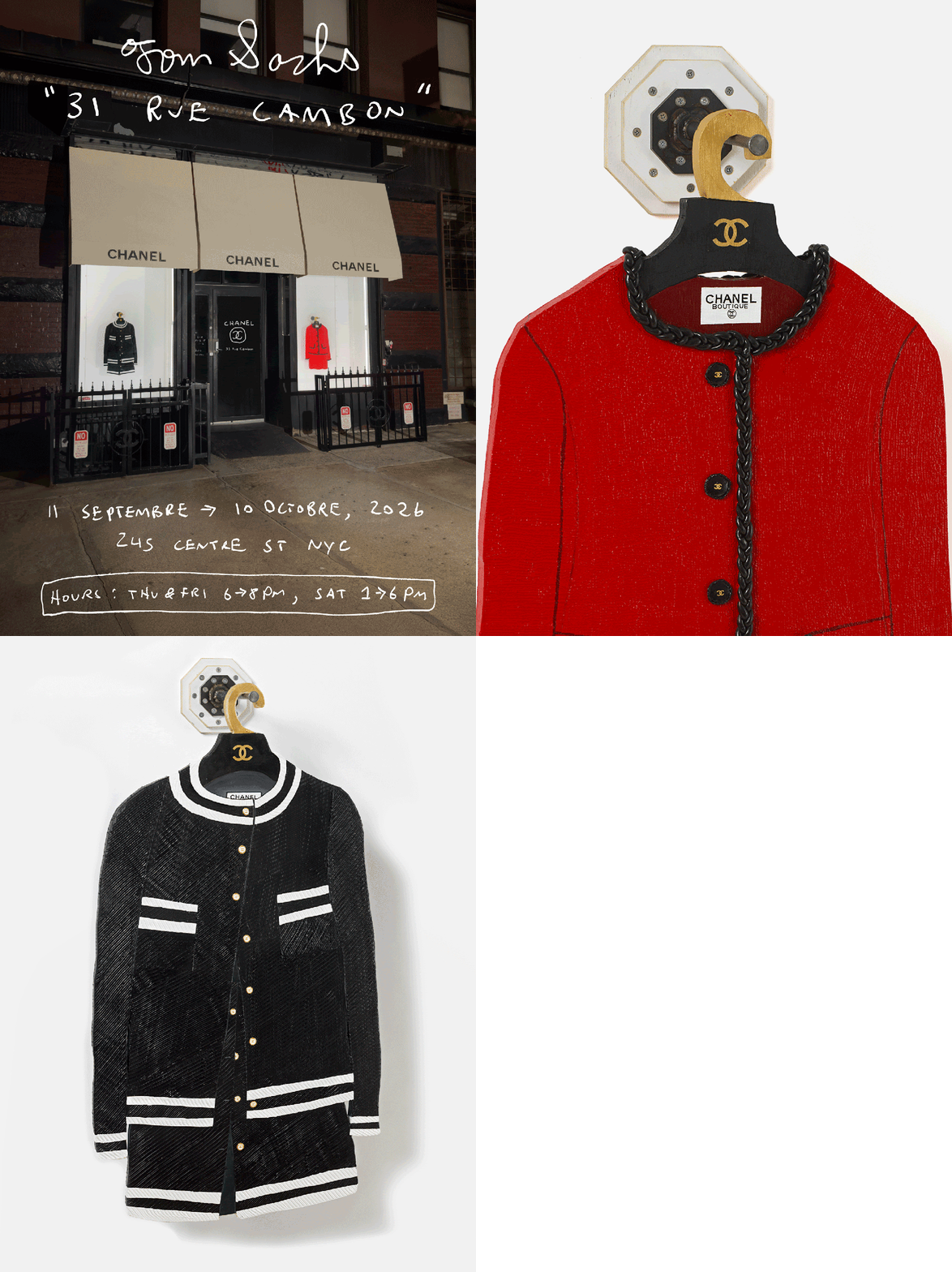
At Tom Sachs Studio in New York, 31 Rue Cambon is on view from 11 September to 10 October 2026. Tom Sachs transforms his long-time SoHo studio into a fully immersive Chanel boutique for 31 Rue Cambon, an exhibition comprising hand-fabricated recreations of the fashion house’s suits, accessories, jewellery, furnishings, packaging and retail displays. Rather than reproducing these objects through conventional manufacturing processes, Sachs constructs them from readily available materials including plywood, acrylic, cardboard and tape. It’s remarkable and so fun!
The exhibition draws on the principle of bricolage, a French concept describing the process of creating and solving problems using materials that are available at hand, often repurposed or borrowed. This approach is central to Sachs’s practice and provides a contrast to the highly controlled production and presentation associated with luxury fashion.
The works include handmade jewellery incorporating LEGO elements and bicycle reflectors, as well as furniture based on pieces associated with Coco Chanel’s Parisian apartment. Together, they recreate elements of Chanel’s visual and commercial identity while deliberately exposing the materials and labour involved in their construction.
The title refers to 31 Rue Cambon, the Paris address closely associated with Chanel and the location of the house’s historic headquarters and flagship. The exhibition also comes at a significant moment for the brand. Since Matthieu Blazy joined Chanel as Artistic Director of Fashion Activities in 2025, the house has entered a new creative phase, with his first collection presented in October 2025. Chanel reported a 2% increase in revenue to $19.3 billion in 2025, following a decline the previous year, and credited strong creative momentum, including Blazy’s debut, as part of the year’s performance.
The momentum continued into 2026: Chanel’s first-half comparable revenue was reported to have increased by approximately 16%, with Blazy’s collections identified as a significant factor in the performance. His approach has combined new interpretations of established Chanel codes with new products, attracting both existing customers and new clients to the brand. Genius!
Against this backdrop, Sachs’s recreation of Chanel becomes particularly timely. By rebuilding the house’s codes within his own studio, he examines ideas around authorship, value, labour, envy and the mechanisms through which luxury objects acquire cultural and economic significance.
Sound is also an integral part of the installation. A custom soundtrack combines ambient and horror-film music with archival Chanel advertising, creating an additional layer to the exhibition’s reconstruction of the brand and its retail environment.
By placing the exhibition in his working studio rather than a conventional gallery, Sachs connects the finished objects directly to the processes of making. 31 Rue Cambon uses the visual language of Chanel to consider the relationship between handmade production, luxury, branding and consumer desire, while demonstrating Sachs’s continued interest in bricolage and the transformation of everyday materials into culturally recognisable objects.

