Francis Picabia will take centrestage at Palazzo Reale, Milan, from 9 October 2026 to 24 January 2027, in an expansive exhibition that brings together more than 170 works to explore the restless, radically inventive career of an artist who refused to remain fixed in one style.
Curated by his great-granddaughter, writer Anne Berest Picabia, Picabia. Open the Gates of Night is the most comprehensive exhibition dedicated to the artist ever presented in Italy. Works from major European museums and international collections are shown alongside rare loans from the Picabia family, photographs, correspondence, personal documents and vintage albums, offering an unusually intimate portrait of both the artist and his world.
Born in Paris in 1879, Picabia moved restlessly between Europe and the United States, crossing paths with figures including Marcel Duchamp, Gertrude Stein and Pablo Picasso. His career refuses an easy narrative: Impressionism gives way to Fauvism, Cubism to Dada, abstraction to something else again. Rather than treating these transformations as separate chapters, the exhibition reveals them as manifestations of the same impulse, the refusal to stay fixed.
This is reflected in the structure of the exhibition itself. Rather than following a strict chronology, Open the Gates of Night moves through the ideas, obsessions and experiences that animated Picabia: love, dance and music, his Spanish origins, war and collective creation. Paintings enter into conversation with archival material, creating a more intimate picture of the man behind the shifting artistic identities.
The night becomes the exhibition’s connecting thread: a space between certainty and possibility, where conventions loosen and new forms can emerge. It is an apt metaphor for Picabia, whose work repeatedly occupied the territory between one idea and the next.
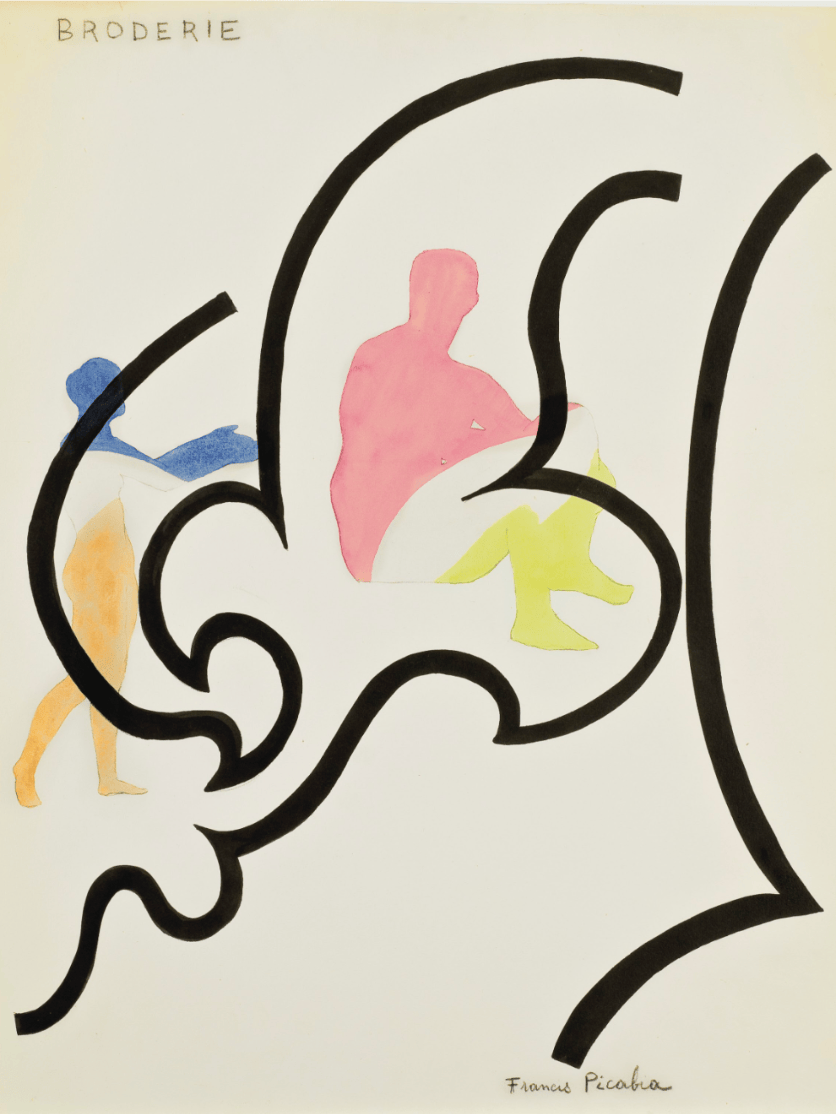
From Broderie (1922) to Salicis (c. 1929), Têtes superposées (c. 1939) and Symbole (1950), the exhibition traces an artist who treated style not as a destination but as something to be continually discarded, questioned and reinvented.
At Palazzo Reale, Picabia is explored as an artist impossible to contain within a single movement, medium or definition. His great subject was perhaps change itself, and the freedom that comes from never having to remain the same. Ch-ch-changes, turn and face the strange!
–
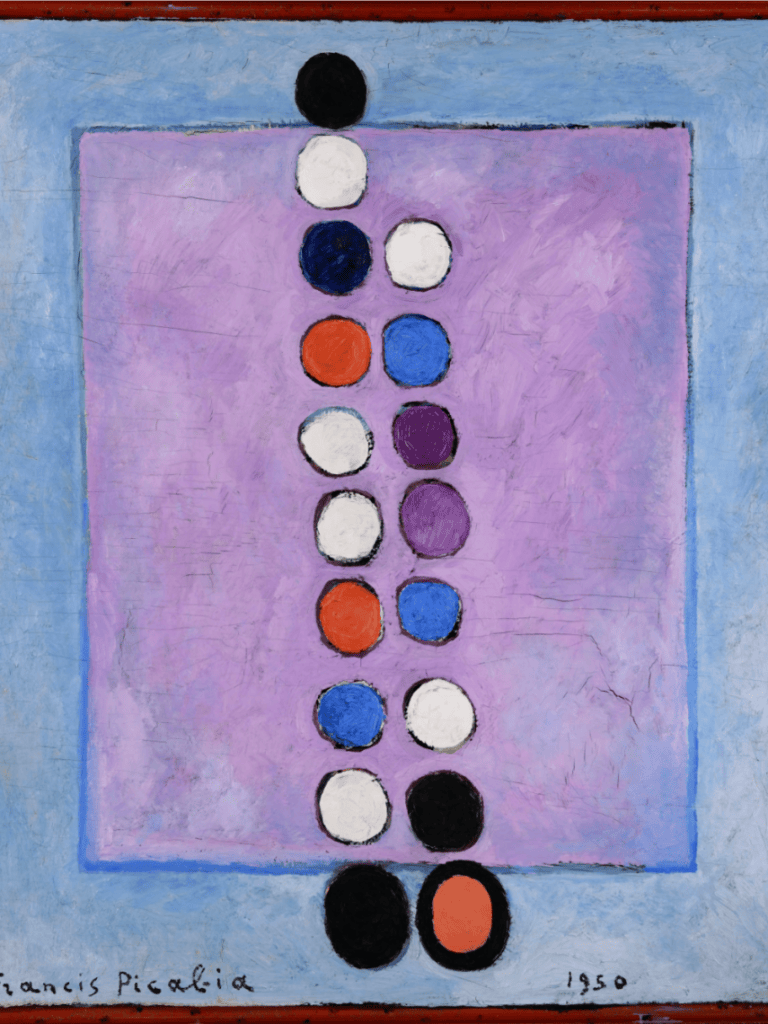
Images: Francis Picabia, Broderie, 1922. © Perl Collection, Perl Collection and Francis Picabia, Symbole, 1950. Musée – Bibliothèque Pierre André Benoît Collection, Alès. © Musée – Bibliothèque PAB, Alès, France

