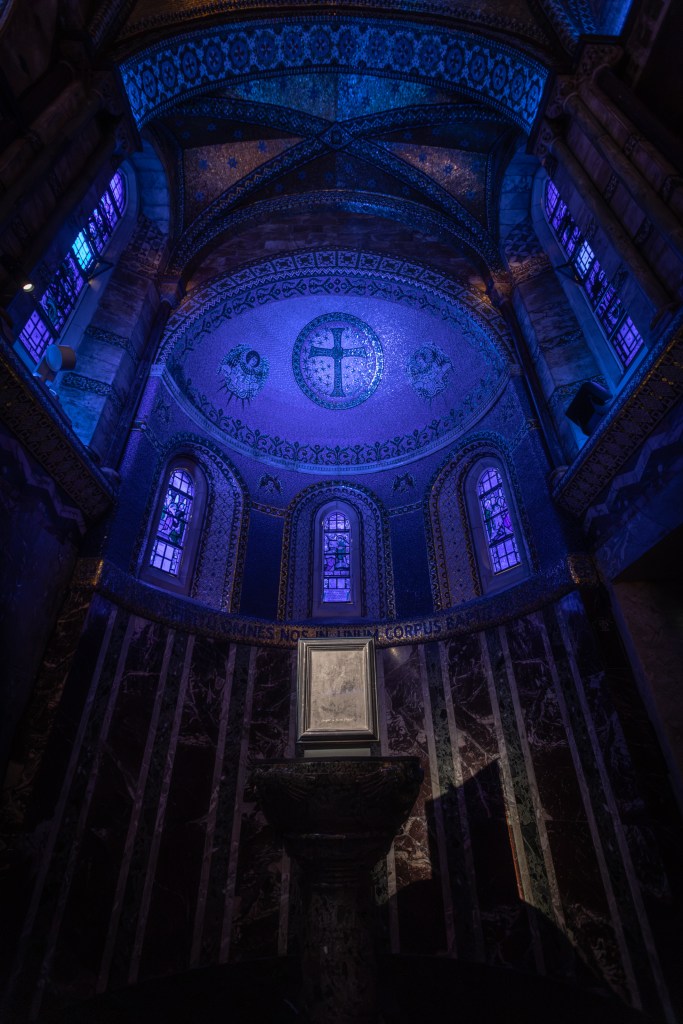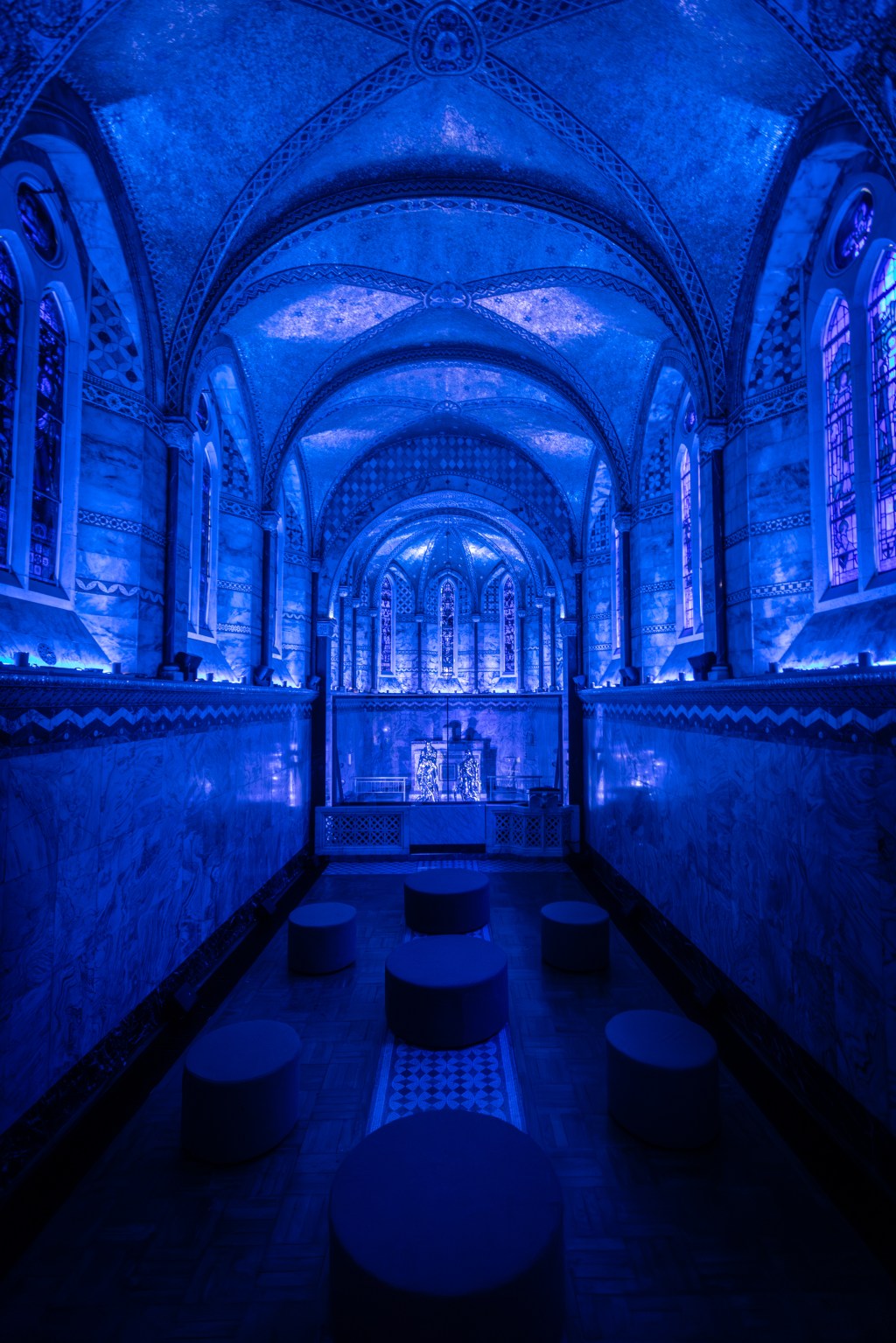
In London’s Fitzrovia Chapel, the colour blue becomes a way of remembering, mourning and reflecting on the human experience. Opening on 16 October, Middlesex Hospital Blues brings together the work of filmmaker and artist Derek Jarman with new creations by composer Simon Fisher Turner, actor Tilda Swinton and artist Jenkin Van Zyl. Through sound, light and sculpture, the exhibition explores loss and compassion.
Curated by Iain Forsyth and Jane Pollard, the exhibition is the third and final part of their year-long residency at the chapel. Following Souvenir and Miseris Succurrere Disco, it continues their exploration of the building’s history and its connections to memory, grief and care.
At the centre of the exhibition is Derek Jarman’s Blue (1993), his final film, released just four months before his death from AIDS-related complications. The film consists of a single, deep blue screen accompanied by spoken text and music. Made as Jarman’s eyesight was failing, it is a powerful reflection on illness, mortality and how we experience the world. Rather than showing the film itself, Forsyth and Pollard have taken its central idea and transformed it into an immersive experience that fills the chapel with art.
The setting is particularly meaningful. The Fitzrovia Chapel was once part of Middlesex Hospital, which housed some of the country’s first dedicated HIV/AIDS wards. The building’s history gives the exhibition a strong connection to the people who received care there, as well as to the wider history of the AIDS crisis.
A newly commissioned sound work by Simon Fisher Turner forms the heart of the exhibition. A close friend and longtime collaborator of Jarman, the composer has drawn on recordings from his archive, alongside extracts from Jarman’s writings and projects, including Blue and Bliss. The work features the voice of Tilda Swinton, another of Jarman’s frequent collaborators, heard throughout the chapel through a specially designed sound system developed with Arup. Swinton’s voice moves around the space, creating a sense of presence and absence, while Fisher Turner’s music surrounds visitors and invites them to listen closely.
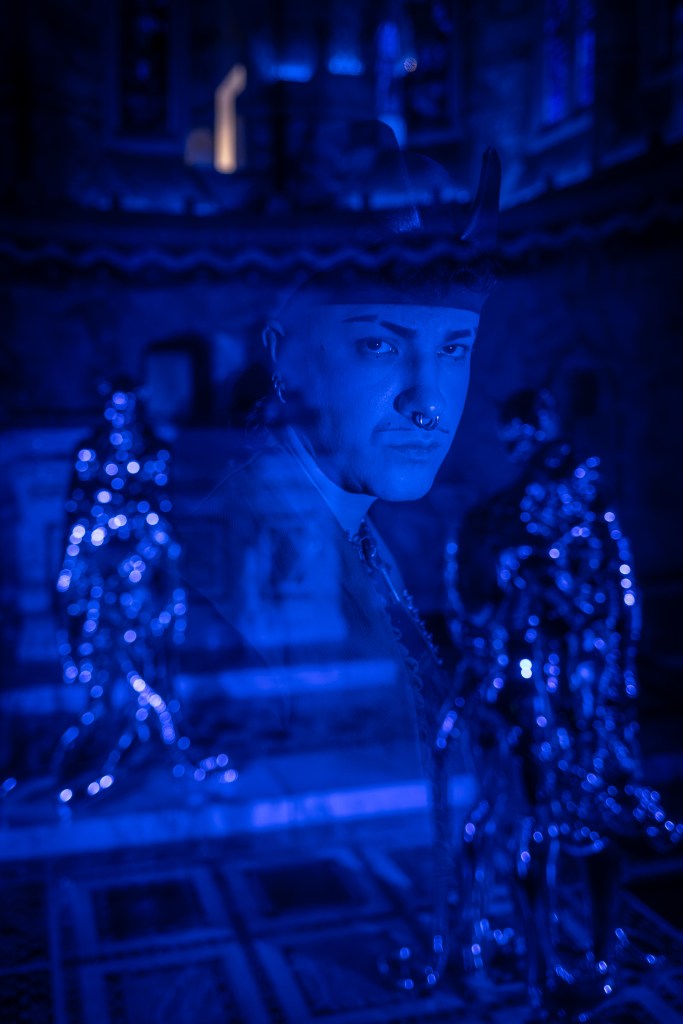
Alongside the sound work, artist Jenkin Van Zyl presents a new sculptural installation. A mirrored screen stretches across the chapel, echoing the proportions of the cinema screen used for Blue. Behind it stand two mirrored sculptures of an embracing couple, positioned in front of the altar. Their reflective surfaces change with the light and the viewer’s position, making the figures appear and disappear.
The sculptures draw inspiration from the endurance dances of 1920s and 1930s America, where couples danced for days in the hope of winning a prize, as well as receiving food and shelter. Partners were often assigned to one another, and if one stopped dancing, both were eliminated. Holding each other upright was therefore not only a gesture of affection but also a matter of survival. In the exhibition, the embrace becomes a powerful image of mutual support, showing how care can be both tender and necessary.
Occasional flashes of white light break through the darkness, recalling the flashes Jarman described during eye examinations. In these moments, the mirrored figures appear like ghosts behind the glass, their reflections shifting between visibility and disappearance.
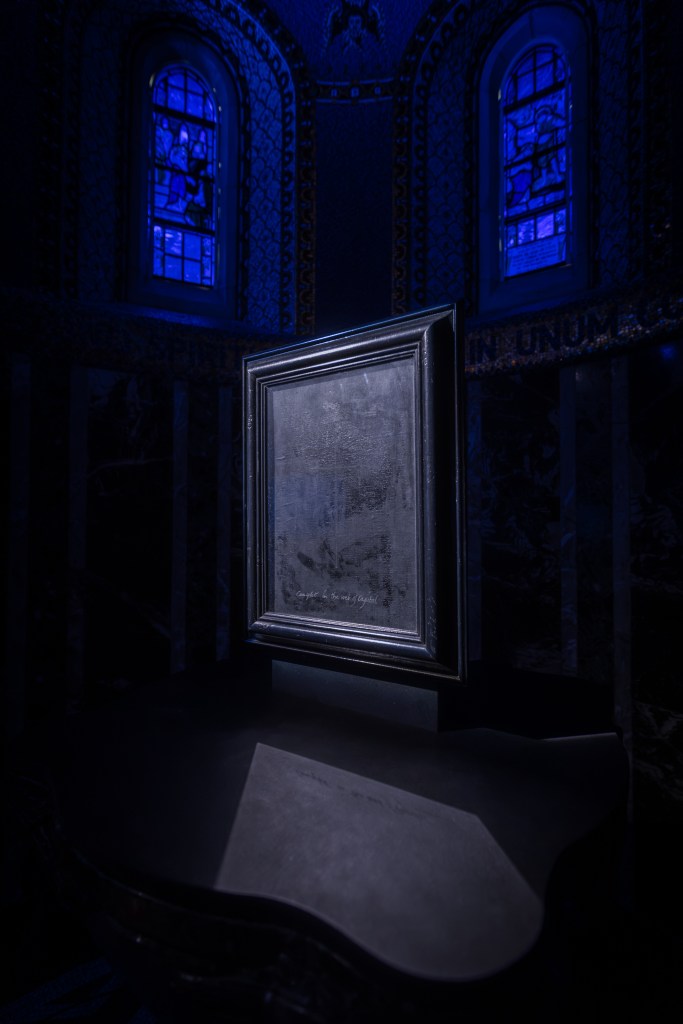
One of the exhibition’s smallest works is also one of its most personal. The Spirit of the World, an oil painting by Jarman from 1981, is displayed on the chapel’s ornate font. Although he is best known for his films, Jarman continued to paint throughout his life. The work’s almost empty frame offers an early example of the simplicity and use of space that would later become central to Blue.
The title Middlesex Hospital Blues brings together several meanings. It refers to Jarman’s film, the blue uniforms once worn by hospital staff, and the blues as a musical expression of sadness and resilience. Together, these references create an exhibition that looks at personal loss alongside shared history. Blue becomes a way to remember those who have died, acknowledge the care they received and reflect on experiences that were often hidden from public view.
At a time when cities are constantly changing and their histories risk being forgotten, Middlesex Hospital Blues offers a moving reflection on the role of art in keeping memories alive.
–