Naples is a city of contrasts. Ancient and unruly. Theatrical and intimate. Shadowed by Vesuvius, lit by the blue of its bay. In this incredible city, art rarely stays inside its frames. It spills into the churches, the palazzi, the narrow streets themselves.
Caravaggio’s Seven Works of Mercy still commands the altar at the Pio Monte della Misericordia, figures wrenched from darkness in a single, startling composition. Across town at Capodimonte hangs his Flagellation; at the Gallerie d’Italia, his Martyrdom of Saint Ursula, painted in the last weeks of his life, has just returned from conservation to a gallery built around it. Contemporary Naples keeps pace too: Thomas Dane Gallery opens a new Cecily Brown show this autumn, and Lia Rumma has been staging Kiefer, Abramović and Kentridge since 1971. The Museum of Contemporary art, designed by Alvaro Siza is also remarkable.
It is a city that rewards wandering without an itinerary, where a masterpiece, a hidden chapel or a view of Vesuvius can reveal itself within the same ten minutes. Naples is a city built in layers, and perhaps nowhere is that more apparent than at the amazing San Francesco al Monte Hotel.
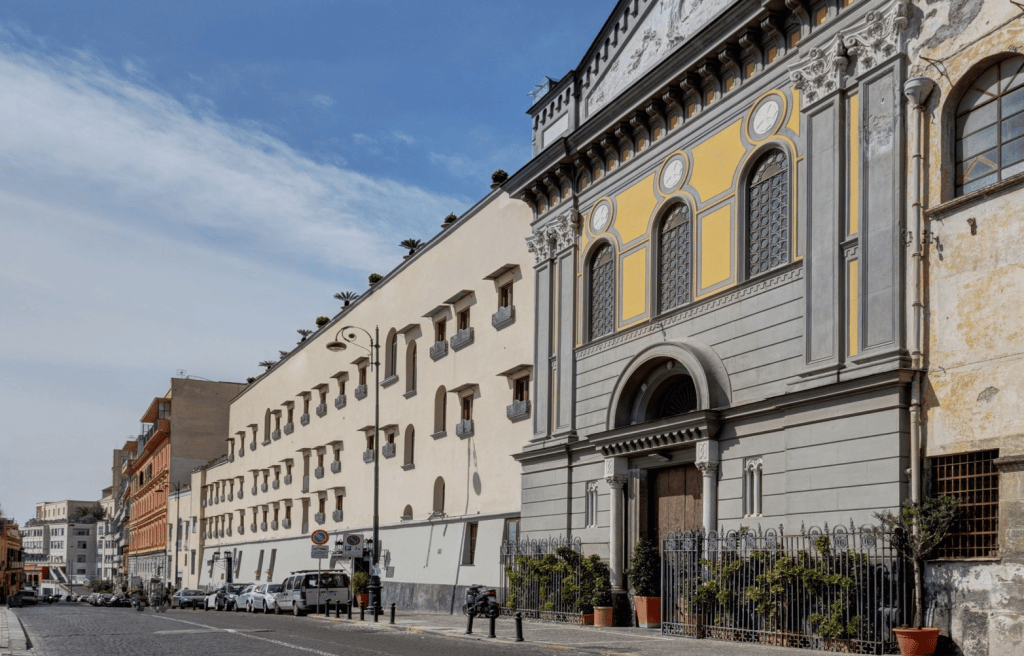
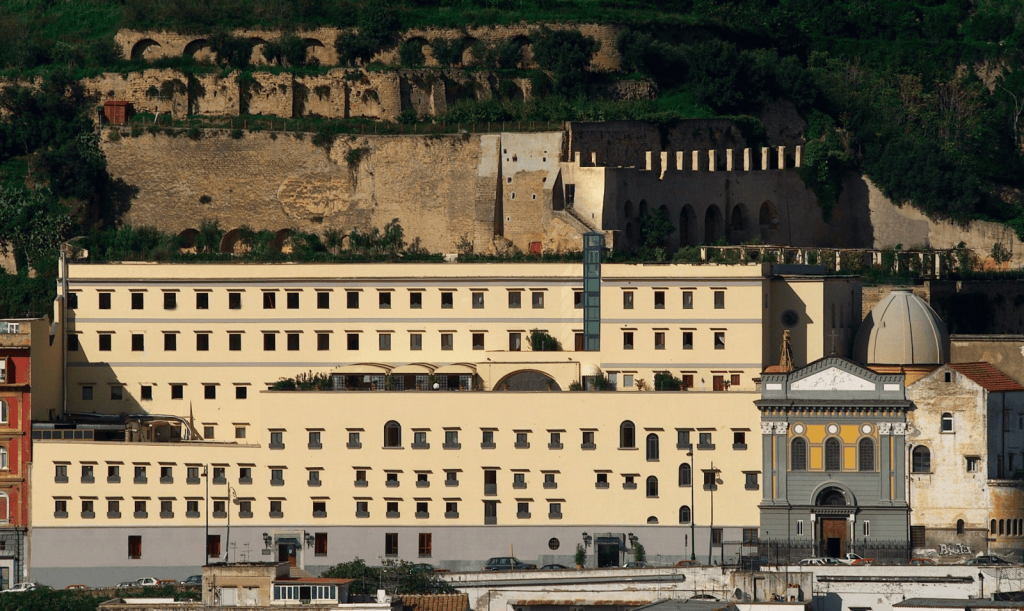
Perched on the slopes of Naples, San Francesco al Monte which can be seen from everywhere around Naples, is a remarkable 16th-century monastery transformed into one of the city’s most atmospheric hotels, with panoramic views. Set at the foot of the hill leading up to Castel Sant’Elmo and the Certosa di San Martino, its historic setting is as compelling as the views, while the Corso Vittorio Emanuele funicular is just a two-minute walk away. More than simply a hotel, San Francesco al Monte is a wonderfully evocative retreat in which Naples’ history, landscape and unmistakable atmosphere come together.
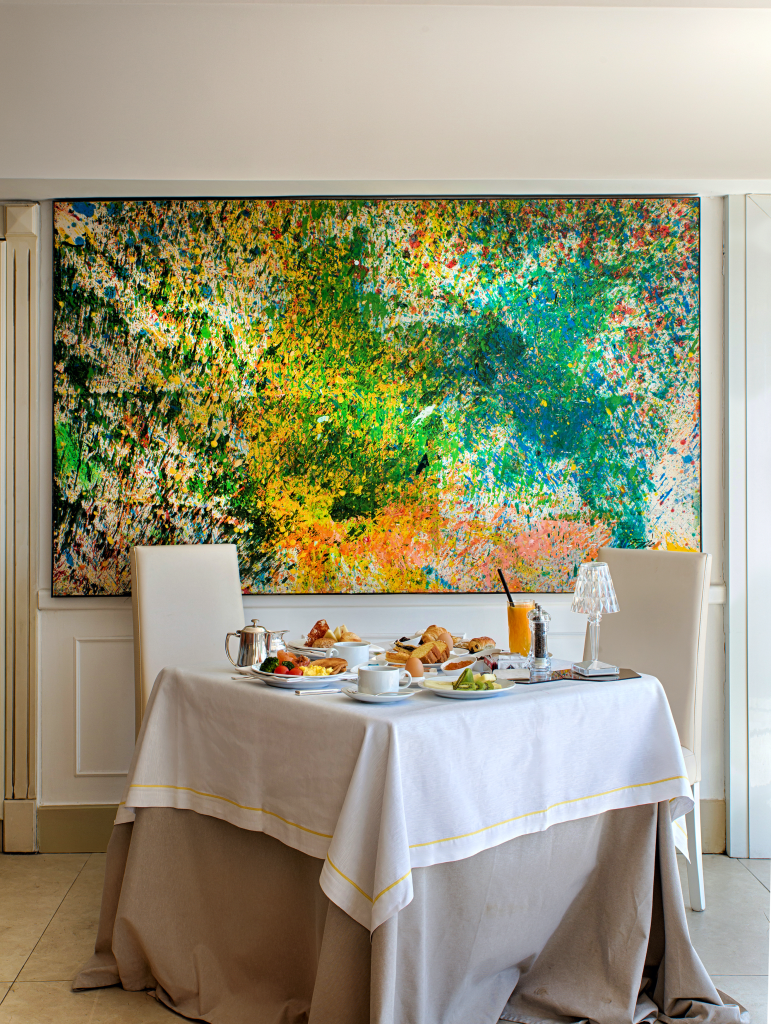
The spectacular hotel feels cut from the same landscape: 45 rooms occupy what were once monks’ cells; a swimming pool is carved into the volcanic rock once walked by the friars; and on the third floor, a chapel recalls the story of a beatified saint said to have grown apricots there in winter. The rooms are suffused with the same sense of place, each opening onto the bay and Vesuvius beyond, while offering all the comforts expected of a contemporary stay. A highlight is the seasonal panoramic garden and pool, where the city and sea unfold below, while breakfast is served in La Terrazza dei Barbanti on the fourth floor, with Mediterranean cuisine continuing through lunch and dinner.
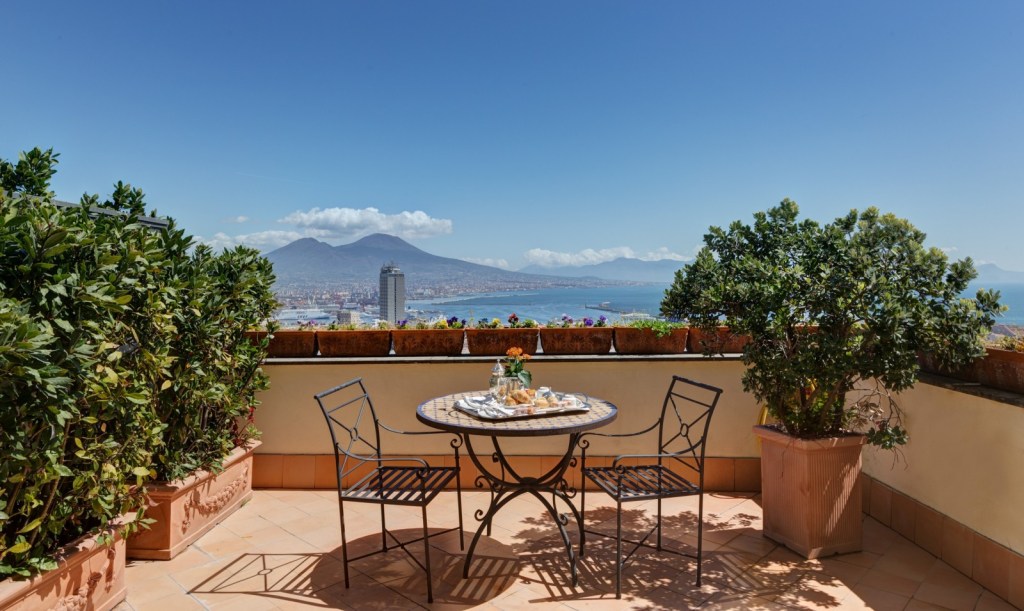
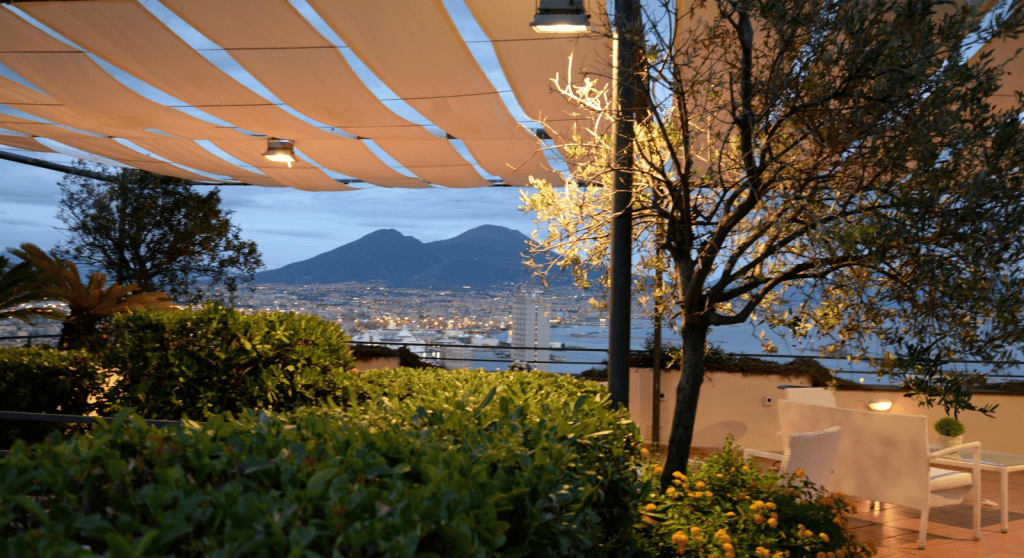
For five centuries, the building has lived several lives, hermitage, monastery, ruin and, today, four-star hotel, and somehow wears them all at once. But it is the view that completes the experience. From San Francesco al Monte, Naples falls away towards the bay, with Vesuvius rising beyond it: an extraordinary panorama that makes this, without doubt, one of the city’s most memorable hotel views.
The impressive building sits on the hill of San Martino, the green shoulder that rises above the chaos of central Naples, and it began, in the 16th century, with a single act of retreat. Friar Augustine Miglionico, one of the Franciscan “Barbanti”, so nicknamed for the beards they refused to trim, carved himself a cell into the hillside, in a spot then known simply as “the mountain.” What grew up around him over the following centuries became the monastery of Santa Lucia al Monte: a church, a frescoed refectory, a room still called the Hall of the Oven, chapels folded into unlikely corners of the rock. Today the most wonderful weddings are still celebrated in this iconic place.
“Art Hotel San Francesco al Monte is a property with a remarkably distinctive identity, shaped by its extraordinary past,” says Marianna Sarno, the hotel’s Commercial and Marketing Director. “Housed in the former left wing of the ancient monastery of Santa Lucia al Monte, the hotel was born from the sensitive restoration of a 16th-century religious complex overlooking the city of Naples. The project, led by architect Luciano Raffin, was conceived with the intention of preserving the soul of the building while giving it a new life as a place of hospitality, art, and contemporary comfort.”
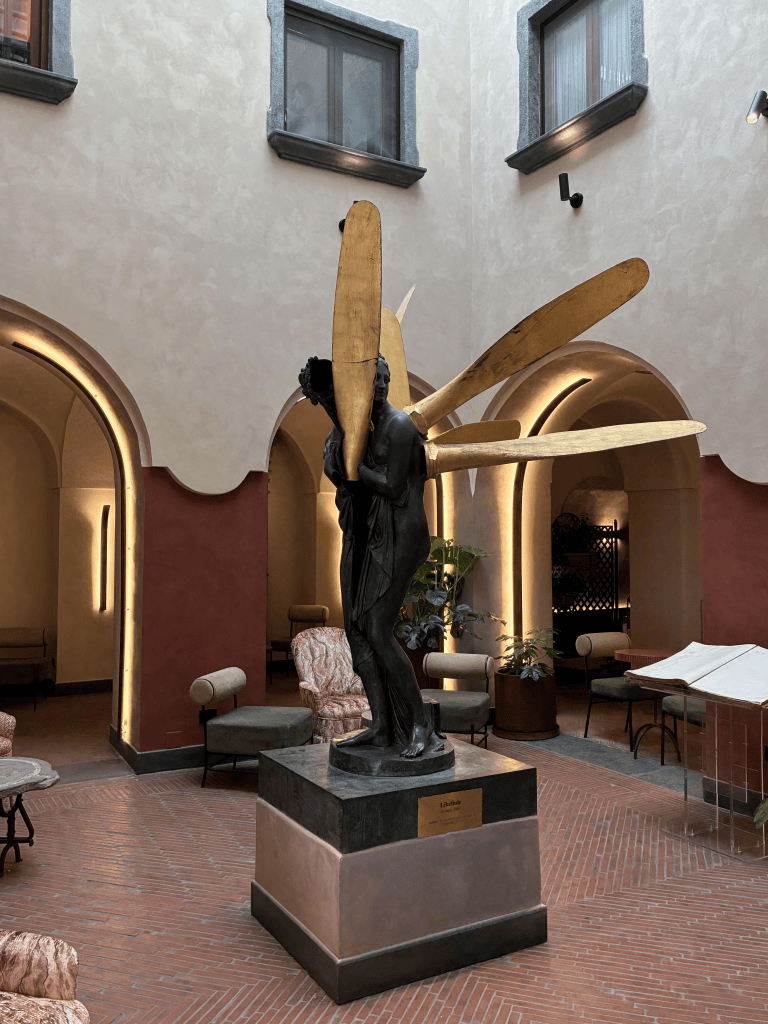
Hotel San Francesco Al Monte may well be Naples’ most distinctive art hotel too, where art is not simply an added flourish but an essential part of the identity and atmosphere of the place. That sense of creativity begins the moment you step into the lobby.
At its centre stands Arman’s spectacular Libellule (1997), a monumental sculpture that brings together gilded boat oars and a classical Venus figure. It is an extraordinary introduction to the spirit of Naples itself: classical and contemporary, theatrical and slightly surreal, with a distinctly Mediterranean love of gold and spectacle. This work is a statement.
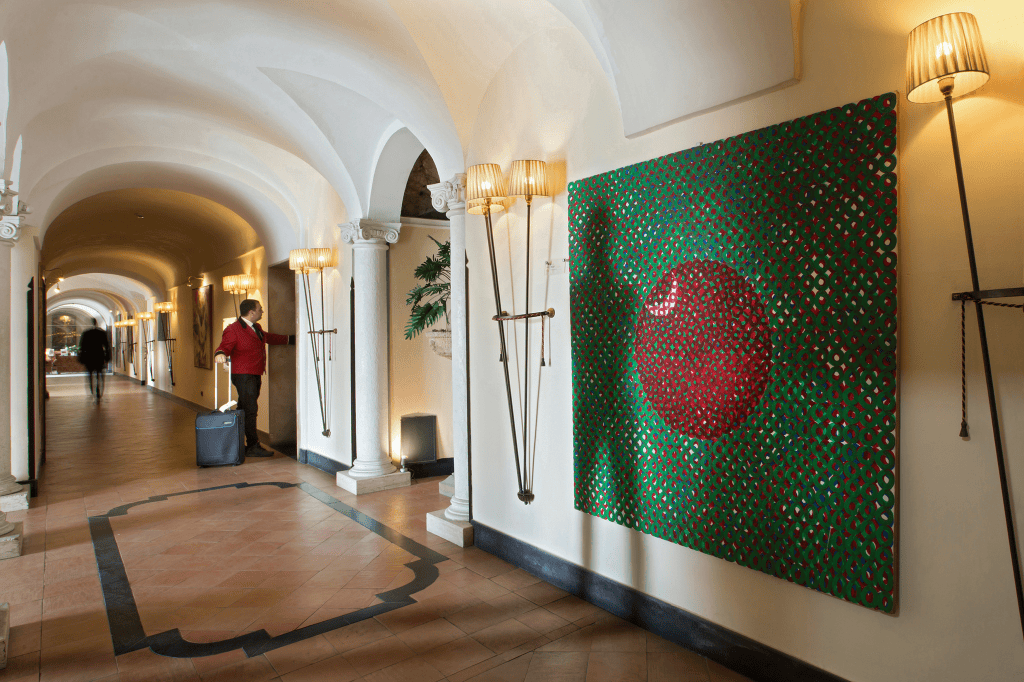
Developed in collaboration with Naples’ Morra Foundation, the collection continues from the lobby to the third floor, bringing a distinctly contemporary visual language into dialogue with the monastery’s history. Works including paintings and drawings by Hermann Nitsch, Shozo Shimamoto, Paul Renner and Nanni Balestrini sit alongside artists from Naples including by Renato Barisani, Carmine Di Ruggiero, Augusto Perez, Gianni Pisani, Errico Ruotolo and Domenico Spinosa. Nearby, Vettor Pisani’s vibrant blue bust adds another arresting note, its intense colour and surrealist character offering a distinctly Italian counterpoint to Arman’s golden monument. Each work is accompanied by a QR code offering context, a useful addition in a building where the walls themselves already have several centuries’ worth of stories to tell.
Fondazione Morra is one of Naples’s leading centres for contemporary and experimental art, founded by Giuseppe Morra and rooted in the pioneering Studio Morra, established in 1974. The partnership with Hotel San Francesco al Monte is therefore organic. Its programme has been closely associated with movements such as Viennese Actionism and Fluxus, and artists including Marina Abramović and Allan Kaprow, continuing today through exhibitions, performance, research and archives.
The result is less a hotel with an art collection than a building in which art has become part of the architecture of the experience. The old and the new continually sharpen one another. “The hotel’s visual and artistic character also makes it especially suited to creative work,” Marianna notes. “Its terraces and historic interiors have long inspired interest from the worlds of fashion, media, and image-making. The property’s enduring appeal lies in its ability to offer not just a stay, but a setting with real narrative power.”
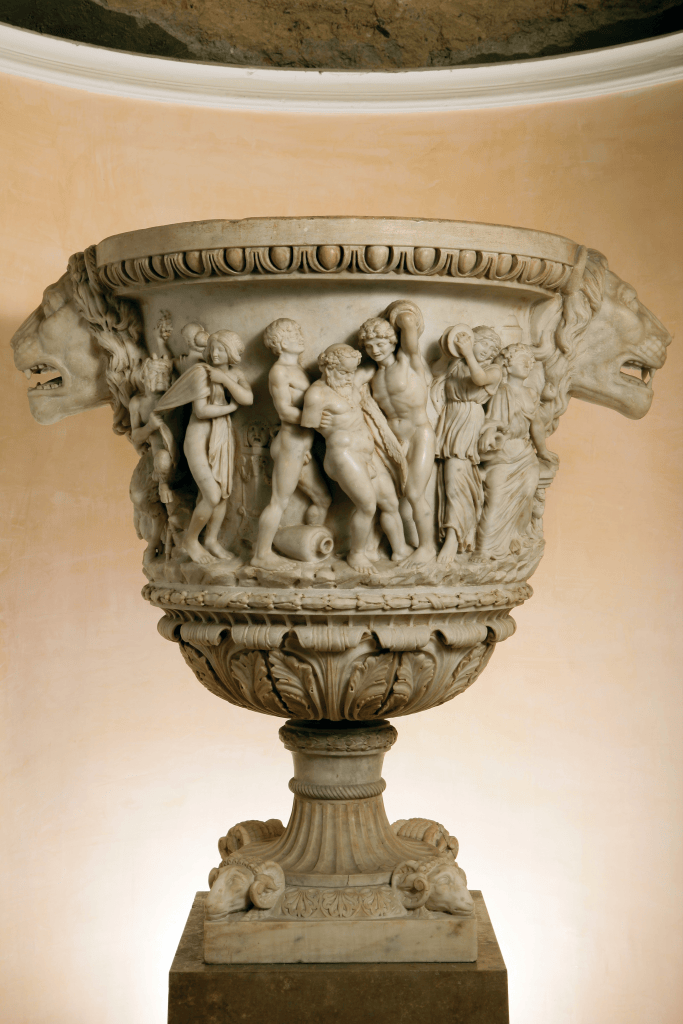
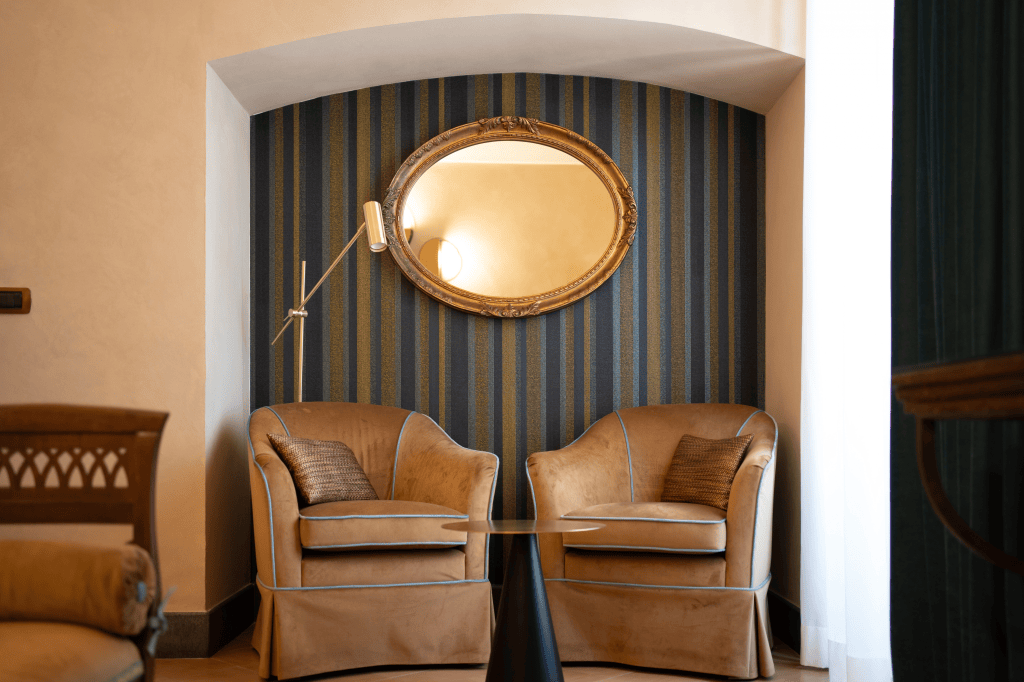
The lobby is captivating, an elegant, atmospheric space layered with art and design. Touches of pink appear in the upholstered chairs, while green accents, religious votive objects, art and fashion books, and an impressive ancient Roman vase create a richly eclectic setting. The architecture retains the character of the former monastery, with exposed brick and historic details beautifully illuminated to bring out their texture and depth. The chequered blue-and-white glass roof introduces a subtle wash of colour to the space, while the shifting natural light brings the pattern to life, giving the room an airy, luminous quality. Large-scale mirrors add another layer of glamour to the waiting areas, while glass vitrines display jewellery and pieces from Neapolitan brands, turning even the quieter corners of the hotel into miniature showcases of local craftsmanship and Monica Vitti style.
There is a wonderful sense of luxury here, but it never feels formal. Instead, the combination of art, history, colour and texture creates a warm, theatrical and unmistakably Neapolitan welcome. The discreet staff add to that feeling, offering service that is warm, professional and genuinely welcoming.
That intention reveals itself less through grand gestures than through a succession of small discoveries: a fragment of fresco hovering above a doorway; a strip of old majolica tile running through a corridor; a ceiling whose centuries have not been entirely smoothed away. Nothing feels reconstructed for effect. Instead, the building seems to have been allowed to carry its age openly, with its various lives sitting one on top of another.
“The inspiration behind the hotel lies precisely in this dialogue between heritage and transformation,” Marianna says. “Its spaces still retain the quiet dignity of the monastery, while its interiors, atmosphere, and artistic presence create a refined and contemporary interpretation of Neapolitan hospitality. Rather than simply preserving history, the hotel allows guests to experience it in a living, layered, and deeply authentic way.”
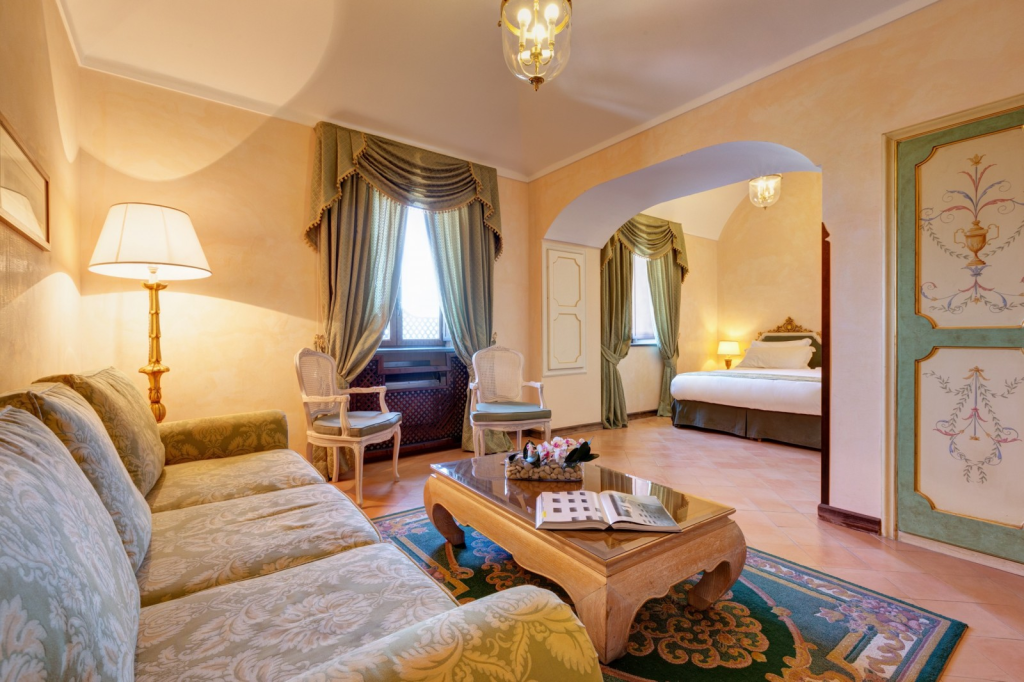
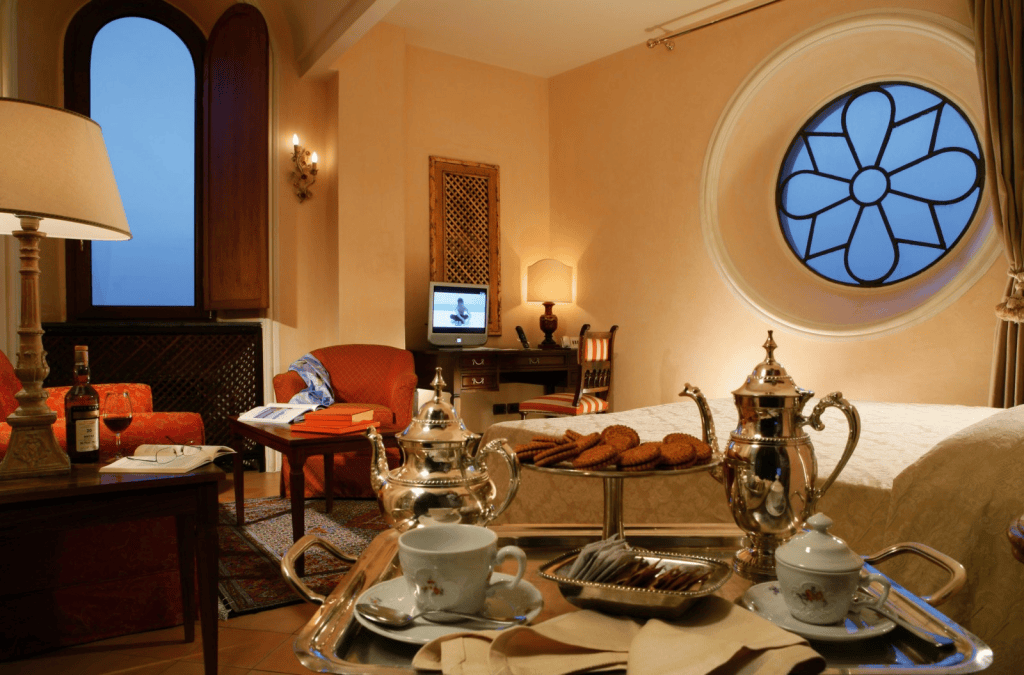
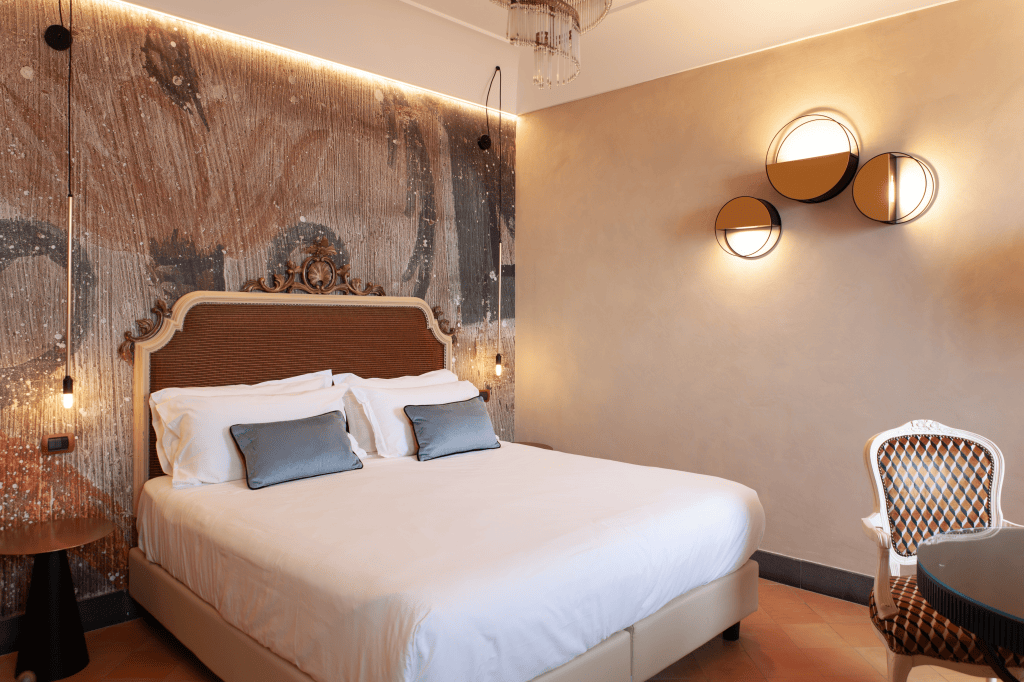
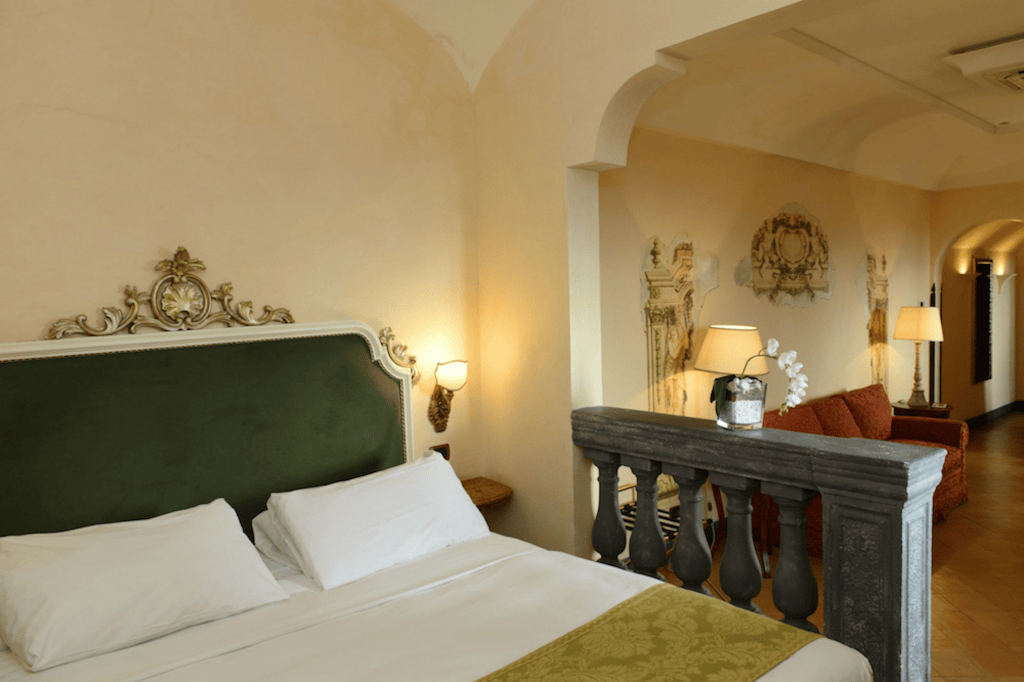
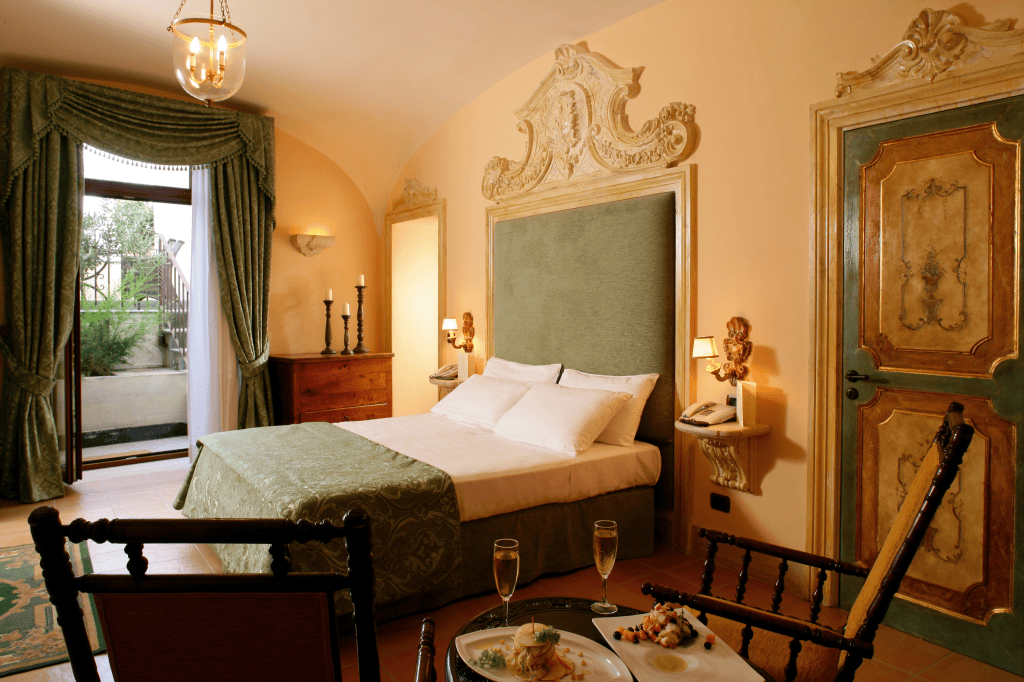
Nowhere is that philosophy more apparent than in the rooms, which are, in essence, the monastery’s original cells, albeit transformed with contemporary comforts, considered decoration and a considerably more generous understanding of what a bedroom should be. All 45 retain the proportions and footprint of their monastic predecessors, which means that no two are quite alike. Many look across the Bay of Naples towards Vesuvius and Capri, turning what might once have been a contemplative view into one of the city’s great visual pleasures. Three rooms come with private terraces and easy access to the restaurant.
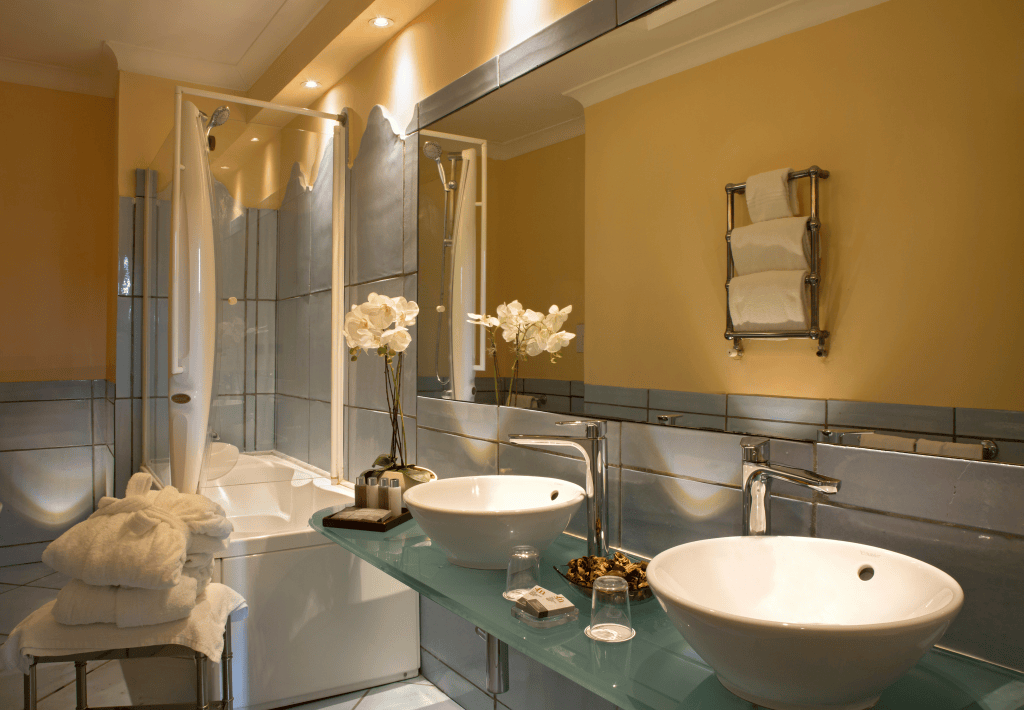
The décor is wonderfully grand and full of character, with ornate detailing above the beds, spectacular marble fireplaces, beautifully crafted furniture and sculptures, colourful glass windows, some depicting Vesuvius itself. Original frescoes, carefully preserved across the walls and ceilings, add an extraordinary sense of history and give each room its own distinctive atmosphere. Yet this historic richness is paired with every modern comfort, from discreetly hidden fridges and exceptionally deep mattresses to thick towels and luxurious toiletries. The colour palette is quintessentially Italian, with warm beige, rich burgundy and touches of pistachio green in the curtains. It is this delightful marriage of rustic charm and contemporary comfort that makes the hotel so appealing: historic, richly atmospheric and unmistakably Italian, yet thoroughly comfortable for today’s traveller.
The effect is subtle but persuasive: this is a hotel that has not tried to forget what it once was. Its logistics, stairs, design and rhythms have instead been built around that memory. The old architecture dictates the experience rather than serving as a decorative backdrop to it.
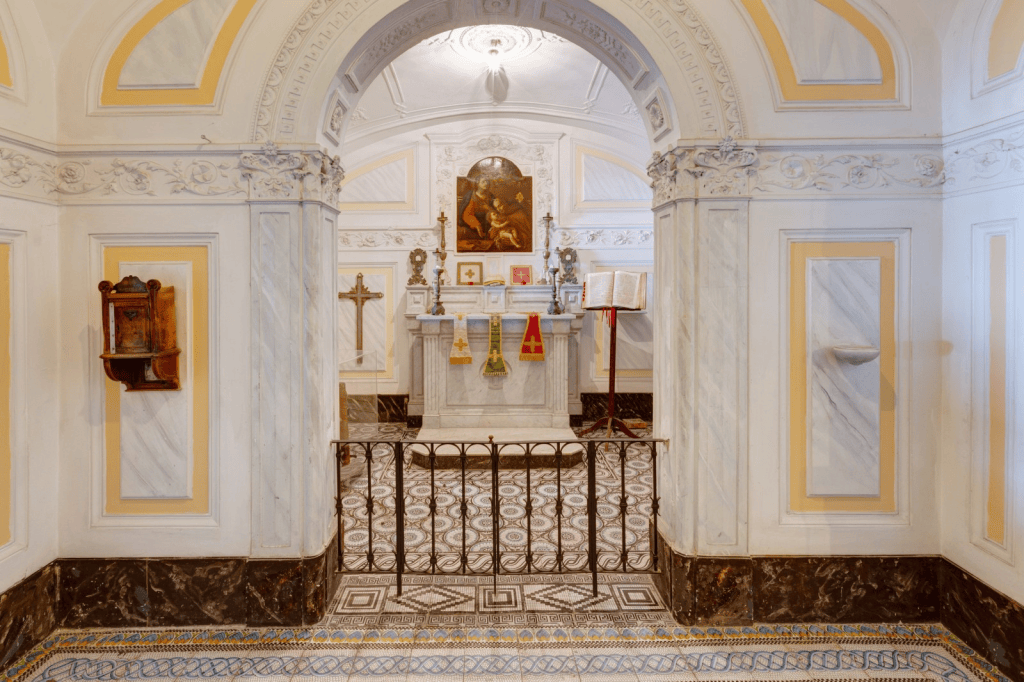
One cell, however, was never intended for sleeping. On the third floor is the tiny room where the friar Giovan Giuseppe della Croce spent the final twelve years of his life. It is scarcely larger than a bedroom and is associated with a reputed miracle in which apricots were said to have ripened around him in the depths of winter. He was beatified in 1789, and that same year his cell was transformed into a votive chapel. Of all the rooms in the monastery, it is perhaps the most interesting: profoundly quiet, with none of the theatricality that usually accompanies a historic space. Only in Italy!
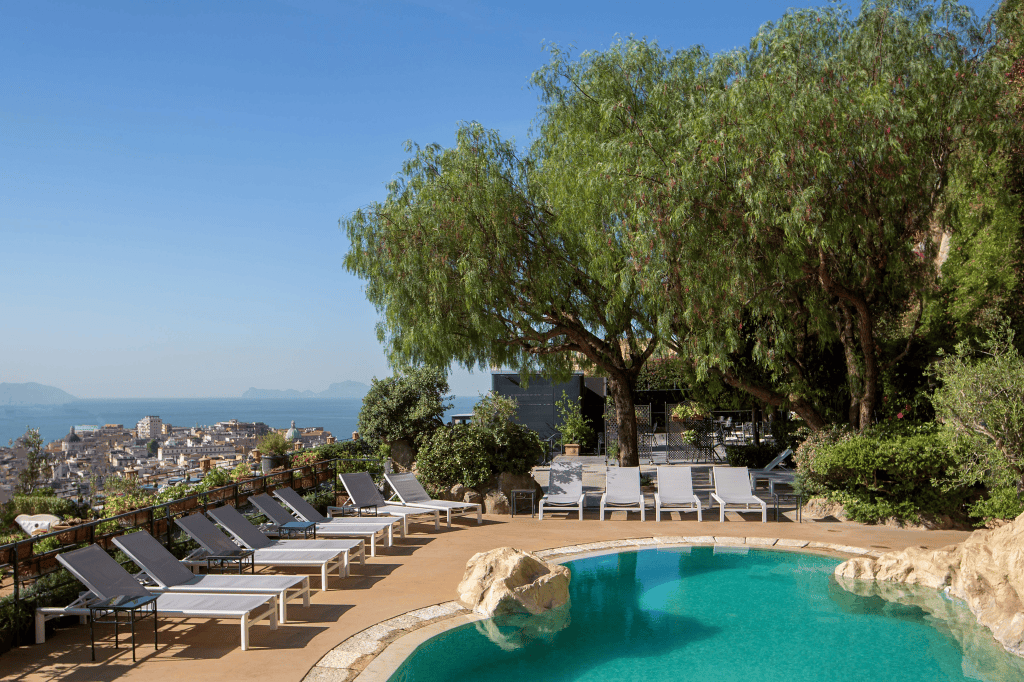
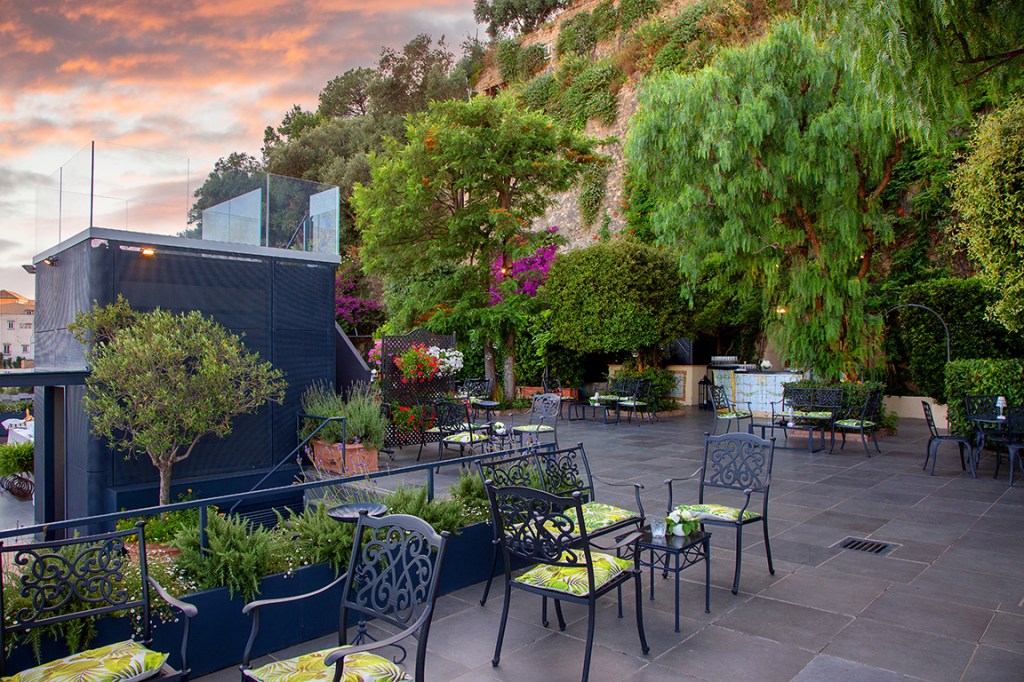
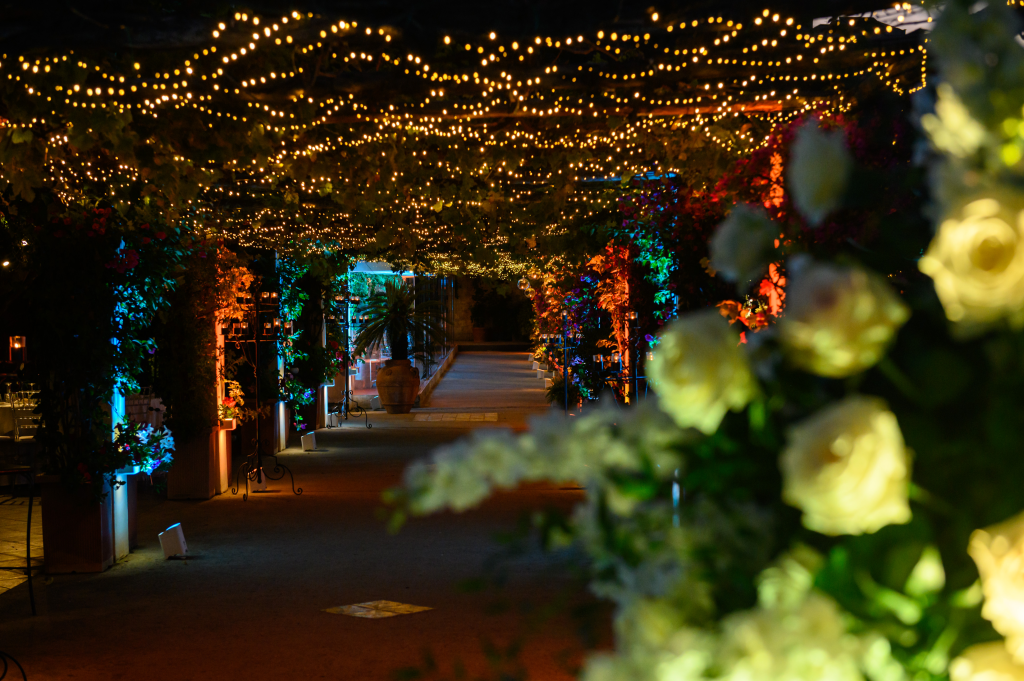
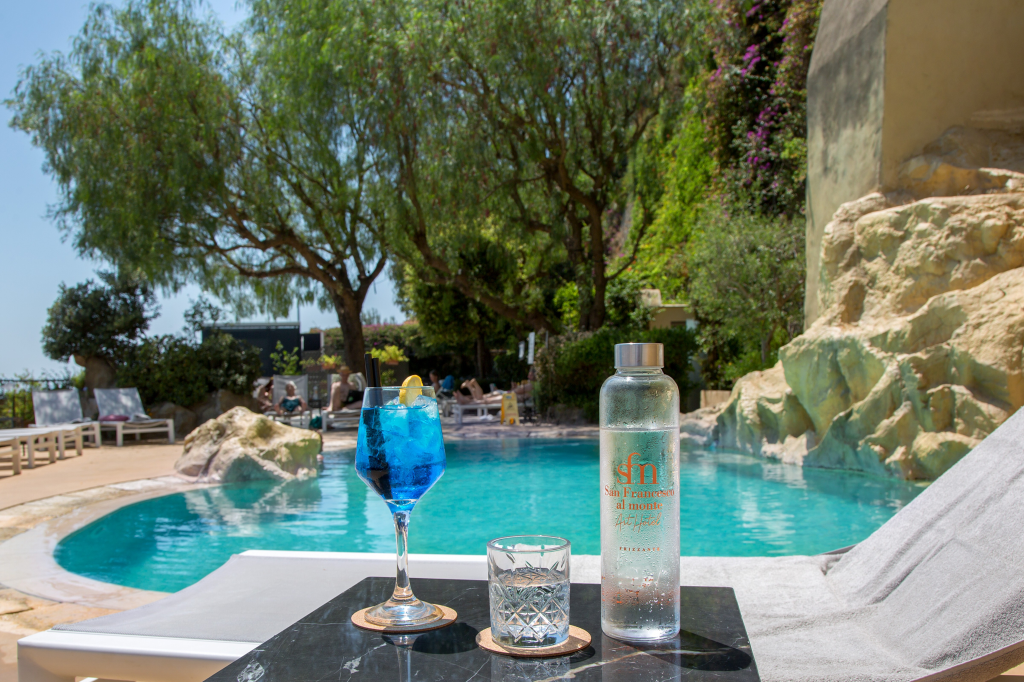
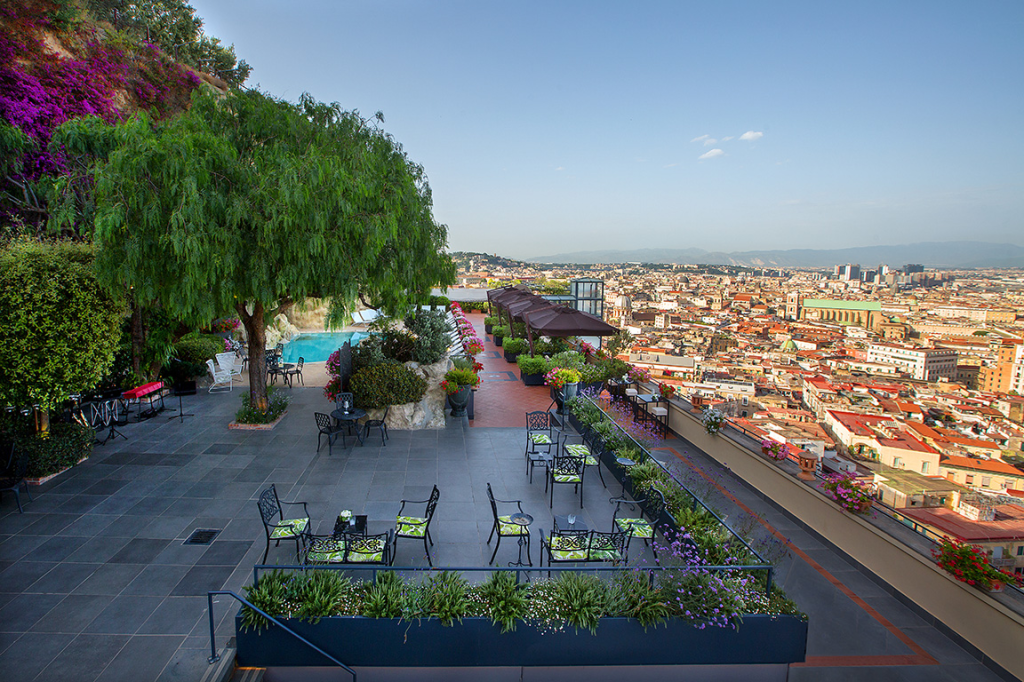
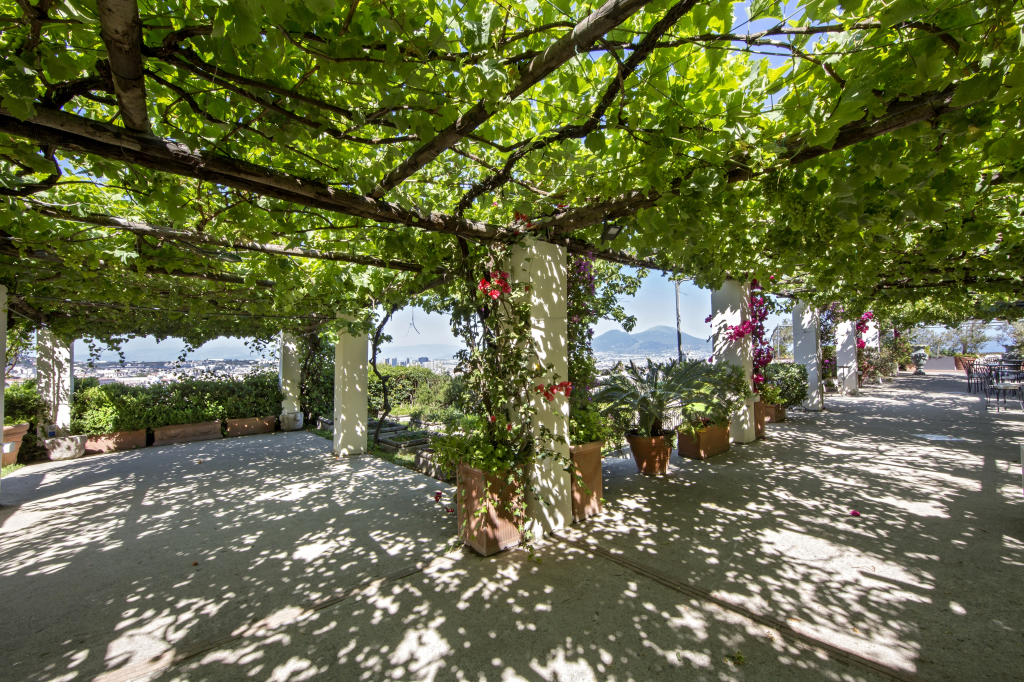
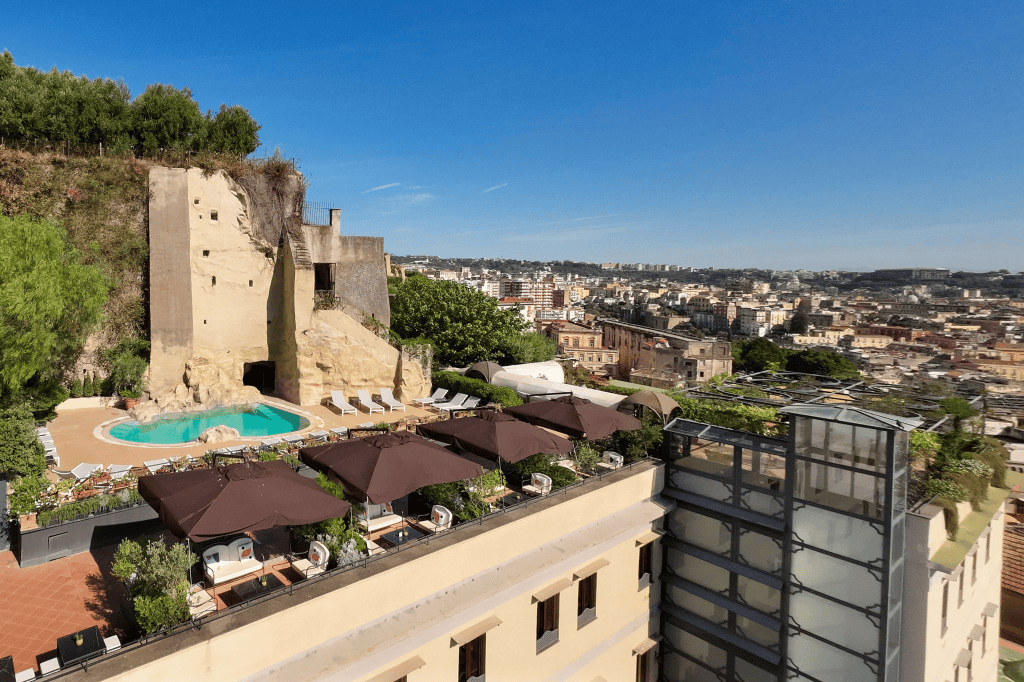
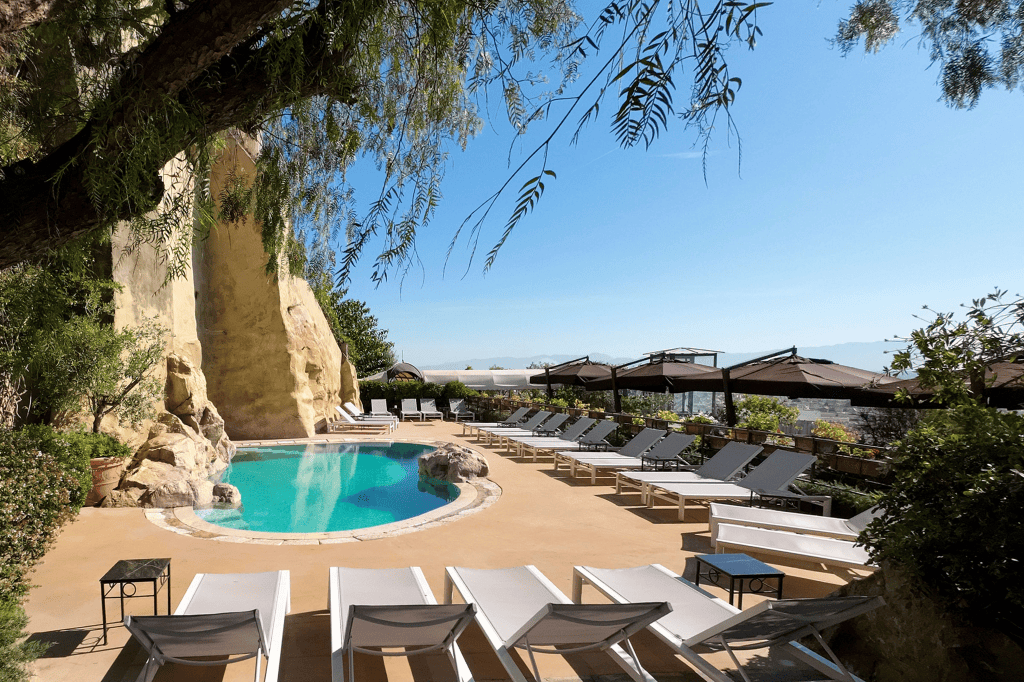
Literally the hotel’s crowning glory, and perhaps the most spectacular expression of its relationship with Naples, the roof terrace and floral cushions, is fantastic. From 15 May to 25 September, what were once the friars’ orchards are transformed into a lush garden, pool and open-air retreat, with pergolas, vines and abundant greenery preserving something of the site’s agricultural past. The setting is simply breathtaking. On one side, the Gulf of Naples opens out towards Vesuvius and Capri; on the other, the Vigna di San Martino, the Certosa and Castel Sant’Elmo rise across the hills. Below, Naples unfolds in all its extraordinary beauty: a dramatic tapestry of deep blue water, volcanic rock, church domes and densely packed rooftops.
It is an exceptional place to begin the day. Breakfast, served with the entire city spread out before you, becomes an experience in itself, one of those rare hotel moments where the setting is every bit as memorable as what is on the plate.
Even the swimming pool feels inseparable from the building’s geology. It is carved directly into the tuff from which the monastery itself was constructed, giving the impression that it has been excavated rather than installed. At Il Vigneto, the restaurant, lunch comes with the same panorama, while a seasonal pool bar takes care of something cold afterwards. The view, naturally, remains the best accompaniment.
Everything else operates with the quiet efficiency expected of a serious hotel: a 24-hour reception and concierge, two lifts, one panoramic, a solarium terrace, two restaurants and two bars. Dogs and cats are welcome, too, which seems fitting for a place that has retained something of the informality of a lived-in house rather than adopting the preciousness of a museum.
Increasingly, it is also becoming one of Naples’ more distinctive places to get married. The hotel accepts only one wedding per day, giving a single couple and their guests the run of the property rather than dividing it between competing celebrations. The choice of setting is unusually broad: a panoramic terrace, the rooftop pool garden or the Antico Refettorio, olive trees and gorgeous plants, the frescoed former refectory where people have been gathering around tables, in one form or another, for five centuries.
The scale can remain intimate or expand considerably, with capacity for up to 210 guests indoors and 400 outdoors. Couples wanting to make the entire day part of the same story can marry in the church of Santa Lucia al Monte itself, still within the original monastery complex, before moving directly to the reception without leaving the grounds. An affiliated garage with 60 spaces and a complimentary shuttle take care of the less romantic logistics. The rest is left to the couple: sky, sea, Vesuvius and five centuries of stone providing the backdrop. There are worse places to say yes.
That combination inevitably attracts a particular kind of guest. “Our typical guests are discerning travellers who value character, beauty, and a strong sense of place: culture lovers, couples, design-minded visitors, and international guests seeking an experience that feels distinctly Naples,” says Marianna. “What creates such loyalty is the unique combination of atmosphere, panoramic views, heritage, and the feeling of staying somewhere that is not only elegant, but also emotionally resonant. Many guests return because the hotel offers something rare: a sense of intimacy within a setting of real historical depth.”
Asked to distil the hotel’s character into a phrase, Marianna returns to the idea that runs through everything here: “If I were to define the soul of the hotel in a few words, I would say it is the harmony between memory and elegance. Its greatest strength lies in the combination of elements that define it: the historic architecture, the artistic identity, the comfort of its spaces, and the exceptional location overlooking the Gulf of Naples.”
Her recommendations beyond the hotel divide naturally between a first encounter with the city and a return visit. For newcomers, she suggests the historic centre, Via Toledo, the Royal Palace, Teatro di San Carlo and the Spanish Quarters, an efficient introduction to the Naples of palazzi, churches, theatres and street life, all within easy reach of the hotel.
For a second visit, she recommends going deeper and quieter: the church and kiosk of Santa Maria La Nova, an architectural treasure in Piazza Santa Maria la Nova, in the heart of the historic centre, whose layers of history have made it something of a repository of Neapolitan mysteries. For guests interested in looking beyond the obvious, the hotel can arrange a private visit with Professor Giuseppe Reale.
Naples is not short of hotels with spectacular harbour views, nor of newly renovated interiors designed to photograph beautifully. What it has here is something harder to manufacture: a building that has genuinely lived several lives.
The art collection makes a difference, too. It prevents the hotel from becoming an exercise in nostalgia, giving the old monastery another life rather than simply embalming the one it had. Perhaps that is why the hotel feels so particularly Neapolitan. Naples has always allowed its past to exist alongside the present, and the hotel embraces that same spirit. It does not attempt to make five hundred years feel seamless; instead, it lets the contrasts and traces of history remain visible, giving the whole place a character that feels both authentic and beautifully lived-in.
To prolong your stay in Italy, the group behind Hotel San Francesco Al Monte has two other distinctive addresses, each offering a very different way into the character of Campania. Near Benevento, La Locanda della Presuntuosa is a secluded country house set within six hectares of olive groves, orchards and woodland, with a pond, tennis court and swimming pool lending it the unhurried air of a private rural retreat. At its heart is Il Chiostro, a 280-square-metre villa for up to eight guests, with four double bedrooms, each with its own bathroom, a living room centred around a fireplace, and a kitchen and dining room. The pleasure here is in slowing down: wandering beneath the olive trees, lingering beside the pool and, on request, sitting down to dishes of traditional Campanian cooking prepared with local ingredients and served in the garden or beside the water. Back in Naples, La Nova Bed & Museum offers something altogether different: a chance to sleep within the extraordinary Monumental Complex of Santa Maria La Nova, an Angevin landmark dating to 1279 in the heart of the city. Rooms marry contemporary comforts with the atmosphere of the historic building, creating the rare sensation of staying not merely near Naples’ history but inside it.
For now, book your Autumn break at the incredible San Francesco al Monte Hotel.
–
Thank you to Marianna and the whole team at Hotel San Francesco al Monte.

