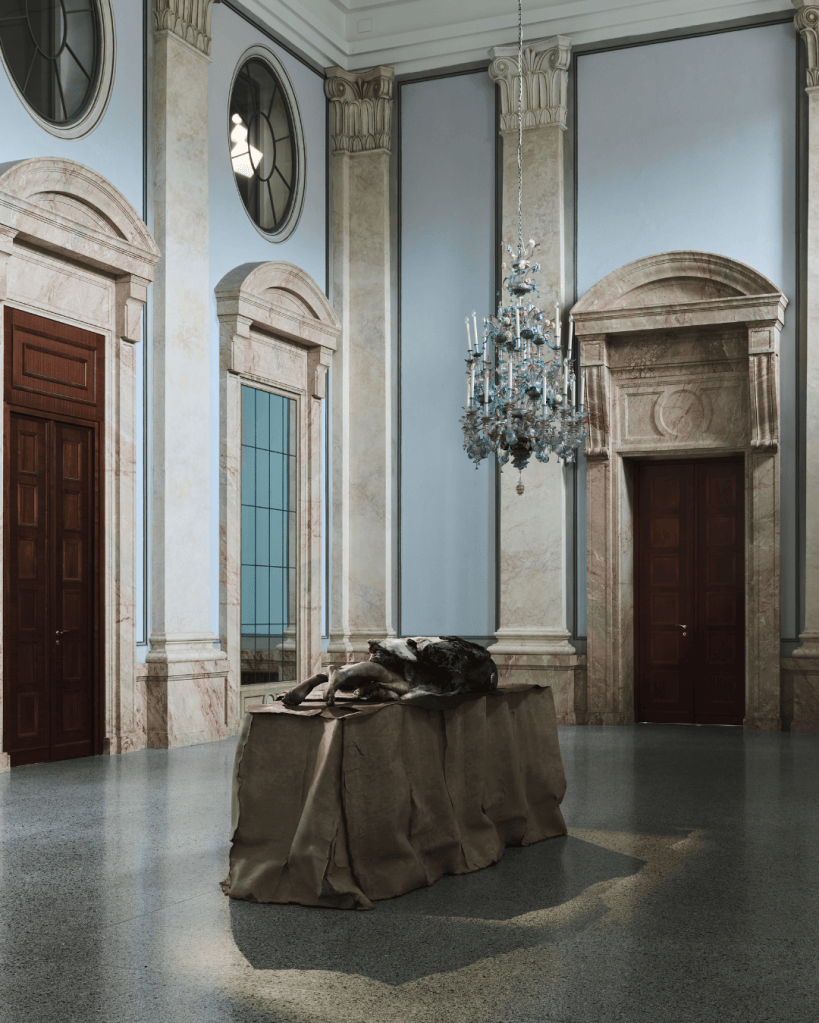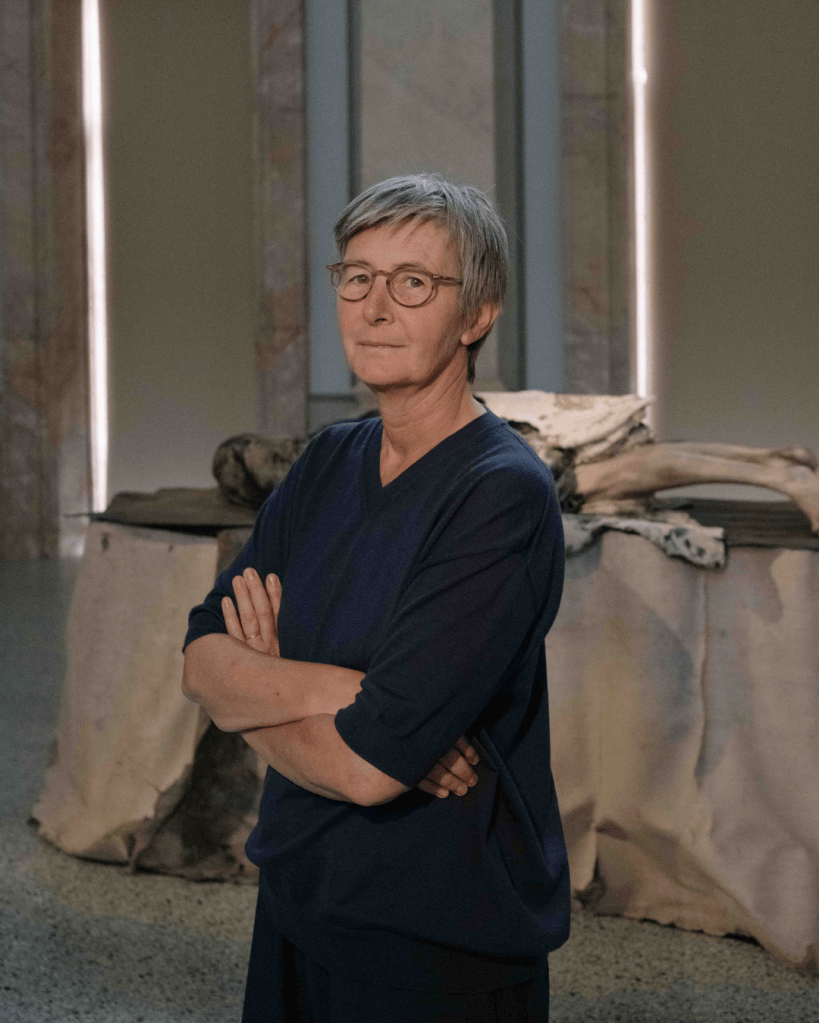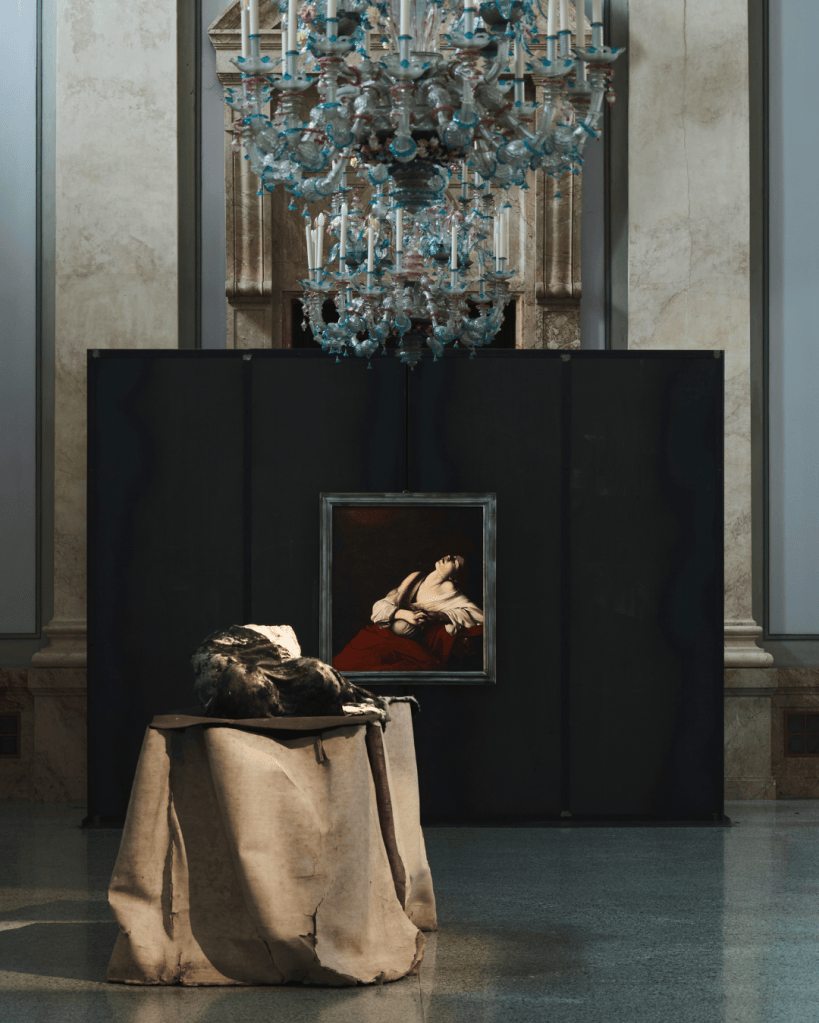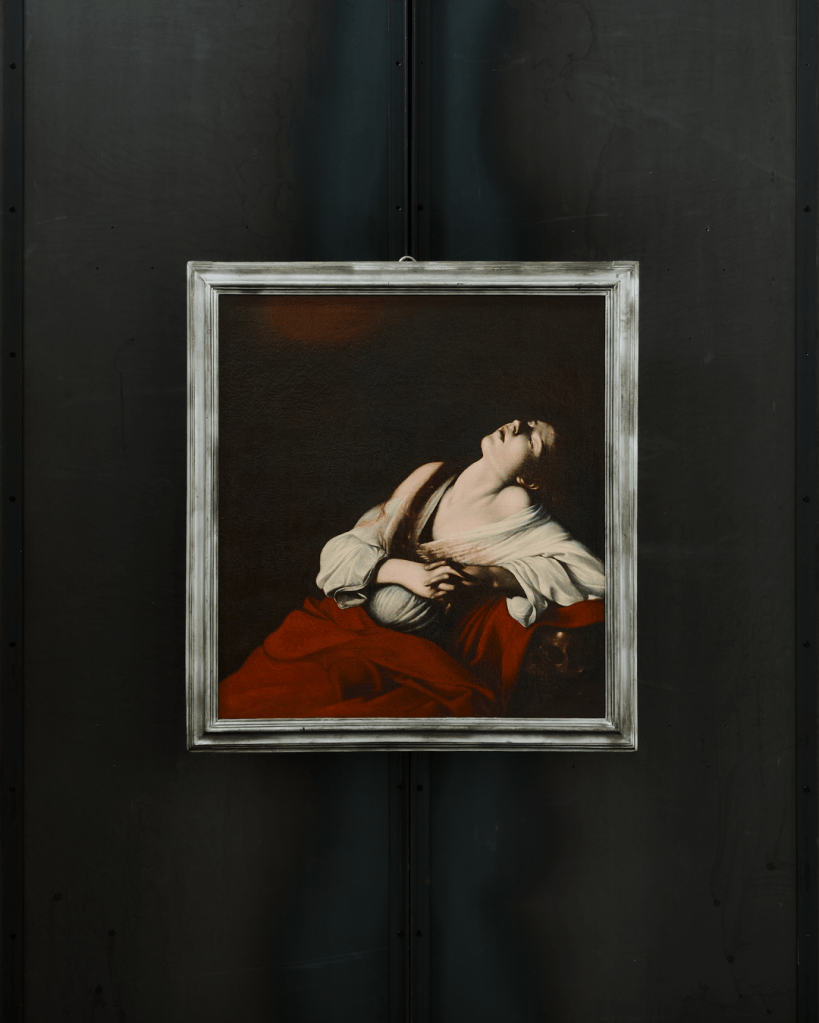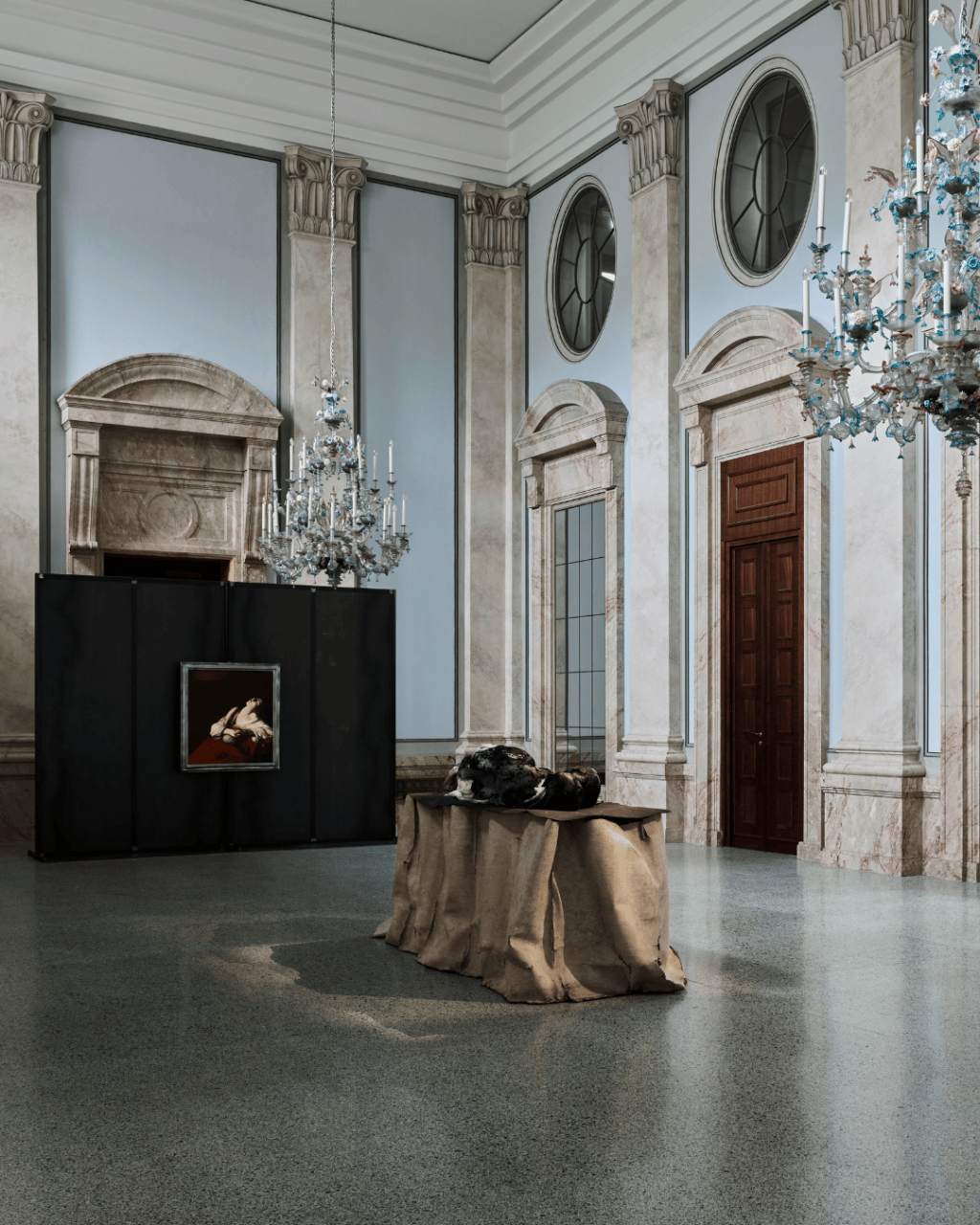
In Berlin, there’s a remarkable encounter between two visions of the human body, four centuries apart. Caravaggio’s Mary Magdalene in Ecstasy (c. 1606) is being shown publicly in Germany for the first time, in dialogue with M.M. MMXXVI, 2026 — Maria Magdalena 2026, a newly commissioned sculpture by Berlinde De Bruyckere.
Painted in the year Caravaggio fled Rome, Mary Magdalene in Ecstasy belongs to his late, stripped-back manner. Almost everything has been removed: there is no elaborate setting or symbolic attribute, only a figure emerging from darkness. Her head falls back, her hands are loosely clasped, her body suspended between surrender and consciousness. Rather than depicting a biblical episode, Caravaggio captures a state in which spiritual rapture and human vulnerability become inseparable.
Working from the model and with strong directional light, the artist gave sacred subjects the bodies and faces of ordinary people, bringing religious painting firmly into the observable world. His Magdalene feels less like a distant saint than a living, breathing presence, caught in a moment beyond time.
Four centuries later, De Bruyckere approaches the same figure through the physical language of matter. M.M. MMXXVI brings together the initials of Maria Magdalena and the year of the sculpture’s creation. Made from wax, linoleum, hair and wood, the work carries traces of touch, weight and time. The body and its support become one: the pedestal is torn, darkened and folded into pleats, evoking both draped cloth and wounded flesh. Dark marks on the heels suggest a long journey and a body pushed towards the limits of endurance.
Placed together, the two works return to a shared question: how can the vulnerable body express devotion, transformation and grace? Caravaggio finds it in skin, shadow and light; De Bruyckere in weight, texture and the physical memory of matter.
Presented within a diplomatic residence rather than a museum, the encounter feels intimate and deliberately unexpected, a temporary conversation between centuries, materials and beliefs, held together by the enduring figure of Maria Magdalena.
The exhibition remains on view until 25 September 2026.
–