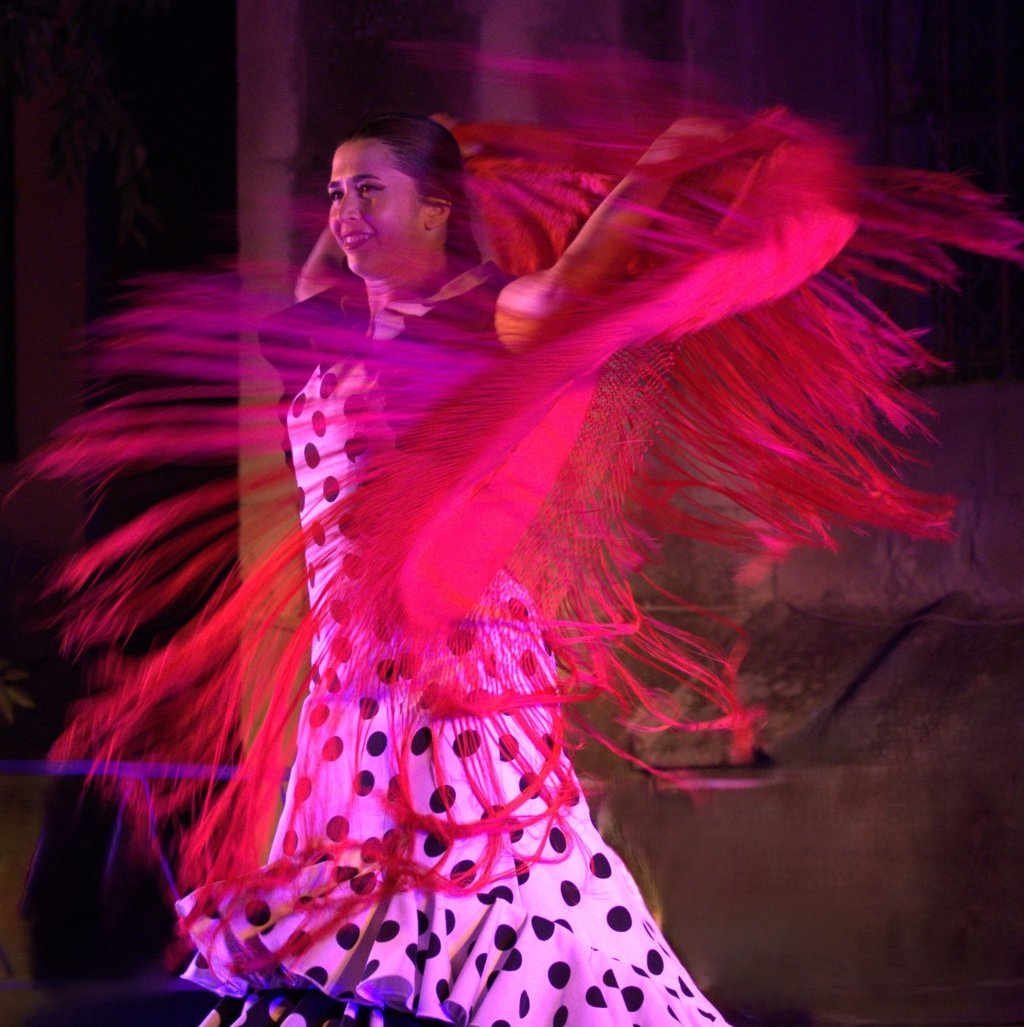
In Arles, flamenco belongs to the fabric of the city. The music, dance and rhythms of the Gitano community have been part of the cultural landscape and the wider Camargue for generations.
FlamencA, led by visual artist José Manrubia, which returned this summer for its ninth edition, is a continuation of a story that runs deep through the wonderful Arles. And then there are las ferias. In Arles, the tradition has a very strong local equivalent through the city’s two annual ferias: the Feria de Pâques in spring and the Feria du Riz in September. These are popular celebrations centred on bullfighting and Camargue traditions, but they also fill the city with music, dancing, bodegas, street festivities and performances.
José Manrubia, born in Barcelona to Andalusian parents and raised in Arles, has spent his life at the crossroads of Spanish and French culture. A former bullfighter who performed in major arenas in Spain, France and Mexico, he later turned to contemporary art and became a passionate advocate for flamenco. He founded FlamencA Arles, bringing leading flamenco artists to the city and creating a cultural bridge between Arles and Andalusia. His work reflects the deep connection between flamenco, bullfighting, art and the Spanish traditions that have become part of the city’s cultural identity.
That story of has some extraordinary characters. Manitas de Plata, born Ricardo Baliardo, grew up in the Gitano community of the Camargue and became one of the world’s most celebrated flamenco guitarists, bringing the music of Arles to international stages. His friendship with the Arles photographer Lucien Clergue was equally significant. Clergue photographed the local community extensively, documenting its musicians, rituals and celebrations, while helping introduce figures such as José Reyes to a wider artistic world.
José Reyes would become part of another remarkable chapter. His sons and relatives formed the musical dynasty that became the Gipsy Kings, transforming flamenco and Catalan rumba into a sound that travelled from the region to the world. Their story remains inseparable from Arles and from the musical traditions that shaped the city and expanding their talents to the world!
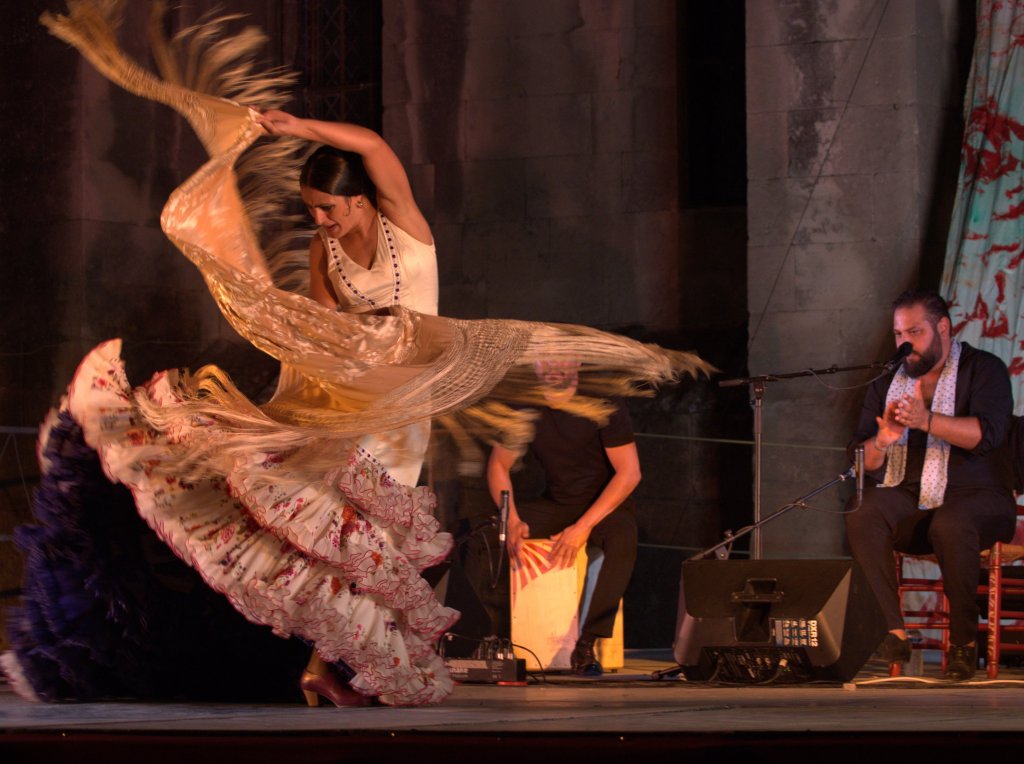
It is this sense of inheritance that makes FlamencA Arles so compelling. The 2026 edition, running from 29 July to 15 August, moved across the city rather than settling into a single venue. The spectacular Roman Theatre became an impressive setting for major performances, while courtyards, hotels, galleries and cultural institutions offer more intimate encounters. Flamenco is placed in dialogue with the architecture and history of the Roman city.
The 9th edition of the FlamencA Arles Festival brought together exhibitions, intimate guitar recitals, flamenco performances and major concerts across Arles. The festival’s larger performances took place in some of Arles’ most atmospheric venues, including the Ancient Theatre and the Cour de l’Archevêché. The festival opened with an exhibition featuring the winners of the 2nd International Flamenco Photography Competition, followed by a guitar recital with José de la Línea and José López. The programme continued with performances by artists including Maestro Antonio Carrión, Isabel and José Fernández, Melchior Campos and Manuel Gómez.
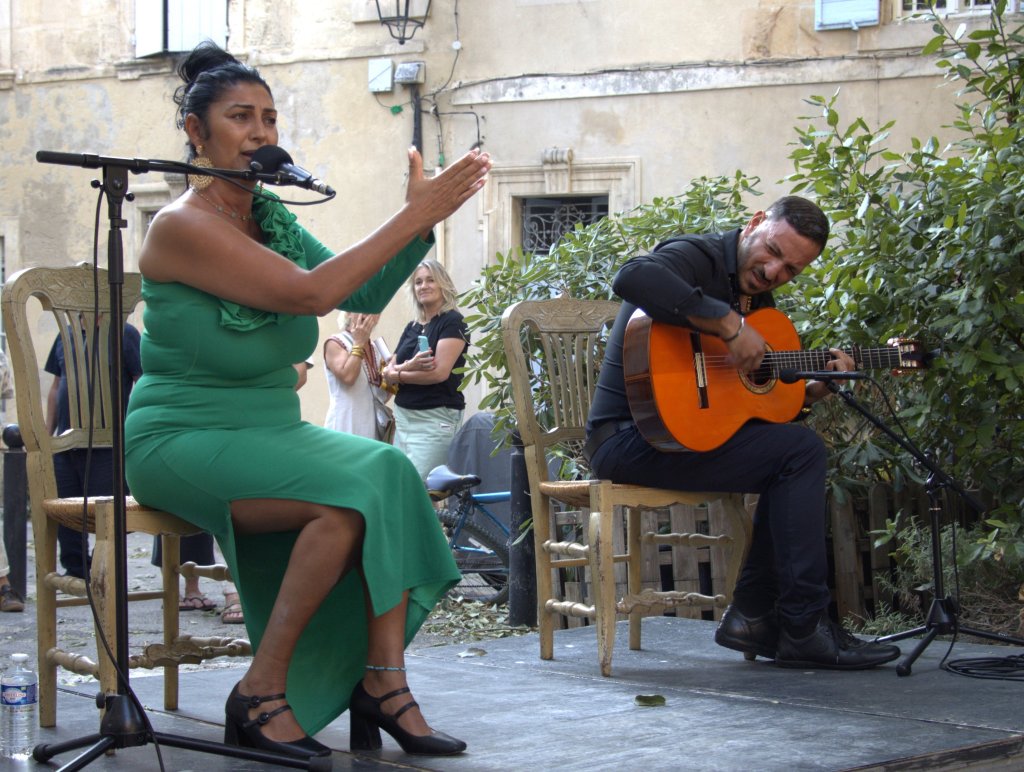
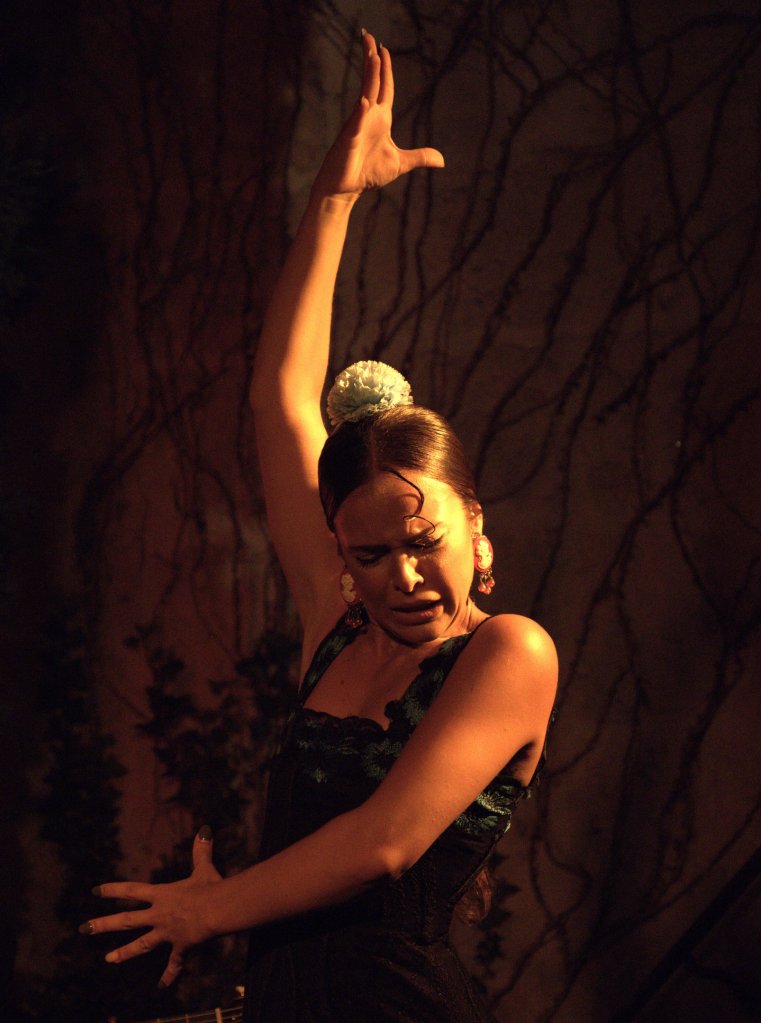
This year, dancer Macarena Ramírez brought Ocho palos, ocho letras to the Roman Theatre, while guitarist Jerónimo Maya offered a more intimate encounter with the tradition. There were tablaos, recitals and evenings dedicated to the many different forms of flamenco, from cante and toque to the exuberance of rumba.
On 13 August, the festival returned to the Roman Theatre for an evening dedicated to the musician and patriarch of the Reyes family, bringing together members of the family, Gipsy del Mundo and a new generation of performers. It was a celebration of musical heritage, but also of transmission: what is inherited, what is remembered and what is transformed.
Alongside the performances, the festival presented several exhibitions, including Portraits by Mexican artist Gerardo Villareal and the double exhibition Camarón y la Isla and CCDEF, 34 años de pasión. These coincided with the photo festival Les Rencontres. Intimate evenings at La Cour Cachée featured performances by Macarena Ramírez and Maestro Jerónimo Maya, as well as Flamenco Allegro, with Delya Sofia, Emilio Cortés and Leny Creff.
The festival concluded on 15 August at La Croisière with Magia del Duende, featuring Léa Delsol, Emilio Cortés and Juan Santiago, followed by an Electro-Flamenco Night until 2am with Gigi Safari, a rising name on the Parisian scene. A wonderful and cool way to close this year’s edition. An amazing and instructive introduction to the history of flamenco as a genre, presented by José opened the night in this great and edgy venue.
That tension between past and present is at the heart of FlamencA. Flamenco has never been a fixed language. Born from encounters between cultures and passed down largely through oral tradition, it has continually absorbed new influences while retaining its essential vocabulary of voice, guitar and dance.
In Arles, that evolution has a particular resonance. The city has long been a meeting point for artists, photographers, musicians and communities, The Van Gogh Foundation, the Lee Ufan Foundation and so many more spaces bring culture and tourism.
FlamencA continues that tradition. It brings together established names and emerging artists, performance and visual art, heritage and experimentation. Its programme extends beyond the stage into exhibitions, encounters and collaborations, while its partnership with La Isla Ciudad Flamenca in Cádiz creates a cultural bridge between Arles and Spain.
Perhaps this is what makes the festival feel so natural here. Arles’ long-standing cultural dialogue with Spain continues through this striking festival.
As evening falls and the stones of the Roman Theatre begin to glow, the distinction between city and flamenco stage becomes increasingly difficult to make. The best summer rendez-vous for visitors and people from Arles alike.
–
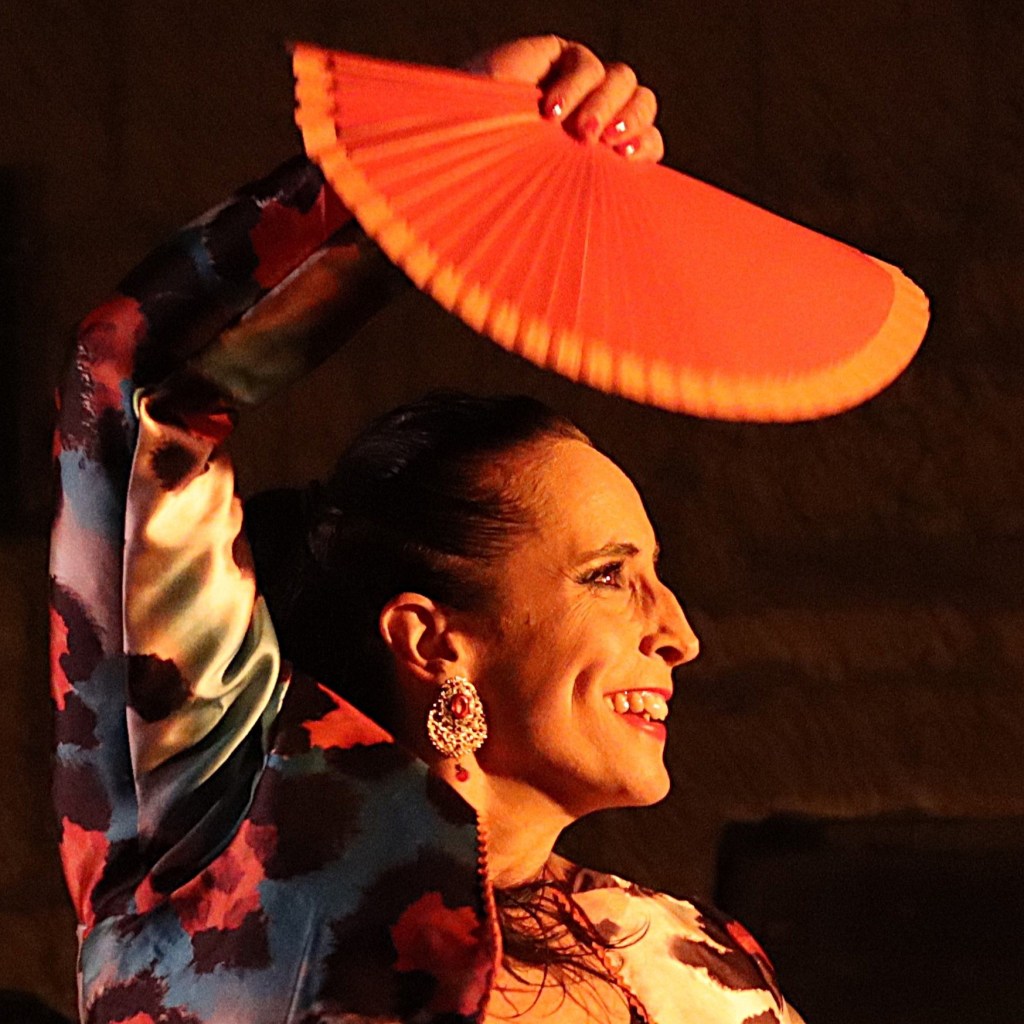
Images: © Thierry Joffroy

