This summer, Saatchi Gallery currently features The Sun and the Moon: Art Inspired by the Celestial, a major exhibition exploring how our celestial forces have shaped artistic imagination across cultures and centuries.
Spanning two floors and nine galleries, this spectacular exhibition brings together painting, sculpture, photography, textiles, film and immersive installations to examine the enduring influence of the Sun and the Moon on art, mythology, science and spirituality. It’s dense and fascinating!
Rather than following a conventional chronology, the exhibition unfolds across a 24-hour cycle, guiding visitors from dawn to midnight. Each section considers a different relationship between humanity and the celestial world, from ancient myths and agricultural rituals to lunar exploration, folklore and contemporary perceptions of light and darkness.
One of the exhibition’s highlights is Helios by British artist Luke Jerram, a monumental six-metre illuminated sculpture that recreates the Sun using detailed NASA imagery. Combining scientific precision with an immersive soundscape, the installation transforms astronomical data into an awe-inspiring experience while inviting reflection on the Sun’s central role in sustaining life and inspiring culture throughout history. The work has its own dedicated room.
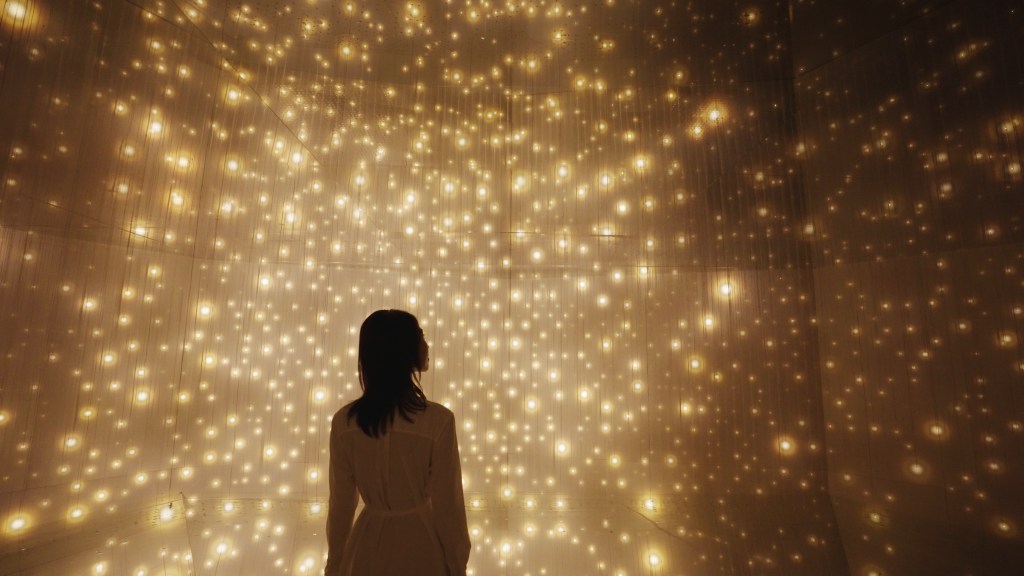
The exhibition also features immersive works by the internationally acclaimed collective teamLab. Their installations, Massless Suns and Dark Suns and Massless Sun and Surface of the Sky, dissolve the boundaries between artwork, environment and viewer, using light itself and music as a sculptural medium to create constantly shifting perceptual experiences. This work brilliantly closes the exhibition. “When you enter this installation, there are many, almost anonymous, luminous forms -like spheres. But they do not “exist” in a traditional sense. It is made of light and environment. Even if you try to touch them, you cannot. There is no physical object, but we can perceive them as if they exist”, teamLab brand director Takashi Kudo explains.
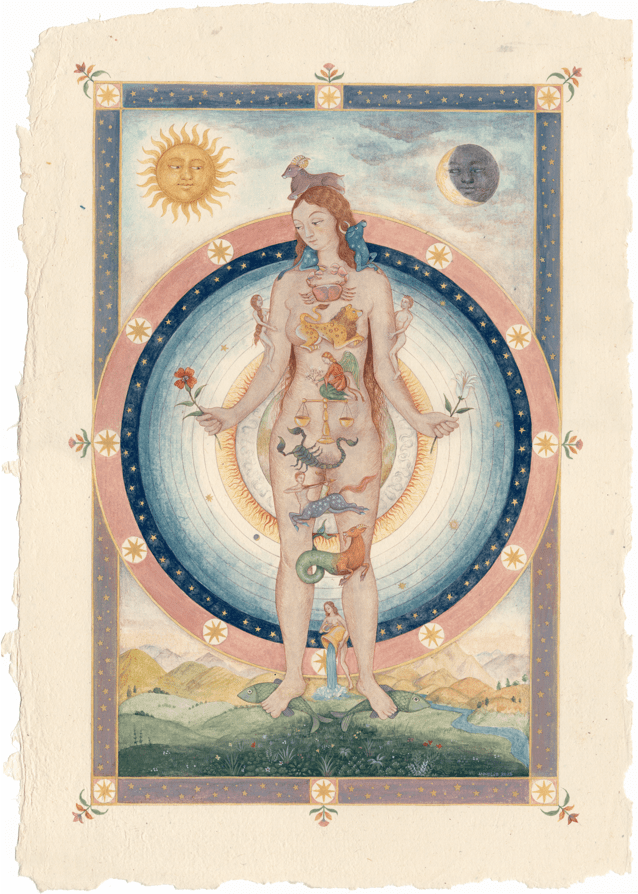
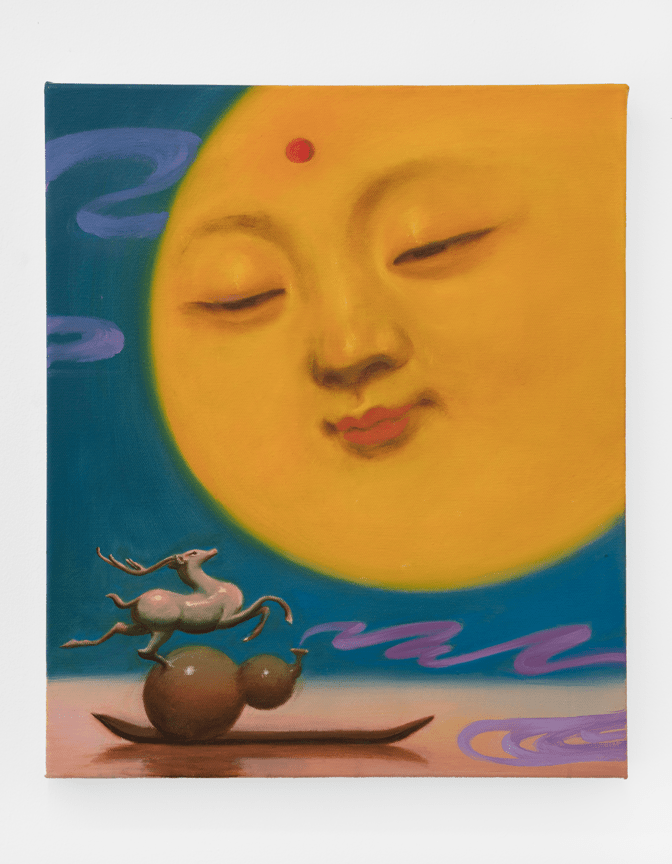
Alongside these large-scale installations, more than a hundred artists contribute works that span generations and disciplines. Historic figures including Barbara Hepworth, Joan Miró, Paula Rego, Patrick Caulfield, Peter Doig and Dora Maar appear alongside contemporary voices such as Sinta Tantra, Saad Qureshi, Margo Selby and Bryony Ella, creating a dialogue between past and present through shared fascination with the celestial.
Highlights of the exhibition include, in the first room, Louis XIV portrayed as Apollo, the Sun God, in Henri de Gissey’s depiction of the monarch’s celebrated performance in the Ballet de la Nuit (1653), illustrating how the French king cultivated the enduring image of the ‘Sun King’.
J.M.W. Turner’s dramatic Stonehenge (c.1827–28) transforms Britain’s prehistoric monument into a sublime vision of elemental power, where the setting sun, rising moon and storm-filled skies evoke both mystery and awe. The special display dedicated to Stonehenge is particularly striking.
The exhibition also features Michael Eichner’s striking 1992 photograph of Henry Rollins performing at New York’s legendary CBGB club, capturing the musician’s iconic sun tattoo, a symbol that reflects the celestial motif’s continued resonance within contemporary culture. A series of album covers including Pink Floyd’s Dark Side of the Moon, and Ozzy Osbourne’s Bark at the Moon, showcase how the sun and moon have also influenced musicians.
Following the success of FLOWERS – Flora in Contemporary Art and Culture, The Sun and the Moon continues Saatchi Gallery’s exploration of nature as a catalyst for artistic expression. Blending mythology, scientific discovery and contemporary practice, the exhibition offers an expansive reflection on two constants that continue to shape both the physical world and the human imagination.
The Sun and the Moon: Art Inspired by the Celestial is on view at Saatchi Gallery to 8 September 2026.
–