More than 70 years after her death, Frida Kahlo remains one of the most recognisable figures in modern art. Her face appears everywhere, from museum walls to fashion collections and everyday objects, yet her influence extends far beyond the image that has become so familiar. Kahlo is not simply remembered as a painter; she has become a symbol of resilience, LGBTQI+ rights, identity and self-expression.
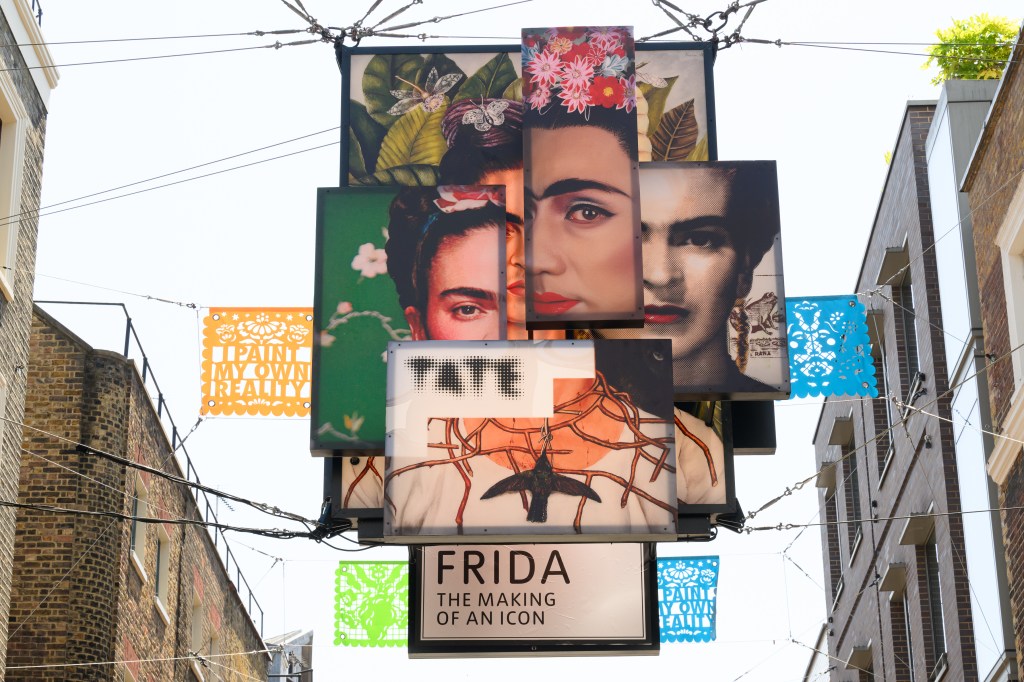
This summer, London celebrates the artist’s enduring legacy with Frida: The Making of an Icon at Tate Modern, a major exhibition exploring her life, work and transformation into a global cultural figure. Everyday, visitors arrived dressed in homage to the Mexican artist, while others carefully studied her paintings and personal story. Kahlo may have died in 1954, but her presence remains remarkably alive.
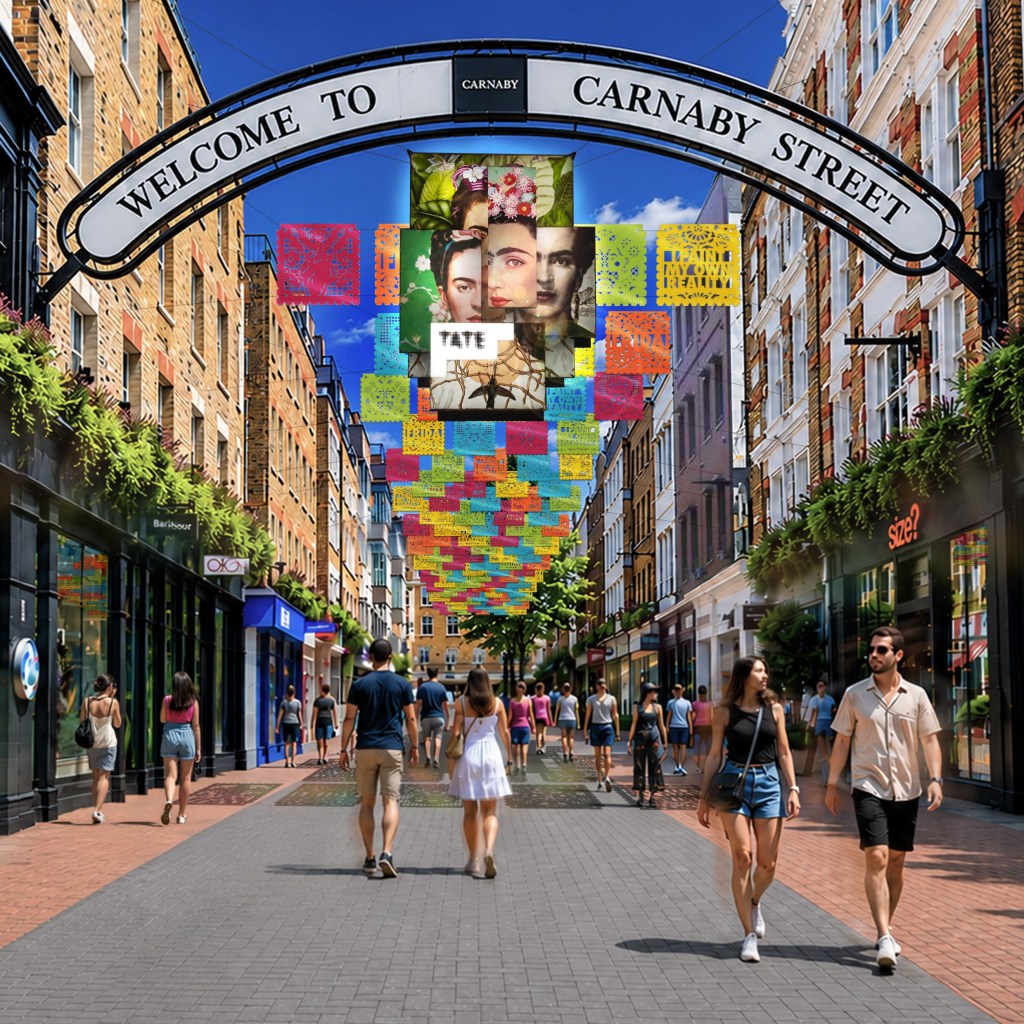
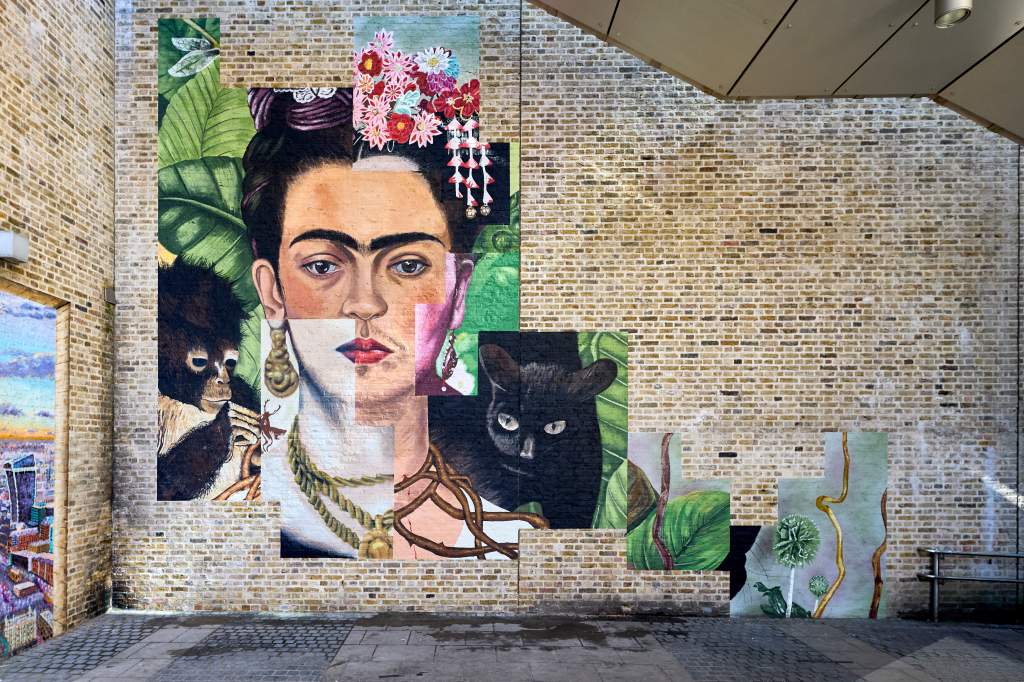
Extending Kahlo’s legacy beyond the gallery, ¡Frida Icónica! brings her spirit into the streets of London until 31 August. Across the river in Bankside, six large-scale murals by emerging artists under 25 reinterpret her life and work, exploring themes of feminism, Mexican heritage, queerness and disability. Created as part of Beyond Boundaries, a collaboration between Better Bankside and Tate Collective, supported by Oxford Properties, the works transform the area’s public spaces while carrying Kahlo’s fearless vision into the hands of a new generation.
“She’s very much the girl that refuses to go away,” explains curator Mari Carmen Ramírez. “And she’s going to refuse to go away for a long time because of what she represents: a mestiza, a wife, a bisexual woman and a political activist.” For Ramírez, Kahlo’s legacy has moved beyond art history. “Frida Kahlo has ceased to be just a painter or an artist. She embodies a cultural phenomenon.”
Known as Fridamania, this phenomenon reflects the rare emotional connection Kahlo has created with audiences worldwide. This is the subject of the last room of the exhibition. Unlike almost any other artist, people do not simply admire her work, they identify with her. They recreate her style, explore her image and see themselves reflected in her story.
Born Magdalena Carmen Frida Kahlo y Calderón in Coyoacán, Mexico, in 1907, Kahlo’s life was shaped by both creativity and hardship. After a devastating bus accident at 18 left her with lifelong pain and health struggles, she turned to painting during long periods of recovery. It was then that she began creating the self-portraits that would become her most celebrated works. “I paint self-portraits because I am so often alone, because I am the person I know best,” she once said.
The Tate Modern exhibition brings together more than 170 works across seven thematic sections, including 30 self-portraits. Among the most iconic is Untitled [Self-portrait with Thorn Necklace and Hummingbird], painted in 1940 after her divorce from artist Diego Rivera.
Catherine Wood, Interim Director of Tate Modern said: “The extraordinary demand for Frida Kahlo is testament to the enduring power of her story and her work, which continues to resonate across cultures and communities, and inspire new generations of artists. Tate Modern is thrilled to be leading a summer-long programme across the city. Positioning Frida as an artist for 21st century London, we will offer audiences multiple entry points into her world – from the intimate space of the gallery to the shared experience of the public realm.”
Long before the age of social media, Kahlo understood the power of self-representation. Hundreds of photographs reveal her relationship with the camera and her ability to turn herself into both artist and subject.
The exhibition also explores Kahlo’s connection with Surrealism. Although André Breton described her as a “self-made Surrealist”, Kahlo rejected the label, insisting that she painted her own reality rather than dreams. “Frida has been commodified, commercialised and iconised into a phenomenon, which we call Fridamania,” says Ramírez. “Despite the negative impact that Fridamania may have on her image, we find that Frida is an icon of incredible resistance and endurance.”
Kahlo’s influence continues beyond the gallery. This summer, six large-scale murals around Bankside will celebrate different aspects of her identity, including feminism, queerness, Mexican heritage and disability. A special menu by Mexican chef Santiago Lastra of KOL will also reinterpret elements of Kahlo’s world through food.
Ultimately, the fascination with Frida Kahlo lies in her ability to transform personal struggles into universal stories. She challenged ideas of beauty, identity and creativity, creating an image of herself that continues to inspire generations.
More than a century after her birth, Frida Kahlo remains impossible to ignore. Frida: The Making of an Icon is open at Tate Modern until 3 January 2027.
–