JW Anderson has always been an amazing supporter of the LGBTQI+ community. This year, the brand takes a thoughtful approach, looking forwards with an exhibition dedicated to the pioneering physique magazine Physique Pictorial and its founder, Bob Mizer.
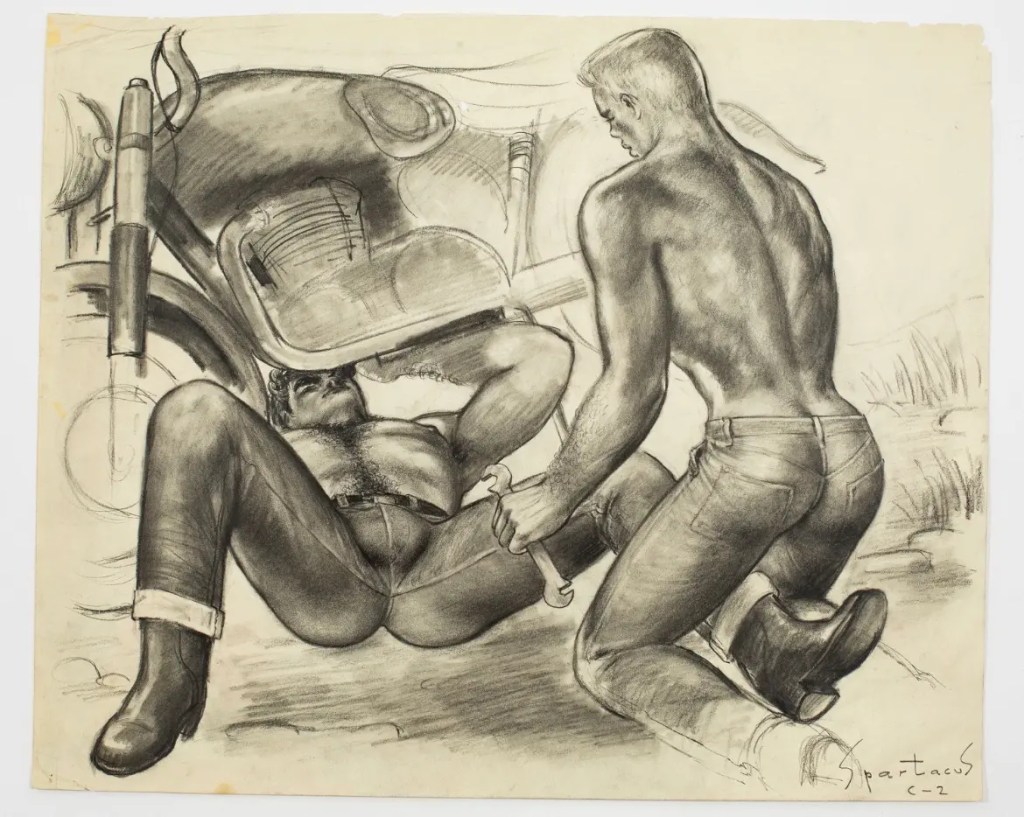
Presented at the JW Anderson Soho store in London, the exhibition brings together forty rare illustrations by the anonymous artist Spartacus, originally published in Physique Pictorial during the 1950s and 1960s. Their depictions of muscular men, Roman heroes and mythological figures occupy a fascinating territory between classical drawing, commercial illustration and coded eroticism. Once produced for a readership forced to navigate censorship and criminalisation, they now emerge as remarkable documents of queer resilience.
To understand their significance is to understand the role of Physique Pictorial itself. Founded in Los Angeles in 1951 by photographer Bob Mizer, the publication ostensibly celebrated bodybuilding at a time when magazines devoted to physical culture enjoyed legal protection. Beneath that respectable façade, however, lay one of the twentieth century’s most influential platforms for homoerotic imagery. Long before LGBTQ+ representation entered mainstream publishing, Mizer created a visual language through which desire could circulate discreetly across America and beyond.
The coded strategies employed by the magazine are visible throughout the exhibition. Spartacus’s illustrations frequently reference antiquity, mythology and athleticism, drawing on subjects considered culturally acceptable while subtly reshaping them into expressions of queer fantasy. These were images designed to evade censorship without abandoning sensuality, demonstrating how creativity often flourishes under restriction. Their wit lies not simply in what they invite the viewer to recognise.
Fashion has long drawn inspiration from this visual tradition. The idealised male physique, the theatrical embrace of masculinity and the interplay between innocence and eroticism have all become recurring motifs within contemporary image-making. Designers from Jean Paul Gaultier to Tom of Finland’s many admirers have mined similar territory, while photographers such as Robert Mapplethorpe transformed the aesthetics of physique culture into fine art. Even David Hockney acknowledged the formative influence of Physique Pictorial, whose pages offered one of the few affirming representations of gay life available during his youth.
Jonathan Anderson’s decision to foreground these works reflects his wider interest in material culture and overlooked histories. Rather than treating fashion as a closed discipline, the exhibition positions the boutique as a site for cultural research, where archival material is given renewed public visibility. In doing so, it quietly argues that clothing, publishing, illustration and photography have always participated in the construction of identity.
These illustrations are celebrated not because they are provocative, but because they testify to the imagination required to make oneself visible when visibility itself carried profound risk. Before Pride became a global celebration, it existed in coded drawings, discreet publications and communities of readers who recognised themselves in images that others overlooked.
By bringing Spartacus’s once-hidden illustrations into the public realm, this presentation reveals how images that once circulated in secrecy continue to shape contemporary art, fashion and the politics of visibility.
–