Gala Flamenca staged at Sadler’s Wells in London celebrates an art form in constant reinvention. Marking the 25th anniversary of the Flamenco Festival, the programme brought together four generations and distinct visions of contemporary flamenco, demonstrating how the genre continues to evolve while remaining rooted in its Andalusian heritage. It is the cultural rendez-vous of the season.
Director Miguel Marín said: “Flamenco is a living language – one that carries memory, identity, and transformation within it. This year’s programme invites audiences to experience that living pulse: a journey where tradition and creation meet, where the past resonates in the present, and where new voices continue to shape its future. In London, flamenco finds a stage where it can continue to grow, to take risks, and to connect deeply with the world of today”.
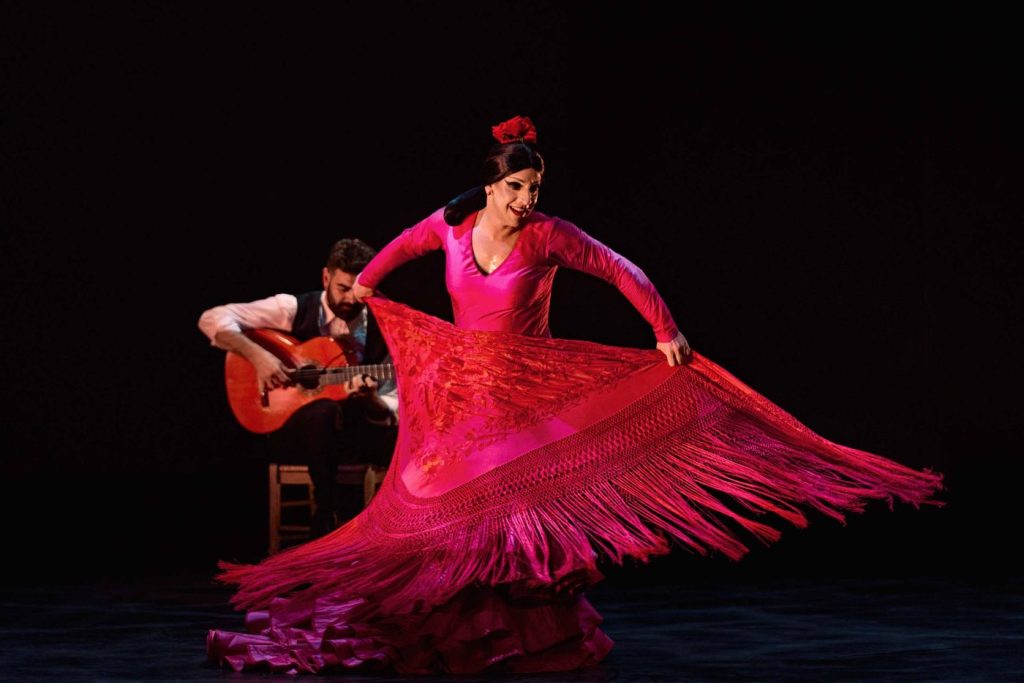
At the heart of the evolution of flamenco showcased in Gala Flamenca, is Manuel Liñán, one of the most influential choreographers working today. Across two hours and twenty minutes, the programme is built around four solos interwoven with ensemble works by Liñán, who brings the performers together in shifting combinations that drew enthusiastic applause. From the outset, the musicians are central, with singers Juan de la María, Manuel de Ginés and Sebastián del Puerto taking centre stage as the red curtain rises, highlighting the significance of live music throughout.
Rising star Juan Tomás de la Molía, following his unforgettable solo in Muerta de Amor, opened with a breathtaking dance of precision and speed. His ‘avalanche’ of moves anchored an exhilarating ensemble performance that seamlessly wove together dance, live music, and song. A very powerful start.
As both artistic director and performer, Liñán has become renowned for challenging long-held conventions around gender, costume and performance, creating works that expand flamenco’s expressive possibilities without losing its emotional intensity or technical rigour. His acclaimed productions such as Muerta de Amor have reimagined the form for contemporary audiences, proving that innovation can deepen tradition. His performance in Gala Flamenca is an explosion of joy, movement, and colour, combining extraordinary technical prowess with wit and humour.
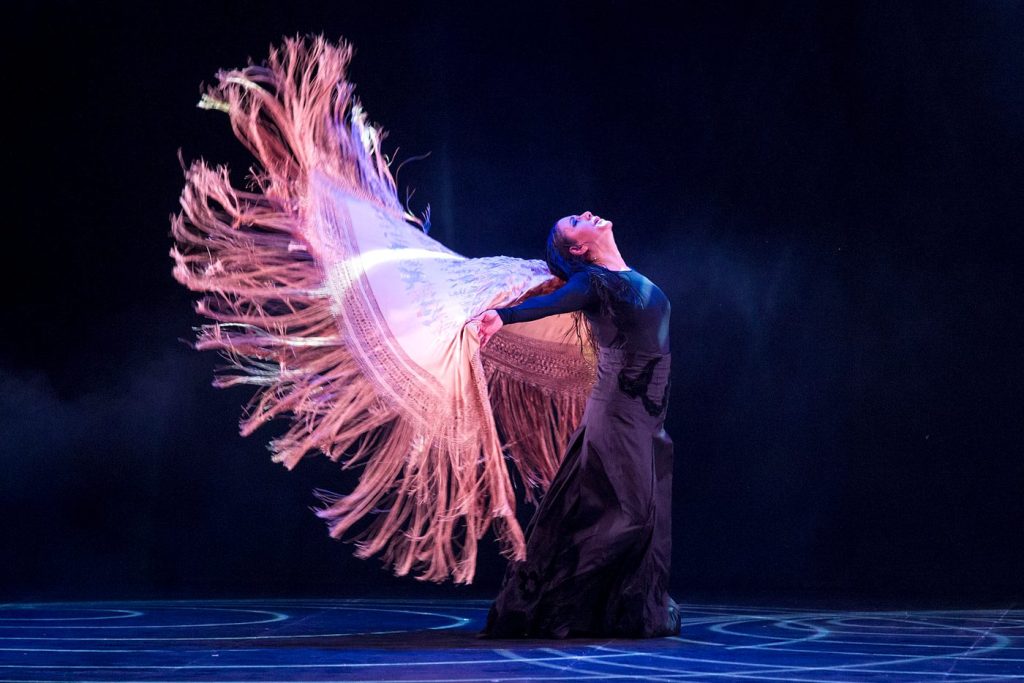
Alongside Liñán, the legendary Eva Yerbabuena brought a profoundly introspective approach. The artist is celebrated for balancing the purity of traditional forms such as the soleá with a modern theatrical sensibility and the show demonstrated this. She famously said: “the story of my life has been running away from labels”. Yerbabuena is a true superstar of flamenco, and her performance in Gala Flamenca remained a masterclass in emotional intensity and artistic excellence.
El Farru, heir to the iconic Farruco dynasty, brought his unmistakable energy to the show, his explosive footwork embodying flamenco’s living lineage. His performance dazzled with a technique that points firmly to the next generation of the art form, while remaining deeply rooted in tradition. Within the context of the gala, he created a dynamic dialogue between heritage and experimentation, presenting flamenco not as a fixed form but as a vibrant, evolving language, one that continues to absorb new perspectives, identities, and modes of expression. It is no surprise that artists such as Beyoncé, Björk, and Paulina Rubio have sought to collaborate with him.
Among the most striking moments in the show was a single guitar placed on a chair and given centrestage, its presence charged with stillness and focus. A duet of black dresses unfolded within an atmospheric, almost 1980s-like blue landscape of light and space, while a rose falling from Yerbabuena’s hair (was it a coincidence?) seemed to acquire a life of its own, becoming a silent partner in an emotional dance.
More than a showcase of virtuoso dancing, Gala Flamenca reflects a broader shift within contemporary flamenco: one that embraces theatrical innovation, questions inherited traditions and expands who gets to tell its stories. It is this tension between preservation and transformation that has made flamenco one of today’s most dynamic performing arts (think Rosalía), capable of speaking as powerfully to contemporary audiences as it has for centuries.
Gala Flamenca ultimately balanced tradition and experimentation, offering a celebratory and assured opening to this important and beloved London Flamenco festival.
There was obviously more to see. The 21st annual Flamenco Festival brought 10 distinctive productions, including five UK premieres, to various London venues, such as Sadler’s Wells Theatre, Lilian Baylis Studio, Sadler’s Wells East, and the National Gallery, from 15 to 29 June 2026. This year’s celebration of Spanish culture featured an array of world-renowned dancers, musicians, and vocalists, with major highlights including a special Baroque-flamenco collaboration responding to the National Gallery’s Zurbarán exhibition, the epic 15-dancer ensemble of Ballet Flamenco de Andalucía, and a 25th-anniversary finale by Marco Flores.
–