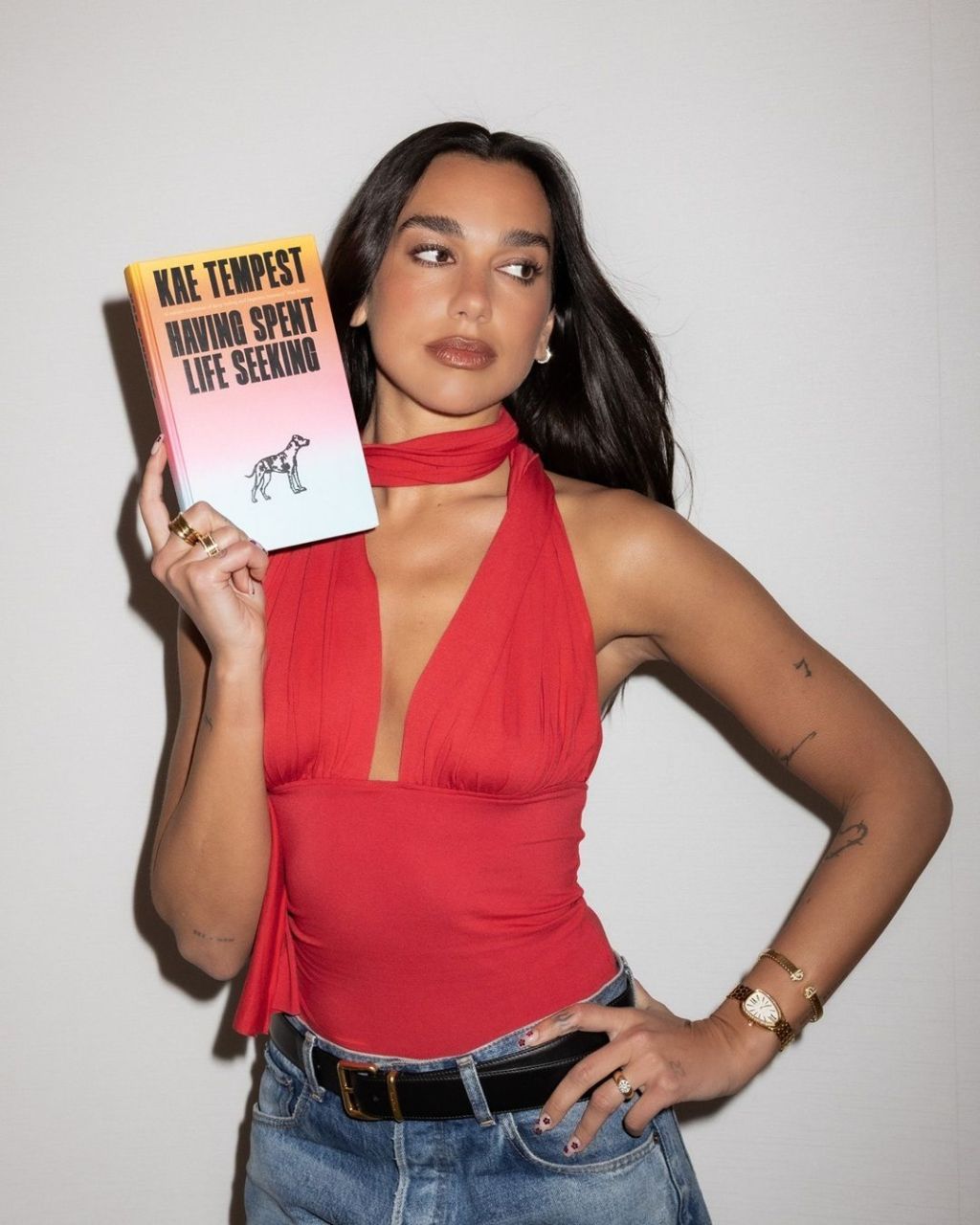
Inside Porto’s Livraria Lello, Dua Lipa has opened the Manifesto Library, a permanent space dedicated to books that have been banned, censored, or removed in different contexts for being considered controversial. Dua Lipa strikes again with intelligent content!
The project was unveiled on 27 June during the inaugural edition of the BABELL international book festival. It is located within the new cultural auditorium of the historic bookshop and it looks fantastic!
The Manifesto Library brings together around one hundred books organised around four themes: power, control, voice, and memory. The selection focuses on works that have at some point been challenged or restricted. These include books removed from school curricula or libraries in some countries due to themes relating to race, gender identity, or sexuality.
Authors represented in the selection include Margaret Atwood, Salman Rushdie, Olga Tokarczuk, and Reginald Dwayne Betts. The project highlights the ongoing reality of book censorship and its continued presence in contemporary cultural and political contexts.
The superstar said: “sometimes the most subversive thing you can do is read a book and then talk about it.”
The library is presented as an extension of Dua Lipa’s Service95 platform, which she launched in 2023 as a book club and literary newsletter. It has since evolved into a broader cultural initiative. The Manifesto Library is described as the first physical space linked to this platform, designed for reading, discussion, and engagement with books.
According to Dua Lipa, the aim of the project is to create a space where readers and writers can engage with books freely, and where access to literature is not restricted by external control. She describes the library as a “sanctuary” for books that have been censored or removed, and for authors whose work has challenged systems of power.
Visitors are invited to browse the collection and choose books for themselves. The project does not prescribe reading lists, but instead emphasises individual choice in what is read and discussed. The Manifesto Library reflects the wider global debates about book bans and access to literature, presenting reading as an ongoing site of cultural and political contention.

