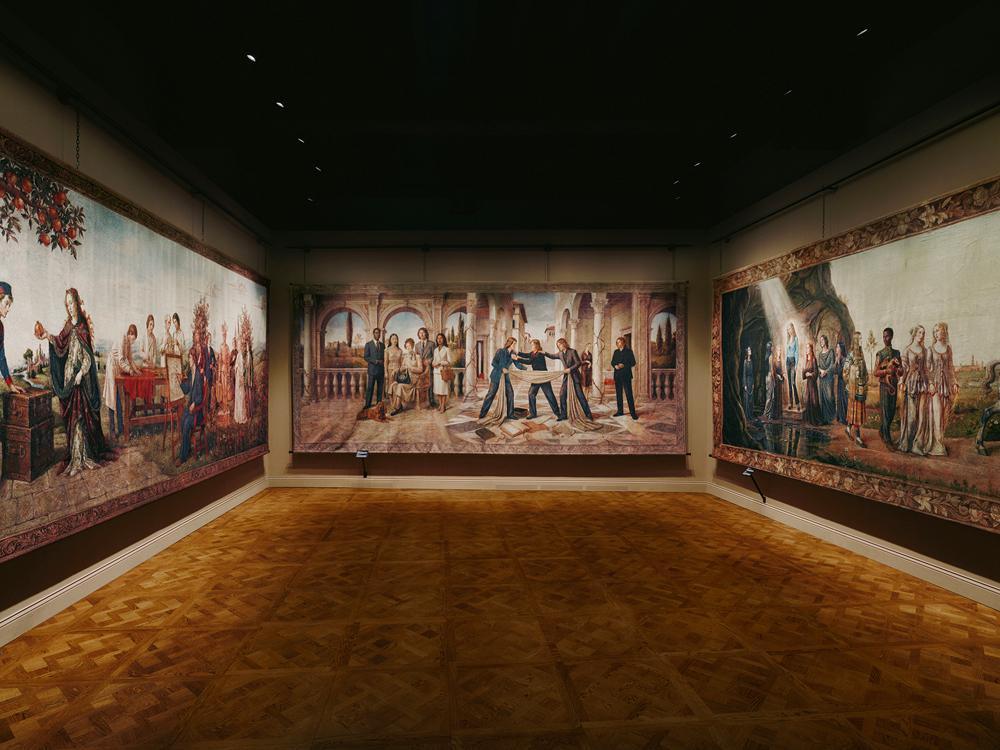
In Florence, Gucci has opened Gucci Storia, an exhibition housed inside Palazzo Gucci, the historic Palazzo della Mercanzia in Piazza della Signoria. The project reinterprets the history of the House of Gucci and its connection to its city of origin, presenting it as an evolving dialogue between past and present. And it’s stunning!
The exhibition occupies the first and second floors of the building, while the ground floor continues to host retail and hospitality spaces. It is conceived as a cultural destination combining archive material, design, and immersive installations.
At the centre of Gucci Storia is the idea of a “museum of museums”, structured as a sequence of rooms, each dedicated to a different aspect of the brand’s identity and history. Visitors move through a portrait gallery exploring ideas of lineage and identity, a tapestry gallery referencing Florentine craftsmanship closely linked to Gucci, and a “cabinet of curiosities” presenting archival objects. Other spaces focus on craftsmanship, innovation, and the brand’s visual language, including cinematic environments and interactive installations.
The exhibition also highlights Gucci’s archival history, presenting objects and references that trace the evolution of the house from its beginnings in Florence in 1921 to its contemporary identity under creative direction. The narrative is presented as non-linear, allowing visitors to engage with different periods and themes across the brand’s development.
More classical in tone, one room traces the evolution of Gucci ready-to-wear through mannequins dressed in pieces designed by Tom Ford, Frida Giannini, Alessandro Michele, Sabato de Sarno, and, of course, Demna. Finally, in a more playful and unexpected gesture, L’Oracolo, an interface installed within a futuristic, immaculate white space, invites visitors to interact with Gucci’s heritage.
According to Gucci, Gucci Storia is designed to reflect the ongoing relationship between the fashion house and Florence, positioning the city as both origin and active reference point for its identity. The exhibition is framed as part of a broader cultural strategy that combines fashion, design, and heritage within a museum-like setting.
A blue silk shirt from Gucci’s Autumn/Winter 1995 Tom Ford debut collection became an icon of the “porno chic” era, worn by models like Amber Valletta, Shalom Harlow, and Kate Moss.
Its cultural status was cemented when Madonna wore it to the 1995 MTV Music Awards, and it is now featured in the Gucci Storia exhibition alongside other iconic Gucci looks. This is one of the highlights of this remarkable exhibition.
Located inside Palazzo Gucci, the space continues the building’s role as a hybrid cultural site, combining exhibition, retail, dining, and archival presentation under one roof.
–
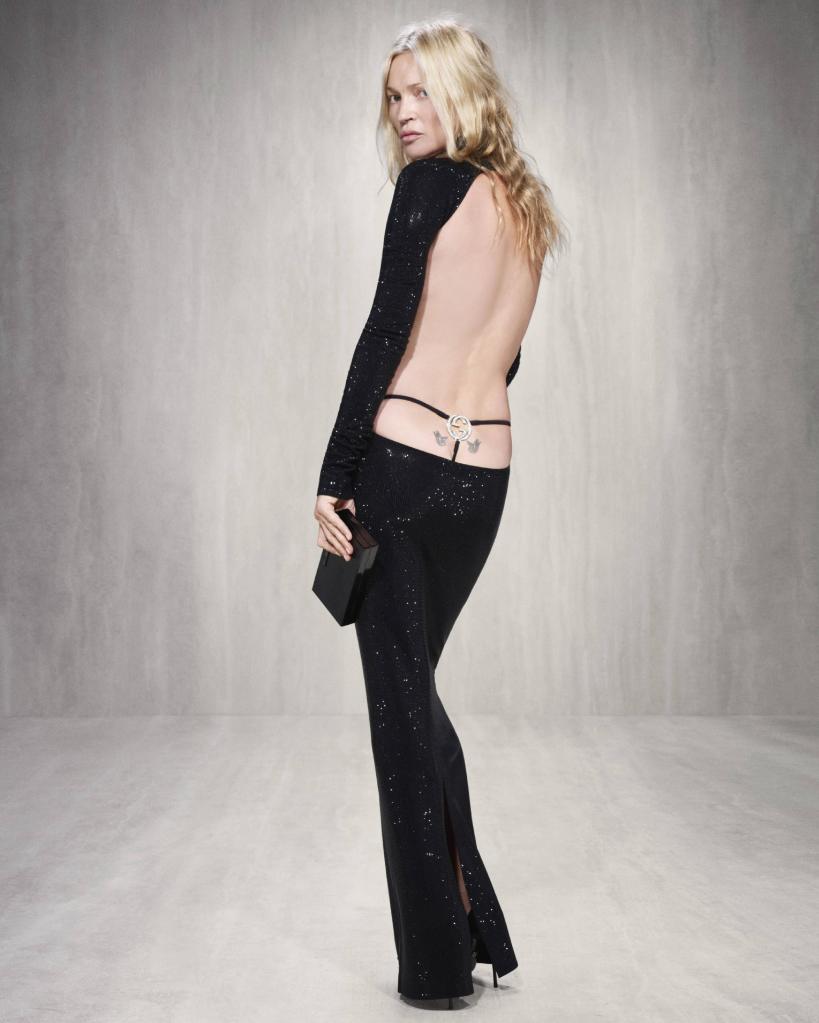
Image: Kate Moss at the Gucci Autumn/Winter 2025–2026 runway show

