Have you ever dreamt of sleeping in a cinema? In Paris, a city whose streets, cafés and boulevards have provided the setting for countless films, it is possible. At mk2 hotel Paradiso Nation, cinema extends far beyond the theatre to become the very essence of the hotel experience. And it’s amazing!
Few cities have such a deep and enduring relationship with the silver screen. From the pioneering experiments of the Lumière brothers to the films of the French Nouvelle Vague, from neighbourhood cinemas to the Cinémathèque Française, cinema has long been woven into the fabric of Parisian cultural life. The city has served as both backdrop and protagonist in countless films, from Jean-Luc Godard’s À bout de souffle (1960) and Jacques Rivette’s Paris nous appartient (1961) to Vincente Minnelli’s An American in Paris (1951). In Paris, cinema is not simply an art form; it is what they call an exception: ‘L’exception française’.
At Nation, mk2 has translated this cultural heritage into an entirely different kind of hospitality, one that invites guests to sleep, watch, read, borrow, discuss and, quite literally, live cinema.
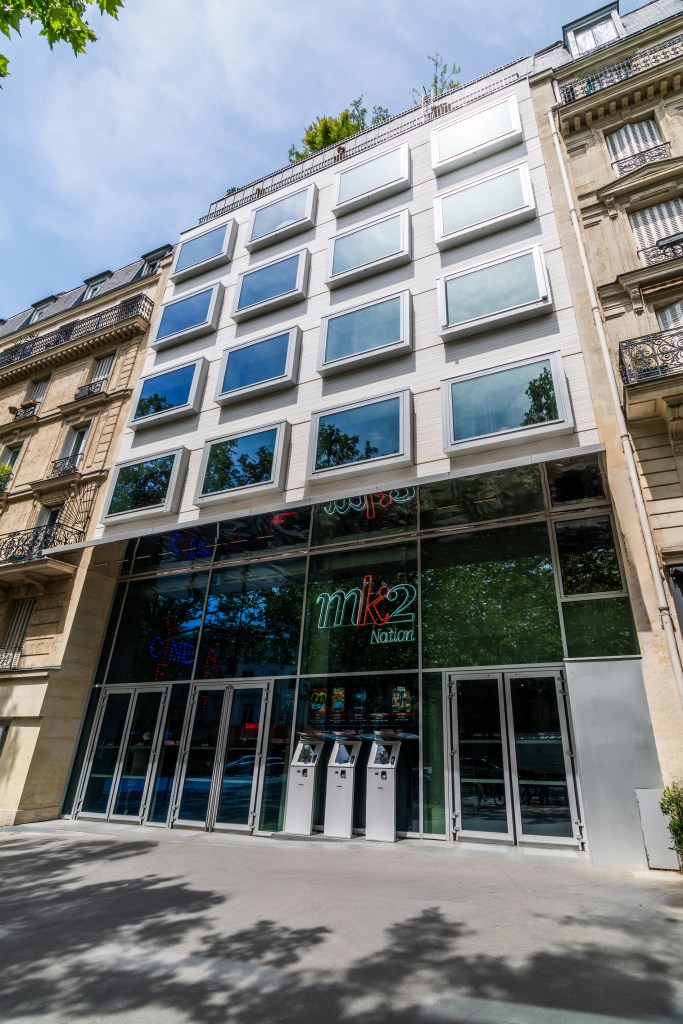
The location is part of the appeal. In eastern Paris, Nation has a distinctly local character, shaped less by the grand monuments of the centre than by independent cinemas, music venues, design studios and the rhythms of everyday neighbourhood life. Coolness too! The hotel sits directly beside mk2 Nation, the grand six-screen cinema operated by the independent French film group. Nearby, the cultural landscape extends to La Flèche d’Or, the creative workshops of the Viaduc des Arts and the Coulée Verte René-Dumont, a leafy promenade tracing a former railway line through the city. Père-Lachaise is also within reach, while the surrounding 11th, 12th and 20th arrondissements offer a lively mix of historic architecture, independent businesses, creative spaces and residential streets.
This is a hotel that feels embedded in a real Paris neighbourhood rather than conceived as an isolated destination. You are unmistakably in Paris, but away from the more predictable hotel addresses. Paris, after all, is beautiful!
Founded in 1974, mk2 is much more than a cinema operator. Over the decades, the group has established itself as an important force in French and international film culture, spanning cinema exhibition, production, distribution and international sales. Its extensive catalogue includes works by filmmakers such as François Truffaut, Agnès Varda, Krzysztof Kieślowski, Abbas Kiarostami, David Lynch and Céline Sciamma. Its commitment to film restoration and preservation further connects contemporary cinema with the heritage that shaped it. It is a distinctly French vision of culture: independent, ambitious and committed to the enduring power of the moving image. Mk2 embodies good taste and culture.
Understanding this history is essential to understanding the hotel. Paradiso is not a conventional property with a cinematic theme added as an afterthought. Cinema is its starting point.
Conceived and developed by mk2 in the early 2010s, the hotel reflects the vision of Nathanaël and Elisha Karmitz, who sought to imagine a more open and evolving cinema, responsive to changing habits and the ways in which audiences experience films. Paradiso takes that idea a step further. Rather than asking guests to sit in an auditorium for two hours, it allows them to weave cinema into the rhythm of their cosy stay.
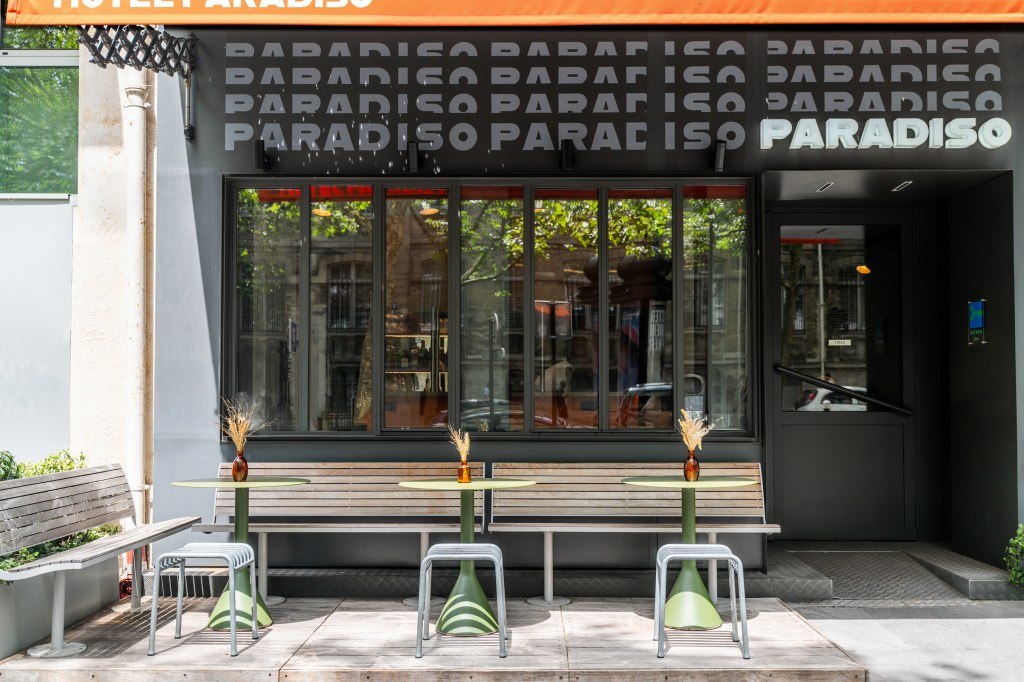
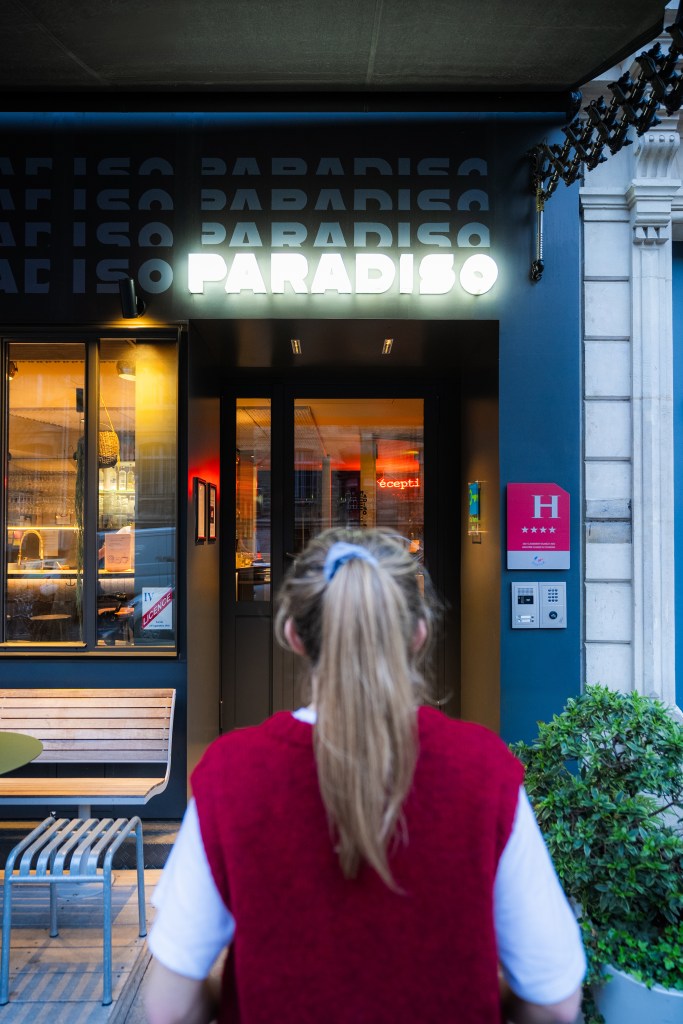
Even the entrance establishes the mood. A generous orange curtain lends the arrival a theatrical flourish without tipping into excess. Beyond it, the atmosphere is surprisingly relaxed and approachable with attentive, nice and professional staff.
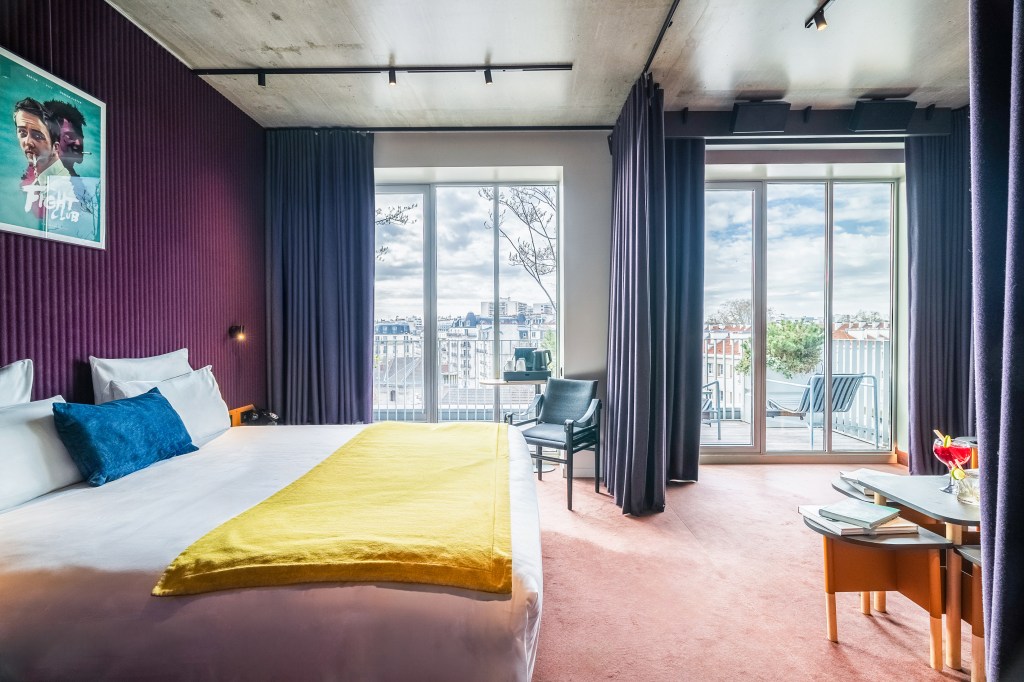
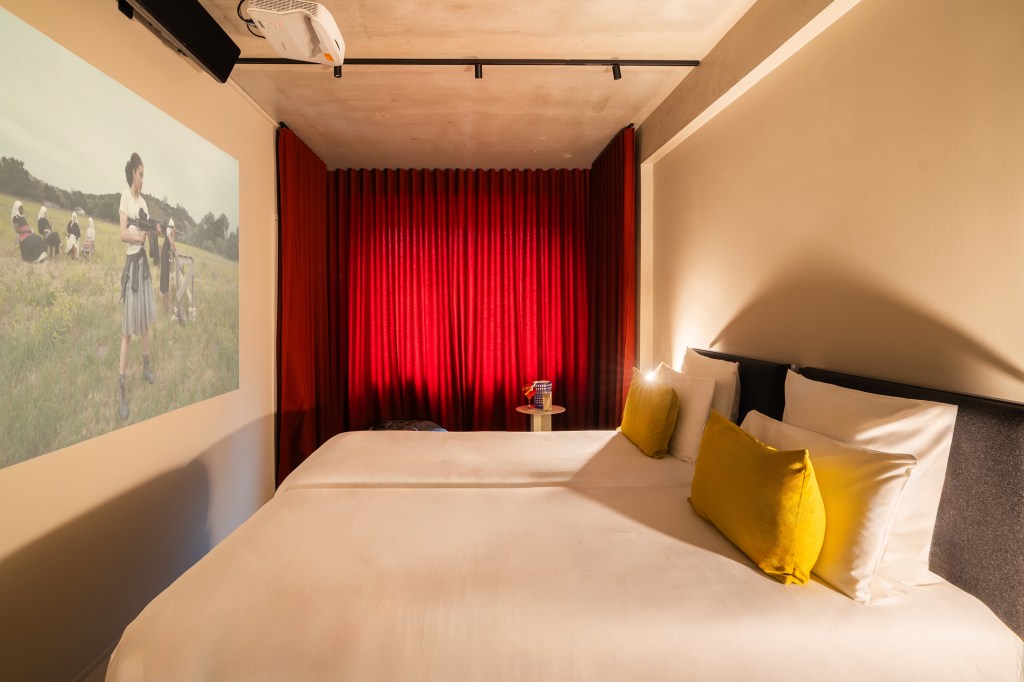
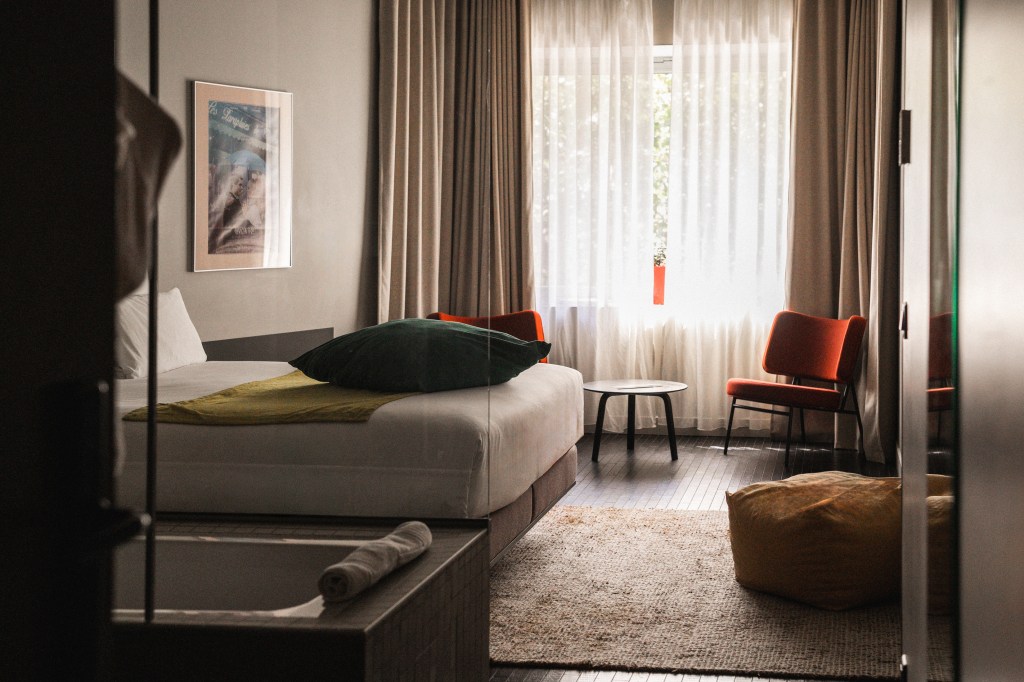
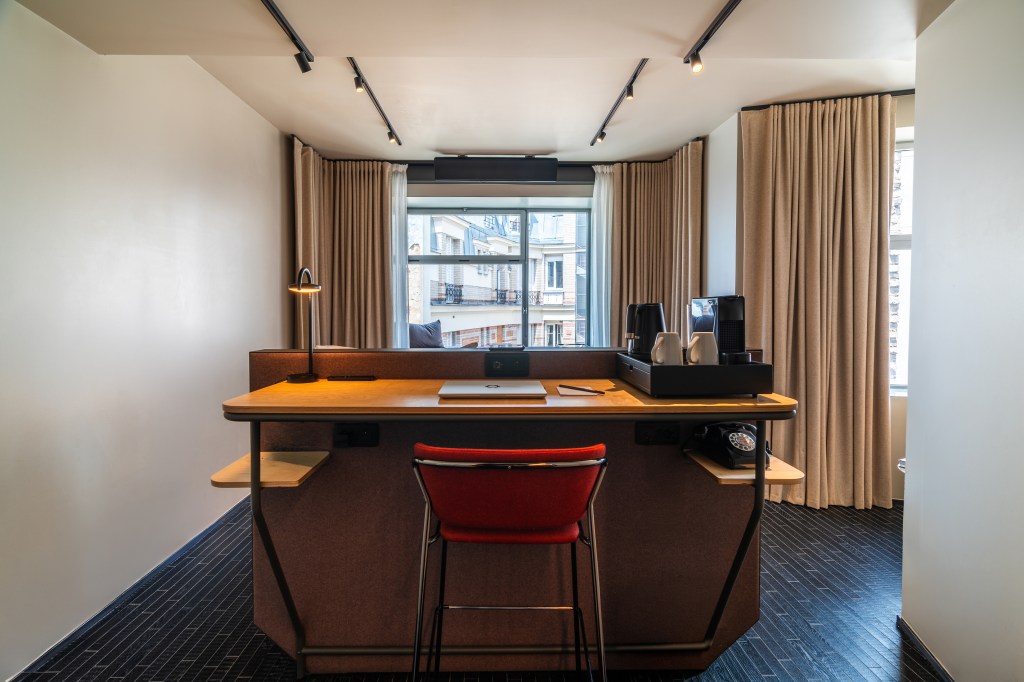
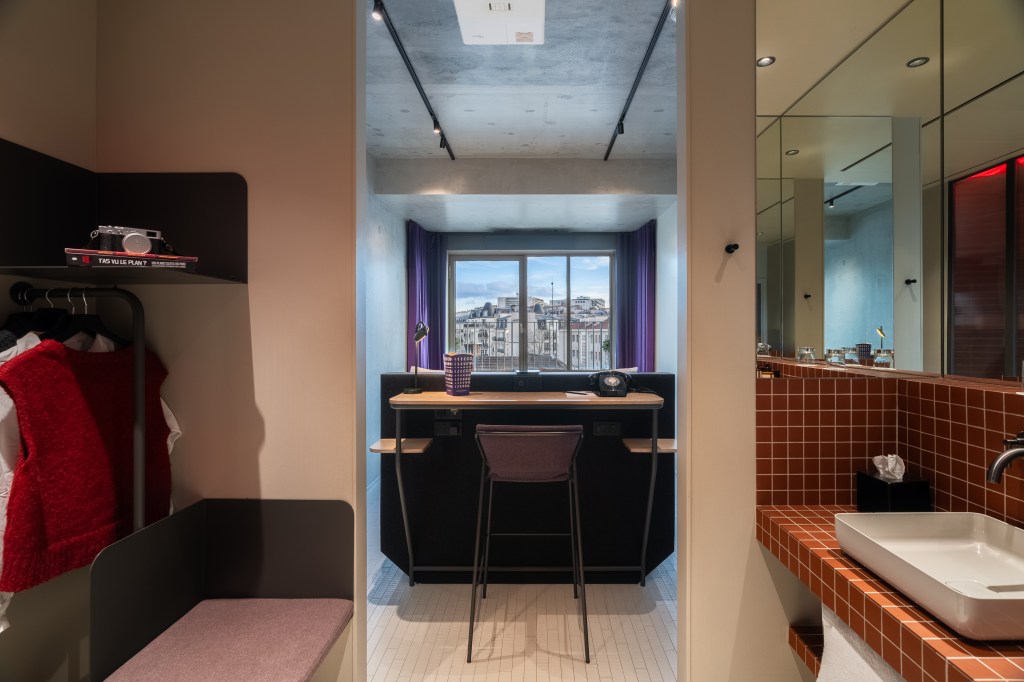
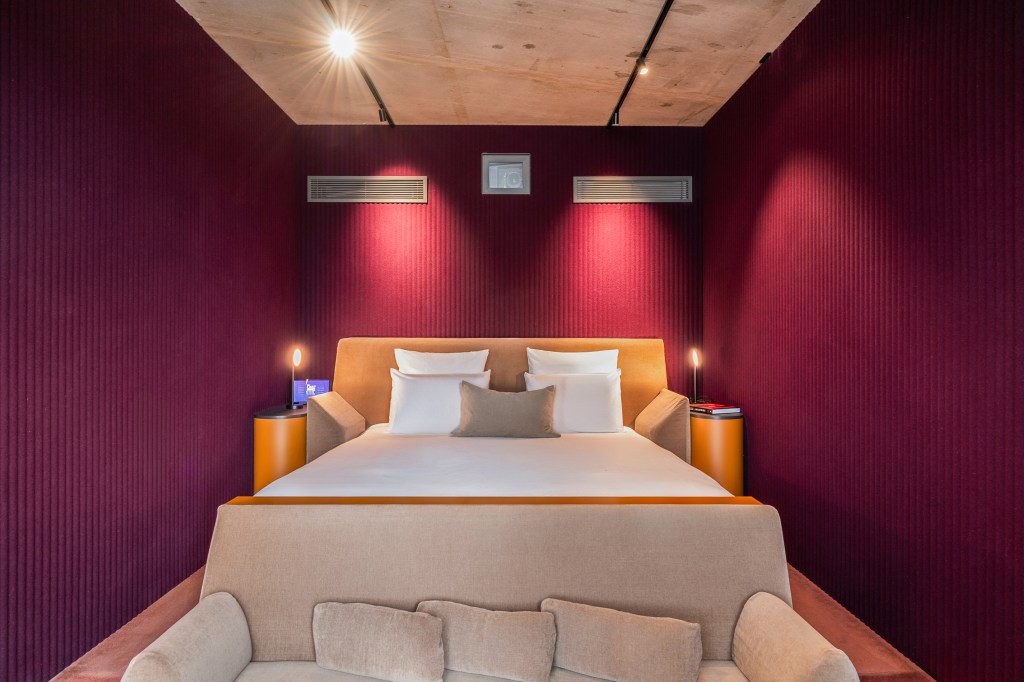
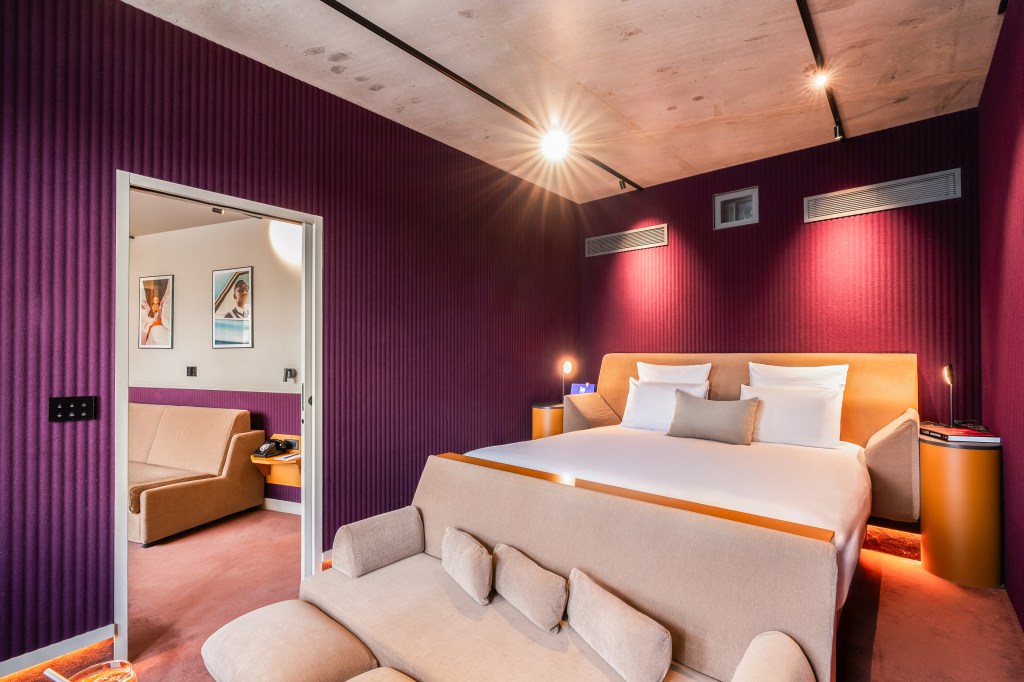
The hotel’s 34 rooms revolve around the idea of a private screening. Each is equipped with a large projection screen, a projector and surround sound, allowing guests to watch films and series from the comfort of their beds. Cocooning anyone? In a city where the instinct is usually to spend every waking moment exploring, the invitation to stay in becomes part of the experience and that’s what makes it so unique.
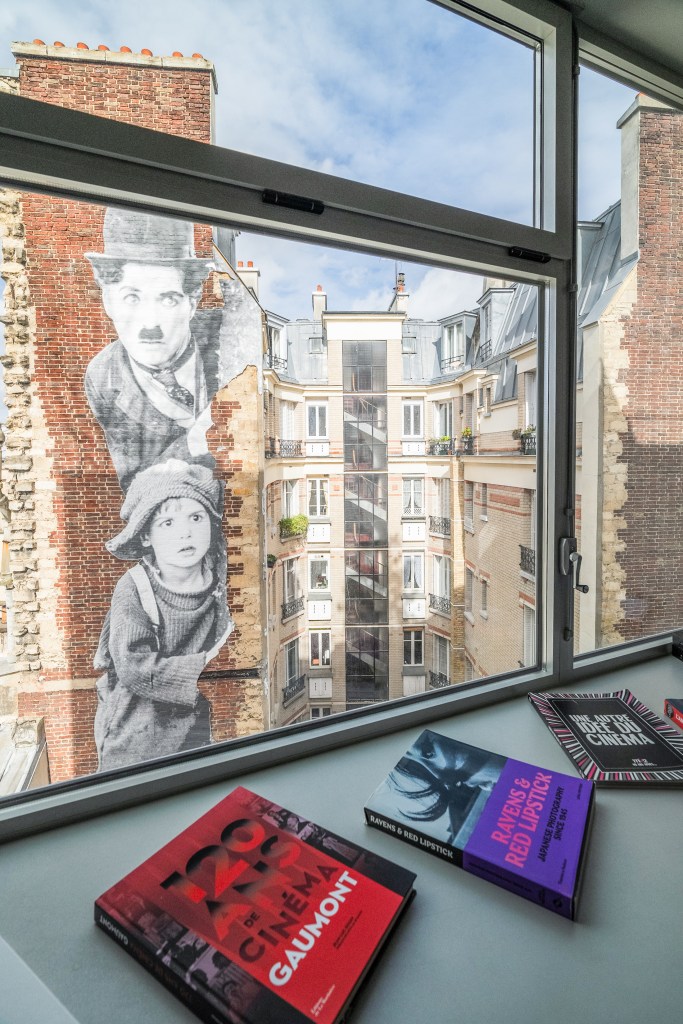
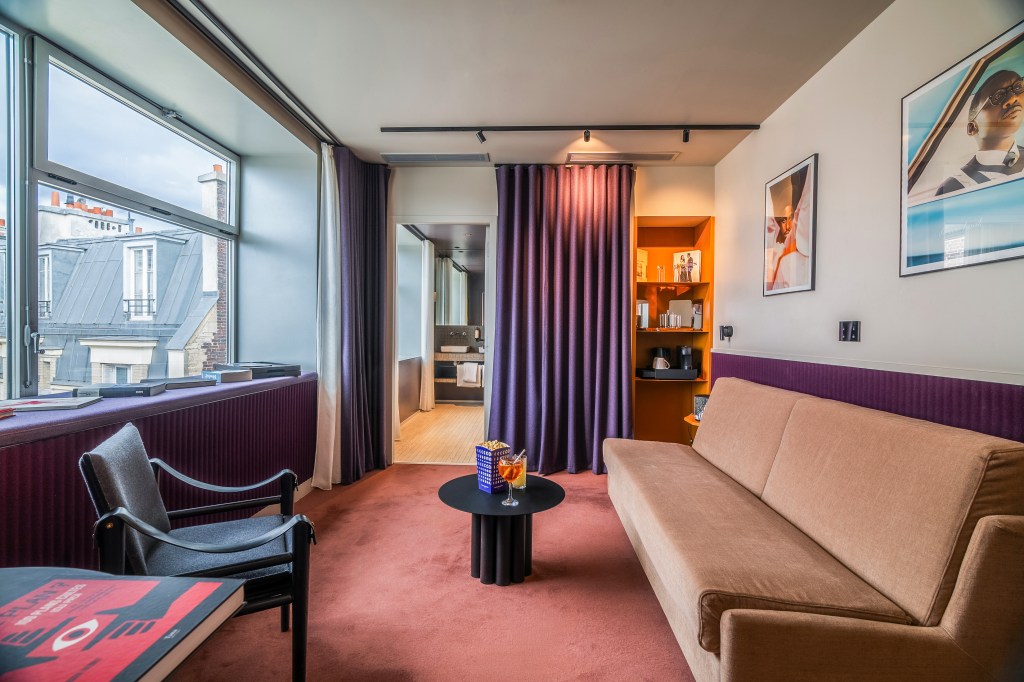
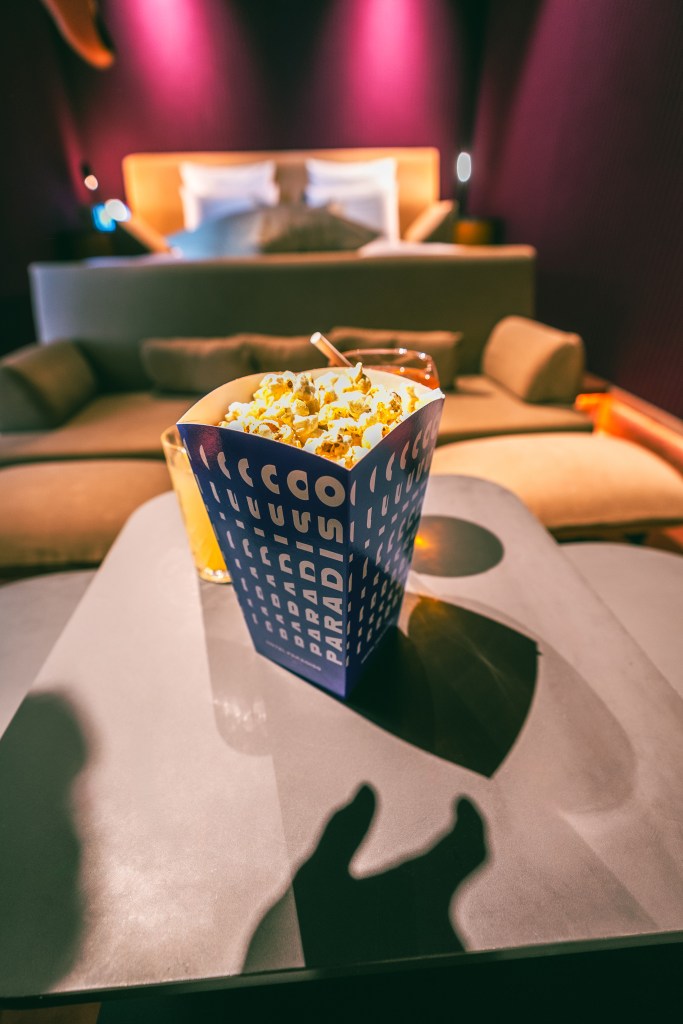
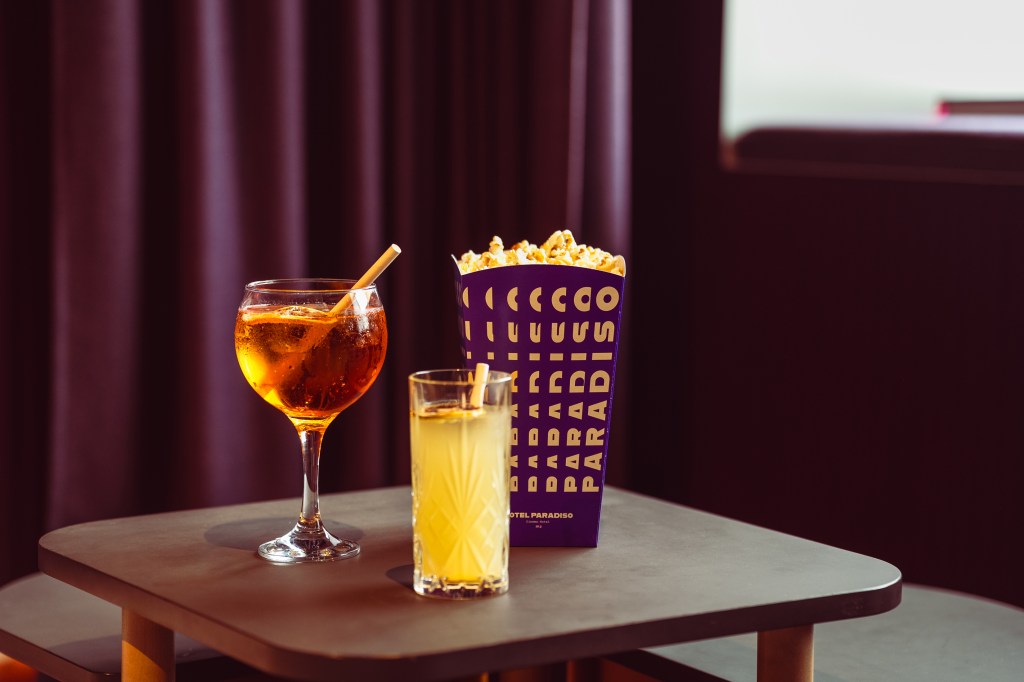
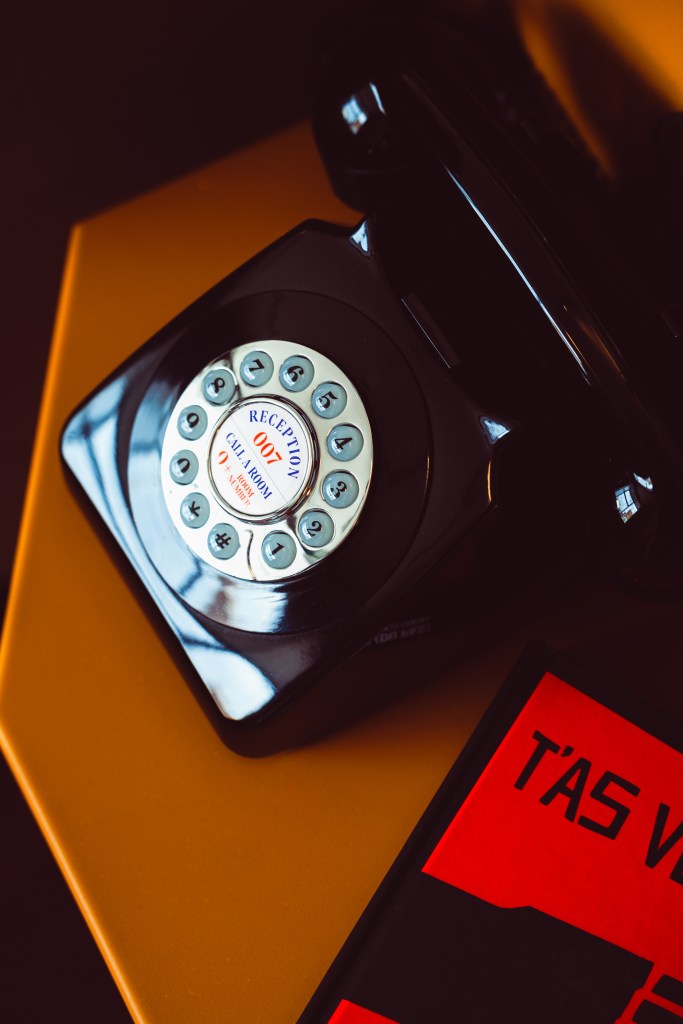
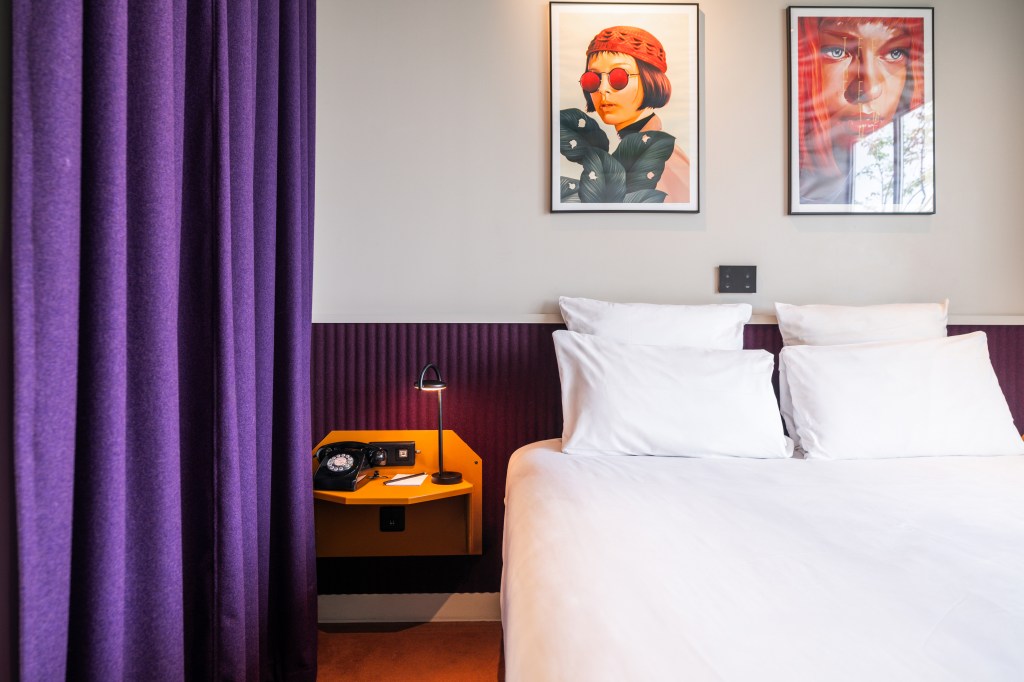
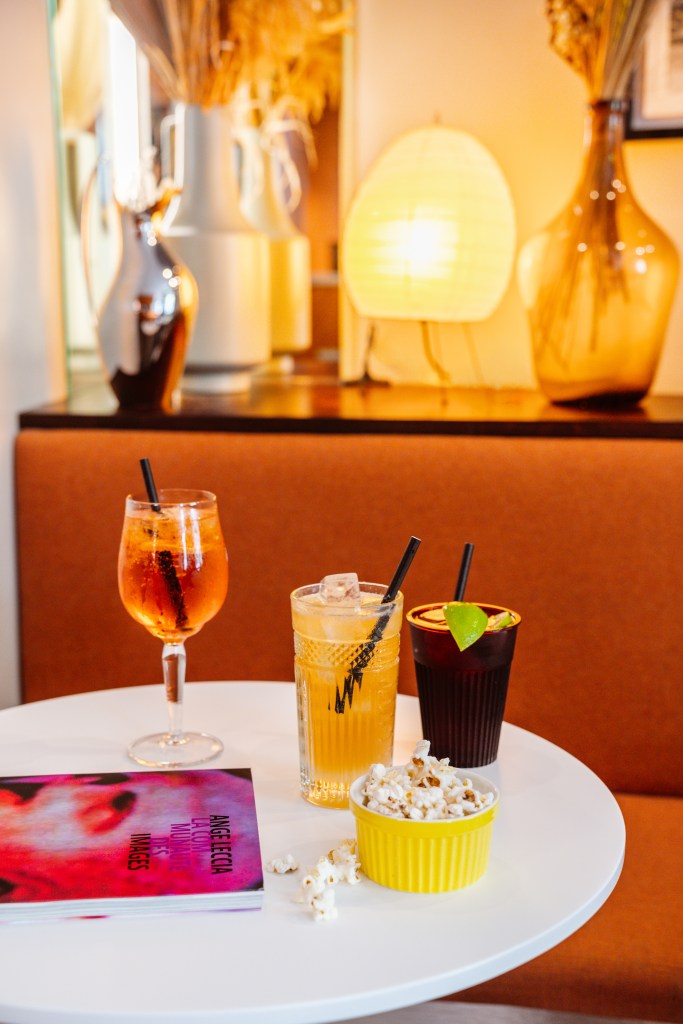
Popcorn awaits in the bedroom, while an old-fashioned black telephone seems to have arrived from another era. David Lynch, anyone? The corridors are lined with DVDs that guests are free to borrow, from Charlie Chaplin’s The Tramp to the films of Miloš Forman and Jacques Demy’s Les Demoiselles de Rochefort.
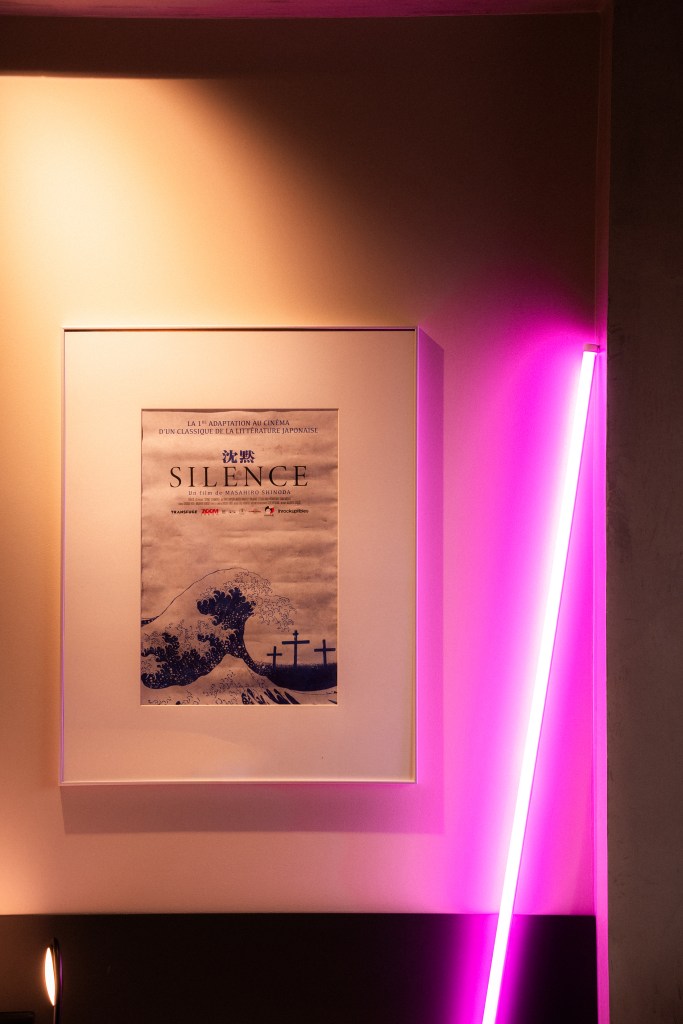
Film posters celebrate some of the most remarkable works and filmmakers in cinema history, lending the interiors a playful, quietly nostalgic character. These references are more than decoration: they invite curiosity and encourage guests to discover something new. The television has, in effect, disappeared. In its place is a cinema screen. Of course!
The distinction matters. Paradiso does not simply install a large television and call the room cinematic. The combination of projection, sound and scale changes how the space is experienced. After a day spent wandering through Paris, you can draw the curtains, choose a film and settle into bed for a private screening. You will not want to leave your room.
It is a wonderfully immersive way to disconnect from the outside world. There is something nostalgic about the experience, too. At a time when films are increasingly consumed on laptops, tablets and phones, Paradiso makes watching one feel like an event again. The darkness of the room, the scale of the image and the deliberate act of sitting down to watch a film properly restore a sense of occasion that streaming has often diminished.
The two Cinema Suites take the concept further, with professional cinema projection and Dolby sound designed to reproduce the conditions of a proper screening. Equipped with DCI-standard projection technology, they offer film lovers the possibility of watching current releases in conditions that come remarkably close to those of a professional cinema. They feel almost like private screening rooms with bedrooms attached, rather than hotel rooms that happen to contain cinema equipment.
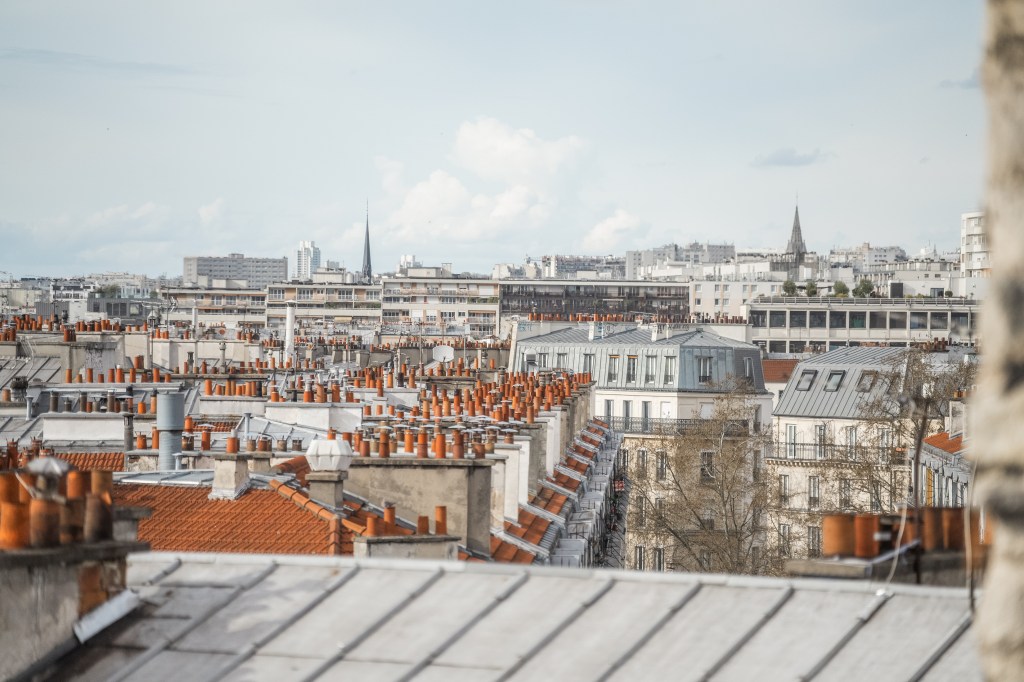
Yet one of Paradiso’s greatest strengths is that you need not be a committed cinephile to appreciate it. The concept is immediately accessible: watch a film from bed, borrow a DVD, browse a book about cinema, head downstairs for a screening next door, meet friends for a drink or venture up to the fantastic rooftop. Yes, the view over Paris is stunning! Then return to your room and put on another film.
The adjacent mk2 Nation cinema is central to this relationship between private viewing and collective experience. Guests can move seamlessly between the traditional auditorium downstairs and their own screening space upstairs.
During a recent evening, that connection felt particularly vivid after a screening of The Odyssey. Outside the cinema, conversations about the film continued as audiences emerged and drifted into the surrounding streets. It was a small but telling moment: cinema at Paradiso does not exist in isolation. It spills out and into the hotel, the neighbourhood and the conversations that follow a screening.
Books devoted to cinema are scattered throughout the communal spaces, inviting guests to linger and explore. Titles including The Oliver Stone Experience, The Bergman Experience and Purple Analog, invite more learning about films and culture.
The breakfast space continues this theme in a quieter, more intimate way. It is an inviting setting rather than a formal restaurant, the sort of place where breakfast can easily stretch into another coffee, a few pages of a book and perhaps half an hour more before heading out into central Paris. Breakfast is served as a continental buffet from 7am to 10am on weekdays and until 10.30am at weekends. It can also be delivered to the room at no additional charge. The coffee bar, meanwhile, welcomes both hotel guests and locals, giving the ground floor the atmosphere of a neighbourhood gathering place rather than a conventional hotel lobby. Locals also love it. Open daily from 7am to 11pm, the bar serves drinks and light snacks, with a water fountain and coffee machine available to guests. It is a useful touch in a hotel where the temptation to retreat to your room for another film is considerable.
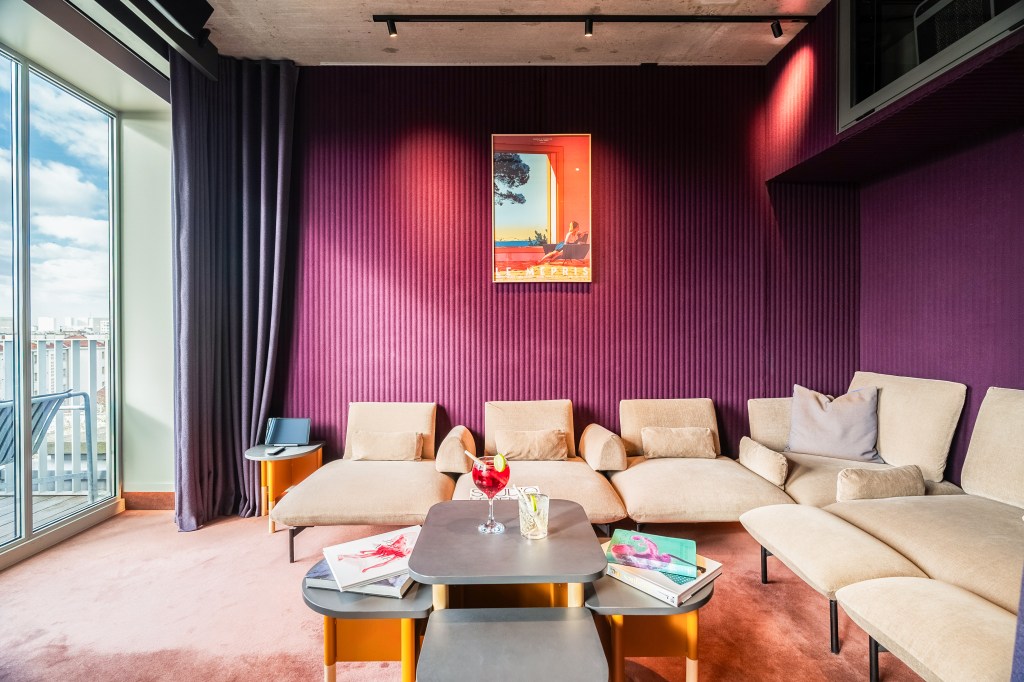
Then there is the Cinema Loge, another thoughtfully conceived element of the property. Located above the mk2 Nation cinema, this private, soundproofed screening room offers intimate loveseats for two alongside standard cinema seating. Guests can enjoy films showing in the adjacent theatre in a more exclusive setting, with drinks and snacks ordered during the screening through room service. Perfect for professional or family events! The space is also available for screenings and premieres to corporate meetings and smaller gatherings.
For something less serious, there is the Karaoke Box. Accommodating up to ten people, the private room is designed for singing, music quizzes and blind tests. Available for exclusive hire, it provides an alternative setting for birthdays, celebrations, evenings with friends or simply an excuse to do something unexpected in Paris. It’s fun and clientele is edgy.
At first, karaoke might seem a departure from the hotel’s film-focused identity. In fact, it fits neatly into mk2’s broader vision of entertainment (musicals dvds are there too!) as a shared cultural experience. Cinema is not treated as a solemn art form here; it exists alongside music, games, conversation and the pleasure of spending time together.
Cherry on the cake: The Vertigo Moonshiner Rooftop offers yet another change of pace. Perched above the city, it opens onto sweeping views across Paris, with a 360-degree panorama that makes it particularly appealing on warm evenings. Open seasonally from May to September, weather permitting, it serves cocktails, wine, beer and light bites, attracting both hotel guests and locals. Special events and parties add to its lively atmosphere. When the weather cooperates, it is a place to linger rather than simply stop for a drink: somewhere to watch the light change over the rooftops before returning downstairs, and eventually to the cinema waiting in your room.
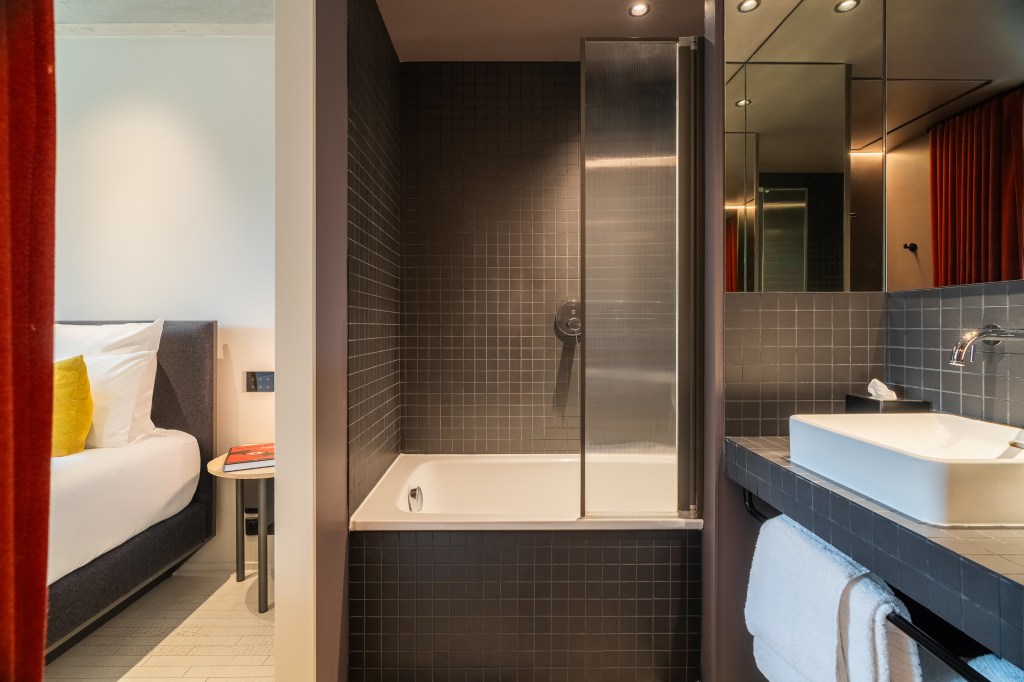
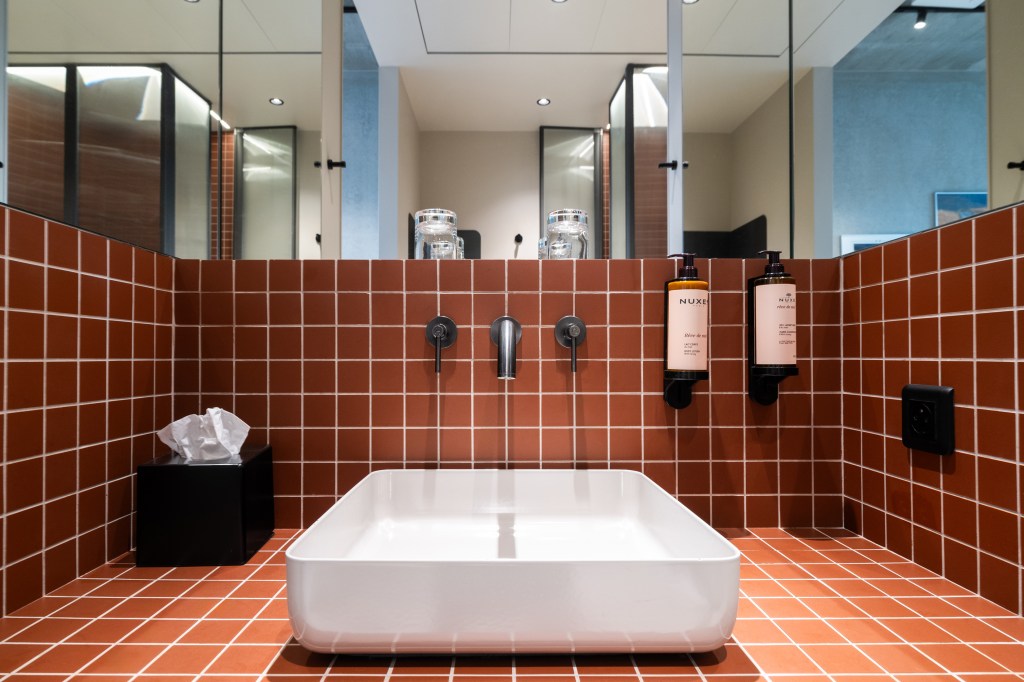
For all its distinctive features, mk2 hotel Paradiso remains comfortable in the ways that matter. The rooms are well appointed, the bedding is inviting and the cleanliness impeccable. Staff are friendly and attentive, with 24-hour service and a warm, uncomplicated welcome. The approach is informal rather than ceremonious, entirely in keeping with the hotel’s character, low lights and grey sheets. Chic and comfortable.
There is no attempt to recreate the atmosphere of a grand Parisian palace hotel, nor should there be. Paradiso’s luxury lies elsewhere: in the high quality of the projection and sound, the comfort of the rooms, the freedom to access films, the originality of its communal spaces and, above all, the feeling that the entire property has been designed around a coherent idea rather than a conventional hospitality formula.
What makes mk2 hotel Paradiso Nation particularly compelling is that its cinematic references are not superficial. They emerge directly from the identity and history of a company that has spent decades exhibiting, producing, distributing and preserving films. The projection technology, room design, programming and attention to detail all extend that philosophy into hospitality.
The result is a hotel that encourages you to experience Paris differently. You might spend the morning reading about cinema over breakfast, have a drink at the bar, sing with friends in the Karaoke Box and watch the sunset from the rooftop.
There is an irresistible echo here of Giuseppe Tornatore’s Cinema Paradiso (1988), the celebrated Italian film that remains one of cinema’s most poignant love letters to memory, community and the magic of the silver screen. Set in a small Sicilian village, it follows a young boy’s friendship with the local projectionist and his growing fascination with the movies. Tender and deeply nostalgic, the film captures the way cinema shapes our lives, preserves our memories and connects us to the people and places we leave behind.
The name Paradiso feels particularly apt in this context. Like Tornatore’s film, the hotel celebrates cinema not simply as something to watch, but as an experience capable of bringing people together and creating lasting memories. It is a lovely cultural reference, one that gives the hotel’s concept an emotional resonance beyond the novelty of watching a film in bed.
That is the real pleasure of mk2 hotel Paradiso Nation: you never quite leave the cinema and you never want to leave mk2 Hotel Paradiso for sure.
–