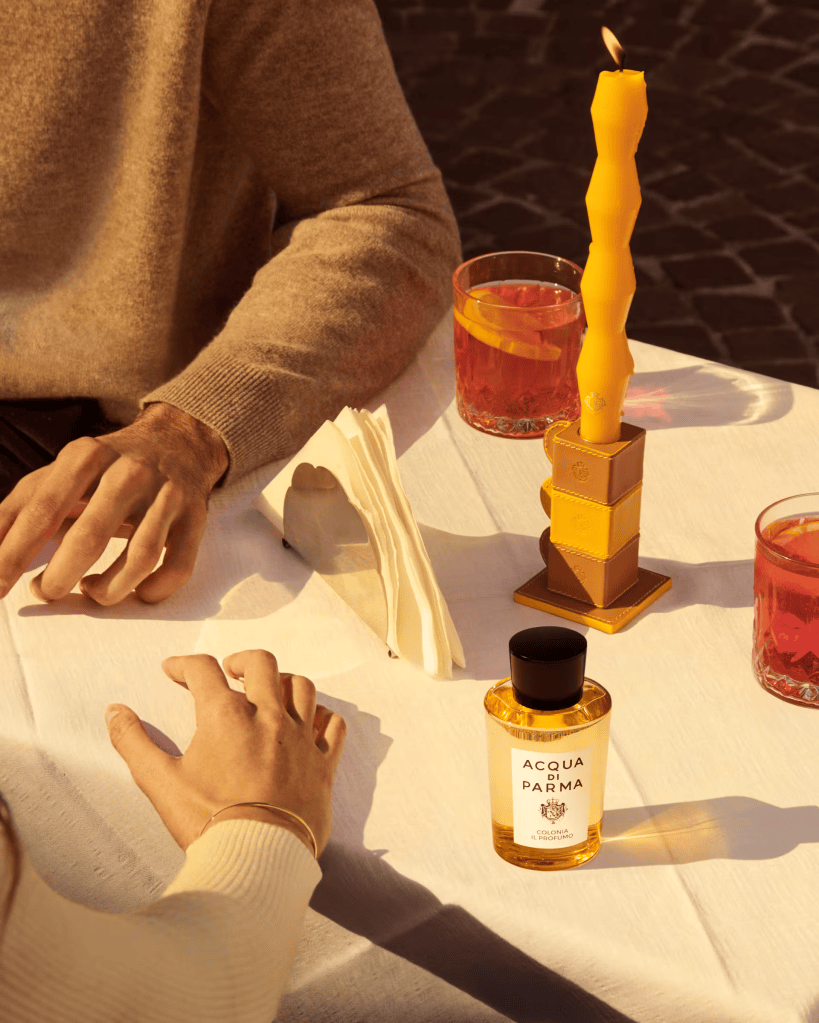
This year, Acqua di Parma celebrates its 110th anniversary, marking more than a century of Italian craftsmanship, elegance and taste. To commemorate the occasion, Oscar-nominated actor Michael Fassbender has been named the house’s first Brand Ambassador and stars in a new campaign film alongside Italian actress Sabrina Impacciatore.
Set against the sun-dappled streets of Parma, the campaign captures Fassbender discovering the city’s quiet pleasures and hidden luxuries, moving through its streets at his own pace. The film reflects the spirit of Acqua di Parma itself: distinctly Italian, refined yet relaxed, and rooted in an appreciation of the finer details of everyday life.
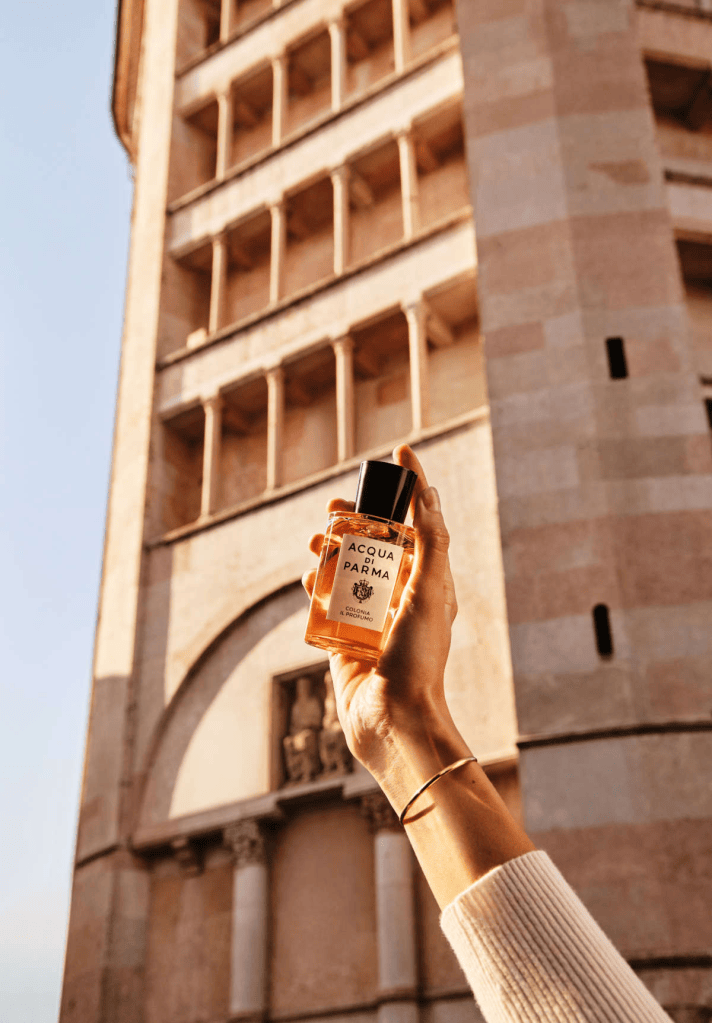
At the centre of the anniversary celebrations is Colonia, the fragrance that has defined the house since it was created in Parma in 1916. Fresh and luminous, its signature composition combines Calabrian bergamot, lemon and orange with lavender and rosemary, grounded by warm woody notes. More than a century later, Colonia remains one of the most recognisable expressions of Acqua di Parma’s approach to fragrance.
“Sophistication, beauty and elegance lie in simplicity,” says Fassbender, in the first episode of the campaign by enjoying a morning espresso, admiring a classic car, sampling fresh lemons at a local market and dining with friends. “For me, that is what personifies Italy and brings Italian philosophy to life. It is embodied in its food, culture and art.”
Long before Acqua di Parma became synonymous with ultimate Amalfi luxury, it began with a deeply personal expression of home. Carlo Magnani founded the house in 1916, creating Colonia as a fragrance for himself. Art is Alive meets Matthew Hicks, Acqua di Parma’s fragrance specialist, at the beautiful Harrod’s boutique: “Carlo Magnani founded the house in 1916 and created Colonia as a fragrance for himself. He was a Parma native who travelled often to cities like London and Paris, and he missed Italy, its light, its calm, its identity. Colonia was his answer to the popular French perfumery of the time, and to homesickness for Parma itself.”
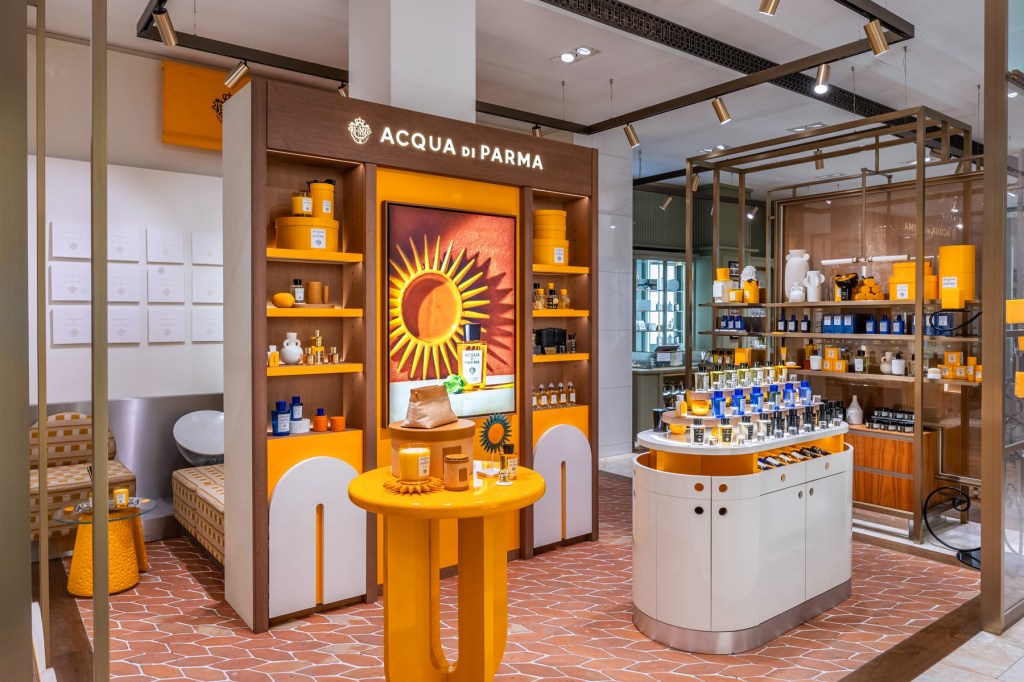
That sense of place remains at the heart of the house today. Acqua di Parma’s distinctive yellow, for example, takes its inspiration directly from the buildings of Parma. “It reflects the yellow-toned buildings of Parma, which glow in the sunlight,” says Matthew. “The sun is central to the brand’s philosophy, the house even runs an event called Sole, bringing ‘Italian sunshine’ to the counter.”
The house’ identity is deeply connected to various cities and islands in Italy including Venice and Capri, but expressed through a sophisticated contemporary language. “Products, community, and Italian excellence, culture, storytelling, and craftsmanship, expressed across fragrance, home, and accessories,” in Matthew’s words. It also shows in a wonderful book titled “The Art of Living Under the Italian Sun”, available at Harrod’s which also celebrates the brand.
That commitment to Italian craftsmanship extends to every stage of production. “Entirely there, the fragrance, packaging, and point-of-sale materials all come from Italy,” says Matthew. “The house previously had its headquarters in Parma and now runs a studio and workshop in Milan, working closely with the Italian creative team.”
Even the smallest details have been considered. The bottle caps unscrew rather than being pressed on, a decision that reflects the way each bottle is made. “Because the bottles are hand-assembled rather than machine-pressed, a deliberate mark of craftsmanship. Every bottle is individually labelled by hand,” Matthew explains. True luxury indeed.
For Acqua di Parma, craftsmanship and storytelling are inseparable too. “Both,” says Matthew when asked which matters more. “Acqua di Parma calls its standout ingredients ‘singularities’, rare or exceptional materials chosen for technical craft, but always in service of a story or feeling that connects to the wearer’s lifestyle.”
That philosophy can extend well beyond the fragrance itself. For the launch of La Riserva within the Blu Mediterraneo collection, the house created a bespoke picnic basket evoking a Mediterranean road trip or boat outing alongside the fragrance. “Yes, for the Blu Mediterraneo collection’s La Riserva launch, the basket contains the fragrance and more, reinforcing the ‘journey’ theme of the scent.”
Artistic collaboration is another important part of the brand’s world. “artist Matteo Civico designed visual merchandising and a Buongiorno-themed decorative plate; the brand regularly partners with Italian and international artisans, especially for major seasonal collections such as the upcoming holiday launch.”
For the house, Laura Gonzalez, the Paris-based interior architect and designer known for her vibrant use of colour, pattern and craftsmanship, created La Caletta, a Mediterranean-inspired collection for summer 2026. Her designs bring coral forms, vivid colours and seaside references to fragrances, candles and home objects.
Cristina Celestino, whose work often combines contemporary design with traditional Italian craftsmanship, reinterpreted Acqua di Parma’s Antelao fragrance bottles in glazed porcelain. Inspired by the Dolomites, their colours and hammered surfaces reference the landscape and local craft traditions.
French artist Ben Arpea brought his distinctive graphic and Mediterranean-inspired painting style to the Chapeau! candle and a series of scented candles including Pineta, Salina and Ulivo.
India Mahdavi, celebrated for her exuberant use of colour, transformed Acqua di Parma’s fragrances and home collection through Murano glass. Stripes, tartan patterns and saturated colours turn bottles, candles and diffusers into decorative objects in their own right.
Finally, French jewellery and sculptural artist Annelise Michelson created a gold-plated brass tray for Luce di Rosa, extending her tactile, fluid sculptural language into the world of fragrance.
Together, the collaborations demonstrate how Acqua di Parma is treating fragrance as more than scent: as an object, at the crossroads of art and design.
The fragrance portfolio itself is organised around distinct universes, each offering a different expression of Italy. “Into four core universes,” says Matthew. “Colonia, the brand’s history and heritage; the original 1916 fragrance and its variations, evoking ‘a day in Parma.’ Blu Mediterraneo, one ingredient, one location; inspired by places like the Amalfi Coast, Sicily, and Calabria, using ingredients sourced from those exact regions. Signatures of the Sun, rare, non-Italian ingredients (saffron, oud, osmanthus) ‘exposed to the Italian sun’ and blended with Italian citrus for a new character. Buongiorno, a philosophy of wishing someone a good day; understated, sophisticated skin scents built around musk.”
Running through this entire world is a distinctly Italian citrus signature. “The ‘Frutti d’Oro’, three principal Italian citrus fruits: Calabrian bergamot, Italian lemon, and sweet orange. Not every fragrance uses all three, but at least one appears in every scent, forming the brand’s DNA.”
Within Signatures of the Sun, the house brings ingredients such as oud, saffron and osmanthus into an Amalfi coast context. “It combines powerful, unusual ingredients, like oud, saffron, or osmanthus, with Italian citrus, giving them an unexpectedly Italian character not typically associated with those materials.”
Buongiorno offers another expression of Acqua di Parma’s philosophy, centred on intimacy and understated elegance. “No ostentatious cues, just quiet elegance. All five fragrances in the line are skin scents built on musk, a first for the brand, designed to feel personal and long-lasting by bonding with the wearer’s skin.”
Several fragrances provide particularly vivid expressions of these ideas. Colonia Mille Miglia is “a limited-edition rework of the classic Colonia, launched to mark the brand’s 110th anniversary.”
Colonia Mela e Timo, meanwhile, extends the original Colonia narrative into a different moment of the day. “It’s an extension of the ‘day in Parma’ story told by Colonia, but set at golden hour rather than daytime, the same familiar buildings, but under a different, richer light. Ylang-ylang (from a particularly prized 2024 harvest) adds warmth, sensuality, and opulence that the classic Colonia doesn’t have.” The bottle reflects that change in atmosphere. “It has a raised frame around it, echoing the window frames of Parma’s buildings, a tactile detail that reflects the shift in mood from the original Colonia.” Simply beautiful!
With Fico di Amalfi La Riserva, the house similarly takes an established favourite and gives it greater richness. Matthew describes it as “an elevated version of the original Fico di Amalfi, macerated for two months instead of one. This deepens the scent profile, more fig, more plum, more jammy, with added tonka bean for richness. It represents an evening on the coast at sunset.”
Chedro Virtuoso, part of Signatures of the Sun, takes its inspiration from technical and creative mastery. “A fragrance celebrating ‘virtuosity’, technical brilliance paired with emotional resonance,” Matthew explains. Its Virginia cedarwood and hazelnut (so original) are fused through co-distillation, creating a single distinctive ingredient, while Alaskan cedar, Atlas cedar and Italian bergamot add further depth and freshness. It is presented as an Eau de Parfum for greater longevity and projection.
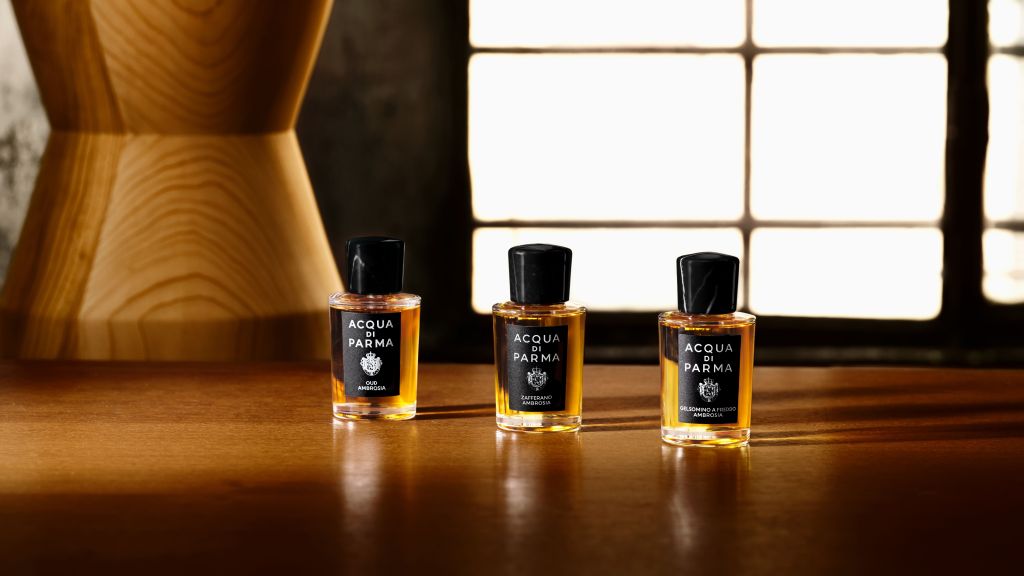
At the upper end of the fragrance collection sits Ambrosia, a newer and more concentrated category. Matthew’s describes these as “a newer, more concentrated category, richer, longer-lasting, and using rarer ingredients than the Eau de Parfums.” The name refers to Greek mythology and the idea of “closeness to eternity.”
Among the range is Oud Ambrosia, a Harrod’s-exclusive inspired by Palermo and Sicily’s historic relationship with the Middle East. “Inspired by Palermo, Sicily, and its historical Middle Eastern influences. It reworks the brand’s Oud Eau de Parfum with notes of papaya and passion fruit alongside the traditional musky, animalic oud character, plus bergamot, giving it a fruitier, distinctly Italian take on oud compared to more traditional Middle Eastern or ‘Western’ ouds.”
The Ambrosia and original Oud compositions are deliberately distinct. “They’re not ‘flanker’ fragrances (near-identical variations), they’re genuinely different compositions. The Ambrosia uses oud butter and leans sweeter, while the classic uses oud oil and is more wearable, versatile day-to-day.”
“The Ambrosias are built around a ‘light and shadow’ duality, Ambrosias intentionally use a higher proportion of deep, dark base ingredients (around 80%) to create a more opulent, intentional, ‘special occasion’ fragrance versus the more versatile Eau de Parfums.”
Zafferano, meanwhile, is one of the house’s hero fragrances, built around the historic journey of saffron from the Middle East to Venice along the Silk Road. “Considered a hero and icon fragrance. Its story traces saffron’s historical trade route from the Middle East to Venice via the Silk Road, alongside Italian bergamot. The fragrance is likened to Venetian architecture, built from rare, precious materials (saffron, vanilla) the way Venetian buildings use marble, Murano glass, and gold leaf.” There is also a Zafferano Ambrosia: “Yes, an even more opulent, saffron-forward version of the story, still rooted in Venice but presented in a more structured, elevated way.”
Buongiorno, the flagship of the collection, transports the wearer to Tuscany. “Inspired by spring in Tuscany, the scent of a villa garden after rainfall as the sun returns. Notes include spearmint, basil, and petitgrain up top, with amber and musk in the base for warmth.”
The collection then unfolds through five fragrances representing different moments of an Italian day. Buongiorno Albicocca captures “the kiss of the morning sun; bright citrus and neroli, waking you up.” Amore Mio evokes “the feeling of fresh bed linen just before getting up; iris and a musk accord.” Dolce Far Niente is “a lemony, carefree fragrance for a day with no obligations.” Gioco del Destino introduces “an unexpected, playful turn to the day,” built around wheat bran and candied orange. Finally, Buonanotte offers “a warmer, muskier close to the day” and is Matthew’ personal favourite in the collection.
The fragrances also bring together different creative approaches. “Perfumer Olivia Giacobetti created the softer, breezier scents (Al Bacio, Amo Mio, Dolce Far Niente), while richer, more intense compositions like Gioco del Destino and Buonanotte round out the collection.”
Acqua di Parma’s exploration of Italy continues through its seasonal and limited editions. These include the opera-inspired Note di Colonia, connected to Parma’s Teatro Regio, and Bergamotto di Calabria Sfusato, which uses the traditional sfumatura extraction method. The technique is remarkably artisanal: the fruit is hand-expressed using sea sponges and is now practised by only around ten to fifteen remaining artisans. Seasonal home collections extend the storytelling into vineyards, Italian desserts and Christmas traditions, including Bosco, Panettone and Torrone.
“Colonia fragrances are traditionally presented as eau de cologne (lighter, more classic) because that reflects the fragrance’s historical origins, Carlo Magnani set out to create ‘an Italian cologne.’” Signatures of the Sun uses Eau de Parfum for greater depth and projection, while Blu Mediterraneo is predominantly Eau de Toilette, reflecting what Matthew describes as a “splash of the Mediterranean Sea.” La Riserva and Bergamotto Sfusato move into Eau de Parfum to complement their richer concentrations.
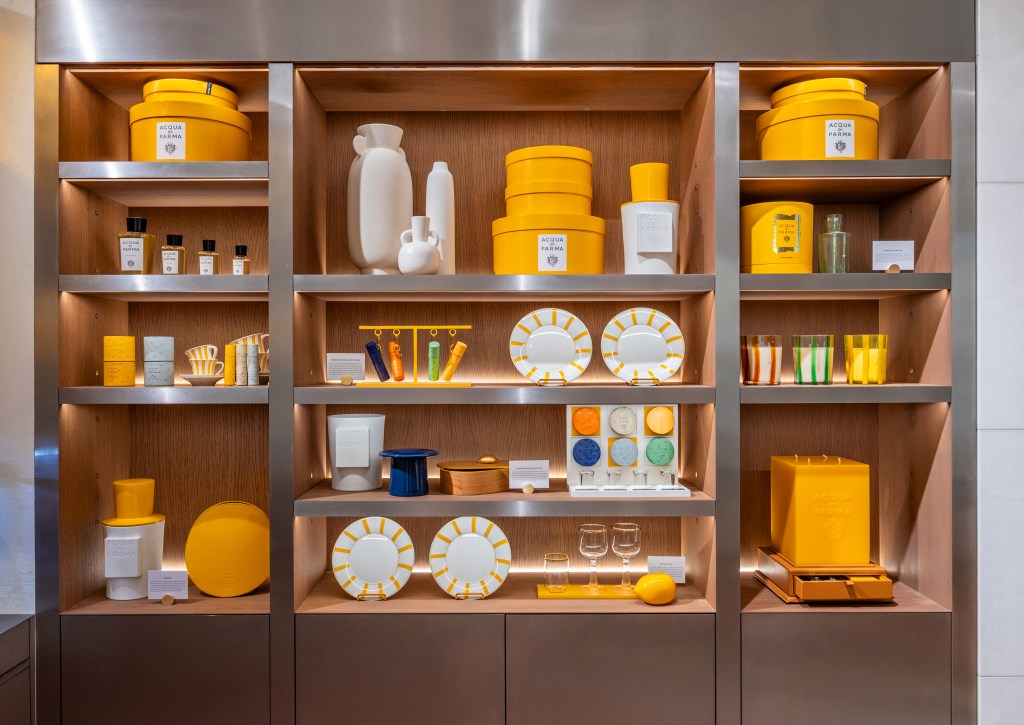
The Art of Living collection takes this philosophy further, encompassing a selection of objects and accessories that celebrate Italian design, craftsmanship and the pleasures of everyday life. From decorative pieces and tableware to travel and leisure accessories, it reflects the idea that beauty should extend beyond fragrance and into the way we live.
The Acqua di Parma world extends naturally into the home. “Yes, candles and diffusers exist for most of the brand’s hero scents, plus a dedicated ‘Italian Moments’ home collection (e.g., Insieme/‘together,’ Grazie/‘thank you’) that doesn’t have a corresponding perfume.”
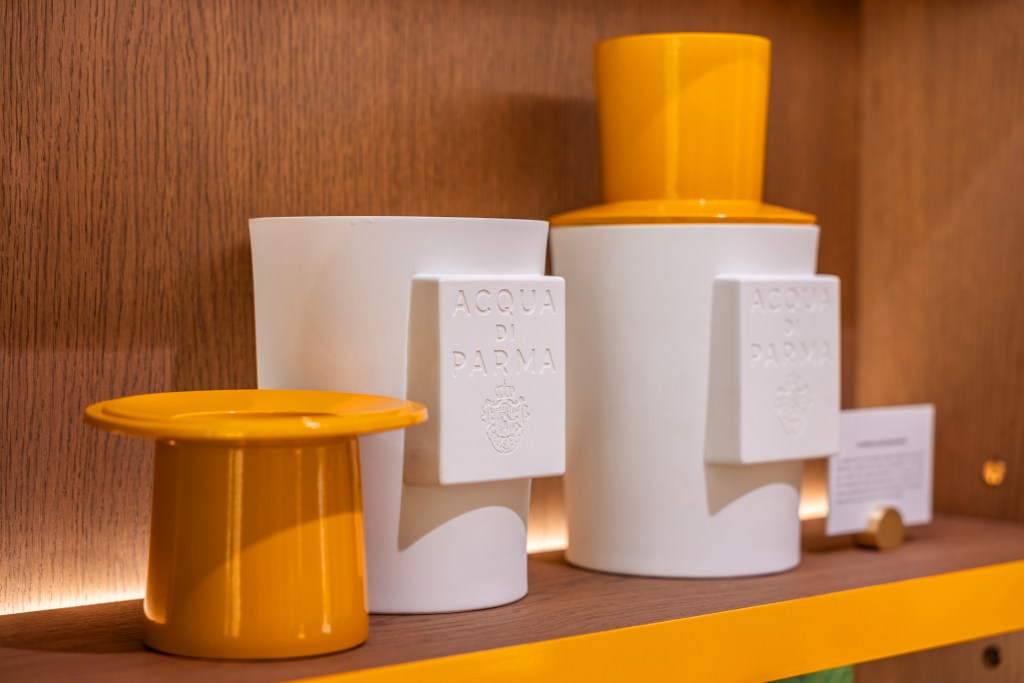
At the artisanal end of the collection is Chapeau, a limited candle range whose name is both a reference to the French word for hat and a playful “hats off” to the customer. Each ceramic candle takes approximately four weeks to produce by hand. “The ceramic base and painted and carved lid are crafted, tested, and finished separately using specialised tools, then paired together.”
The same sensibility extends to the Body Collection, which transforms fragrance into an everyday ritual with body washes, lotions, creams and deodorants, as well as the Barbiere range dedicated to shaving and grooming.
Gifting is another important part of the Acqua di Parma experience, with curated sets, limited editions and personalised offerings designed for different occasions.
The boutiques also offer a collection of what the house calls “Masterpieces”: leather fragrance travel cases, customisable refillable bottles in porcelain and Murano glass, leather-cased refillable car diffusers and seasonal objects such as an ice-cream-shaped candle holder and a beach bucket-and-spade design.
In the UK, Harrod’s offers the complete Acqua di Parma boutique experience and it’s stunning. “Yes, the brand has counters across various department stores in the UK, but Harrod’s is the only standalone boutique offering the full product and service range.” It features a small banquette, beautiful bright yellow displays and wonderful tiles.
From one Parma native’s homesickness in 1916 has emerged a remarkably expansive expression of Italian culture. What makes Acqua di Parma distinctive is the consistency of that vision: Parma, sunlight, craftsmanship, citrus, travel, architecture, art and the pleasures of everyday Italian life continue to inform everything from its most iconic colognes to its candles, objects and accessories.
More than a century after Carlo Magnani created Colonia, the house remains firmly connected to the place that inspired it, while continually finding new ways to translate that Italian spirit into fragrance, design and contemporary luxury.
–