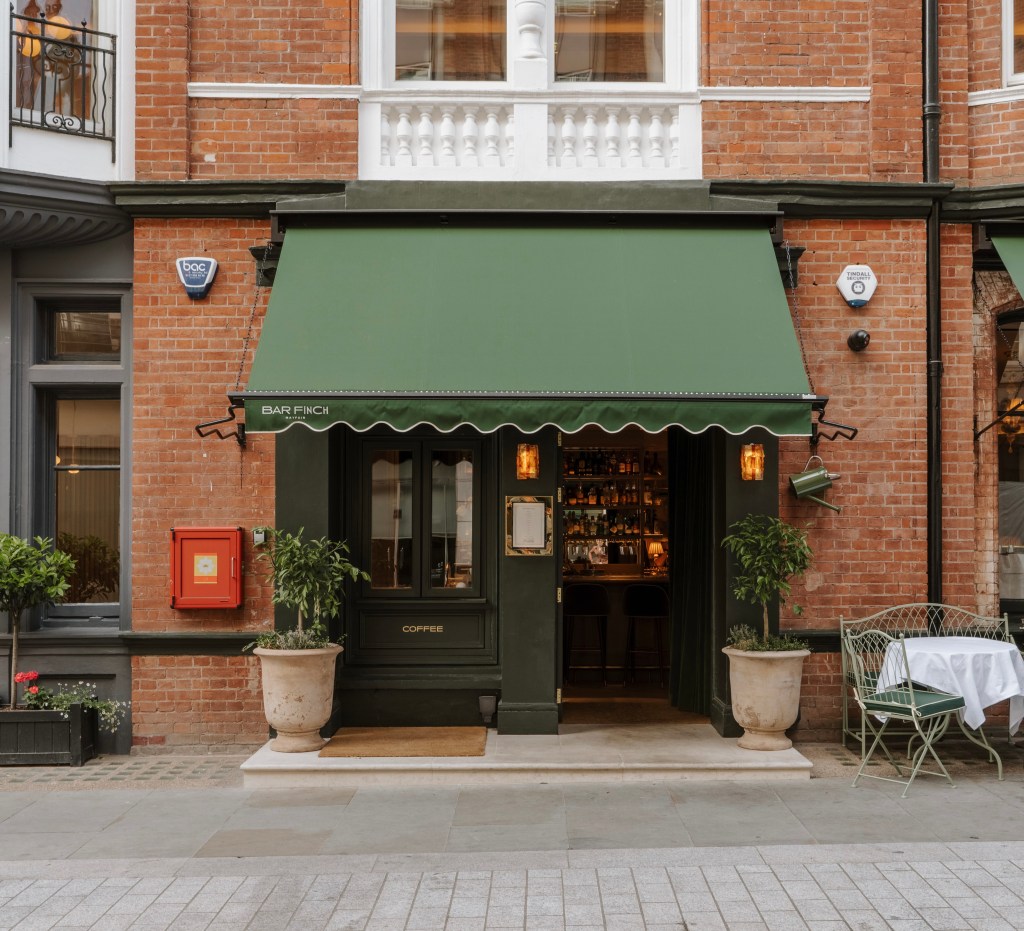
Mayfair has always been the beating heart of the artworld. Before the neighbourhood became synonymous with private members’ clubs, five-star hotels and luxury fashion houses, Cork Street and its surroundings were home to artists, dealers, writers and provocateurs, a small, concentrated world. Bar Finch at 31 Cork Street, epitomises this universe. It is currently the best restaurant and bar in Mayfair.
The story of Mayfair’s art scene begins long before its current concentration of galleries and auction houses. The Royal Academy’s association with the area began in 1771, when it moved to temporary premises in Old Somerset House after outgrowing its home in Pall Mall. In 1780, it relocated to purpose-built apartments in New Somerset House, designed by its founding member Sir William Chambers. The Royal Academy remained there until 1837, when it moved to Trafalgar Square and later established its permanent home at Burlington House in Piccadilly.
The market followed, and over the decades the surrounding streets developed a distinctly artistic identity of their own. The Mayor Gallery opened on Cork Street in 1925, with Fred Mayor championing the radical European avant-garde. In 1938, Peggy Guggenheim opened Guggenheim Jeune at 30 Cork Street, her first London gallery. For its inaugural exhibition, she presented the work of Jean Cocteau, with the show selected and hung by Marcel Duchamp and its catalogue written by a then-unknown poet, Samuel Beckett. The works were considered sufficiently provocative to be held by customs in Croydon. Guggenheim, however, proved less successful as a salesperson, and the gallery closed after just 18 months.
By then, Cork Street had begun to develop a cultural ecosystem of its own, largely removed from the more conservative tastes of the wider city. At the opening of The London Gallery’s Surrealist Objects and Poems in 1938, sausages and whisky were served at midnight.
Around the corner, at 5 Burlington Gardens, now home to Cecconi’s, the New Burlington Galleries hosted the International Surrealist Exhibition in 1936, bringing together artists including Picasso, Miró, Max Ernst and Salvador Dalí. Dalí supplied the evening’s most memorable piece of theatre. For a lecture, he arrived in a deep-sea diving suit, accompanied by two leashed dogs. The helmet, predictably, proved problematic: Dalí began to suffocate and had to be rescued.
On the roof of Burlington Arcade, Antony Gormley’s sculpture offers another reminder that art here is not simply housed behind gallery doors; it remains part of the fabric of the neighbourhood itself. People don’t even notice this mysterious work.
David Bowie’s 1995 exhibition staged at The Gallery, 28 Cork Street, marked his first solo presentation of visual art, bringing together paintings, drawings, sculpture and installations made over two decades.
British film producer, businessman and publisher, Charles Finch is behind Bar Finch. But why is it exceptional? He described his new venture: “Bar Finch has been a long time coming this bar of mine and it feels like the culmination of decades spent living life well. There is nothing particularly innovative about Bar Finch; it is, at heart, a classic Roman or Venetian bar, with a touch of my own transatlantic experiences – club classics on the menu, made up of the dishes we actually love to eat, a proper bar, and with a charming staff.”
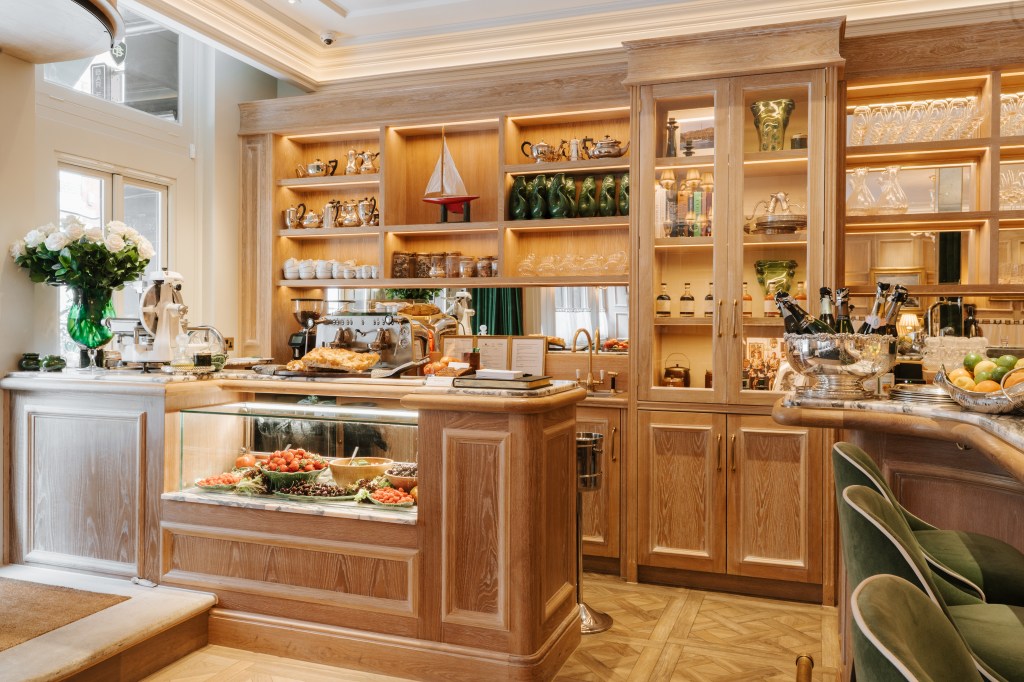
There is a confidence in that approach. Rather than chasing novelty, Bar Finch leans into fantastic atmosphere, and wonderful details. Walking in, the first impression is of serious style. Issues of A Rabbit’s Foot (also owned by Charles Finch) line the left-hand side above a cabinet displaying a beautiful, colourful array of fruit and cakes, a wonderfully catchy detail.
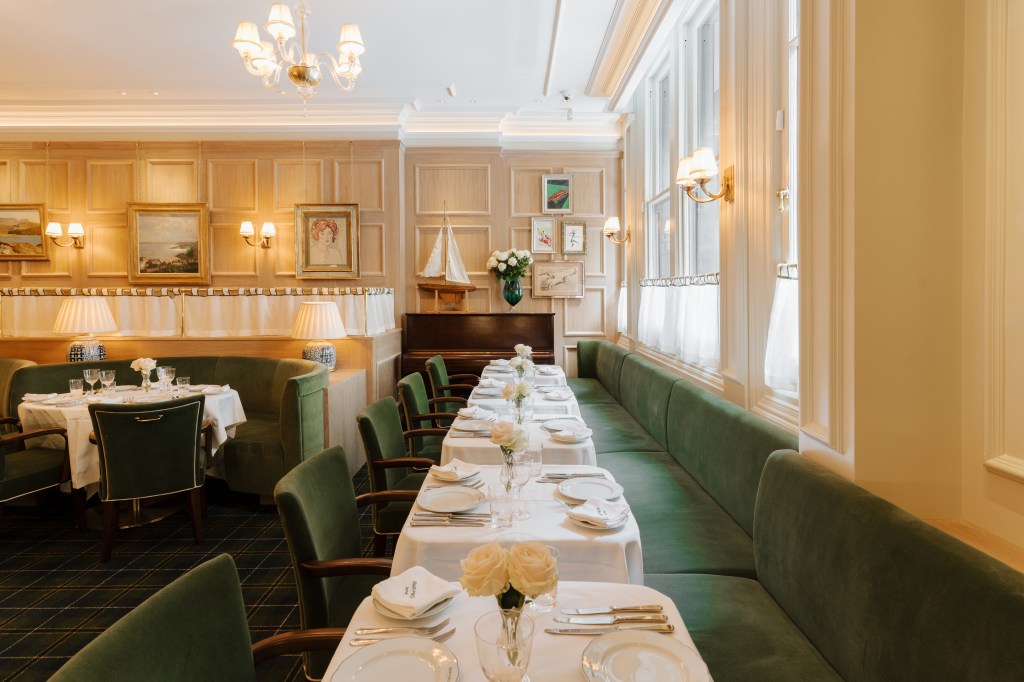
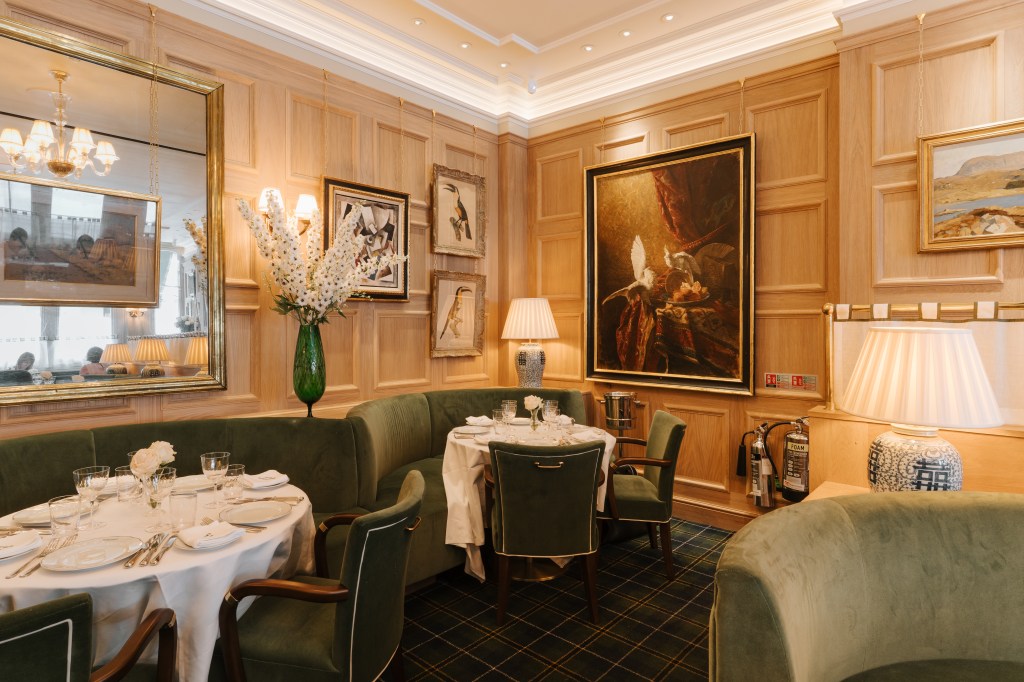
The room is wrapped in Scottish tartan, which covers both the wallpaper downstairs and carpet upstairs. It could easily have become too literal, but here it gives the space warmth and character. Green chairs pick up the deeper tones of the fabric, while white roses on the bar on the tables, add a softer note.
The walls are hung with art, including Impressionist studies, Cubist works and prints by Picasso. It feels collected, reinforcing the sense that Bar Finch is a cosy environment rather than a restaurant built around an Instagram-ready concept.
At the centre is an impressive light-coloured wooden bar, giving it the feel of an unusually stylish private club. It is very chic, but not formal.
A live pianist plays throughout the room, with jazz standards and movies’ themes, providing a soundtrack rather than a performance. It gives the restaurant a distinctly cinematic quality, appropriate, perhaps, given Finch’s long association with the film world. The music never overwhelms the conversation.
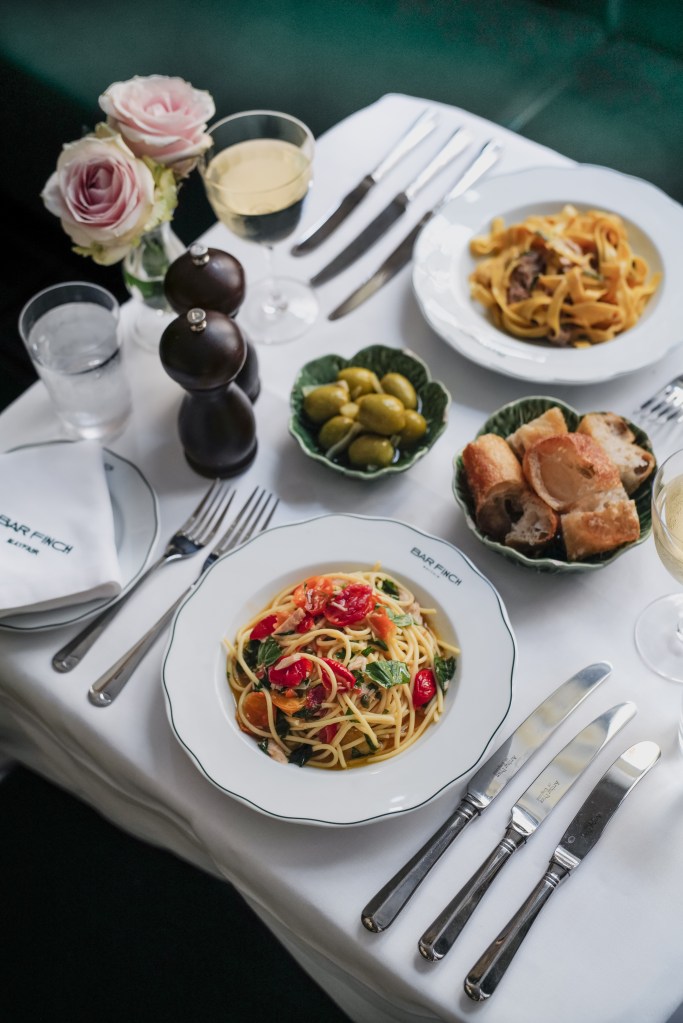
The details are equally considered. The waiting staff are dressed in dark green, working seamlessly with the palette of the interiors. Even the tableware has personality. Amuse-bouches arrive on Bordallo Pinheiro plates shaped like cauliflowers; the serviettes feature discreet Bar Finch embroidery; the crockery carries the restaurant’s logo. Most charmingly, the butter arrives shaped like a madeleine (Marcel Proust anyone?).
The menu features a poem of the month, currently Pablo Neruda, bringing literature into the experience without making a point of it. These are small details, but they do elevate the experience. The same applies to the food and delicious cocktails, making a difference with other venues in London.
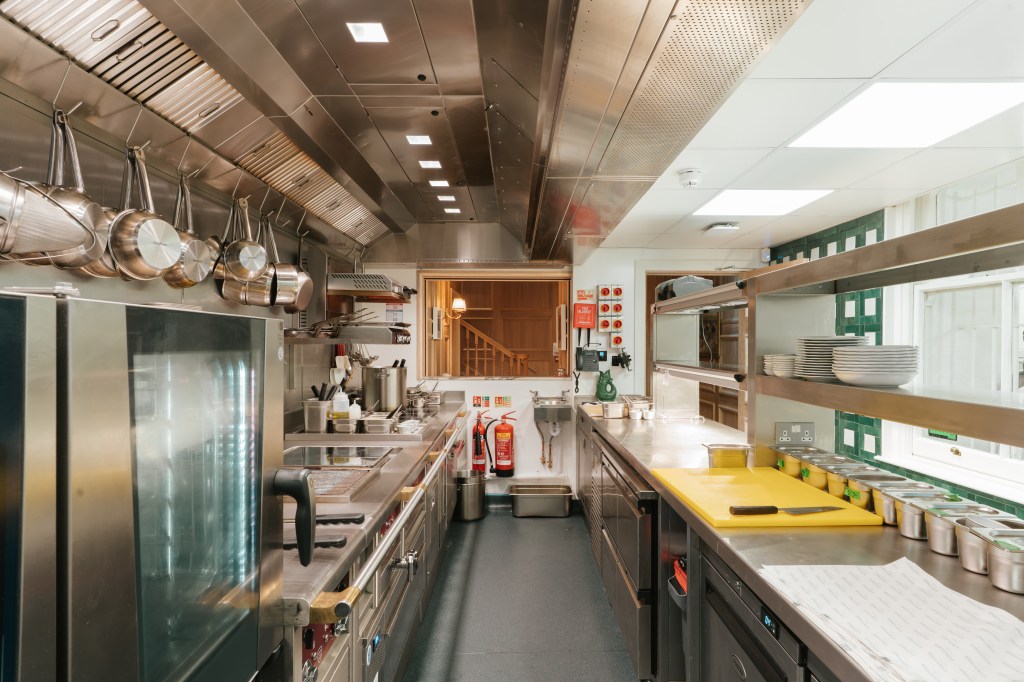
At the helm of the kitchen is Tom Trubshaw, Chef de Cuisine, with a menu built around great dishes. There is Longhorn rump tartare with game chips and cured yolk, cured yellowfin tuna with toasted brioche, Dorset crab cakes with preserved lemon tartare sauce and tomato salad. The chopped salad and Bar Finch Caesar continue the straightforward offering, while smoked trout and grilled langoustines offer lighter options. Delicious!
The Bar Finch Hamburger and croque monsieur fit with the vibe and are exceptional. Steak frites, roast chicken, chicken piccata with poussin, capers and parsley, melanzane alla parmigiana (more italian touches) and the catch of the day make up the more substantial choices. There is also pasta del giorno, alongside fries, mash potato, mixed leaf salad, greens and beans.
Dessert continues the same theme. Lemon meringue pie, chocolate cremoso, honey and brandy semifreddo and beignets round out the selection. The rather brilliant Tiramisu is the highlight and the best you’ll ever taste in London.
It is essentially the sort of food one wants from a restaurant: recognisable, generous and well executed. There is no attempt to reinvent the classics simply for the sake of it but to provide the best and most exquisite experience.
At the bar, Antoine Brosseau, Chef de Bar, oversees the drinks, while Paul Hough, Maître d’Hôtel, leads the front-of-house team. The service is polished without being overly formal, which suits the restaurant’s overall positioning.
It also demonstrated the flexibility of the restaurant itself. On a quieter evening, the pianist, candlelight and dark-wood bar create an intimate setting for dinner or drinks. During a Fashion Week party, the same room can accommodate a considerably more energetic creative crowd without losing its identity. Guests are very chic and discussions are fun!
Last weekend, A Rabbit’s Foot, the brilliant independent film magazine, chose Bar Finch for the launch of its September Film Fashion issue and to coincide with London Fashion Week. The evening made the relationship between Bar Finch and A Rabbit’s Foot particularly clear. The evening began at what is now the Messums Gallery, (where Bowie presented his show) where enlarged pages from the magazine and editorials featuring cover star Willem Dafoe greeted guests before the party moved into the restaurant. Both venues operate in that increasingly fluid space between cinema, fashion, art and social culture. It is an interesting context for this amazing restaurant. Bar Finch feels like an extension of that world. That consistency is one of Bar Finch’s strongest qualities. The decor, the arts, the atmosphere and carefully chosen tableware all feel as though they belong to the same visual language.
It is a restaurant that understands the importance of a point of view. In a city increasingly full of restaurants designed around a particular visual moment, Bar Finch is more interested in creating an environment that works over time. It can accommodate a long family lunch, a business dinner, a romantic drink at the bar or a BAFTA party. It feels sufficiently polished for Mayfair without becoming so formal that it discourages regular visits.
There is a nostalgic element too, but it is less about recreating a particular period than about returning to an older model of hospitality: the restaurant as social room, the bar as somewhere to linger, be seen, and food, cinema, music and chats as parts of the same experience.
That idea has a particular resonance on Cork Street and opposite where Peggy Guggenheim and ‘Groovy Bob’ had their galleries. The artists and dealers who established the area’s reputation were creating social worlds as much as exhibitions.
Bar Finch belongs to a very particular kind of Mayfair, with its subtle Italian and French references and an instinct for understated glamour. Yet the sensibility is instantly recognisable: this is arguably the chicest address in town, perfectly positioned between Savile Row’s tailors and some of London’s finest galleries. You will come back to Bar Finch!
–