Bathed in golden tropical light and framed by the vast sweep of the Baía de Todos-os-Santos, Salvador is one of Brazil’s most dazzling cultural cities. This incredible place reflects a vibrant blend of former colonial grandeur and coastal ease, where pastel-painted mansions, ornate baroque churches, and palm-lined plazas overlook the glittering Atlantic. Nature is everywhere too creating a vibrant palette of colours. Salvador is often called the ‘Black Rome’ with its many churches and spectacular architecture.
What makes Salvador today truly unforgettable is its extraordinary vitality. The city is the beating heart of Afro-Brazilian culture, expressed through its world-renowned cuisine, music, dance, and artistic traditions. Elegant women in flowing white lace serve freshly made acarajé on street corners, capoeira performers animate public squares, and sunset gatherings spill effortlessly from rooftop terraces to the waterfront. There is warmth in every encounter and a palpable joy woven into daily life.
In the historic UNESCO-listed Pelourinho district, music drifts through cobbled streets from dawn until late evening, giving the entire city an unmistakable sense of movement and celebration. Sophisticated yet deeply soulful, Salvador captures the essence of Brazil at its most colourful, generous, and alive. Ride the historic Elevador Lacerda for sweeping views across the Bay of All Saints, before exploring the bustling Mercado Modelo, where artisans, local flavours and Bahian traditions come together. Along the coastline, the Farol da Barra lighthouse offers one of Salvador’s most magical rituals: watching the sun sink into the Atlantic as the city’s music begins to spill into the street.
The city is also home to several key museums that reflect its dark and cruel colonial history as well as its vibrant contemporary art scene. The Museu de Arte Moderna da Bahia (MAM Bahia), located in the Solar do Unhão complex, focuses on modern and contemporary Brazilian art and is also revered for its brilliant exhibition programme.
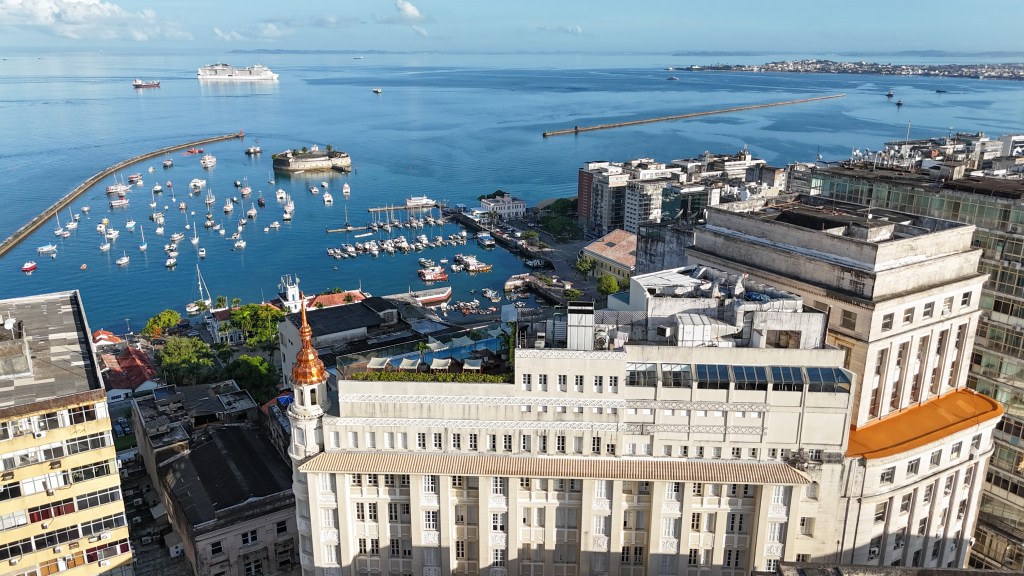
But where is it best to stay to explore such rich cultural life? Rising above Castro Alves Square in the historic heart of Salvador, the Fera Palace Hotel brings a distinctly cosmopolitan glamour to one of Brazil’s most atmospheric cities.
The immediate surroundings bring together some of the city’s most emblematic landmarks, all within easy walking distance from the centre with its small and beautiful boutiques. Fera Palace remains the most central place to explore the city.
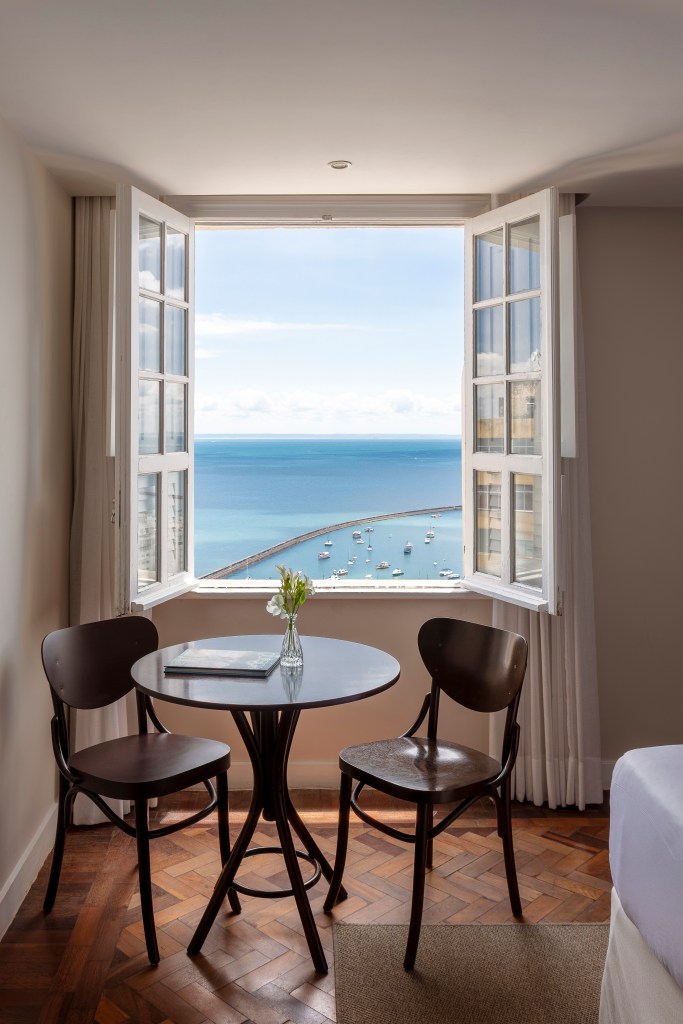
Its position, close to the city’s main historic landmarks places it within one of Salvador’s key cultural routes, linking music, history, and the urban fabric of Salvador. Views from the rooms to the waterfront axis begins with the iconic Mercado Modelo. The Casa do Carnaval da Bahia, focused on the history of Carnival, among others. Near the Elevador Lacerda in the Comércio district, the Cidade da Música da Bahia is a contemporary museum dedicated to the musical history of Bahia. Located in the restored Casarão dos Azulejos Azuis, it presents the evolution of local genres such as samba, axé, and samba-reggae through immersive, multimedia installations. Also easily accessible from Fera Palace. Nearby, the Museu da Misericórdia presents a significant collection of sacred art and colonial-era objects, reflecting the city’s early social and religious history. Further along the historic centre is the Espaço Cultural da Caixa, a contemporary exhibition space hosting rotating shows of Brazilian modern and contemporary art. The nearby Monumento a Cidade offers a sculptural viewpoint over the city and bay, reinforcing the area’s strong connection between landscape and urban form. All of these incredible cultural spaces lie within easy walking distance of the Hotel.
Also within minutes to Fera Palace is Galatea Gallery, a contemporary gallery space presenting exhibitions by artists such as Adenor Gondim, Montez Magno, and Fábio Miguez, among others. Together, these institutions form a dense cultural ecosystem around Rua Chile, where colonial heritage, contemporary art, and everyday city life intersect within a few city blocks. For futher viewings around Palace, The Museu Afro-Brasileiro is dedicated to African heritage in Brazil, with collections centred on religious objects, rituals, and cultural traditions, particularly those linked to Candomblé.
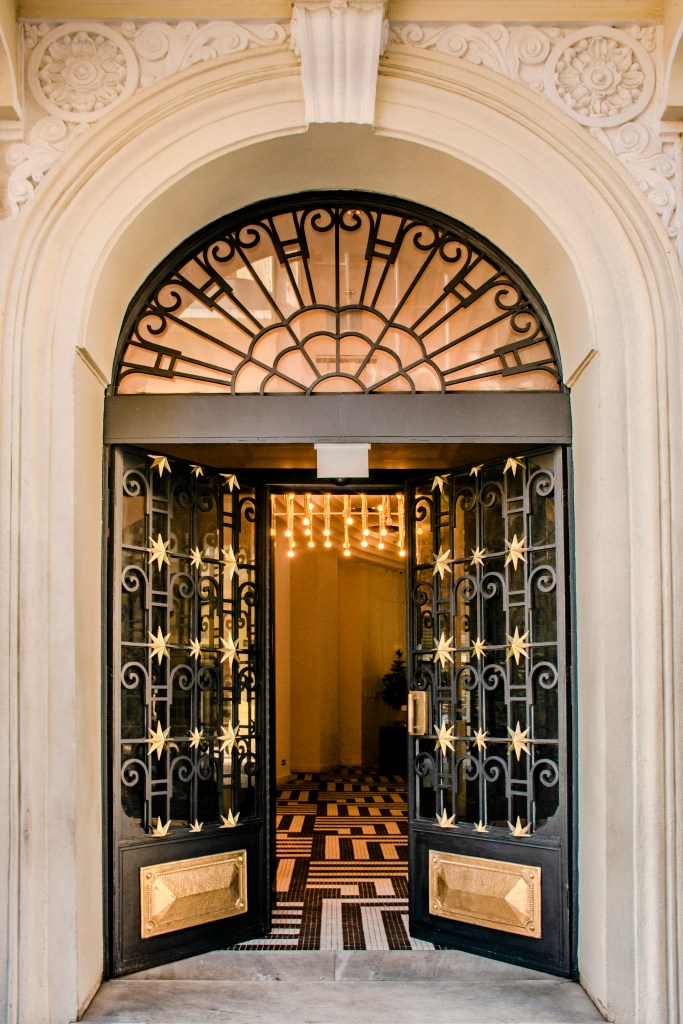
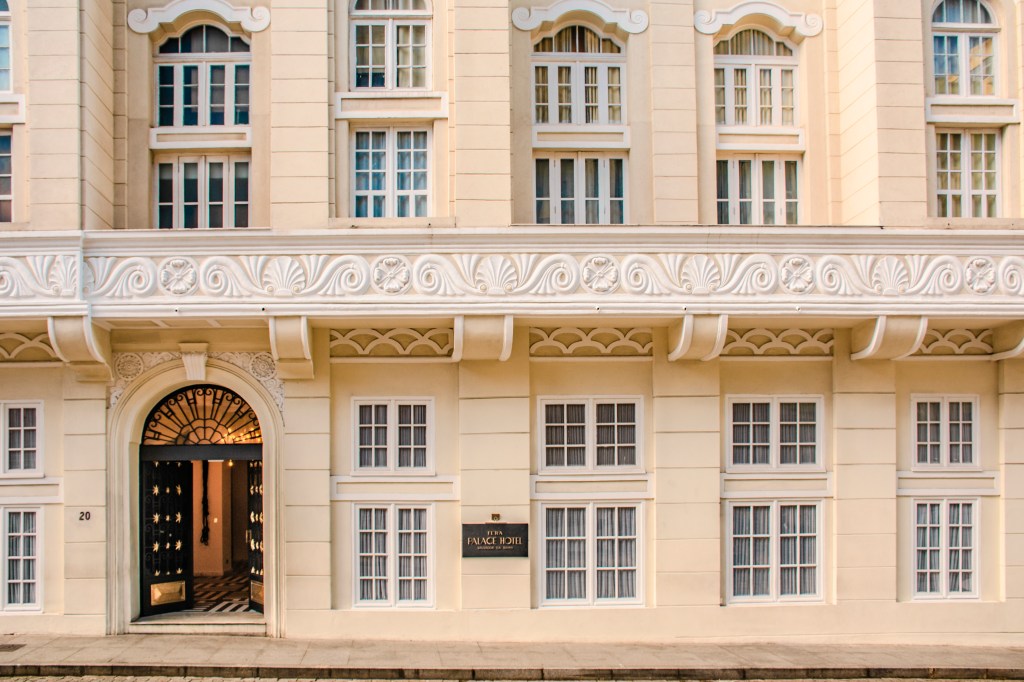
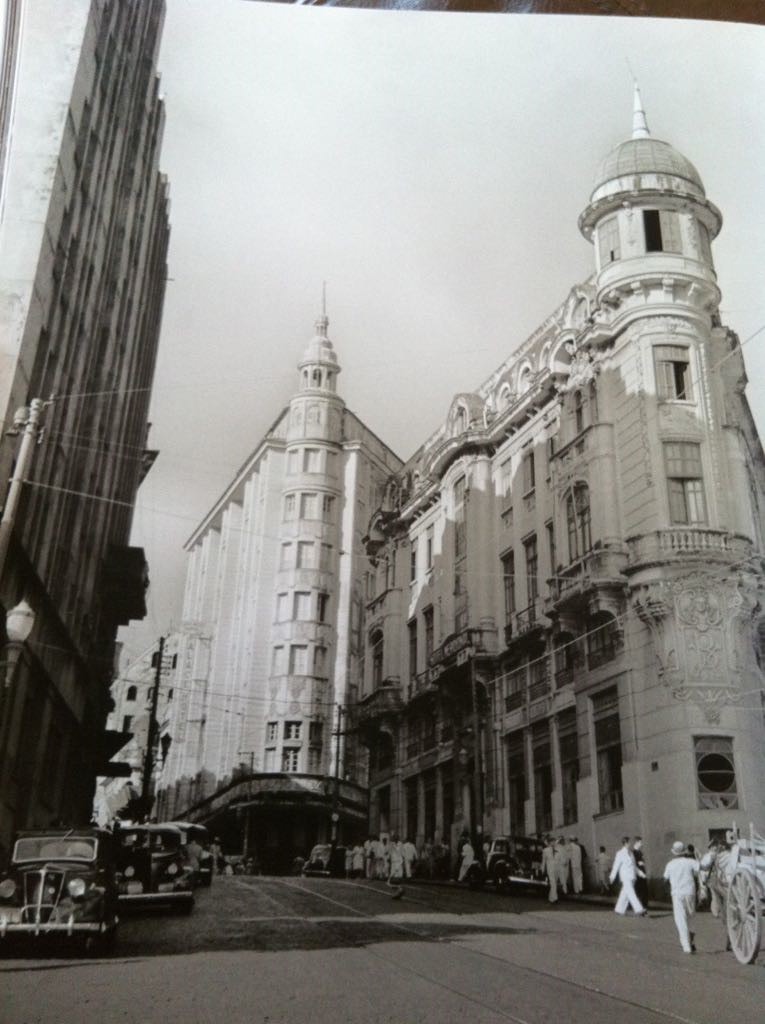
What makes Fera Palace so special? Housed within a striking 1930s art deco landmark inspired by New York’s Flatiron Building, the hotel once welcomed a glittering cast of guests including Carmen Miranda, Orson Welles, and Pablo Neruda during Salvador’s golden era. After standing dormant for years, the property has been meticulously revived by hoteliers Marcelo Lima and Antonio Mazzafera, formerly of London’s Maybourne group.
As Salvador’s economic and cultural centre of gravity shifted from the 1980s onwards, the hotel gradually declined, eventually closing its doors. Like many of the city’s historic buildings, it remained abandoned for decades. In 2012, the ambitious restoration project was initiated and led by Danish architect Adam Kurdahl. The renovation carefully preserved the building’s Art Deco identity while introducing modern infrastructure and amenities. Reopened in 2017 as the Fera Palace Hotel, it re-emerged as a symbol of elegance and a catalyst in the gradual revitalisation of Salvador’s historic downtown.
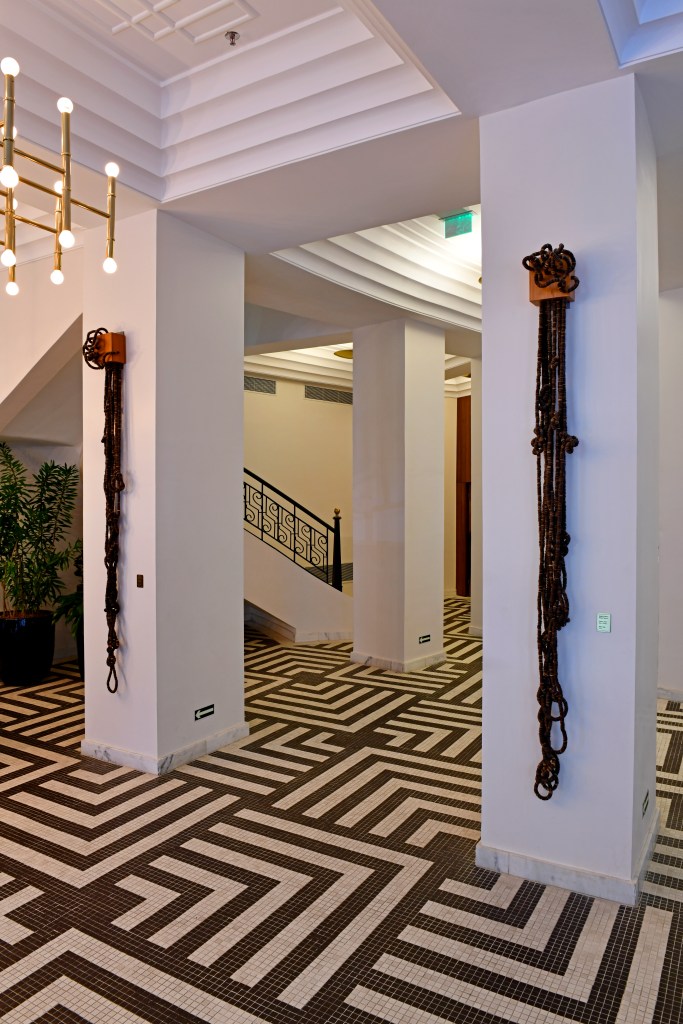
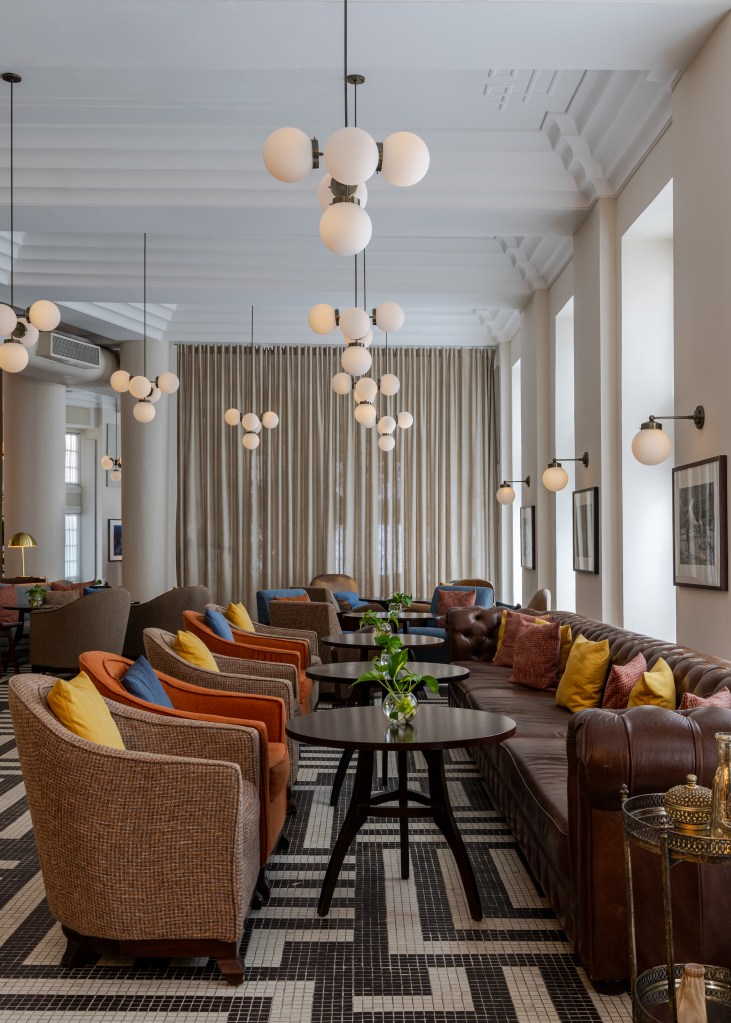
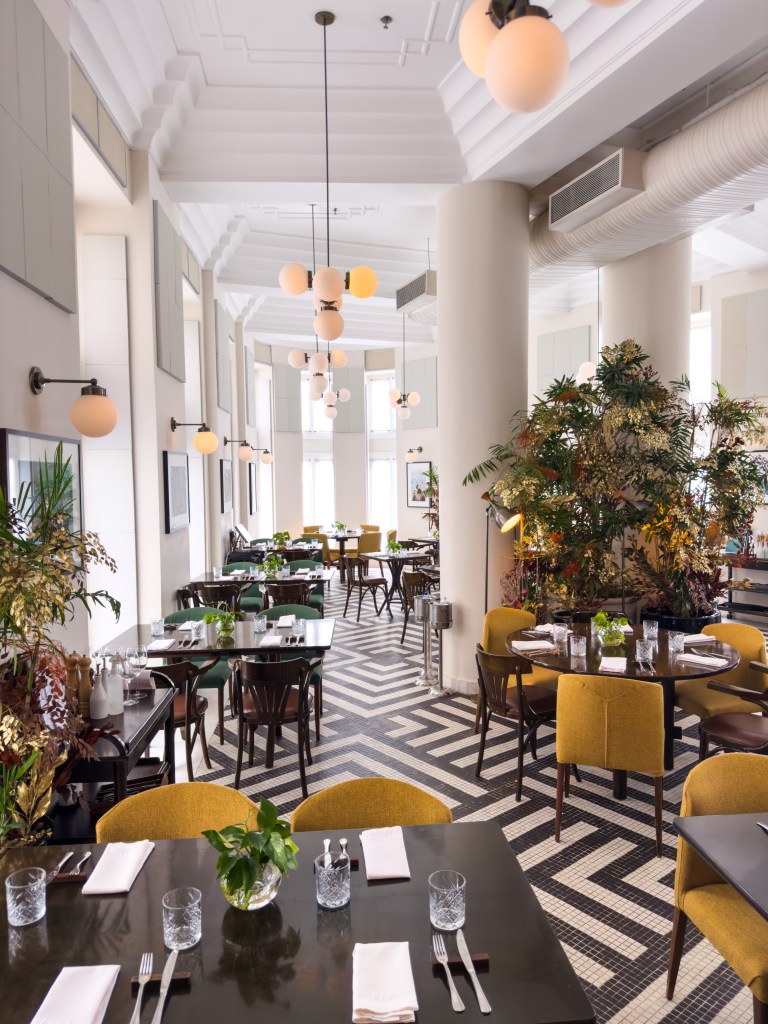
Today, the hotel blends heritage with contemporary luxury. The grand lobby, once a commercial arcade, is now anchored by a striking installation by artist Nadia Taquary, whose presence introduces a contemporary, decolonial dialogue within the restored interiors. The artist’s work explores Afro-Brazilian spirituality, ancestral memory and Black feminine power through sculptural forms. A cream-and-black mosaic floor leads through the space, where brushed steel details, leather Chesterfield sofas, evoke a refined 1950s Art Deco atmosphere. It’s beautiful!
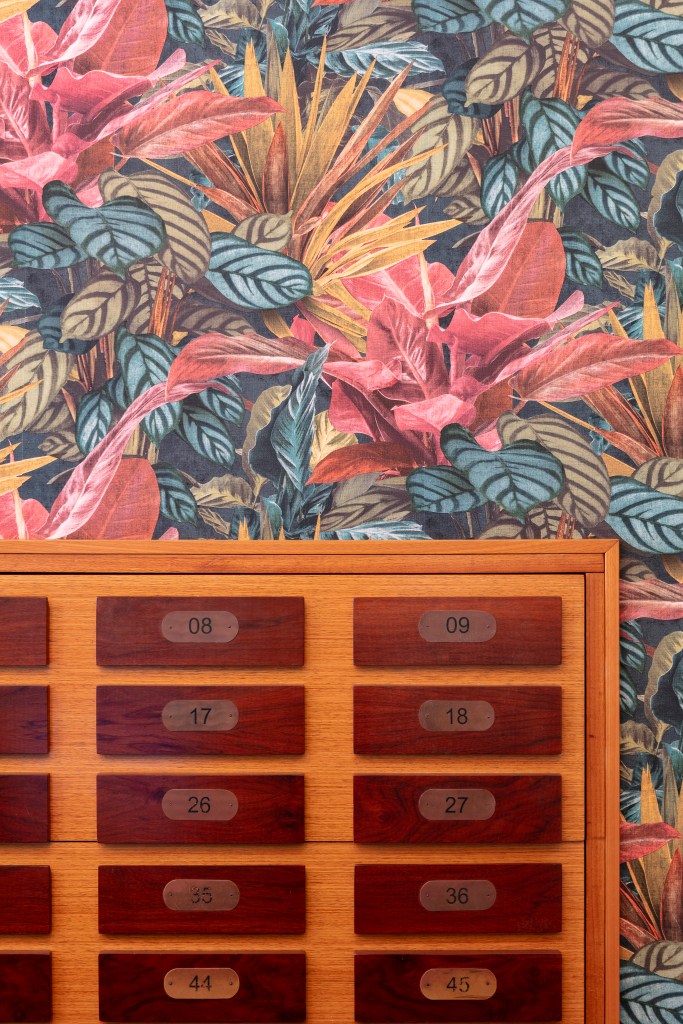
Beyond the lobby, the restaurant and bar open onto a lively social setting defined by green and pink seating, patterned wallpaper, and attentive service.
The hotel offers an excellent breakfast, set within a convivial atmosphere around the bar. The interiors on every floor are immediately defined by their striking mosaic floor too. Framed black-and-white photographs depicting beaches and Brazilian life scenes (so many easily accessible from Salvador) are displayed across the bar and restaurant, while rooms and corridors are lined with colourful images of Bahia’s most beautiful coastlines by Deise Barros. Magnificent views unfold throughout the property.
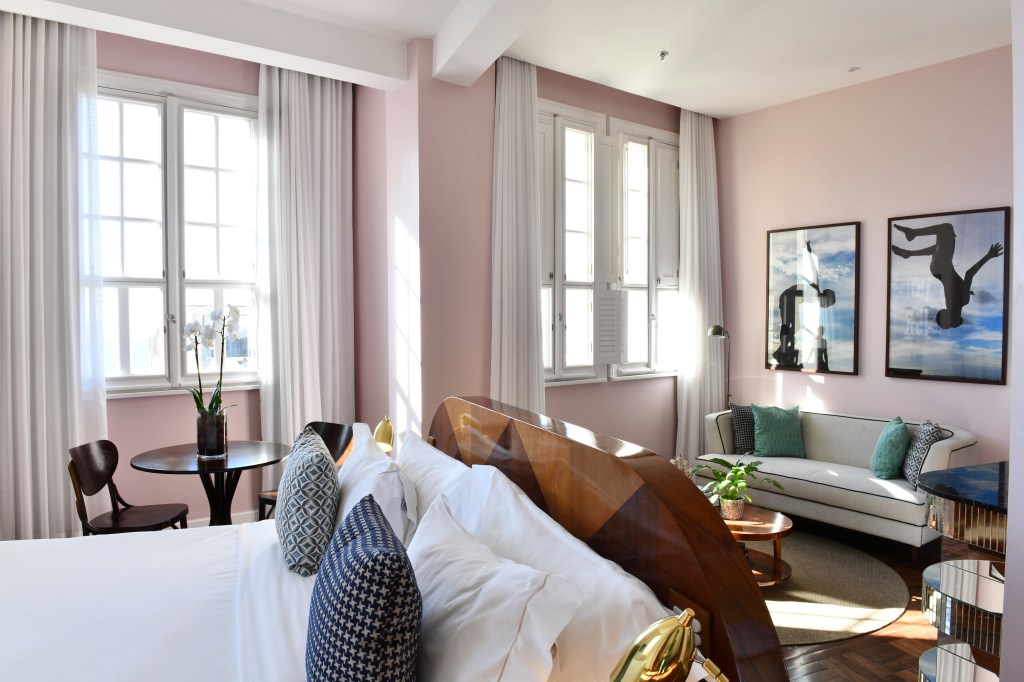
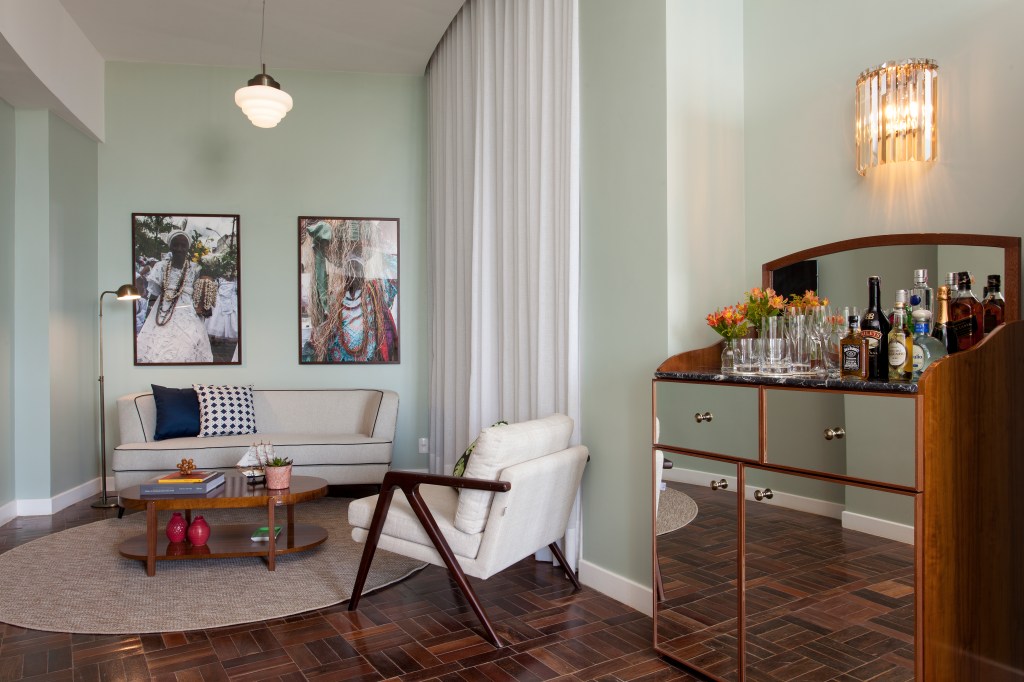
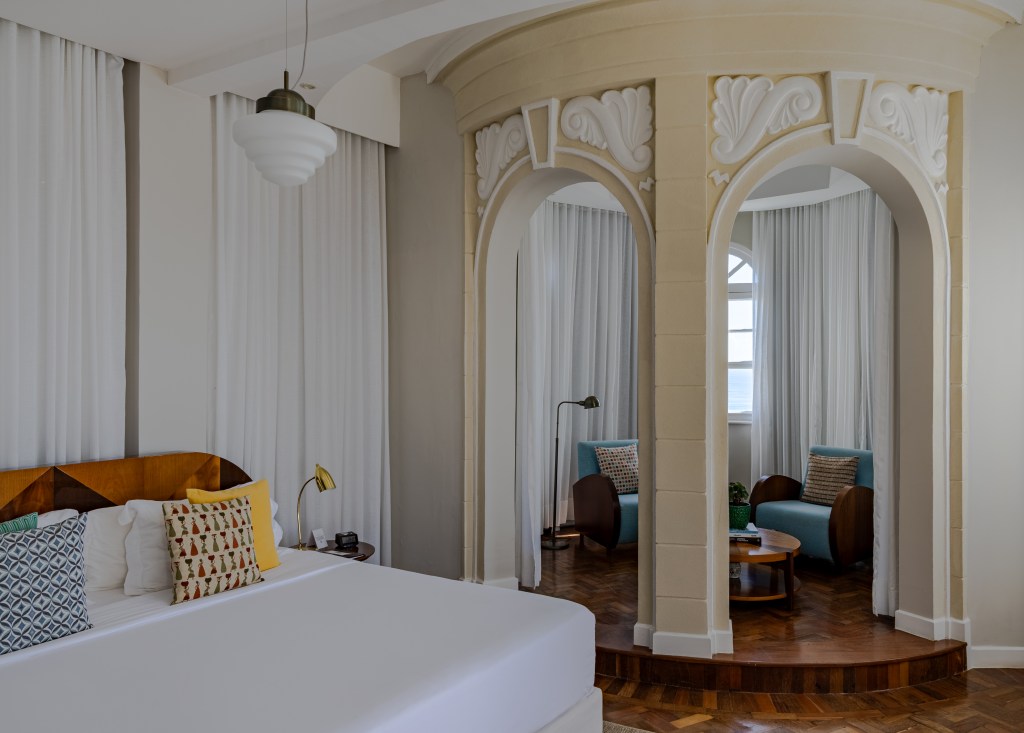
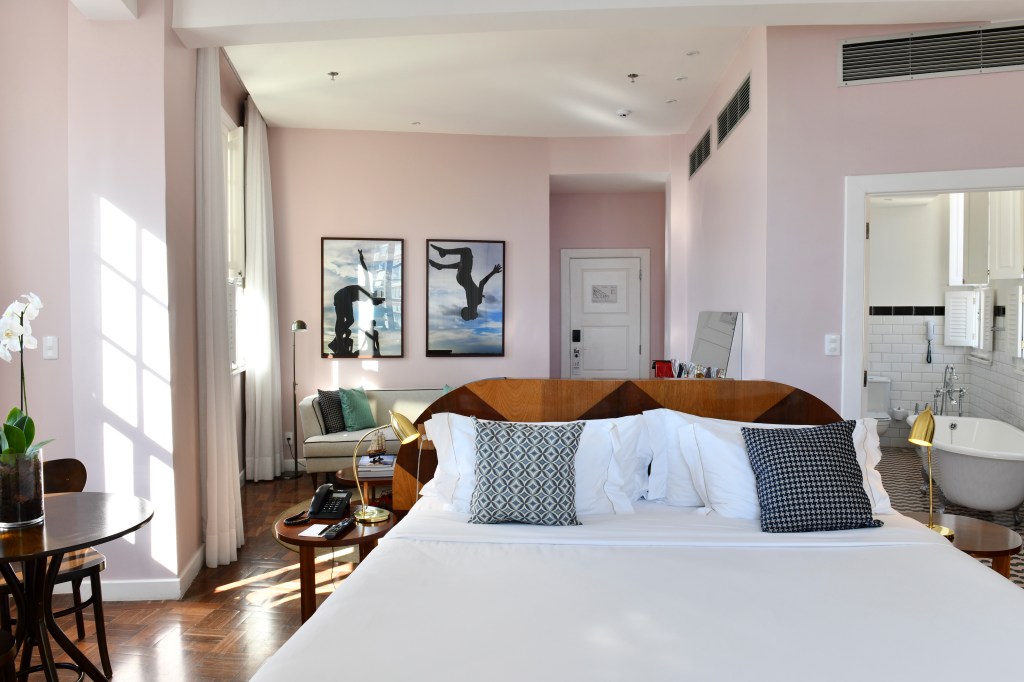
The design is characterised by considered, substantial furniture and a distinct 1950s Art Deco sensibility, enhanced by the use of mirrors and generous spatial volumes. Branded amenities such as flip-flops, bags, and hats are available, alongside notebooks and pencils placed in the rooms, with fresh flowers in the generously-sized bathrooms. Service is consistently attentive, multilingual, and highly professional.
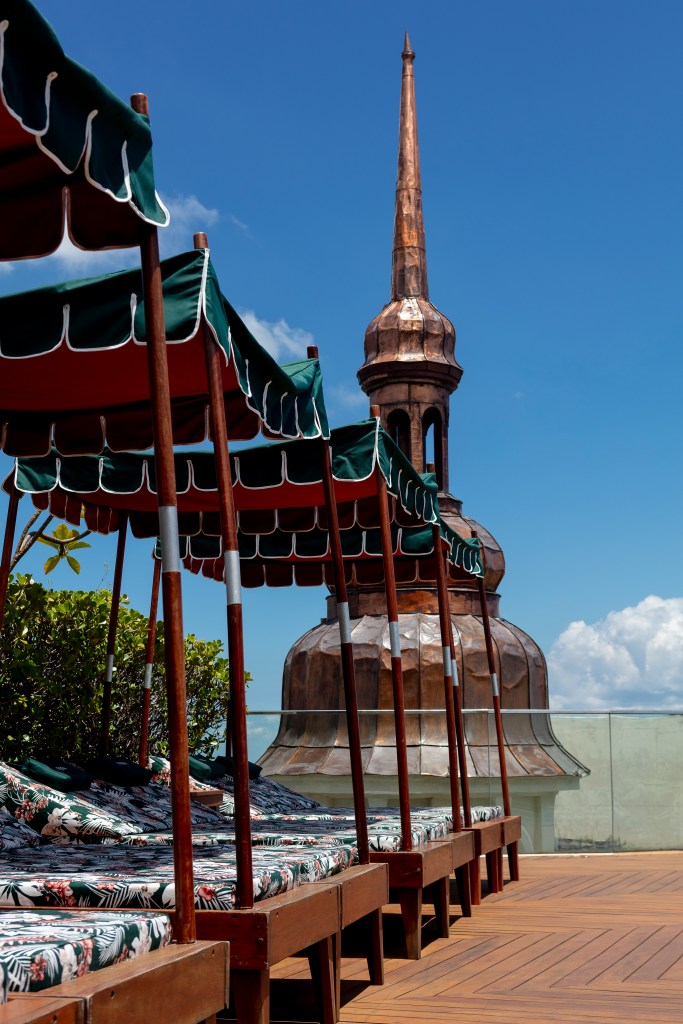
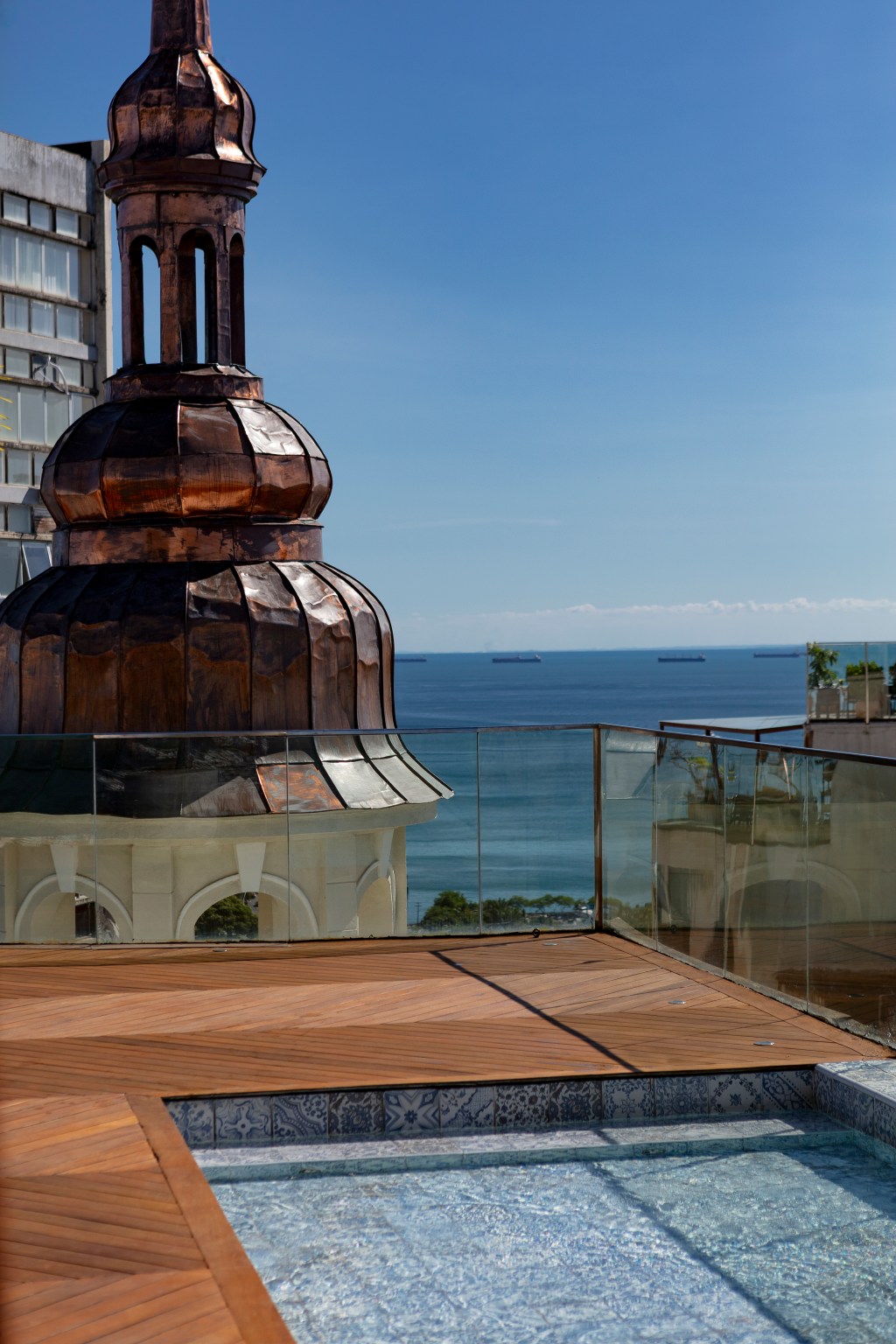
Above it all, the rooftop has become one of Salvador’s most coveted addresses. A long infinity pool featuring azulejos tiles, overlook the glittering Baía de Todos-os-Santos, offering a serene counterpoint to the energy of the city below. Come for the view and the cocktails. It’s simply stunning and unique! The property also includes a well-equipped gym, on that top floor, completing its range of guest facilities. That rooftop and its infinity pool is the focal point of this amazing property.
At the restaurant, chef Peu Mesquita reinterprets Bahian flavours with refined ease, weaving local ingredients and regional traditions into dishes that feel both rooted and contemporary. Sophisticated yet deeply connected to Salvador’s cultural spirit, Fera Palace captures the city at its most vibrant and elegant.
Guests can move between the Art Deco elevator and a sweeping stone staircase to reach the upper levels and former ballroom, once a casino and still marked by its dramatic mirrored columns and sense of theatrical grandeur.
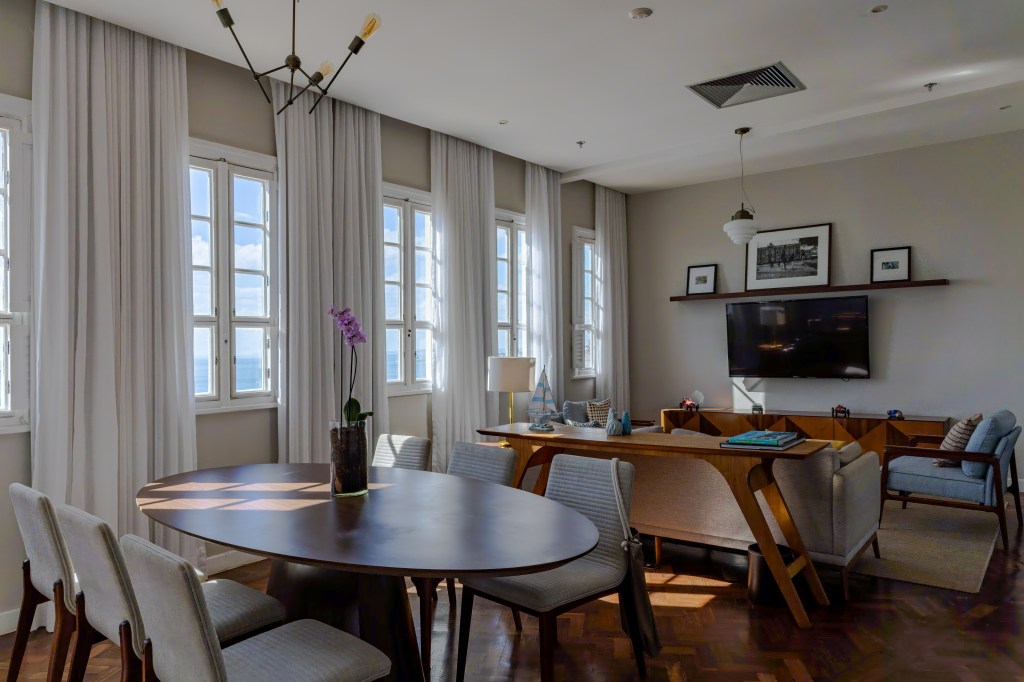
The hotel now comprises 81 rooms and suites, including spacious corner suites with generous light, panoramic views over Castro Alves Square and glimpses of the sea, and interiors that combine comfort with carefully curated photographic works and paintings referencing Salvador’s coastal culture.
Designed in continuity with the building’s historic language, the lounge and lobby space has become a popular meeting point for both visitors and locals. Many fashion shoots have taken place in this amazing terrace overlooking the entire city.
More than a hotel, the Fera Palace Hotel functions as a living architectural document of Salvador’s transformation—merging 1930s glamour with contemporary urban renewal, and reaffirming the cultural significance of Rua Chile within the city’s historic core.
To mark its 90th anniversary, the Fera Palace stood as one of the country’s most compelling examples of heritage hospitality, an Art Deco landmark that had quietly shaped the city’s architectural identity since its inauguration. Rising in the heart of the historic centre, the building remained instantly recognisable for its distinctive triangular form and sculptural façade. It’s simply the best in Savaldor!
Salvador is best discovered beyond its landmarks, through the hypnotic beat of samba-reggae, the graceful movements of capoeira, and the aromas of Bahian cuisine, from acarajé to moqueca. In Rio Vermelho, the city’s bohemian quarter, evenings unfold over seafood restaurants, lively bars and the unmistakable creative energy that has made Salvador one of Brazil’s most captivating cultural capitals. Fera Palace is the best hub to connect with all these amazing places, with fantastic staff and majestic design.
Beyond Salvador’s historic streets, the coastline of Bahia unfolds into a spectacular sequence of beaches, each with its own character. Close to the city, Porto da Barra remains a favourite for its calm, turquoise waters and golden sunsets, while Farol da Barra combines seaside charm with one of Salvador’s most iconic views.
Heading north along the Coconut Coast, the beaches become wilder and more tropical. Praia do Flamengo and Stella Maris offer long stretches of soft sand, rolling waves and a relaxed local atmosphere, while Itapuã, immortalised in Brazilian music, captures the timeless romance of Bahia with its palm trees, fishing boats and poetic shoreline.
Further north, the elegant village of Praia do Forte brings together pristine beaches, natural pools and a sophisticated barefoot atmosphere. Further afield, Morro de São Paulo enchants visitors with car-free lanes, dramatic cliffs and a series of beautiful beaches stretching along the Atlantic coast. More reasons to land in Salvador and experience the wonderful Fera Palace!
–