Fashion and design continue to merge in Milan, where the boundaries between runway presentation, exhibition format, and interior space are increasingly difficult to separate.
At this year’s Milan Design Week, running alongside Salone del Mobile, luxury brands are not simply extending their identities into homeware or installations, they are operating directly within the field of design culture itself with displays, shows and panel discussions.
At Loro Piana, material remains central. Its presentation of textile works made from vicuña, cashmere, and linen reframes fabric as structure rather than surface, translating the logic of its garments into domestic objects produced with the same level of precision and exclusivity.
Prada continues to develop a dual presence across object-making and discourse. At Prada Home, Japanese ceramic works are presented in dialogue with traditions of ritual craft, including the tea bowl. Alongside this, the house’s ongoing symposium series, Prada Frames, returns during Salone del Mobile Milano with a programme of talks and conversations that take place across the city, including at Santa Maria delle Grazie. Curated by Formafantasma, the series shifts attention away from product display and toward the systems behind image-making, infrastructure, and design thinking.
Elsewhere, fashion brands continue to expand into installation-based environments. Moncler transforms a site at 10 Corso Como with an oversized inflatable structure that extends its padded outerwear language into architectural form, turning branding into immersive space.
Satoshi Kondo at Issey Miyake works with architectural collaborators to repurpose production waste into spatial prototypes, using compressed paper tubes from garment production to explore how industrial residue can become structure, surface, and installation.
Across the city, Saint Laurent, Balenciaga, Jil Sander, Chloé and others activate exhibitions, installations, and hybrid environments that extend brand identity into spatial and curatorial territory.
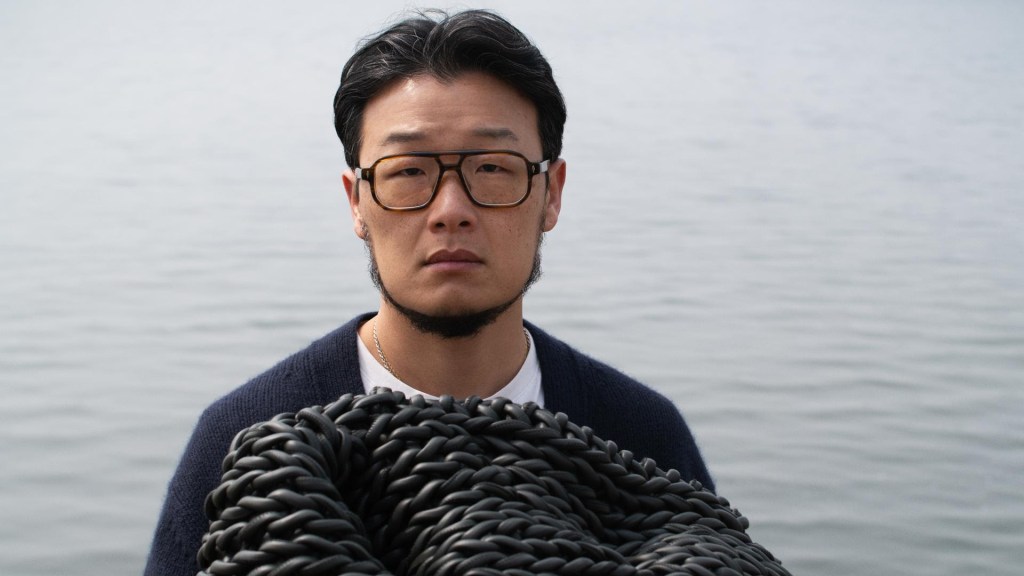
A particularly developed example of this convergence is the collaboration between Bottega Veneta and Korean artist Kwangho Lee. For Milan Design Week 2026, they present Lightful, a site-specific installation centred on the brand’s Via Sant’Andrea store, with additional activations across the city.
The project combines suspended woven forms characteristic of Lee’s practice with new light sculptures made from Bottega Veneta leather fettucce, thin strips of leather linked to the house’s Intrecciato weaving tradition. Developed in bespoke black and green tones selected by Creative Director Louise Trotter, the works shift between object and atmosphere as light interacts with their woven structures. Rather than remaining static installations, they function as evolving spatial compositions shaped by illumination and shadow.
Lightful marks the third collaboration between Bottega Veneta and Kwangho Lee under Trotter’s direction, following his inclusion in the Summer 2026 presentation and the exhibition Weaving the World: The Language of Intrecciato in Seoul in 2025. As part of its development, Lee also spent time in the brand’s Montebello Vicentino atelier, where Bottega Veneta’s leather craftsmanship is produced and maintained.
Born in 1981 and trained in Metal Art & Design at Hongik University in Seoul, Lee’s practice is grounded in material experimentation and traditional craft techniques including weaving, basketry, and chilbo enamelling. His use of diverse materials, from aluminium and copper to rice, marble, and industrial hoses, reflects a consistent interest in how meaning changes when different systems of making are brought into contact.
This focus on encounter aligns closely with Bottega Veneta’s own identity, where weaving operates both as technique and symbol. In this context, Lightful becomes less a standalone installation and more a continuation of a shared language between artist and house, developed through repeated collaboration.
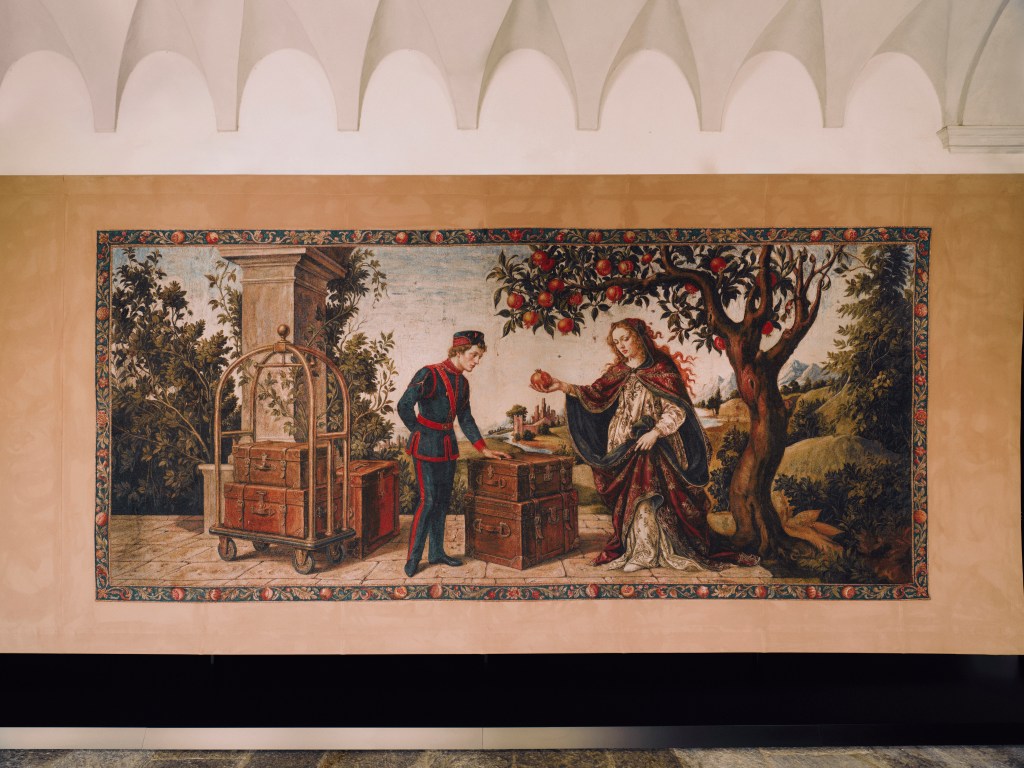
Gucci’s exhibition unfolds as a visual timeline of Gucci, tracing key moments in its creative history through a series of large tapestries. These works move from early iconic designs such as the Jackie 1961 and Bamboo 1947 bags to the distinct eras shaped by successive creative directors including Tom Ford, Frida Giannini, Alessandro Michele, Sabato De Sarno, and culminating in the house’s current direction under Demna. Across the sequence, shifts in colour, composition, and imagery chart Gucci’s evolving identity, moving between archive, reinvention, and present-day reinterpretation.
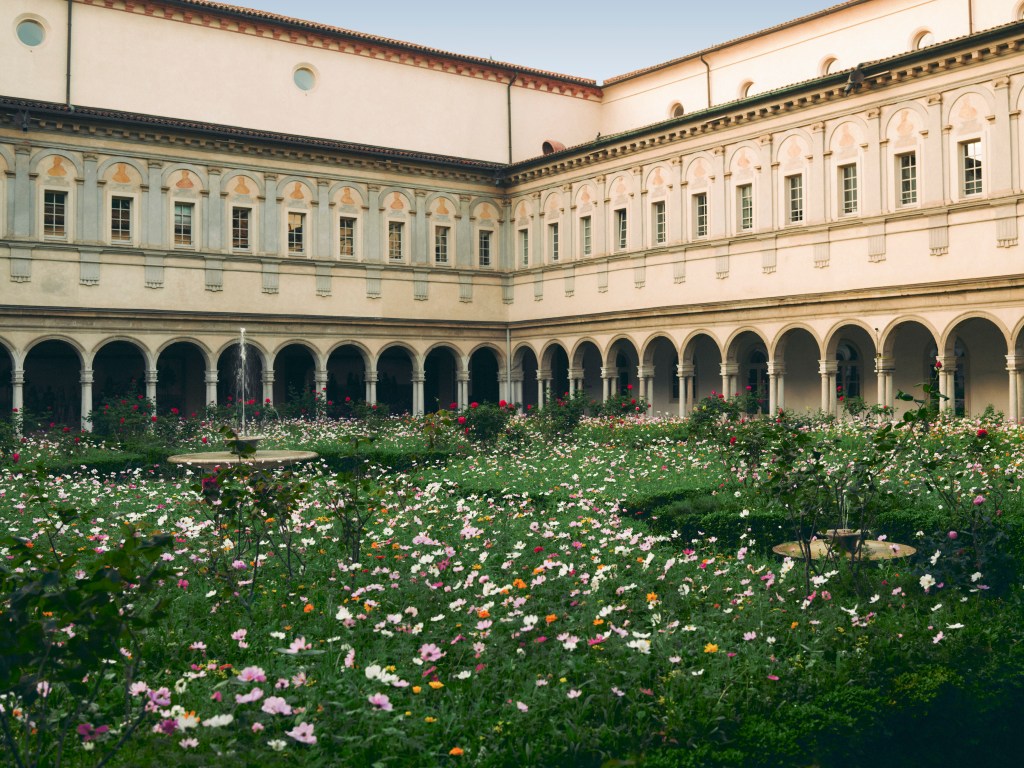
The installation extends into the cloister spaces, where a garden of seasonal flowers references the Flora motif, translating a signature house code into a physical environment. In a smaller cloister, an interactive installation of vending machines dispenses drinks linked to character archetypes from Gucci Giardino, turning identity into a playful system of chance and selection. Together, these elements expand the exhibition beyond static display, using craft, narrative, and environment to reflect on how the house continually reconstructs its own visual language.
Across Milan, what emerges is a clear structural shift. Fashion is no longer appearing within design week as an accessory presence. It is fully embedded within it, using Salone del Mobile and Milan Design Week as platforms not just for display, but for shaping how contemporary culture is exhibited, experienced, and understood.
–
Images: Bottega Veneta and Gucci presentations.
 ART IS ALIVE