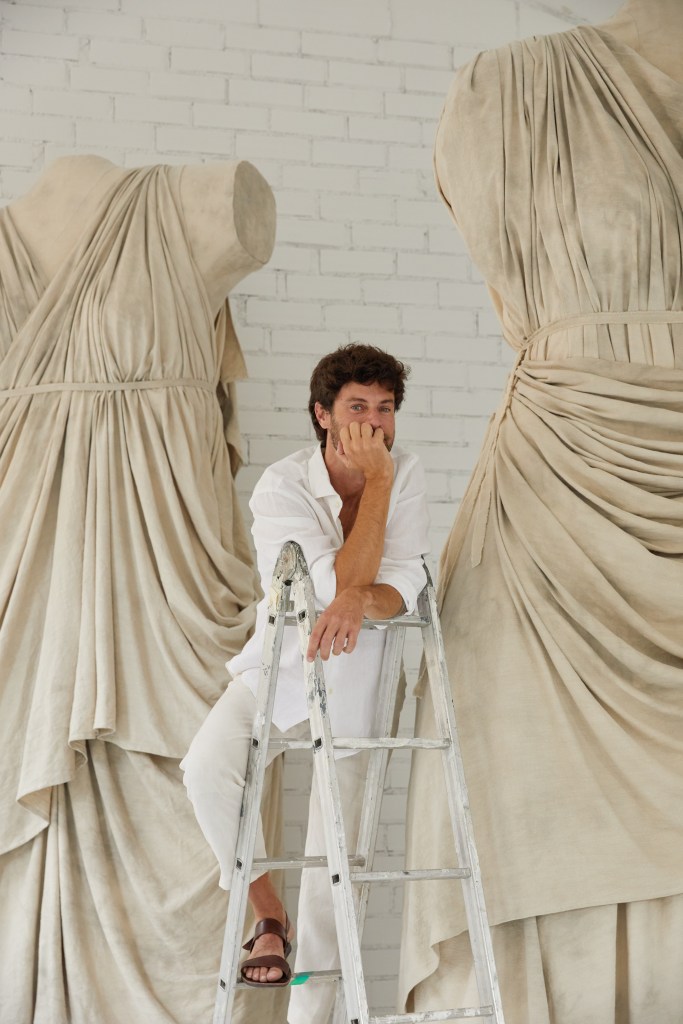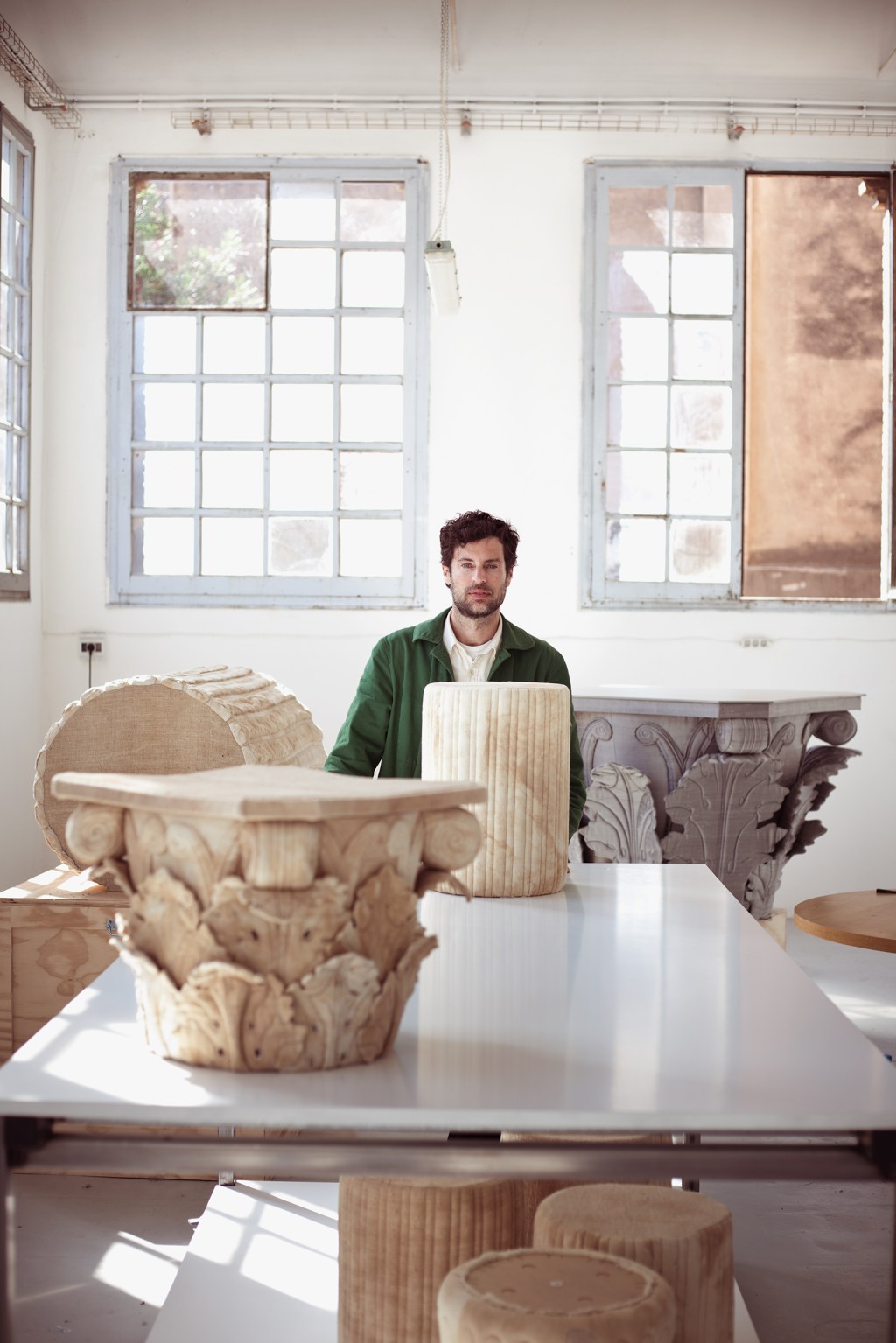
Sergio Roger is a contemporary Catalan sculptor whose practice reimagines the language of classical antiquity through a strikingly original material vocabulary. He studied Sculpture and New Media under Hito Steyerl, Tony Cragg, and Rebecca Horn.
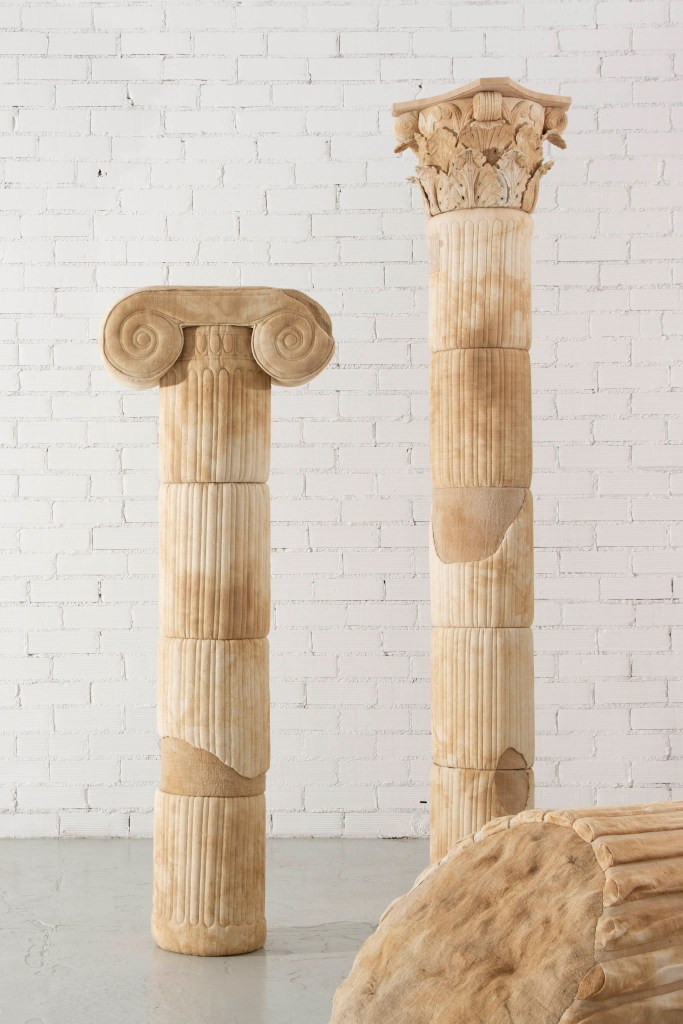
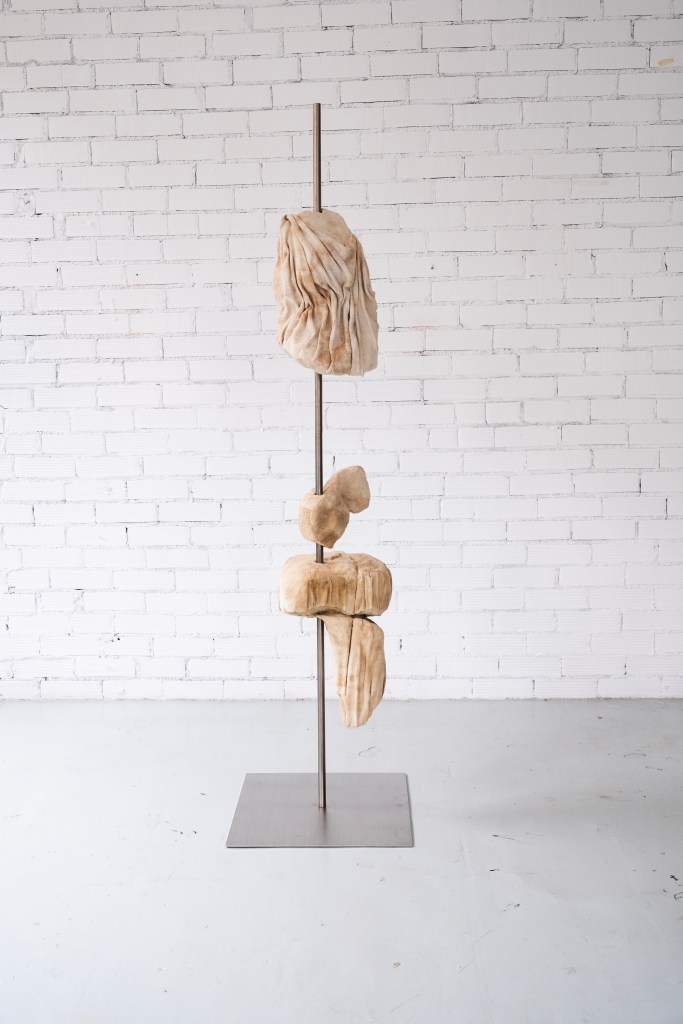
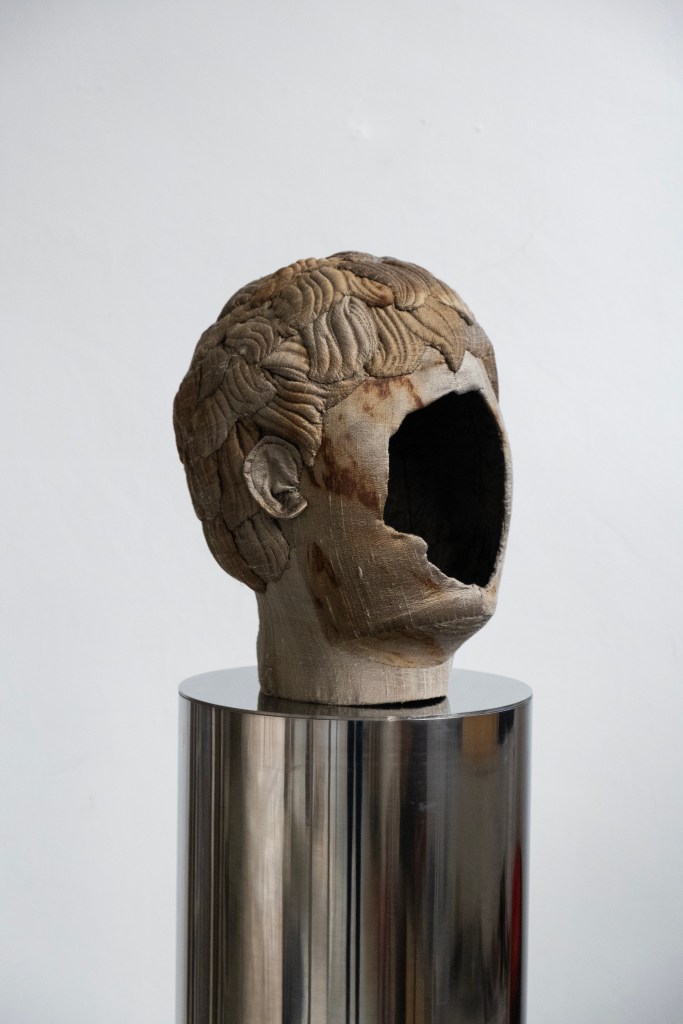
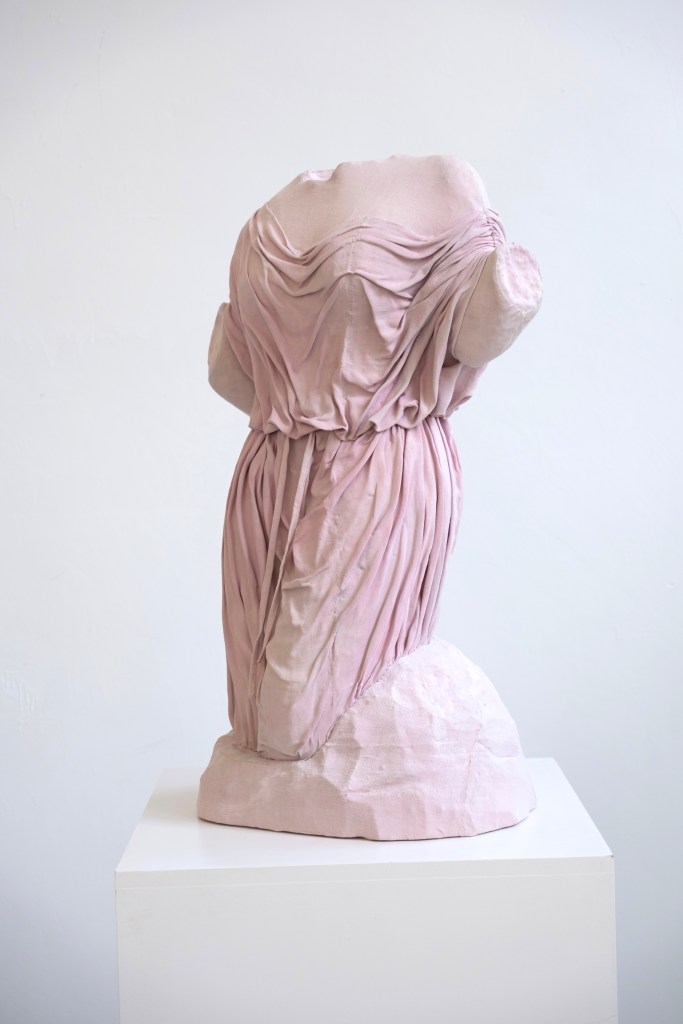
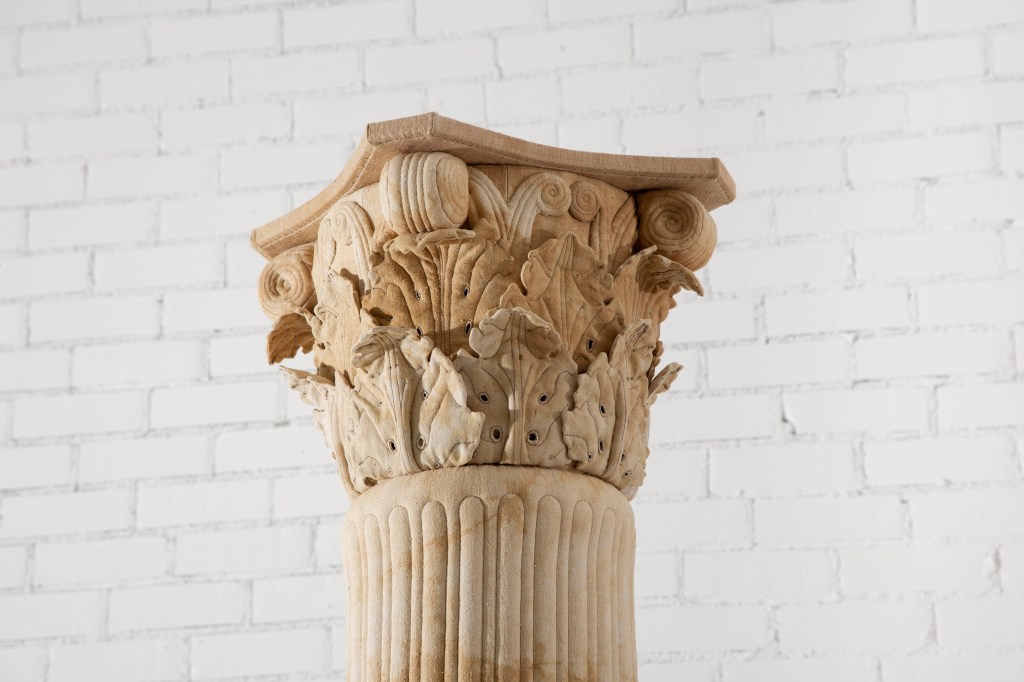
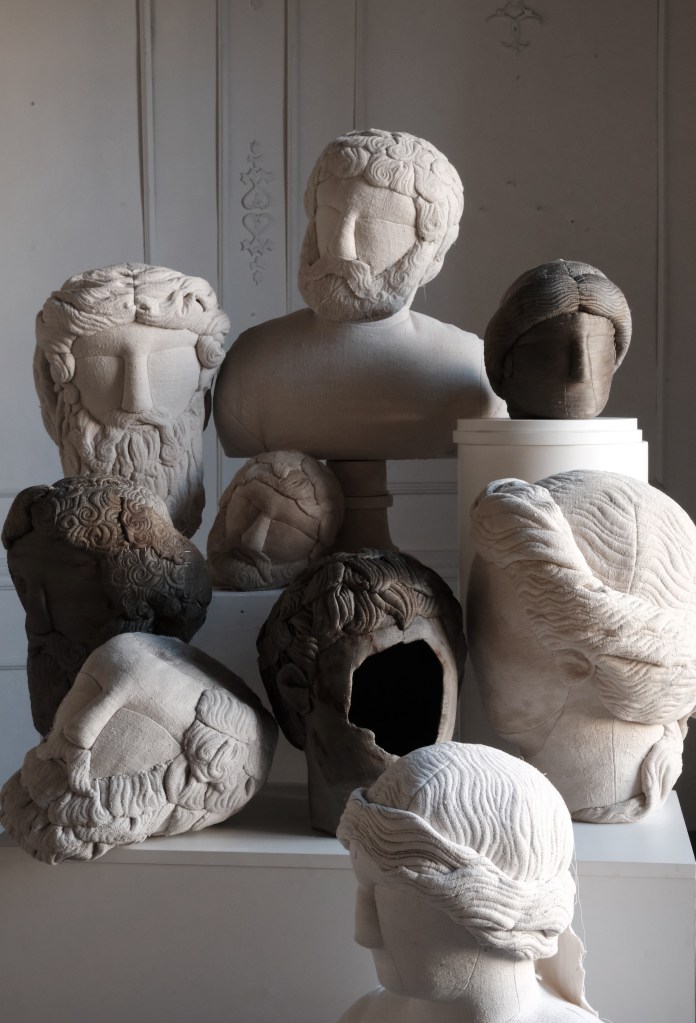
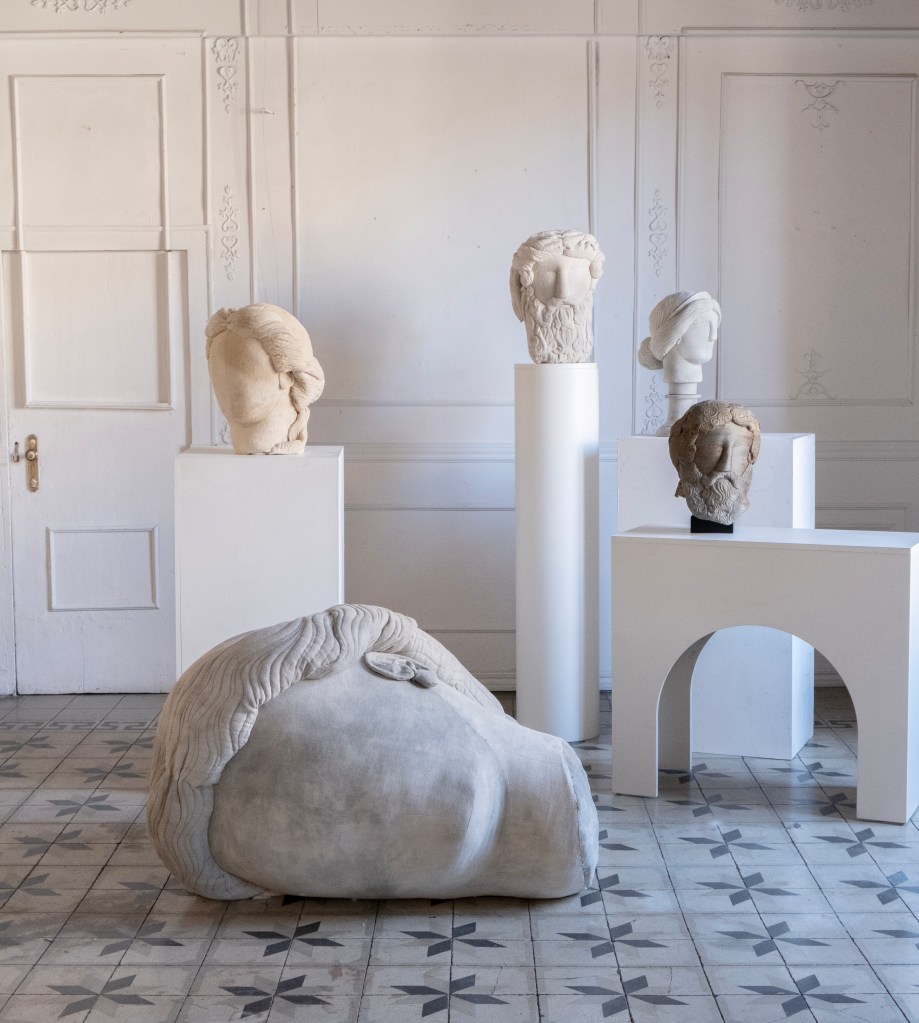
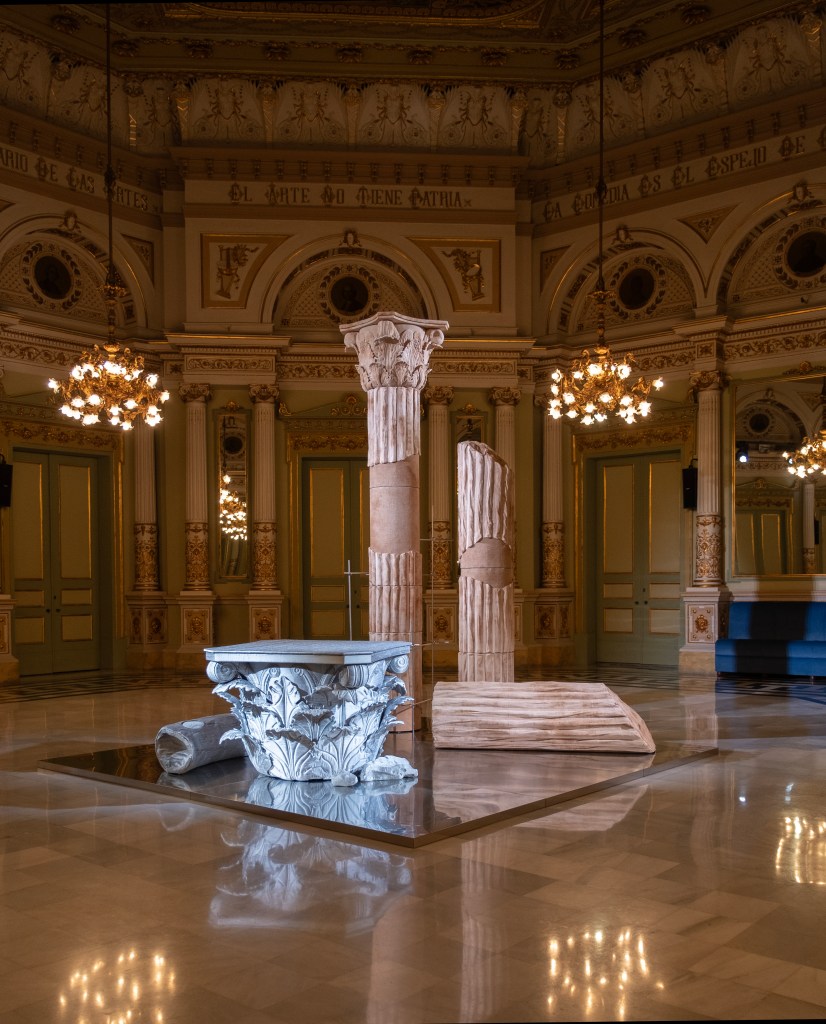
Working primarily with textiles such as linen, silk, and leather, he constructs sculptural forms that echo Greco-Roman fragments, archaeological relics, and architectural remnants, yet are rendered with a surprising softness and intimacy.
His recent exhibitions include El Somni de les Bàquides, El Gran Teatre del Liceu, Barcelona (2025); Mnemosynes Delay, Robilant & Voena, New York (2024); XCVIII, Spazio Nuovo, Rome (2023); and Sergio Roger x Christie’s, Christie’s, London (2022). His work is held in major public and private collections, including the Shannon & Peter Getty Collection, San Francisco; and the Sorigué Foundation, Spain, and he has exhibited internationally, including at the Biennale de Bonifacio (2024), while participating in fairs such as Frieze Masters and TEFAF. Very impressive!
Roger’s talent lies in this tension between material and memory: by translating the permanence of stone into fragile, tactile fabric, Roger disrupts conventional expectations of sculpture while evoking the passage of time, erosion, and cultural myth-making. His works feel at once ancient and contemporary, suggesting histories that are both recovered and newly invented. And his installations are both poetic and beautiful!
Art is Alive caught up with the artist about his inspirations, his artistic investigations, archeology and his upcoming projects.
What first drew you to work with textile sculpture as a medium, and how did that intersect with your early artistic interests?
Somehow, textiles have always felt close to me, carrying a sense of familiarity. Recently, while speaking with my aunt, I discovered that my ancestors were involved in textile manufacturing and trade in the Netherlands before establishing themselves in Catalonia in the 16th century. Although this tradition has been lost over the generations, I believe that
some invisible memory persists, and I have intuitively reconnected with this legacy.
Textiles such as linen and hemp are deeply rooted in the traditions of ancient Mediterranean civilizations. They were not only used for everyday purposes, sails, garments, tents, and general protection, but linen was also believed to possess spiritual properties and was employed in all kinds of transcendent rituals.
Your work is deeply rooted in the visual language of ancient civilizations, why does classical art continue to inspire you?
Classical art is a recurring theme throughout the history of art, continuously revisited across different periods. What interests me about it is how it becomes a shared framework for discussing notions of identity and memory, and, in particular, how meaning and specific narratives are constructed through the legacy of the 19th-century museum.
Can you describe your process for sourcing and selecting antique fabrics from markets and dealers, and how the history of these materials informs the finished work?
I select pieces of antique linen, which I source primarily from textile dealers in Spain and France. I have always been drawn to the beauty and presence of ancient fabrics, and to how their handwork reveals the personal stories behind each seam and patch. By reinterpreting archaeological artifacts through these materials, I am interested in weaving together collective and personal memory.
What conceptual questions are you asking when you create a piece, is it about history, memory, beauty, or something else entirely?
My artistic investigation is an ongoing one. The questions vary with each work, but more specifically, they evolve over time. For example, in the series Textile Ruins, I seek to subvert our preconceived understanding of antiquity and ancient art. We tend to associate this period with notions of idealism and glorification, a legacy of nineteenth-century Western archaeology and museography. I propose alternative readings that challenge hegemonic narratives, permanence, and historical certainty. Currently, I am exploring new concepts and materials. For example, I am introducing iconography, which relate to new historical periods and civilizations. I am particularly engaged with the interplay of memory, collective identity, and the notion of the sacred throughout art history, as well as the integration of universal myths with personal and autobiographical narratives.
Your heroes, inspiration, cultural figures that have shaped your tastes?
There are many, but I would mention Frederic Marès who I would have loved to meet in person. He was a Catalan sculptor and collector who embodied the archetypal 19th-century humanist and collector. His museum in Barcelona, named after him, brings together a very particular and eclectic collection of artifacts, ranging from Iberian prehistoric statuary and medieval art to an entire floor dedicated to 19th-century everyday objects. I visit it very often in search of inspiration.
Exhibiting alongside classical works or in major galleries must be fantastic, how do you approach presenting work in such contexts?
Indeed, It has been a privilege to present my work in such contexts and specially when I had the opportunity to create a dialogue with actual archeological artifacts. I consider my practice to be highly transversal and I find really enriching being able to collaborate with other fields beyond the contemporary art. Since the beginning, my work has attracted the attention of several archaeologists and professionals from the antiquities art world, which I consider a great validation.
What does the term “textile sculpture” mean to you personally, and how do you think it challenges traditional definitions of sculpture?
Traditional sculpture has historically been associated with durable materials such as stone or metal. In fact, when we think of classical art, sculpture often emerges as the primary medium, largely because other techniques, such as painting, did not withstand the passage of time. Contemporary sculpture, by definition, began to challenge this notion, and textiles are a clear example of this shift. This material has always fascinated me and, over the years, it has become my language. It is now so fully integrated into my practice that it has become the natural medium through which I express concepts and ideas.
When you begin a new piece, what does your creative process look like, from research and sketching to selecting materials and stitching?
I maintain a large archive of photographs I have taken in museums and archaeological collections, images of objects that, for different reasons, have captured my attention. I also sketch extensively and record voice notes when ideas emerge at moments when I am unable to write them down, such as while driving or walking my dog in the woods. When it comes to producing a work, the process varies, but it often begins by returning to one of these ideas. I develop a series of technical sketches before selecting the fabric. Each piece of antique textile is unique and possesses distinct material qualities, so I choose it according to the specific effect I wish to achieve. In constructing the work, I combine a range of techniques drawn from various textile traditions, including tailoring and upholstery.
How has your academic background in sculpture and new media influenced your current work with textiles?
Studying at the Art Academy in Berlin (UdK) was key in helping me build a solid conceptual foundation. I began working with objects and installations, and gradually moved into video art for a period of time. Although I stopped working with video after graduating, I now realise that my approach to film was very sculptural.
Your exhibitions often involve mythological figures and motifs, how do you balance historical reference and artistic reinterpretation?
My works are often inspired by specific artifacts from archaeological collections and museum displays. Yet my primary interest lies not in reinterpreting mythological motifs, but in examining how the artifact is perceived, how meaning is constructed through museographic strategies and institutional narratives.
Has the international art world’s reception of your work, from Milan to London and New York, changed how you think about your practice?
Recognition is very important, but it can also pigeonhole you into a fixed label, something I always try to avoid.
Looking forward, are there new materials, narratives, or historical periods you want to explore through this unique fusion of craft and sculpture? Tell us about your future projects.
I am particularly interested in exploring the concept of syncretism, through which elements from different belief systems, cultural traditions, and artistic languages are combined into new hybrid forms. For example, I am especially interested in introducing Christian medieval imagery into dialogue with classical heritage. I am drawn to researching how the notion of the sacred has been represented across different periods and cultures, and to identifying connections between them in order to evoke a non-linear understanding of time.
–