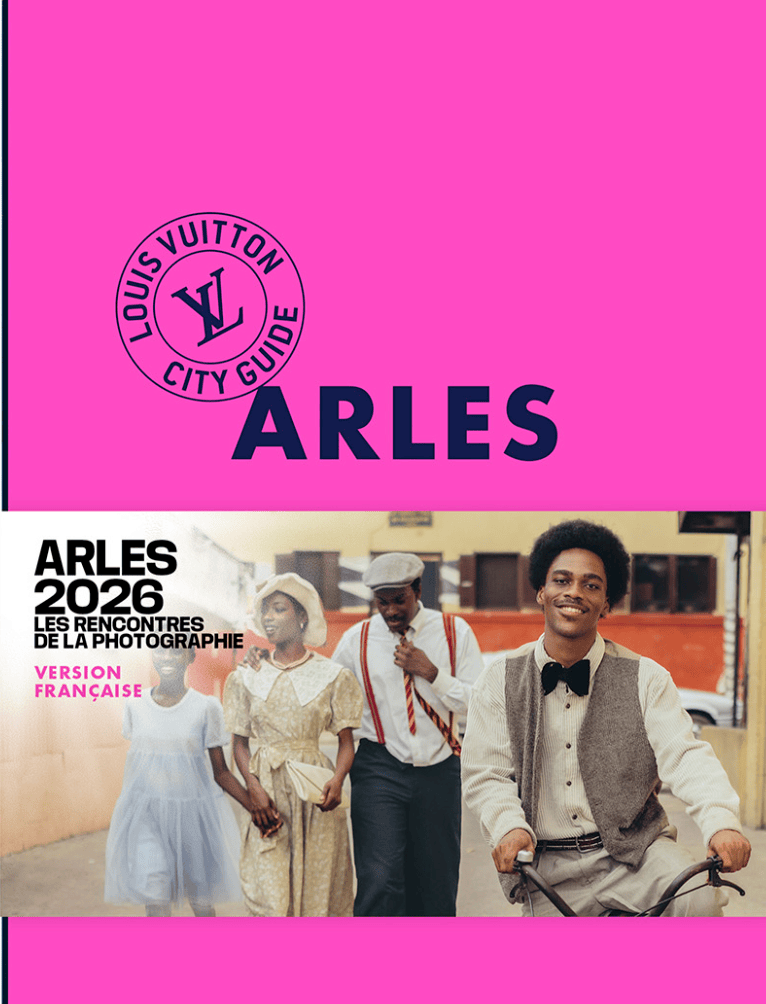
Since 2018, the Louis Vuitton City Guide has featured Arles, reflecting the city’s international cultural profile and the importance of events such as Les Rencontres d’Arles, one of the world’s most significant photography festival. For the latest edition, dedicated to Arles, Louis Vuitton invited Anne-Sylvie Bameule, Julie Gautier and Pauline Capitani, three sisters representing the third generation of Actes Sud, the independent publishing house founded in Arles.
Their contribution provides a perspective shaped by a long-standing connection with the city and its cultural institutions. Actes Sud has played an important role in establishing Arles as a centre for contemporary publishing and culture, with a programme extending across literature, visual arts, photography and other disciplines.
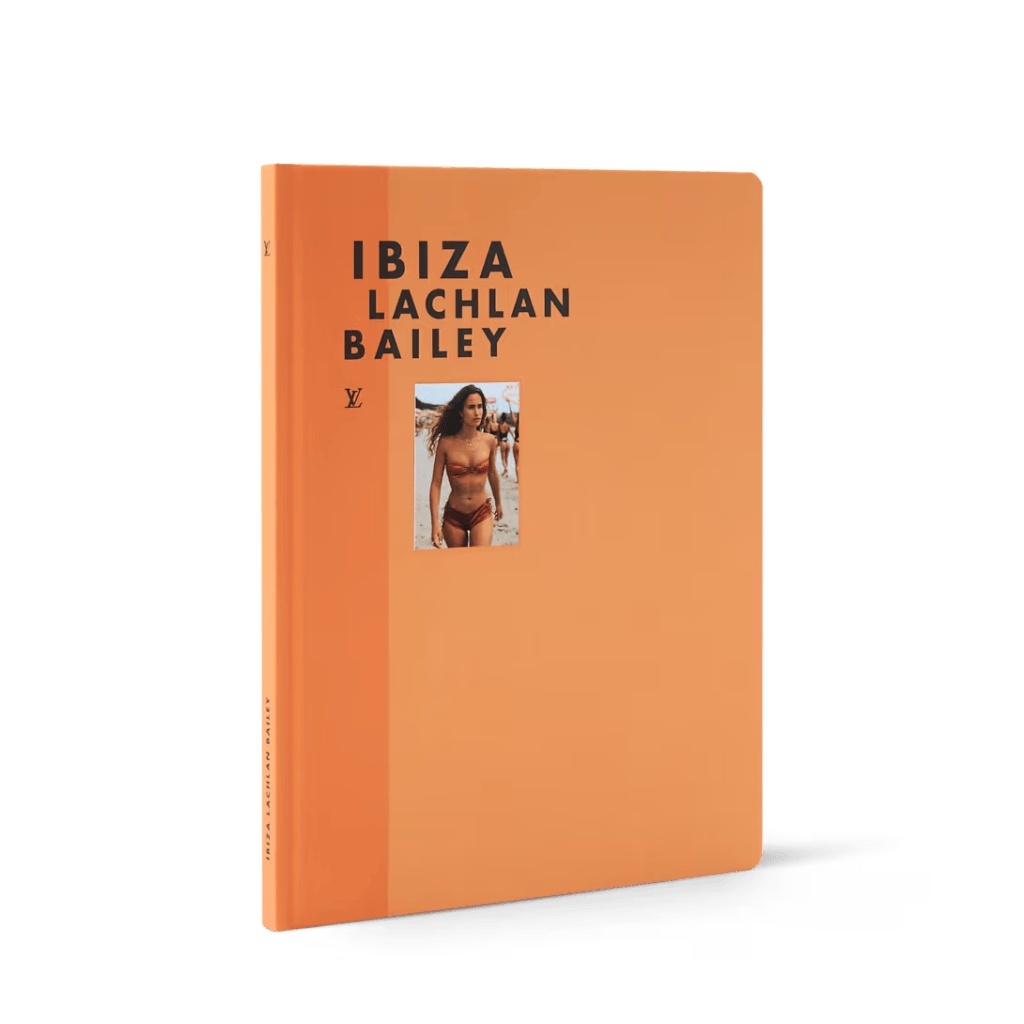
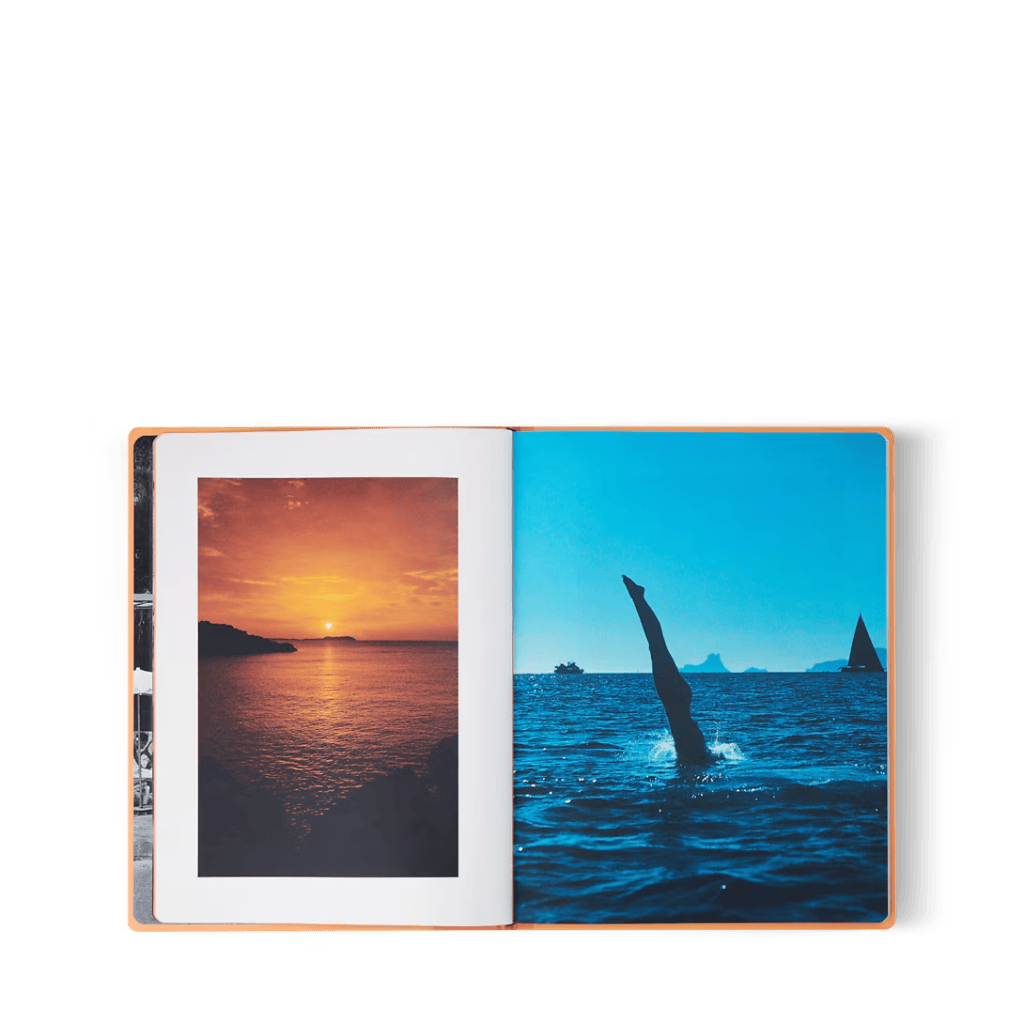
This season, the Louis Vuitton Editions turn their attention to three destinations with new publications dedicated to Arles, Ibiza and Bucharest. The City Guide Arles brings together a curated selection of addresses, cultural institutions and experiences, offering new ways to explore the city. The latest titles in the Fashion Eye collection present two distinct photographic perspectives on Ibiza and Bucharest, interpreted through the work of contemporary photographers.
Arles is a city with a significant Roman heritage and a long association with the arts. Its architecture, museums and cultural institutions reflect several distinct periods of its history, from Antiquity to the present day. The city is also closely associated with Vincent van Gogh, who lived and worked here between 1888 and 1889 and produced a number of important paintings during his time in Arles.
Around 46 BC, following his campaigns in Gaul, Julius Caesar established Arles as a Roman colony for veterans of his army. The settlement was given the name Colonia Iulia Paterna Arelatensium Sextanorum and was granted an important legal status. The decision contributed to a period of major urban development, and Arles subsequently became one of the principal Roman cities in Gaul.
The remains of this period are still central to the city. Arles retains its Roman amphitheatre and ancient theatre, as well as the remains of the Roman circus. The Musée de l’Arles Antique provides further context, with a substantial collection of archaeological objects documenting the city’s development during Antiquity. Among its holdings is a bust identified as Julius Caesar.
Arles’s cultural identity extends well beyond its Roman heritage. The Fondation Vincent van Gogh examines the artist’s relationship with the city and presents exhibitions that place his work in dialogue with contemporary art. At LUMA Arles, designed by Frank Gehry, exhibition spaces, research facilities and landscaped areas form a major contemporary cultural complex. The Fondation Lee Ufan, dedicated to the Japanese-Korean artist, offers another perspective on contemporary art within the city.
The city’s cultural programme exists alongside everyday Provençal life. Its historic centre remains a functioning urban environment, with restaurants, shops, markets and public spaces integrated into the historic fabric.
Founded in 1970, the photo festival presents exhibitions across museums, historic buildings and temporary venues throughout the city, attracting photographers, artists, curators, collectors and visitors from around the world. The event has become an important part of Arles’s contemporary cultural identity. The Louis Vuitton Guides have a presence as well, near the iconic Médiatheque space, with a dedicated café and store. This combination of history and contemporary culture provides the context for the latest Louis Vuitton City Guide Arles.
The guide includes recommendations for restaurants, hotels, cultural venues and other places to visit, alongside information connected to the programme of Les Rencontres d’Arles. Photography by Flore-Aël Surun, of the Tendance Floue collective, and Guillaume Blot accompanies the editorial content, documenting Arles and the surrounding Camargue.
The publication is part of a broader Louis Vuitton publishing programme centred on travel, photography, art and culture. The Fashion Eye series, for example, presents cities, regions and destinations through the work of fashion photographers. Recent titles include Fashion Eye Ibiza – Lachlan Bailey and Fashion Eye Bucharest – Paul Kooiker.
Australian photographer Lachlan Bailey is known for his fashion and editorial photography, characterised by a direct, spontaneous approach and a distinctive use of colour, light and composition. For Fashion Eye Ibiza, he turns his attention to the island beyond its familiar nightlife, documenting its landscapes, architecture and inhabitants, and the contrasts that define its identity.
The series combines contemporary fashion photography with archival material, allowing each photographer to approach a destination through a particular visual perspective. The books extend the idea of the travel publication into the fields of fashion and photography and are designed as collectible objects for readers interested in visual culture, photography and design.
There is a clear connection between this publishing programme and the wider history of Louis Vuitton. Travel has been central to the House since its foundation in 1854, when Louis Vuitton established his reputation as a trunk-maker for travellers. The development of luggage and travel objects became an important part of the company’s identity, linking craftsmanship with the practical requirements of long-distance travel.
The Louis Vuitton City Guides, launched in 1998, developed from this tradition. The collection now covers more than 30 destinations, including Paris, London, New York, Tokyo, Barcelona, Shanghai, Sydney, São Paulo, Taipei, Singapore, Rio de Janeiro, Cape Town, Osaka, Hong Kong, Mexico City, Beijing, Prague, Toronto and Basel, as well as destinations such as Saint-Tropez, Mykonos and Capri.
Each guide focuses on the character and cultural infrastructure of its destination, with recommendations covering hotels, restaurants, museums, galleries, architecture, design, fashion, boutiques and historic sites. Contributions from writers, artists, designers and other cultural figures provide individual perspectives on the cities covered.
The wonderful Arles book is presented in a cloth binding, printed in Italy and published in an English-language edition. During Les Rencontres de la photographie, a digital version is also available free through the App Store.
For first-time visitors, the guide provides an introduction to Arles’s principal cultural and lifestyle addresses. For returning visitors, it offers a selection of additional places and perspectives through the contributions of local and cultural figures.
–