Beneath Edinburgh’s Princes Street, under the restored façade of Johnnie Walker’s grand flagship visitor experience, a new chapter in Scotch whisky has quietly been unveiled. Johnnie Walker Vault, launched in 2025, positions itself less as a product extension than as a conceptual platform: part archive, part atelier, part stage for luxury experiences shaped by cultural exchange.
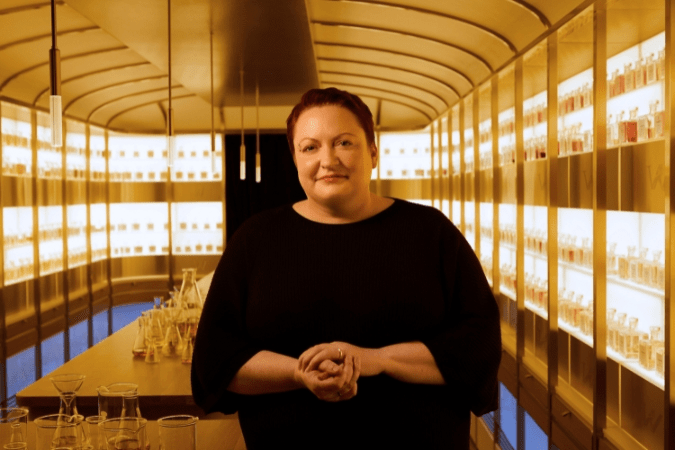
At its centre is Dr Emma Walker, Master Blender at Johnnie Walker, who frames the Vault as a deliberate attempt to bring the emotional dimension of blending to the fore. The idea, she explains, emerged from a desire to work with the brand’s extraordinary access to rare stock in a more intimate and expressive way, saying the project began “with our desire to create something truly special that would showcase the incredible depth of rare whiskies we have access to.”
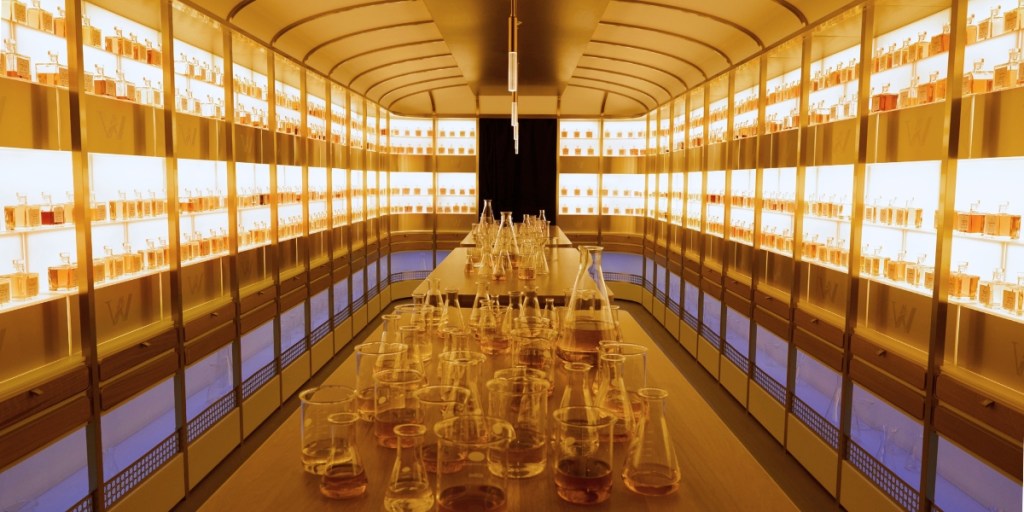
Rather than presenting whisky as a fixed hierarchy of age and rarity, the Vault reframes it as a living archive of possibility. Hidden beneath the city, the space holds a rotating selection of around 500 whiskies drawn from a wider pool of more than ten million casks, including aged expressions and ghost stocks from long-closed distilleries. But its significance lies less in its inventory than in its function as a working studio.
Dr Walker describes it as a “hidden atelier beneath Johnnie Walker Princes Street in Edinburgh,” conceived as a space where guests can be invited into the creative process itself. The concept, she adds, evolved from thinking about how to present rare whisky in a way that felt genuinely new within the category, ultimately becoming a framework for one-to-one blending encounters rooted in personal storytelling.
At the heart of the Vault is the Private Blend Experience, a bespoke programme that situates whisky creation within a wider cultural journey through Scotland. Beginning with curated hospitality that includes Michelin-starred dining and a stay at Gleneagles, the experience culminates in a private session with Dr Walker, where each guest’s preferences and personal narrative are translated into a bespoke expression.
She describes these encounters as central to the philosophy of the project: “When a guest engages with Johnnie Walker Vault, they’re embarking on an extraordinary personal journey. I love these sessions because they allow me to truly understand each person’s story and preferences, then translate these into a completely unique whisky by selecting from our collection of 500 rare, aged, and ghost whiskies.”
The resulting blend is bottled in a Baccarat crystal decanter, conceived as both object and heirloom, and formally recorded within the Johnnie Walker Vault archive. In this way, each commission becomes part of a continuing institutional memory, extending the brand’s long history of blending into a new register of authorship and personal legacy. As Dr Walker notes, “each personal recipe is chronicled in the Johnnie Walker Vault archive, creating a lasting legacy and allowing guests to add their own chapter to the Johnnie Walker story.”
Alongside these private commissions, the Vault also introduces a programme of cultural collaborations, inviting figures from outside the whisky industry into its creative ecosystem. The first of these is a partnership with French fashion designer Olivier Rousteing, developed over twelve months of exchange between Paris and Edinburgh.
For Dr Walker, the collaboration exemplifies the Vault’s ambition to operate across disciplines: “I’m incredibly excited about our first cultural collaboration for Johnnie Walker Vault, which welcomes acclaimed French creative director Olivier Rousteing,” she says, describing how the project unfolded through shared exploration of emotion, seasonality and material expression. “It’s been a fascinating journey working with Olivier… where we explored how to translate his emotional connection to the seasons into whisky.”
The result is the Couture Expression collection, a series of four whiskies that interpret Rousteing’s creative language through the lens of blending, while extending Johnnie Walker’s own vocabulary of flavour construction. Further collaborations are planned, positioning the Vault as an ongoing platform for cross-disciplinary experimentation between whisky and contemporary culture.
More broadly, the initiative reflects a shift in luxury towards experiences defined less by ownership than by participation. Dr Walker articulates this change directly, suggesting that “meaningful experiences are now at the heart of how people connect with brands, especially in the luxury space.” In this context, the Vault becomes a site where that shift is made tangible: a place where narrative is not communicated, but co-authored.
What emerges is a reframing of whisky as a medium for personal expression, rather than simply a finished product. As Dr Walker puts it, there is “something magical about translating someone’s narrative into flavour, creating a whisky that’s uniquely theirs.”
In positioning blending as both craft and cultural dialogue, Johnnie Walker Vault situates itself within a wider contemporary movement: one in which luxury is increasingly defined by proximity to process, access to authorship, and the transformation of experience into legacy. Beneath Edinburgh, whisky becomes less an object of consumption than a site of collaboration—quietly reimagining what it means to create, and to leave something behind.
–