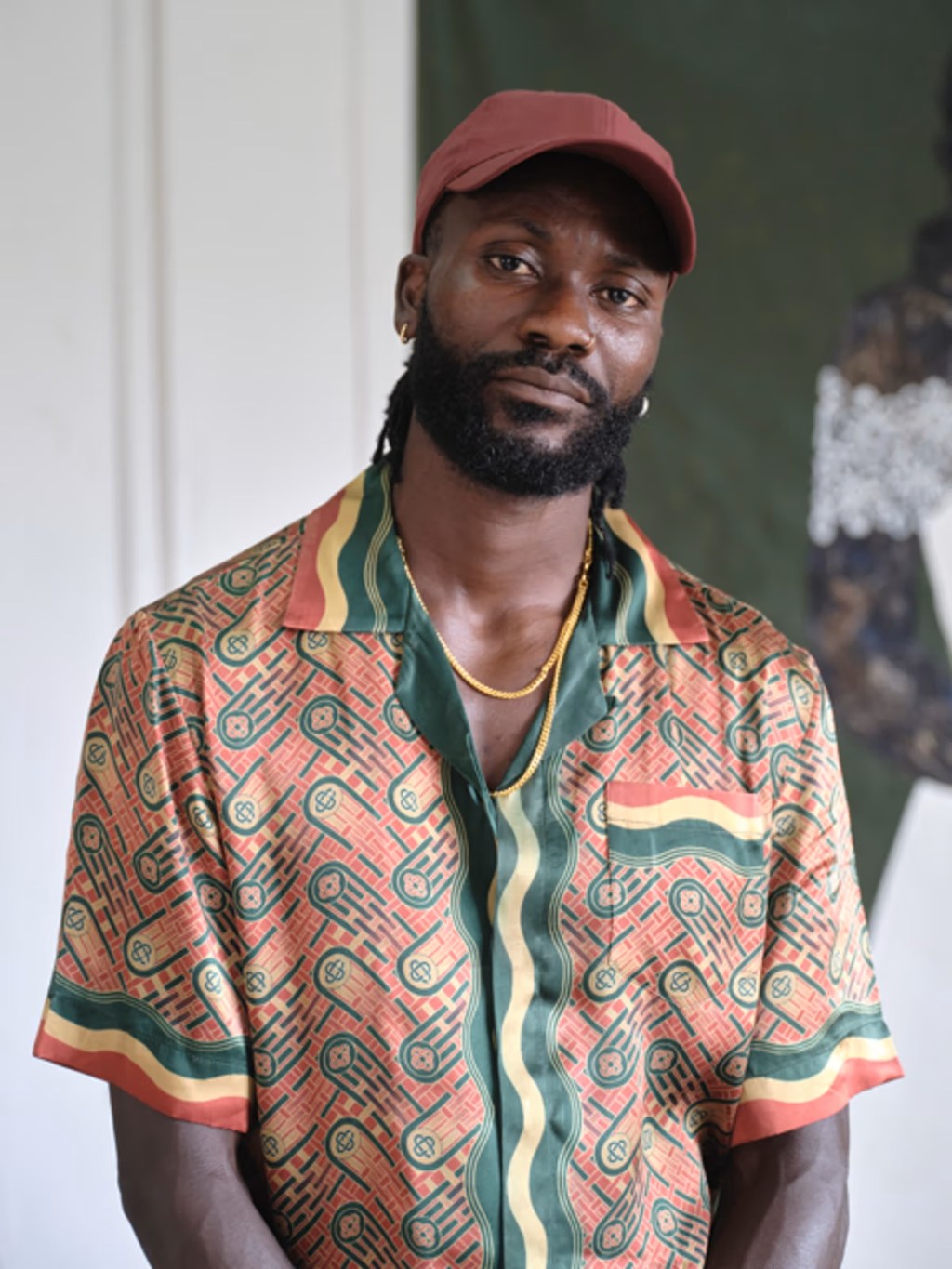
Amoako Boafo presents his first solo exhibition in Italy at the Museo di Palazzo Grimani in Venice, bringing together a series of new and recent works shown in dialogue with the building’s spectacular Renaissance setting.
Drawing inspiration from the atmosphere of the Palazzo Grimani, Boafo has created paintings that respond directly to the site’s unique architecture and history. The works are installed on the second floor of the palazzo, part of the Musei archeologici nazionali di Venezia e della Laguna, where they sit within rooms shaped by centuries of Venetian artistic tradition. The Museo di Palazzo Grimani in Santa Maria Formosa, part of the Musei Archeologici Nazionali di Venezia e della Laguna, has medieval origins and was later reworked in the 16th century by the heirs of Antonio Grimani, who served as Doge of Venice from 1521 to 1523. In 2021, Gagosian presented an exhibition of works by German artist Georg Baselitz at the museum.
“The primary idea of my practice is representation, documenting, celebrating, and showing new ways to approach Blackness.” Amoako Boafo said.
The exhibition continues Boafo’s ongoing exploration of identity, style, and representation. His distinctive portrait language, built through bold colour and textured surface, remains central, giving each figure a strong sense of presence and individuality.
Placed within the historic interiors of the palazzo, the works create a quiet but direct dialogue between contemporary Black portraiture and the legacy of Venetian Renaissance art. The contrast is not forced, but open: two visual histories occupying the same space and speaking across time. Amoako Boafo is known for rethinking portrait painting in contemporary art, becoming an important voice in representing Africa and the African diaspora today. His works focus on Black identity, style, and presence, often showing his subjects with dignity, confidence, and strong individuality.
A defining feature of his practice is his technique: Boafo applies paint using his fingers rather than a brush, creating textured, expressive surfaces that feel direct and personal.
In 2013, he moved to Vienna, where he co-founded WE DEY, a cultural space supporting artists of colour and LGBTQ+ communities through exhibitions and workshops. His experience in Austria, where he witnessed the marginalisation of Black people, deeply shaped his focus on portraiture as a form of visibility and affirmation.
Boafo draws inspiration from both historical and contemporary artists, including Gustav Klimt and Egon Schiele, as well as Jordan Casteel, Maria Lassnig, and Kerry James Marshall.
Presented in collaboration with Gagosian, the exhibition opens just before the 61st Venice Biennale, situating Boafo’s work within one of the most active moments of the international art calendar. This is one of the Biennale’s strongest exhibitions on view during this year’s Biennale.

