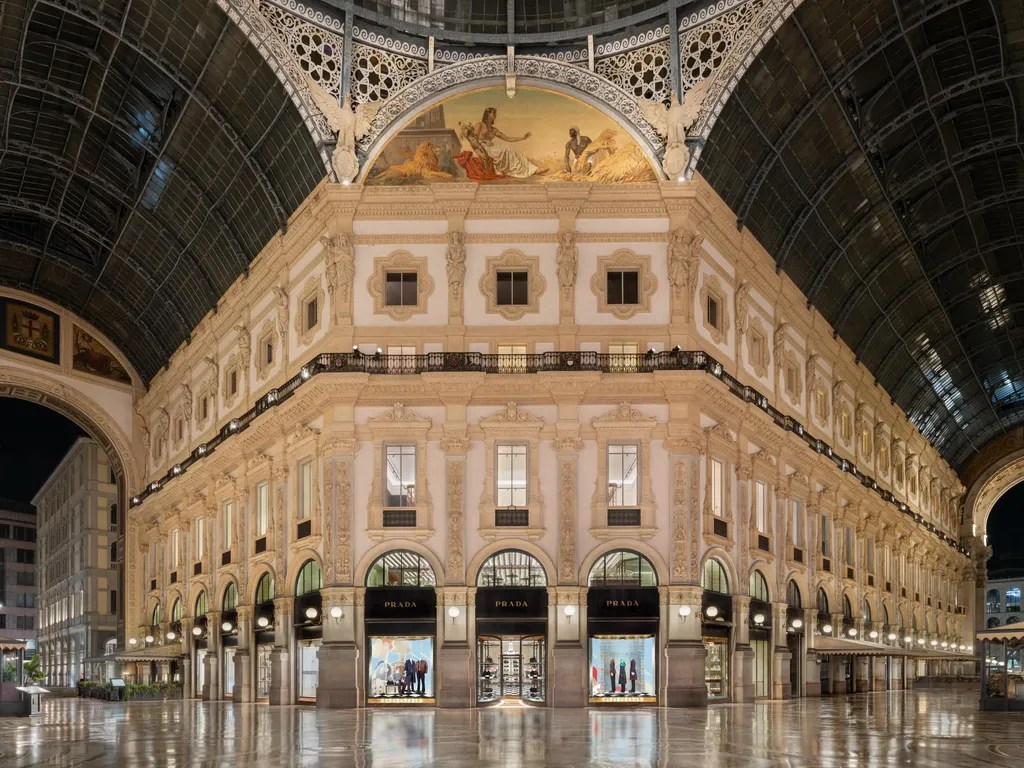
At the heart of Milan’s Galleria Vittorio Emanuele II, Prada has expanded its presence on the site where the brand’s story began. Prada Galleria occupies a new eight-floor destination that brings together retail, hospitality, culture and a permanent exploration of the house’s heritage, a project that arrives at a moment when the industry’s biggest names are increasingly treating flagship openings as cultural statements rather than simple retail expansions. Miuccia herself became a meme this week, when she didn’t applaud the robotic performance brought by Vogue World.
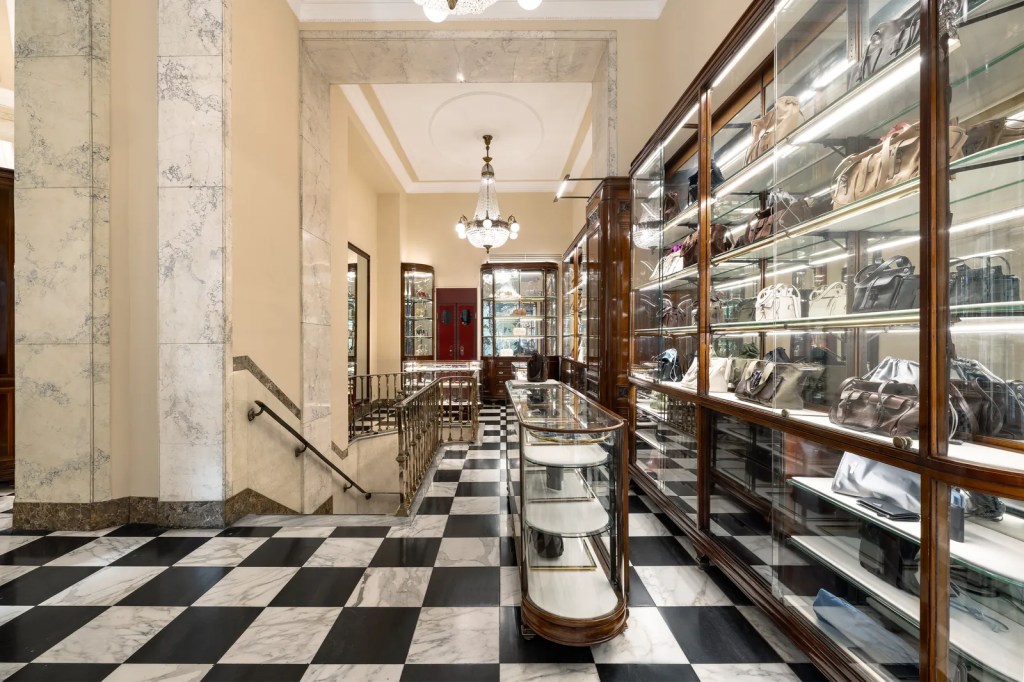
The project returns Prada to its historic roots. The original Fratelli Prada boutique opened here more than a century ago, in 1913, establishing the Galleria as a defining location in the brand’s history, a shop that, in its earliest years, supplied leather goods and luggage to a clientele that would come to include the Italian royal family. Today, the new Prada Galleria extends across both sides of the arcade’s central piazza, with the men’s and women’s stores facing one another and connected underground by a new “Passaggio Segreto.” It’s a stunning space, one that treats the nineteenth-century arcade itself as a kind of architectural collaborator rather than a mere backdrop.
The expanded women’s space offers an extensive selection of ready-to-wear, bags and accessories, alongside luggage, beauty and home collections. The destination also introduces more private settings, including a salon and apartment designed for private clients, spaces that gesture toward hospitality as much as retail, blurring the line between shopping and simply being received.
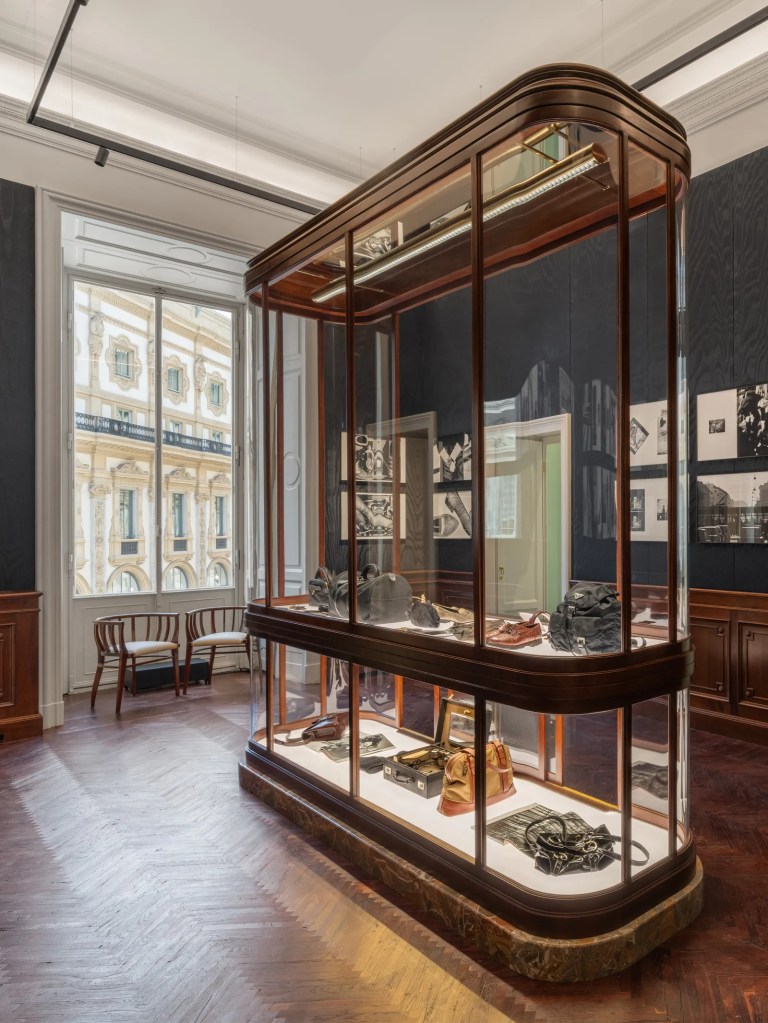
Culture occupies an equally prominent role. Fondazione Prada’s Osservatorio continues its programme of visual experimentation and research, while a new permanent exhibition, Pradasphere, traces the ideas, objects and creative collaborations that have shaped Prada over the decades. Garments and artefacts from the house’s 114-year history offer visitors a closer look at its evolving approach to fashion, design and craftsmanship, treating the archive less as a static record than as a working resource the house continues to draw on.
The interiors establish a dialogue between Prada’s distinctive visual language and the historic architecture of the Galleria. Black-and-white marble flooring sits alongside rich wood panelling, while display vitrines and cabinetry echo the materiality of the surrounding interiors. Pistachio green walls introduce another reference to the Prada universe, drawing on the signature colour of Marchesi 1824, the Prada-owned pasticceria located within the new space, a detail that turns a single shade of green into a thread connecting fashion, food and interior design under one roof.
Pradasphere occupies the level above Marchesi 1824, creating an exhibition environment within what is arguably Prada’s spiritual home. Rather than treating the archive as something fixed in time, the presentation explores how the house’s history continues to inform its contemporary identity, through craftsmanship, experimentation, collaboration and an ongoing exchange of ideas.
The name Prada Galleria itself carries a historical reference. It is shared with the house’s iconic top-handle bag, first introduced in 2007 and named after the original Prada store that opened in the Galleria in 1913, a naming choice that quietly folds the brand’s commercial history into its present-day identity.
The new destination arrives at a significant moment for Prada in Milan, reinforcing the relationship between the fashion house and the city that has shaped it.
More than a retail expansion, Prada Galleria presents the brand’s history as something active and evolving, placing commerce, culture and archive within the same architectural setting.
–
Images: Courtesy Prada

