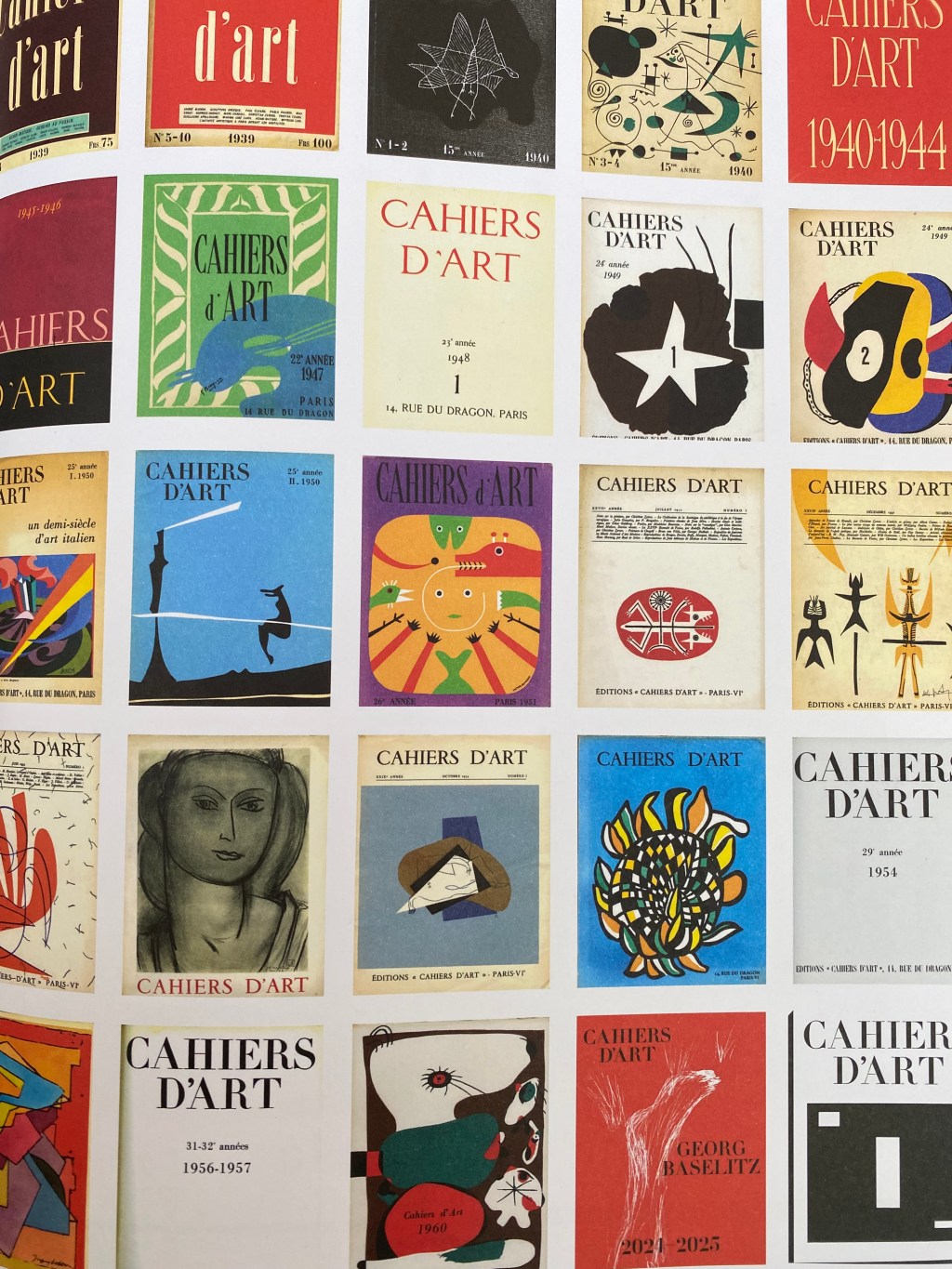
Founded in Paris in 1926 as a publishing house, gallery, and art journal, Cahiers d’Art quickly became one of the most influential platforms for the artists, poets, and thinkers who shaped twentieth-century culture. Led by Staffan Ahrenberg, today, this is an institution which boasts an exhibition space at 14-15 rue du Dragon, in Paris, and continues to edit revered publications on artists.
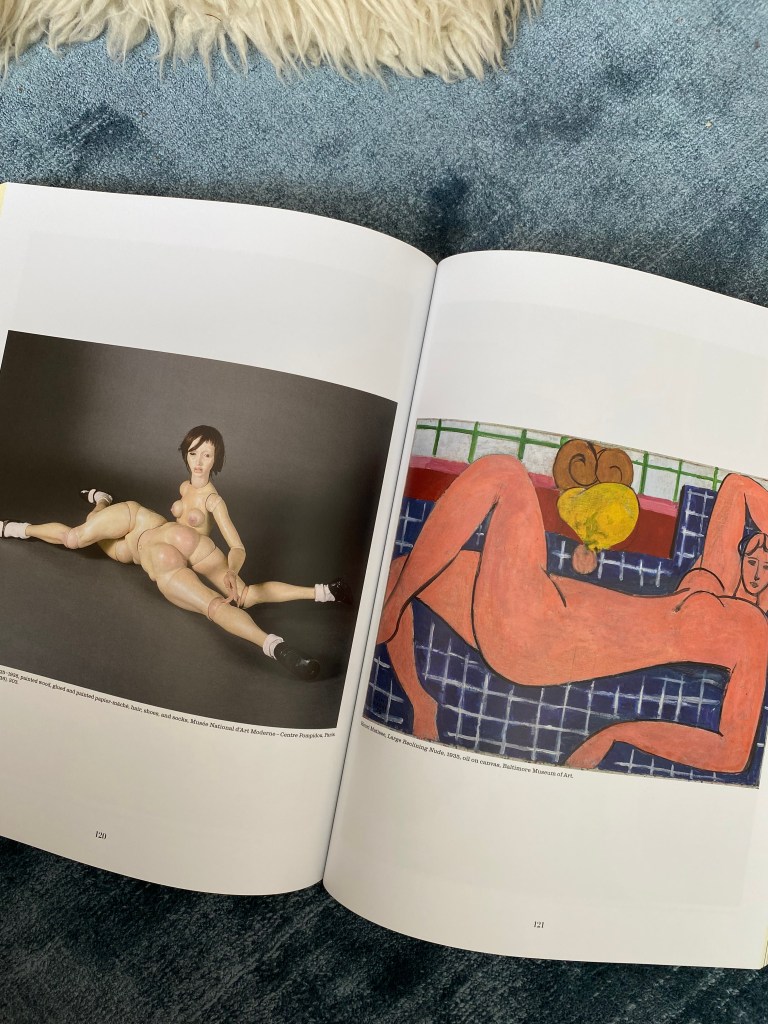
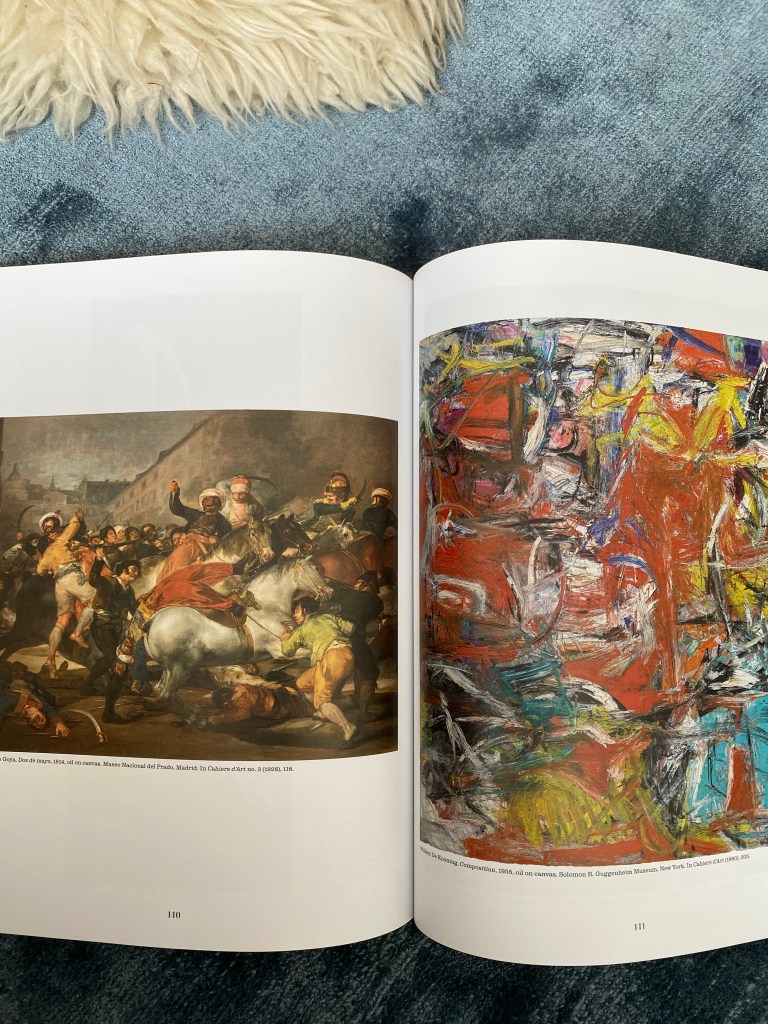
The new centenary volume, published by Flammarion, marks a major milestone in the history of Cahiers d’Art, celebrating its enduring influence on the development and dissemination of modern art. Illustrations from some of the most significant artworks in the history of art are also there, to delight avid readers.
From its earliest issues of La Revue, the publication championed pioneering figures including Henri Matisse, Pablo Picasso, and Wassily Kandinsky, before expanding its pages to embrace revolutionary voices such as Marcel Duchamp, Kazimir Malevich, and the artists of the Surrealist movement, among them Salvador Dalí, Max Ernst, Dorothea Tanning, and Meret Oppenheim.
Renowned writers and philosophers including Samuel Beckett, Georges Bataille, and Jacques Lacan contributed essays that positioned Cahiers d’Art as a unique meeting point between artistic experimentation and intellectual inquiry. Meanwhile, groundbreaking photographers such as Dora Maar and Man Ray brought a new visual language to its pages, cementing the journal’s reputation as a pioneering forum for modern creativity. A 360-degree approach to excellence at the crossroads of visual arts, literature, poetry, and design.
Following its relaunch in 2012, Cahiers d’Art has continued this legacy through its celebrated journal and gallery programme, connecting historic masters such as Alexander Calder (currently on view at the Louis Vuitton Foundation in Paris) with leading contemporary artists.
This fantastic new volume features essays by Daniel Birnbaum, Cécile Debray, Effie Rentzou and more important contributors from the fields of museums and philosophy.
“The rebirth of Cahiers d’Art in 2012 marked not a nostalgic return to the project but a decisive continuation of it under contemporary conditions. It connects past and present without collapsing one into the other, allowing historical modernism to be reread through contemporary practice, and contemporary practice to be sharpened through historical consciousness. The rebirth of Cahiers d’Art thus affirms modernism not as a closed chapter but as something ongoing, a project that remains vital precisely because it is continuously rewritten.” said Daniel Birnbaum and Cécile Debray
Explorations of landmark exhibitions honouring Cahiers d’Art presented across some of the world’s most renowned cultural institutions, reveal its enduring influence and the profound role it has played in shaping the history of modern and contemporary art. From the Peggy Guggenheim Collection in Venice and the Musée Départemental d’Art Moderne, Collection Zervos in Vézelay, to the Benaki Museum in Athens, the Musée National Picasso-Paris, the Museo Nacional Centro de Arte Reina Sofía in Madrid, the Museum of Modern Art (MoMA) in New York, and LUMA Arles, museums across Europe and the United States have honoured the publication’s extraordinary legacy.
Each exhibition offers a different perspective on the journal’s rich history, highlighting its collaborations with pioneering artists, its contribution to the dissemination of modernism, and its continued relevance as a platform for artistic dialogue. Through archives, artworks, documents, and curatorial interpretations, these presentations illuminate the lasting impact of Cahiers d’Art on generations of artists, scholars, and audiences worldwide.
“This anniversary optimistically addresses the question of the future of Cahiers d’Art, an institution that, thanks to its history and heritage, still faces many challenges in these days of the digitalization and fragmentation of the global art scene. Those challenges notably include perpetuating and reinventing the book form as an original object and artistic project in itself; valorizing photography in all its forms (from analog to digital and from paper prints to polaroids); rethinking the notion of the catalogue raisonné; stimulating lively art criticism; and, finally, pursuing many other projects that point to new adventures.” Cécile Debray writes.
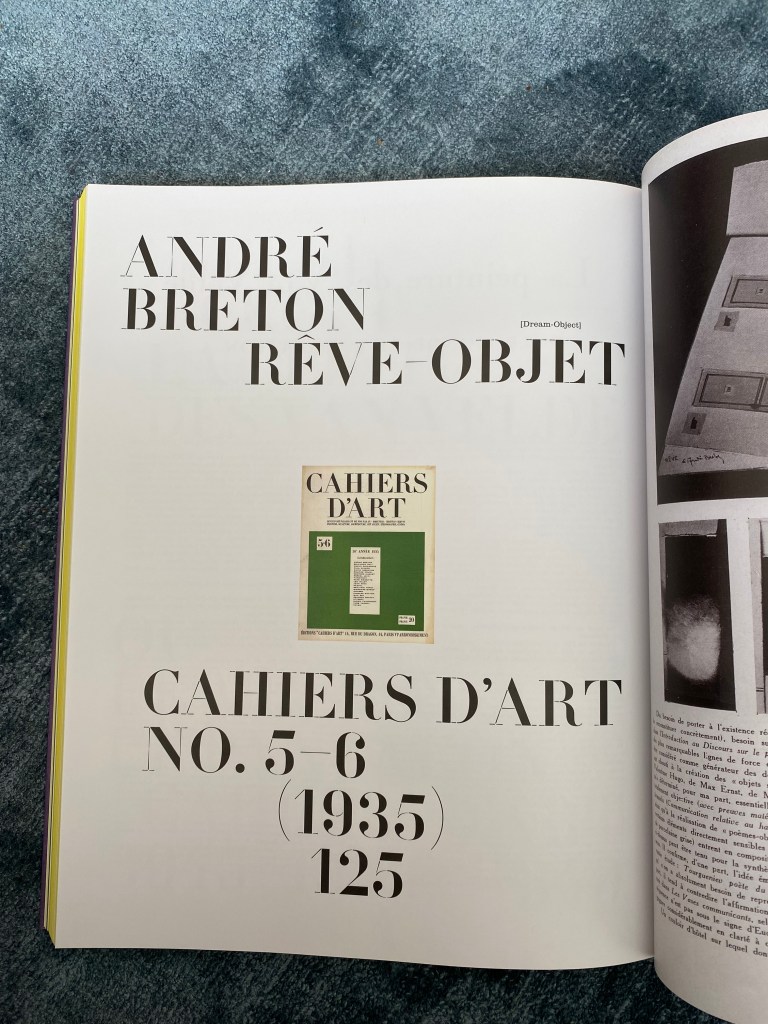
Highlights in the book include André Breton’s visual essay from 1935 titled Rêve-objet, as well as Samuel Beckett’s The Van Veldes’ Painting or The World and the Trousers] from 1945 alongside images. Delightful to rediscover these texts and their illustrations.
Beyond its historic role as a publishing house and journal, Cahiers d’Art has continued to serve as a vital space for artistic exchange through its ambitious exhibition programme. Presented in its Paris galleries, these exhibitions reflect a unique commitment to bringing together modern masters and contemporary voices, creating dialogues across generations and disciplines.
From landmark presentations dedicated to figures such as Pablo Picasso, Marcel Duchamp, Man Ray, Ellsworth Kelly, and Sol LeWitt, to exhibitions celebrating leading contemporary artists including Ai Weiwei, Arthur Jafa, Philippe Parreno, Rosa Barba, and Marina Perez Simão, Cahiers d’Art has consistently championed artistic innovation and critical exploration.
“Even the readymade should perhaps be understood within a longer history of everyday objects entering aesthetic and ritual contexts-from religious icons to vernacular craft. The Cahiers d’Art model suggests that the avant-garde concepts explored in this essay should not be seen as representing points of rupture, but as part of a visual and conceptual lineage, continually reactivated and reinterpreted by artists. This situates the engagement of contemporary artists with these conceptual devices as a form of historical dialogue rather than mere repetition. Perhaps the lives of the monochrome, the diagram, and the readymade have remarkable chapters yet to come.” Daniel Birnbaum writes.
A tribute to a century of artistic innovation, this retrospective volume by Flammarion reaffirms Cahiers d’Art’s ongoing mission: to remain a vital visual, intellectual, and cultural forum connecting generations of artists, writers, and scholars.
–

 ART IS ALIVE