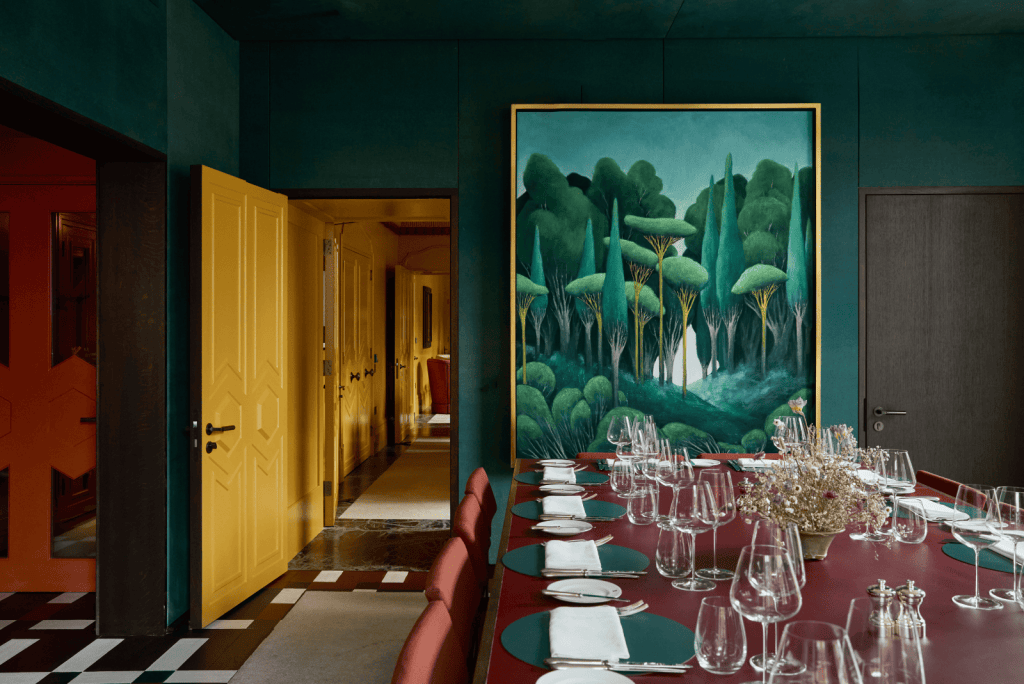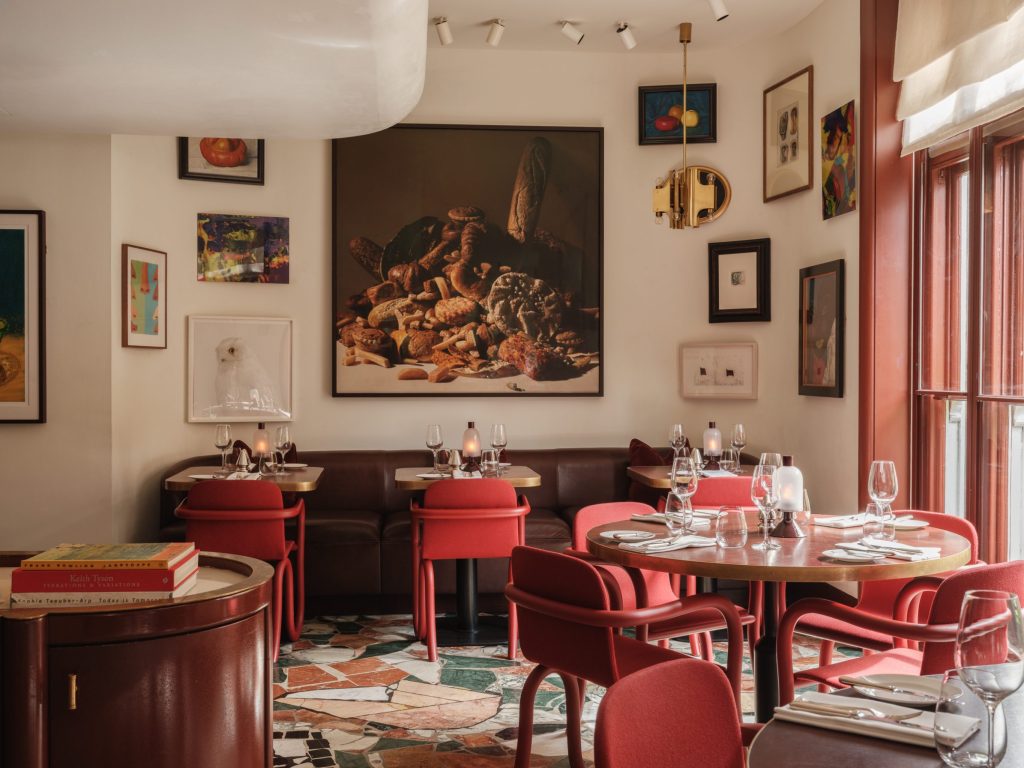
Located at 41–43 Mount Street in Mayfair, Mount St. Restaurant brings together contemporary art, historic interiors and modern British dining. Part of the wider impressive Hauser & Wirth constellation, the restaurant houses an extensive collection of works by established and contemporary artists, integrated throughout its dining rooms, staircases and private spaces. The result is a restaurant in which art is a central part of the experience rather than a backdrop to it.
Two posters advertising the exhibitions by Lorna Simpson and Cindy Sherman currently on view at Hauser & Wirth welcome guests on arrival. The beautiful staircases lead into interiors where paintings, photography, sculpture and specially commissioned design elements merge to reach excellence.
The vibrant flooring is one of the most striking features. Rashid Johnson’s Broken Floor (2022) is a site-specific commission made from Palladian marble, extending the artist’s interest in fragmentation and materiality into the architecture itself. The work establishes an immediate connection between contemporary art and the practical experience of dining.
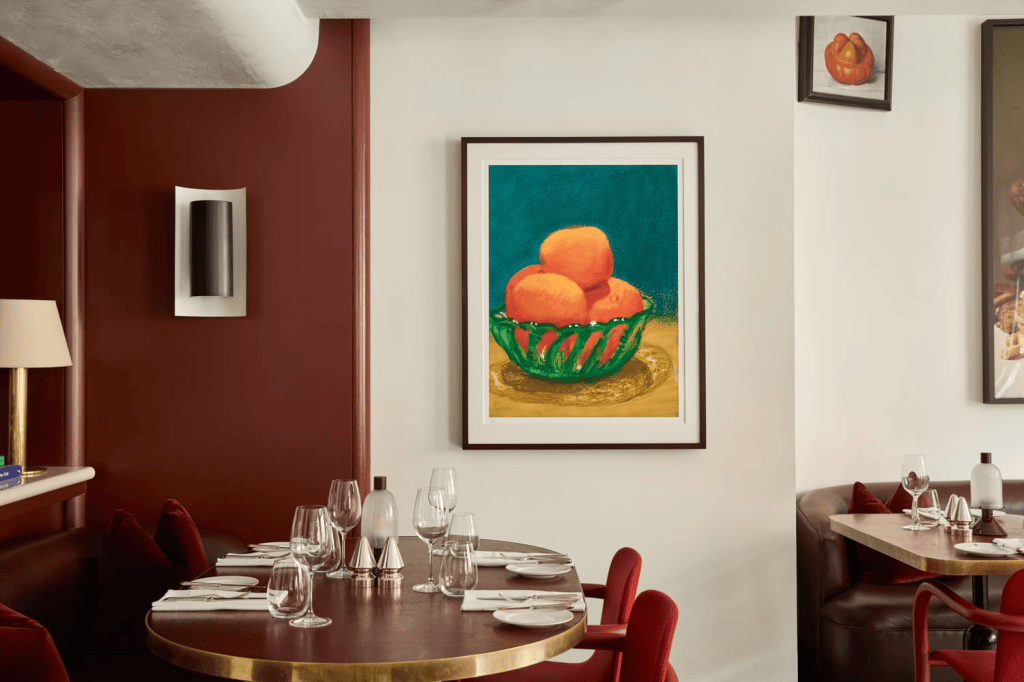
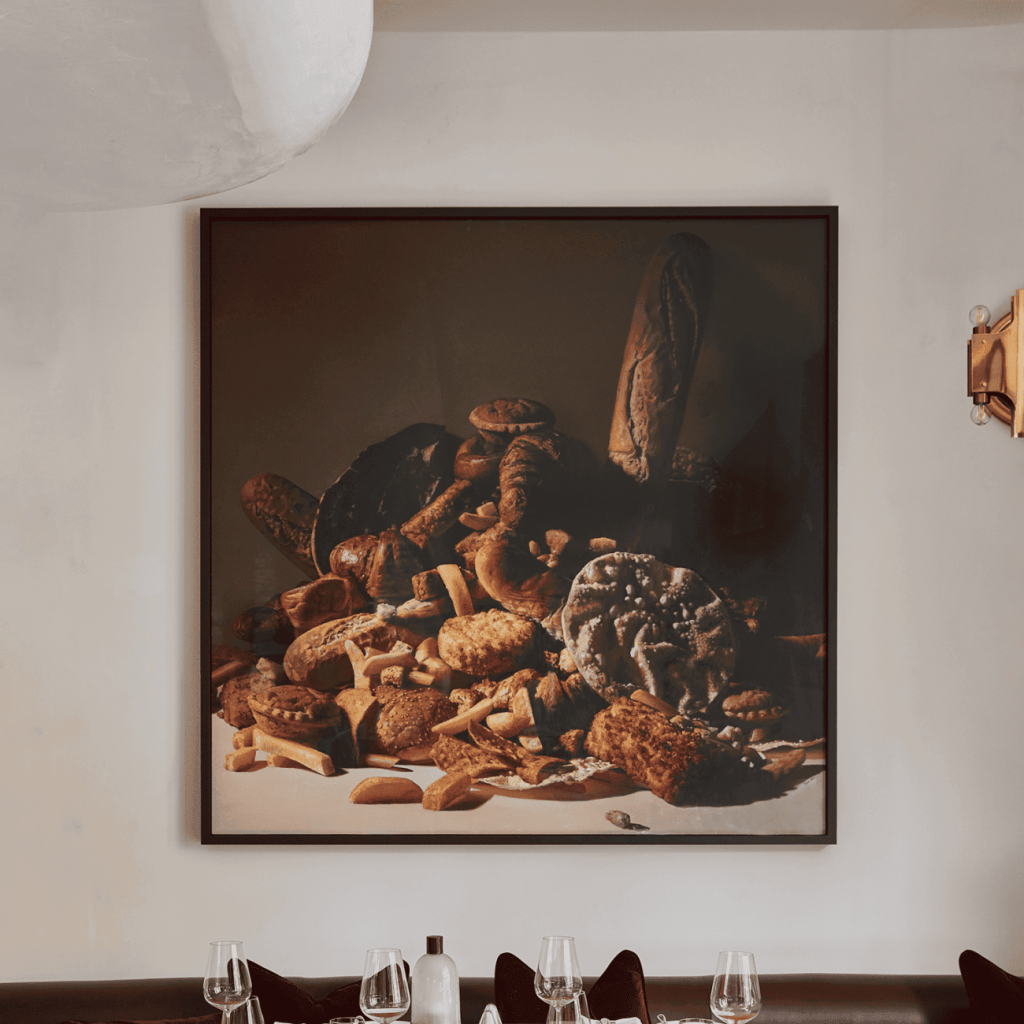
Elsewhere, David Hockney’s vivid orange iPad (2011) drawing sits in dialogue with KeithTyson’s Nature Morte titled Still Life with White Carbs (2011). In No. 643, David Hockney revisits the traditional still life through a contemporary digital medium. Luminous oranges emerge beneath a vivid neon glow, while marks made with the iPad stylus create shadows that evoke both digital pixelation and the pointillist techniques of the nineteenth century. Reflecting on the creative possibilities offered by digital technology, Hockney observed: “Picasso would have gone mad with this. So would Van Gogh. I don’t know an artist who wouldn’t actually.” The juxtaposition brings together Hockney’s exploration of digital image-making and Tyson’s glorious work. Tyson’s Still Life with White Carbs (2011) revisits the still-life tradition through contemporary references to food and consumption. The presence of these works is particularly clever as you enter this fantastic restaurant.
A large new work by Lorna Simpson, dominated by blue, provides another focal point, while a substantial Picasso painting commands attention in the dining room. Where else can you dine in London with such amazing artworks on view?
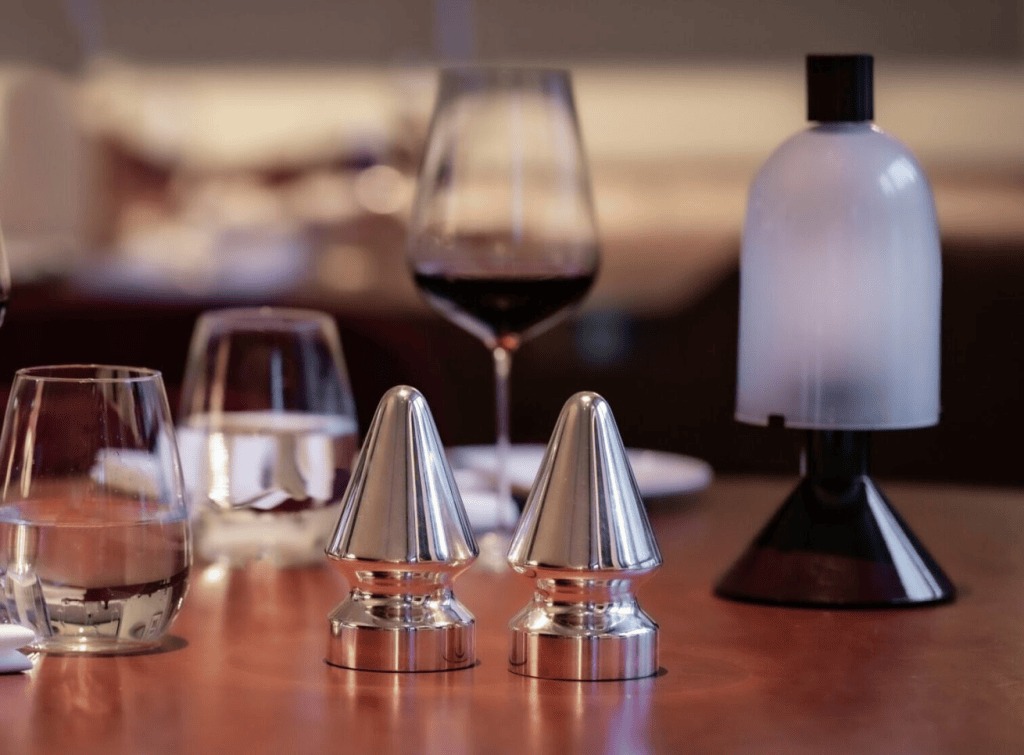
Paul McCarthy’s Salt & Pepper Cruets bring contemporary sculpture into direct contact with eating practicalities. The artist’s recognisable visual language extends into the restaurant’s everyday objects, while McCarthy’s pink wallpaper along the route to the bathrooms demonstrates how the collection continues beyond the principal dining spaces. These details are characteristic of Mount St., where artworks and design commissions appear throughout the building. Spectacular!
The wider collection includes works by Andy Warhol, Lucian Freud, Philip Guston, Henri Matisse and Frank Bowling, among others. Freud’s A Plate of Prawns (1958) and Brace of Pheasants (1952–53) explore still life through his distinctive approach to observation and paint.
Design is equally important. The table lamps draw inspiration from Sophie Taeuber-Arp’s 1918 Powder Box, reflecting the restaurant’s interest in the relationship between visual arts and everyday objects again. Rather than separating the collection from the interiors, Mount St. incorporates artistic gestures into the environment in which guests eat, drink and meet.
The restaurant’s four private spaces offer distinct interiors and settings for private dining and events. Each has its own artistic references, materials and design approach.
The Italian Rooms take inspiration from Venetian palazzi. Verde Alpi green marble features across the floors and bar, while works by Giorgio de Chirico introduce the artist’s characteristic metaphysical imagery. The combination of Italian architectural references and modern art gives the rooms a distinctive identity with golden yellow walls. The private dining room accommodates up to 12 guests.
The Swiss Room references the Swiss heritage of Iwan and Manuela Wirth and the country’s contribution to modern art and design. Its hand-finished European oak floor was stained by artisan Ian Harper, while joyous works by Nicolas Party adds colours and a contemporary perspective. He also remains drawn to the history of landscape painting, particularly Ferdinand Hodler and Georgia O’Keeffe, who moved between abstraction and figuration. In ‘Landscape’, Party evokes the tensions he is known for: a subject both familiar and uncanny, traditional and new. A gorgeous moving-colour installation by Pipilotti Rist provides another visual highlight. The room accommodates up to 14 guests.
The impressive Scottish Room draws on the heritage and craftsmanship associated with The Fife Arms, the Hauser & Wirth-associated hotel in Braemar. Its interior features a carved Scottish oak table measuring nine metres, an antler chandelier designed by Laplace and made by Gareth Guy of the McLean Horn Shop in Braemar, and bespoke tartan by weaver and designer Araminta Campbell. A portrait of Prince Charles Edward Stuart, known as Bonnie Prince Charlie, painted by Domenico Dupra in 1740, provides a historical reference. A cabinet of whiskies completes the room, while the ceiling’s thistle decoration reinforces its Scottish identity. The space regularly hosts private and corporate events, as well as celebrations such as Burns Night.
The room brings together traditional craftsmanship, historical references and contemporary hospitality. Its connection with Scotland demonstrates a shared interest in local heritage, art and design, translated into a setting in central London. Thistle arrangements bring a contemporary decorative touch to all tables, alongside exhibition catalogues that reinforce the restaurant’s celebration of art and culture.
The Games Room, on the fourth floor, offers a more intimate and relaxed environment, with a bar, lounge seating and card table. A bespoke rug designed by Laplace in collaboration with Jerry Gorovoy, Louise Bourgeois’s longtime assistant, references the artist’s visual language. This work dialogues with images referencing Andy Warhol and Man Ray.
Annie Leibovitz’s iconic portrait of John Lennon and Yoko Ono, also on the wall, taken just hours before Lennon’s murder in 1980, remains one of her most memorable photographs. Captured in their Manhattan apartment, the intimate image shows Lennon embracing Ono and later appeared on the cover of Rolling Stone. When shown the Polaroid, Lennon reportedly remarked: “That’s it. That’s our relationship.”
Anj Smith’s hand-painted intervention on the circular turret ceiling adds another contemporary element. The room accommodates six guests around the card table or up to 20 for a standing drinks reception. The recent Frieze party to honour Cindy Sherman took place in this beautiful space. Behind golden curtains, Cindy Sherman’s Untitled #581 (2016), part of her Flappers series, explores identity and femininity. Drawing inspiration from Norma Desmond, the fading Hollywood star in Billy Wilder’s Sunset Boulevard (1950), Sherman portrays a woman clinging to the glamour of a bygone era through elaborate makeup, sequins and carefully styled hair. The contrast between her composed expression and the visible signs of ageing lends the image a poignant quality, reflecting on the passage of time and the fragile relationship between appearance and identity.
Together, the private rooms demonstrate the range of Mount St.’s approach to interiors. Venetian references, Swiss design, Scottish craftsmanship and contemporary artistic practices coexist within one building, while each room retains its own character. They are available for private dining, celebrations and events.
Back in the main restaurant, the menu follows a similarly broad approach, drawing on British culinary traditions and seasonal ingredients alongside French and Italian influences. Classic preparations sit alongside more contemporary combinations, with delicious dishes ranging from seafood and game to traditional roasts and richly prepared desserts.
The meal begins with liver pâté, butter and warm bread. Among the starters listed on the menu are Portland crab Royale with confit lemon and a toasted muffin with seaweed butter; Orkney scallop scampi with chip-shop curry sauce, apple and carrot; and raw Cornish bluefin tuna with smoked cod’s roe and Bloody Mary dressing. Delicious!
Other options include carpaccio of roast sirloin with oyster mayonnaise and crispy potato, rillette of Stepney smoked trout with horseradish crème fraîche and heritage beetroot, and caramelised white onion soup accompanied by a cheddar, leek and truffle toastie. The vegetarian selection includes London butter lettuce with Stilton, pear and walnuts, as well as salt-baked celeriac with baby artichoke and romesco sauce.
The Omelette Arnold Bennett is another reference to British dining. Traditionally associated with the Savoy Hotel where the author used to stay, the dish combines smoked haddock with a rich cheese sauce. The Mount St. team rightly emphasised the significance of this great dish. Named for a hungry novelist, this decadent dish turned breakfast into an art form at the time. Even the menu reflects the same thoughtful research and intellectual curiosity that define Mount St. and Hauser & Wirth, bringing historical references and culinary traditions into wonders.
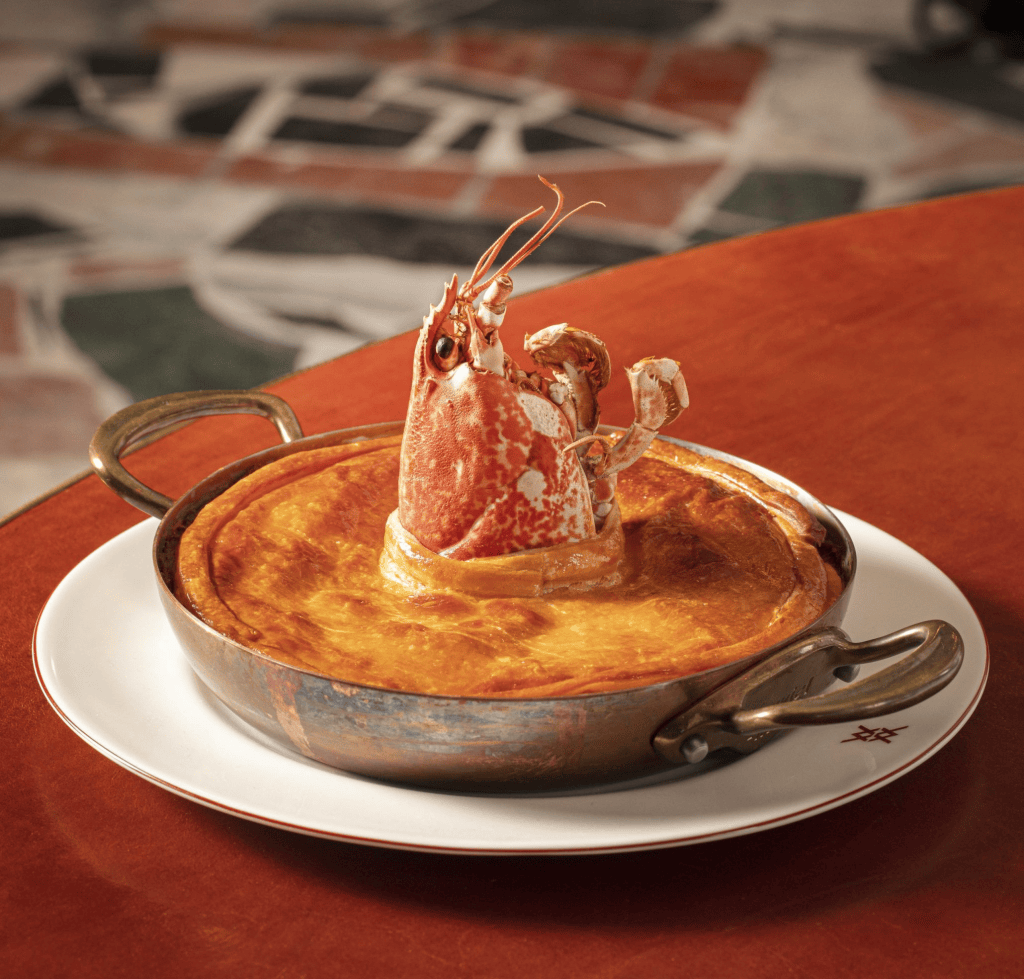
Among the main courses, the beef Wellington for two is simply marvellous. Served with truffle mashed potato, braised shallot and red wine sauce, it requires approximately 50 minutes to prepare. The best in London! The lobster pie for two, served with greens, provides another substantial dish intended for sharing.
The menu also includes Cornish monkfish with mashed potato, sea aster and lobster peppercorn sauce; Dover sole with brown-butter hollandaise; and tagliolini with 24-month Parmesan and white truffle. British game features in the form of young Yorkshire grouse with liver parfait, game chips and bread sauce, and Highland venison with braised shoulder bonbon, celeriac and pear. A dry-aged beef fillet is served with crispy sweetbread, girolles and glazed carrot.
Vegetarian and vegan options include roasted cauliflower with coconut curry sauce and onion bhaji, and a caramelised Roscoff onion tart with bitter leaves and Driftwood goat’s cheese. Traditional side dishes range from bubble and squeak and triple-cooked chips to steamed spinach, French beans with confit shallots and roast carrots with thyme and honey.
The dessert menu combines classic French patisserie with British favourites and contemporary combinations. The Paris-Brest-inspired hazelnut choux bun with Guernsey vanilla cream and hot chocolate sauce, a warm 70% Mayan Red chocolate tart with roasted vanilla ice cream is spectacular, and the raspberry Swiss roll with Madagascan vanilla cream might be another hit. A pavlova with mixed citrus and lemon verbena ice cream provides a fruit-led alternative, while the selection of British cheeses is served with Durslade Farm chutney. Homemade chocolates offer a final accompaniment to coffee.
The drinks offering extends to a selection of sweet wines and ports, including Tokaji Aszú, Jurançon, Château d’Yquem and vintage Madeira. These provide options for pairing with desserts or extending the meal.
Service is an important part of the experience. The team is attentive and professional, with staff from different backgrounds, including French and Italian members of the team. Their knowledge of the artworks and their enthusiasm for the collection contribute to the restaurant’s experience. Where else do you find a team whose passion for hospitality is matched by such an impressive knowledge of art?
The restaurant’s story also includes personal details with the gallery. The recipe book presented to Iwan Wirth for his fiftieth birthday is one example of the relationship between food, hospitality and the people behind the project.
Mount St. serves breakfast, brunch, lunch, dinner and Sunday lunch, alongside drinks, and offers a children’s menu. Its programme therefore extends beyond evening dining, accommodating everything from a morning meeting to a leisurely lunch, a family meal or a private celebration.
Executive chef Jamie Shears is the culinary talent behind Mount St. Restaurant, bringing an excellent pedigree shaped by time with Gordon Ramsay, the Galvins and Jason Atherton, as well as a spell as executive chef at CUT at 45 Park Lane. That cv shows in a menu of British classics cooked with real confidence and care. Shears works closely with farmers, growers and makers to source the finest British produce, including beef and lamb from Artfarm’s own Durslade Farm in Somerset, and the result is cooking that is rooted in place, impeccably sourced and worthy of the extraordinary art that surrounds it.
Mount St. Restaurant is a rare Mayfair destination that brings together elements usually treated separately: a substantial art collection, carefully designed interiors, traditional craftsmanship and a menu rooted in British dining.
Art here is not confined to the walls, as large-scale paintings and photography sit alongside flooring, wallpaper, lighting and table objects, so that it becomes part of the everyday experience of a meal. The private rooms add another layer of character, and their connection to The Fife Arms reveals a consistent philosophy of hospitality in which art, regional identity and craftsmanship are closely intertwined.
In a neighbourhood where restaurants compete on food, design and service, Mount St. stands apart through the relationship between its art (which is, of course, also for sale) and its dining. This is a restaurant shaped by the conviction that art need not be confined to galleries, and that hospitality offers a wonderfully inviting context in which to experience it. So unique!
–