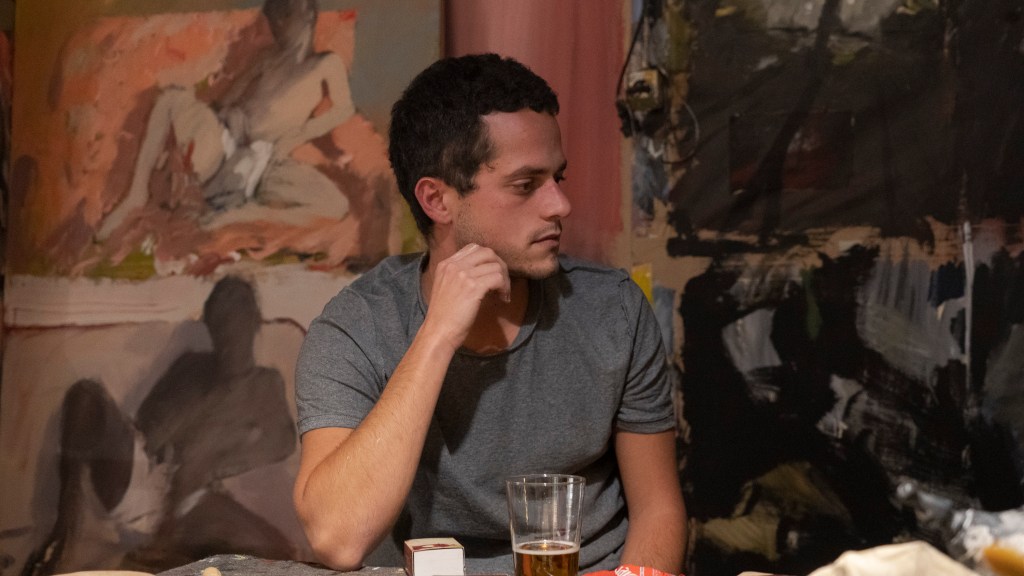
João Gabriel is one of the most talented painters of his generation, with large-scale and smaller-size paintings that convey lyricism, multiple cultural references and explosive sensuality.
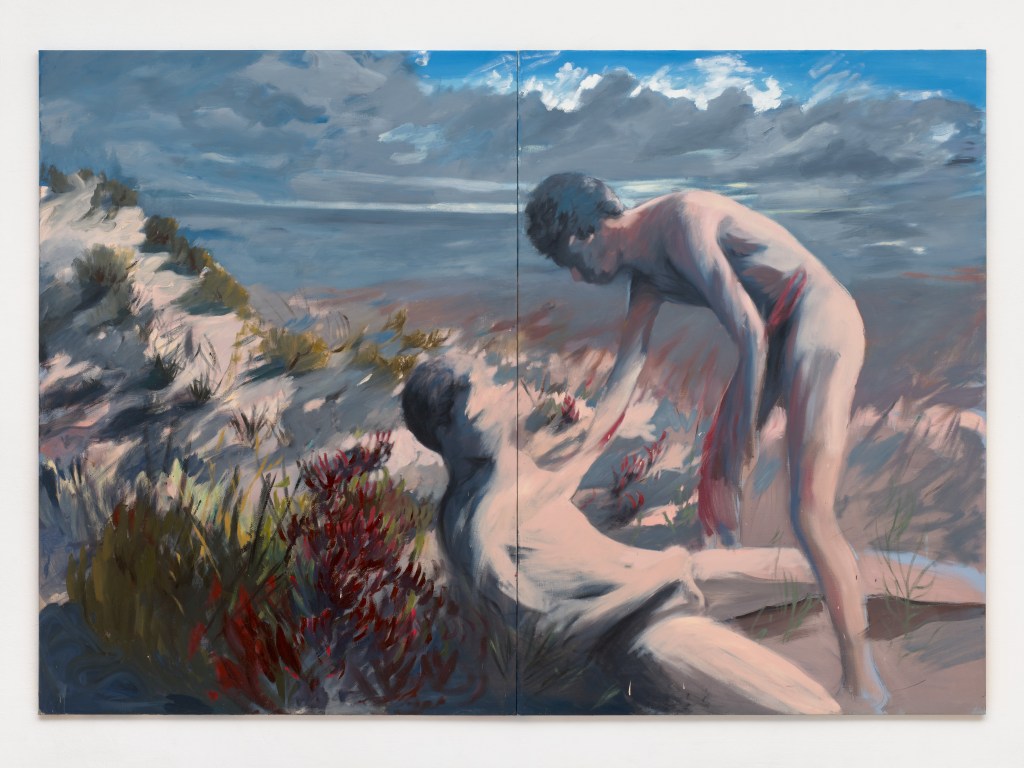
Natural landscapes and intimate scenes representing love-making between men, are subtly featured in vibrant paintings which turn the viewer into voyeurs, consequently outlining natural and secret moments.
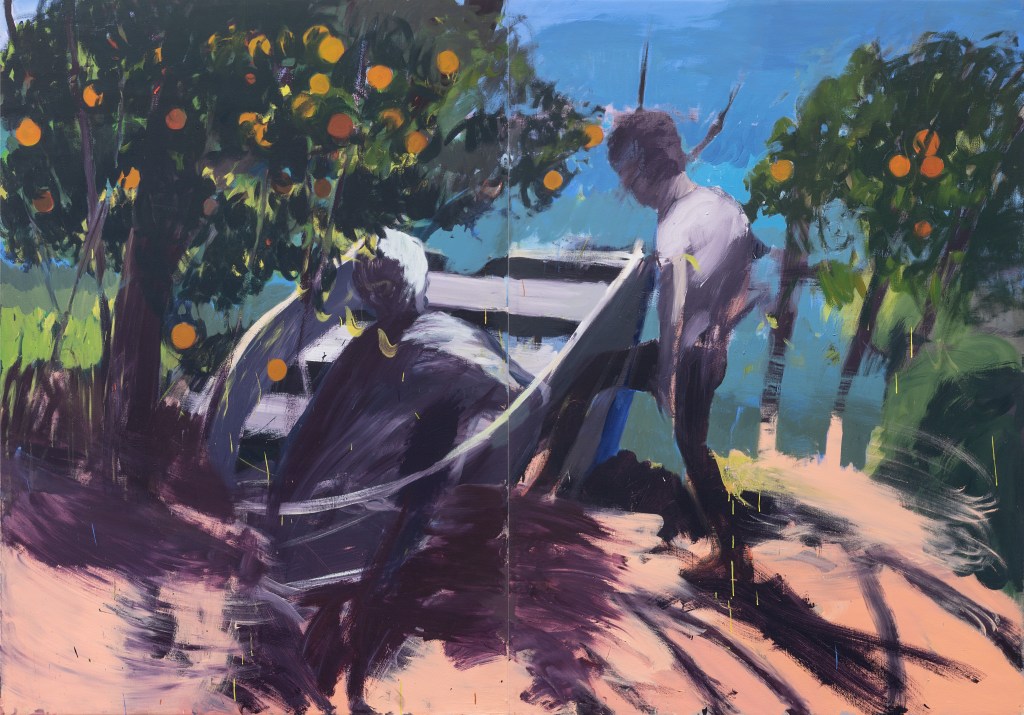
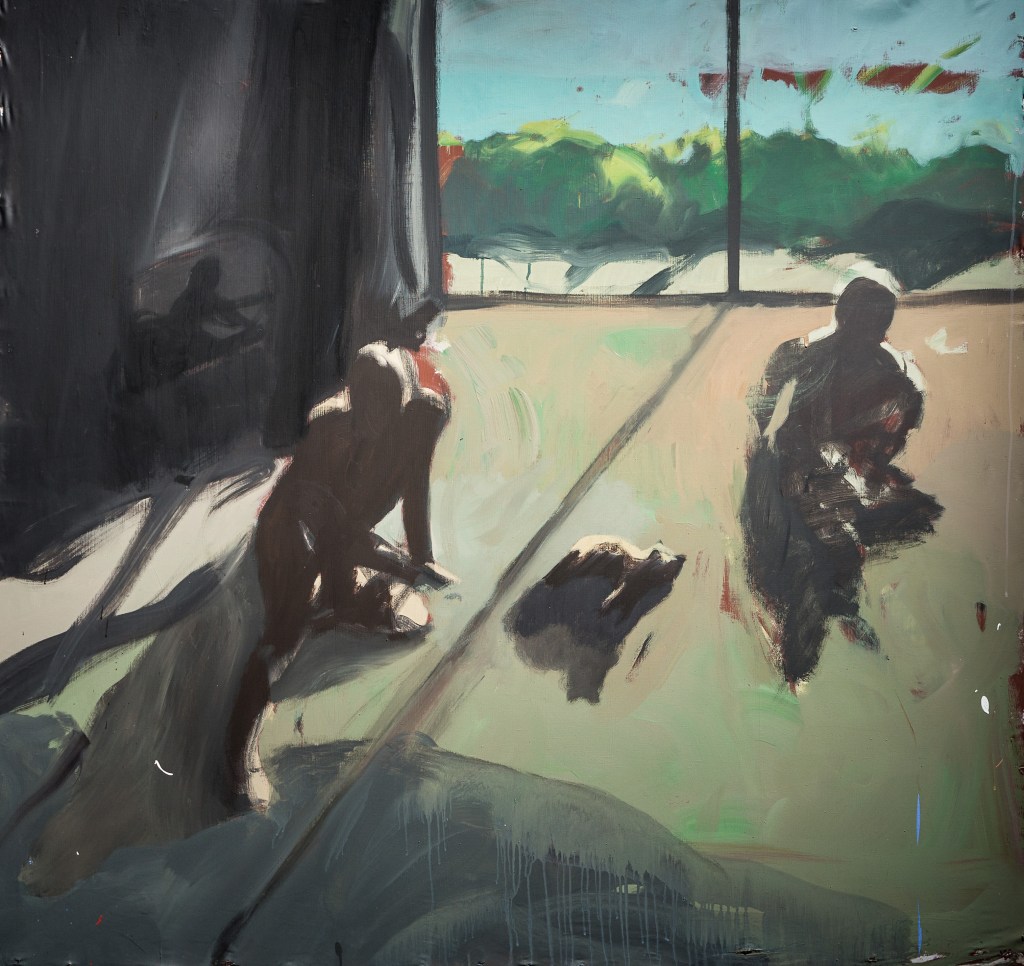
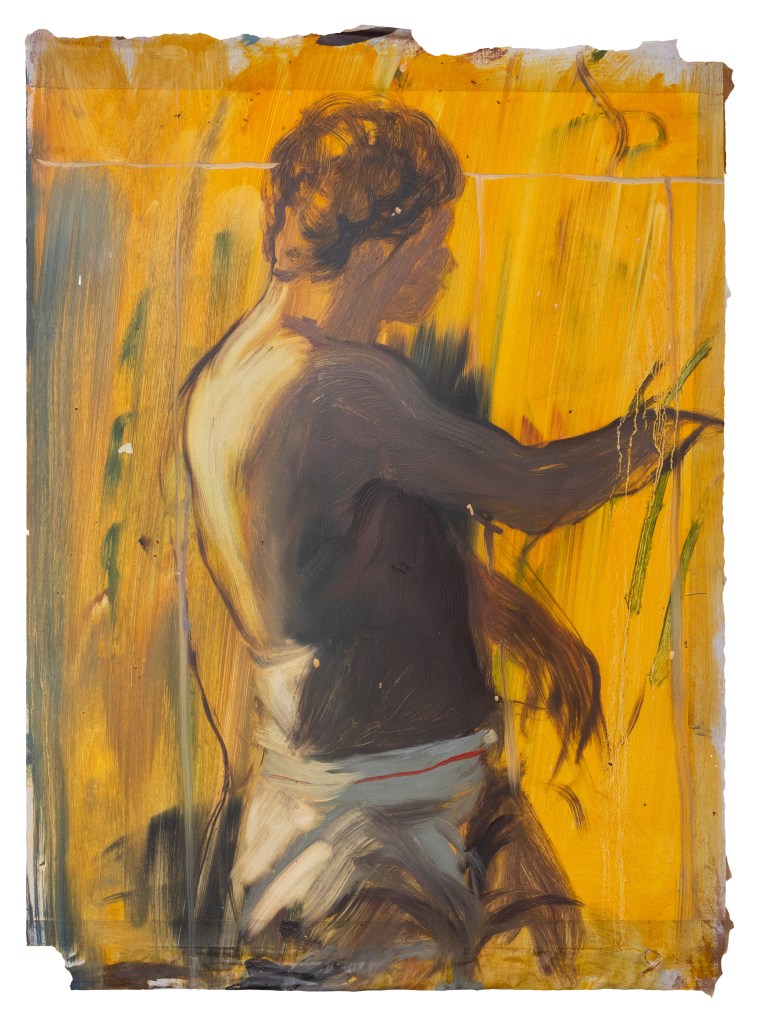
João Gabriel’s paintings exult pleasure and desire in abstract settings. The works showcase beautiful textures, vigorous brushstrokes and a mastery at oscillating between enigmatic characters and colourful background.
Living and working in Portugal, his work is already included in the collections of important museums including the public collections of MAAT, PT, Marin Gaspar, and Figueiredo Ribeiro, in Portugal.
While his paintings are rarely inspired by his personal life, João Gabriel’s rebel spirit is imbued in the works. They juxtapose classical references, such as erotic Greek and Italian frescoes from Vitti’s house to French Impressionism and Fauvism, Renaissance beauty and the Baroque. Conceptually, the artist is fascinated with the relationship between Eroticism and depiction.
Most importantly, João Gabriel’s painting explore relationships between humans and freedom through rare virtuosity. These mysterious and often interior-based sequences express fearless physicality, and a unique sense of carnal impulse. The depictions are amplified by a dramatic interplay of light and darkness, and powerful ideas of innocence and aspiration.
For Art is Alive, João Gabriel talks about his inspiration, his creative process often bringing interesting surprises, his studio practice in Portugal and the exciting new upcoming projects with his gallery.
How do you start your paintings: do you start with the subject matter, the content, or
rather explore the techniques first? Do you draw first?
Usually the first thing I do when I want to start a new painting is either look at the images I have or search for new ones. Almost all of the pictures I use come from 70s/80s gay porn: sometimes I start by watching a movie while taking snapshots whenever I see something that I feel I could use, other times I just look into the images I already have for something I’m already interested in. Once I have some images, I will start making some drawings. I feel that drawing before making the paintings, especially the bigger ones, help me to free my hand and get my ideas much clearer. Sometimes I’ll make these preliminary drawings in the blank canvas itself with charcoal until I have a structure I feel is right. But, of course, these drawings are only a way to start things. I’ll often change completely what I intended to do during the process, so I never really know what will become of a painting. There is a long distance from the image that first made me want to paint something and the actual finished painting.
Are you very prolific and quick or do you generally take your time to polish your
works. What does that mean for the process?
That really depends on what I want to do and the surprises I get during the painting process. Sometimes I’ll start and finish a painting in the same day because it actually turned out so well that I don’t feel I can add anything without destroying what I already made. Other times I’m not happy with something and try to figure out what I want layer after layer until the initial ones are completely lost behind all the paint I ended up throwing into the canvas, and these can take weeks to be completely finished. There have been some exceptions, but I think that, even when something takes time, I usually paint fairly quickly without really spending too much time with detail.
How do you see your paintings evolve? Will you continue to push the ‘characters’ and
landscapes of your paintings?
I’ve been experimenting with oil paint for a while now, which is something I hadn’t done before for more than one or two days in a row. So far, I have always used acrylics, but I noticed I was getting too comfortable and needed something to shake things up a bit. Shifting from acrylics to oils is changing a lot of stuff for me. For instance, I’m more interested now in giving my characters facial features and also to include more objects in the paintings. So, let’s see what more surprises this process holds for me.
How does Portugal and or Portuguese culture inspire you?
I’ve been living in Caldas da Rainha since I went to art school here. It’s a small city near the coast and it’s very close to Leiria, where I grew up. So it’s difficult to talk about something so familiar. I’ve never lived anywhere else and I like this feeling of having a strong connection to a place. That is why my surroundings appear so many times in my work – for instance, I have an exhibition right now at the Kunstverein Braunschweig in Germany where I ́m showing some works I made last summer that focus on beach scenes and flora. And they are all made from photos and drawings I made here by the coast. Also, some Portuguese writers such as Eugénio de Andrade and Sophia de mello Breyner are very dear to me.
How much of your personal life do you draw into these works?
Very much of the landscapes are drawn from my own surroundings but, except from particular moments where I ́ve painted myself and my boyfriend, none of the people depicted are taken from my personal life. All of these paintings are, of course, anchored in my own sexuality and desire, but most of them are not directly linked with my experience.
Your favourite artists, dead or alive? Inspiring cultural figures?
It’s very hard to choose favourites since I easily catch myself falling in love with artists I didn’t care much about in the past. I think it depends on what my interests are at the moment, and I think observing paintings is as an important part of the painting process as to actually be in the studio. But If I had to choose, I would go with the ones responsible for my falling in love with painting in the first place: Goya, El Greco, Francis Bacon and Bonnard. They are always in my mind when I’m at the studio and I’m all the time trying to steal stuff from them.
Recent book you read and loved?
Baldwin’s Giovani’s Room, it’s just amazing.
Do you feel like your paintings re-evaluate masculinity and fully embrace queerness or
are you not militant?
Even though I never think about that when I’m deciding what to do, when I first presented gay themed works a lot of people came to me saying stuff like “you should not dedicate your work to this, your work should not restrain itself to queer subjects, it can be a lot more than that”. So I started wondering why would this even be a question, you know? Eroticism and art have a strong and long-lasting connection, so why is it suddenly a matter if it’s gay? The thought that this theme could somehow compromise the painterly work did not feel right to me. I grew up without having many chances to see queerness in places of visibility, so it really makes me happy if I can, somehow, contribute to that visibility.
What’s your dream project, museum exhibitions?
Nothing in particular. I try not to have high expectations, I’ll be happy if I just keep being able to
make and show my work.
How is format important? Are you interested in exploring other media?
The format is crucial, I make both big and smaller paintings, and both formats support each other, I feel freer in the smaller paintings to experiment, so a lot of ideas come from them, but on the other hand, I am able to have an array of gestures when painting big that I couldn’t do in smaller sizes. About other media, I’ve tried a couple of times to make video and sculpture but failed every time. I always feel that painting is already so much work and time consuming. I paint almost every day and sometimes even then I feel I would like to have more time. Not to say that I won’t ever do anything besides that, one never knows. But until now painting has been more than enough.
Do you feel part of a new generation of painters exploring freedom and gay sexuality
more openly?
I do and it makes me really happy to know there are amazing new queer artists out there, and a lot of them expressing themselves through painting. I’m thinking, for example, about Louis Fratino and Droron Langberg. I love their work.
Will we see an exhibition of your work in London soon?|
I’ve shown my work in London a couple of years ago at the Ryder Projects (they are now based in Madrid). It’s a city I like very much, I have nothing planned but would surely love to show my work there again.
–
Images:
Portrait: Susana Valadas aka Coração de Boi.
Artworks: All works range from 2019 to 2022 and are courtesy of João Gabriel and Lehmann + Silva.
 ART IS ALIVE