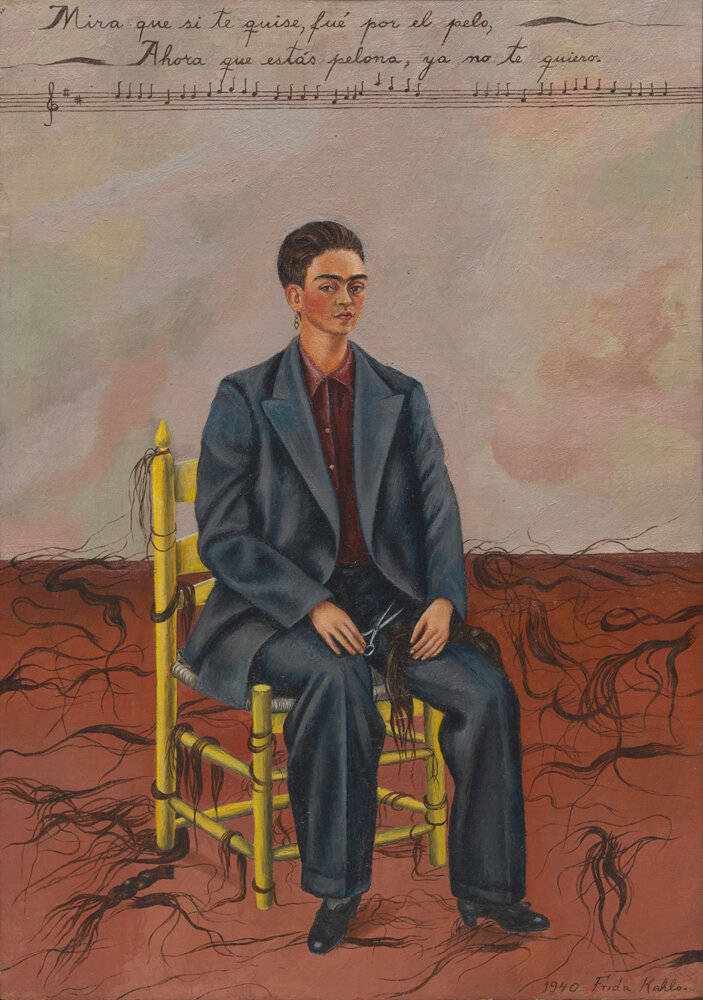
Frida Kahlo and Diego Rivera were more than a couple, they were a living artistic myth. Married in 1929, Rivera was already a monumental muralist, while Kahlo was just beginning to find her voice. Their union, marked by passion, betrayal, and creative exchange, became a crucible for their art.
Kahlo transformed pain, desire, and identity into her work. In paintings like Diego y yo, Rivera appears not as a partner but as an almost spectral presence, embedded in her psyche. Rivera himself admitted that Kahlo was the greater artist, yet her singular, intimate style would ultimately outlast his monumental murals.
More than twenty years after the film Frida (2002), a new adaptation of Kahlo’s life is in the works. This time, it will be a Netflix series directed by Patricia Riggen (Lemonade Mouth) and Gabriel Ripstein (Narcos), produced by Mónica Lozano (Alebrije Producciones), and written by María Renée Prudencio (Club Sandwich). Inspired by Claire Berest’s novel Rien n’est noir, it explores Kahlo’s intense creative drive, her suffering, and her cultural and political commitments.
This fascination with Kahlo continues at Tate Modern in London (Bankside, SE1 9TG), where the exhibition ‘Frida: The Making of an Icon’ (25 June 2026 – 3 January 2027) will bring together over 130 works and archival material. The show explores how Kahlo became more than a painter—an icon whose image circulates globally through museums, Netflix, fashion, and social media.
–
Image: Frida Kahlo. Autoportrait aux cheveux courts. (1940). Huile sur toile, 40 x 27,9 cm. Musée d’art moderne de New York. Don d’Edgar Kaufmann, Jr. © 2025 Banco de México Diego Rivera Frida Kahlo Museums Trust, Mexico, D.F. / Artists Rights Society (ARS), New York. Photo : Peter Butler.
 ART IS ALIVE