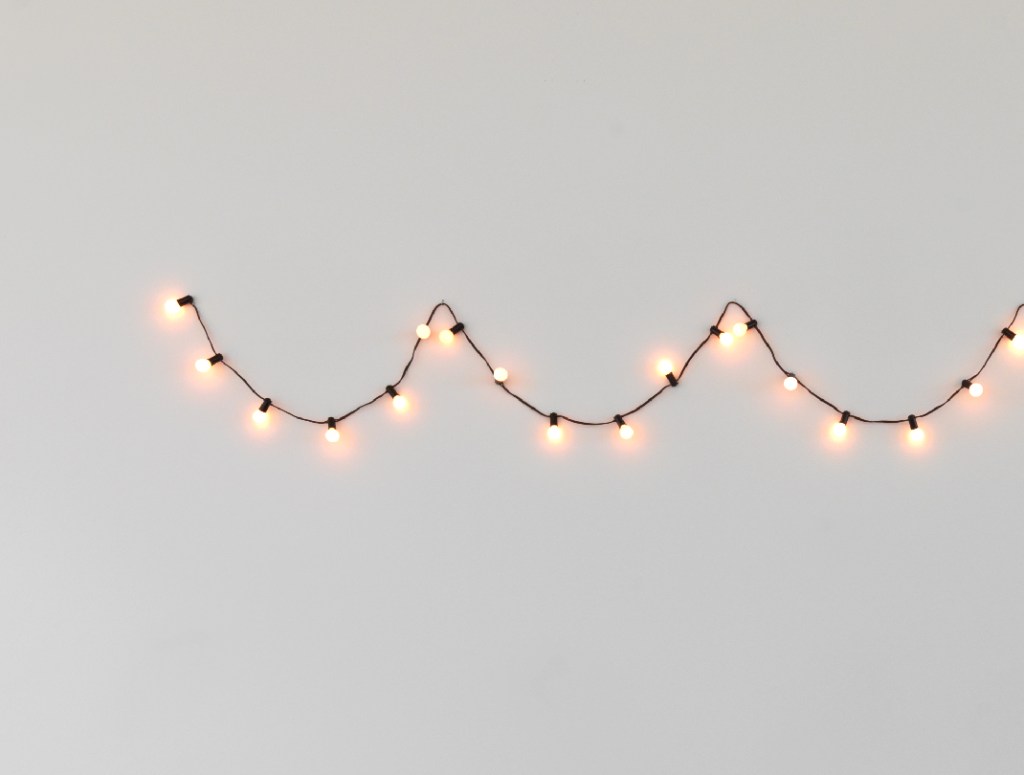
Running until April 5, 2026, La Cuadra San Cristóbal presents an exhibition curated by Pablo León de la Barra, imagining an encounter between Félix González-Torres’s work and Luis Barragán’s architecture. Rather than staging a direct dialogue, the show creates a quiet tension—a meeting of two different ways of experiencing space, time, and emotion.
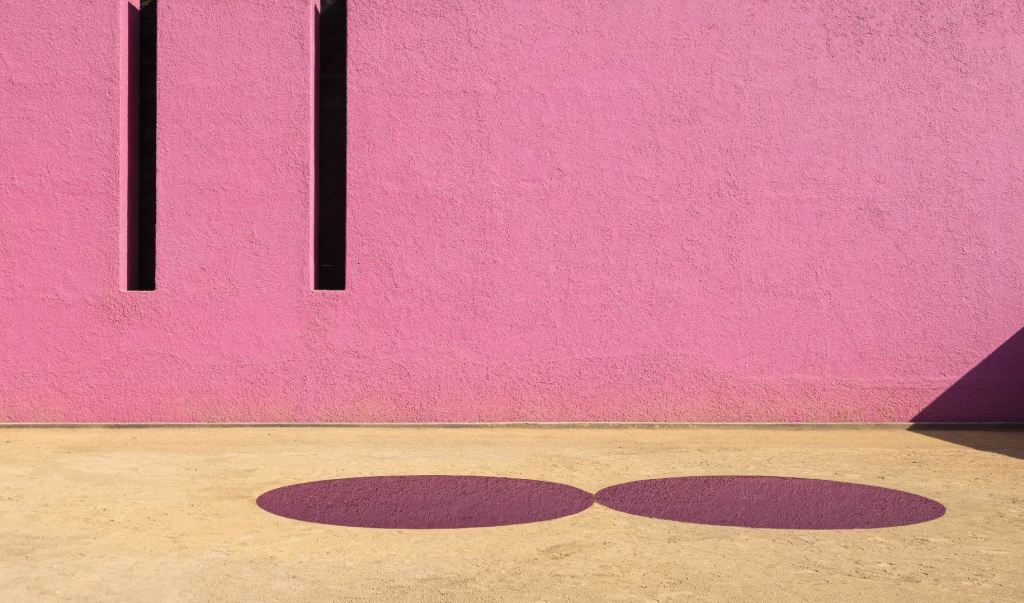
Barragán’s architecture is known for its calm, contemplative presence. His walls, colours, and light create spaces that feel intimate and timeless. González-Torres, by contrast, worked with change and impermanence. His paper stacks, bead curtains, and strings of light are meant to be touched, taken, and altered—existing only through participation.
Within La Cuadra, these approaches interact in subtle, often surprising ways. A golden bead curtain interrupts a solid wall, inviting movement where the wall demands stillness. Mirrored panels fold the space back on itself, creating reflections that shift with each step. Courtyard platforms suggest stages for action, though nothing is fixed.
The exhibition is less about objects than about experience. It explores thresholds, inside and outside, public and private, body and space. González-Torres’s work, shaped by intimacy, grief, and the urgency of the AIDS crisis, insists on fluid boundaries. Barragán, too, embraces impermanence: light changes, shadows move, colors shift. Together, they reveal a shared sensitivity to time and presence.
Visitors are not just observers, they become part of the work with eminent references to Marcel Duchamp. Every gesture, from taking a sheet of paper to brushing past a curtain, holds meaning. The exhibition asks what it means to share space, memory, and attention with others.
González-Torres once said he wanted “to make this a better place for everyone.” At La Cuadra, that intention lives in small gestures, fleeting moments, and a lingering sense of connection.
–
 ART IS ALIVE