BFI Southbank will once again become the beating heart of queer cinema from 18 to 29 March 2026 as the 40th edition of BFI Flare: London LGBTQIA+ Film Festival takes place.
Now the UK’s longest-running LGBTQIA+ film event, the festival has grown from a modest showcase of queer films into an international forum for bold, diverse, and boundary-pushing voices. And it’s more needed than ever! This milestone edition celebrates four decades of queer storytelling, community, and cultural defiance, marking a moment of both reflection and reinvention.
The festival opens with the world premiere of Jennifer M. Kroot’s documentary Hunky Jesus, a riotous and affectionate portrait of San Francisco’s Sisters of Perpetual Indulgence. Founded in 1979 to counter the rise of evangelical preachers in the city long celebrated as a queer pilgrimage site, the Sisters remain a unique social justice movement, using drag, theatre, and performance to challenge conservatism and defend human rights. The film interweaves the 2023 annual free festival for the queer community with chronicles of the Sisters’ history on the front line of the AIDS crisis, including headline direct actions such as the 1987 “exorcism” of Pope John Paul II. Anchored by some of their longest-serving icons, including Sister Roma and founding member Grand Mother Vish-Knew, Hunky Jesus captures the irreverent, crucial, and often hilarious activism that continues to shape queer culture.
The festival also features premieres such as Celyn Jones’ period drama Madfabulous, Hiroaki Matsuoka’s documentary Beyond the Fire, and New Zealand’s coming-of-age story Big Girls Don’t Cry, offering new perspectives on queer lives in all their complexity. Black Burns Fast, an exuberant South African romance, will close the festival, while thematic strands such as Hearts, Bodies, Minds and Treasures celebrate both contemporary voices and the festival’s own legacy.
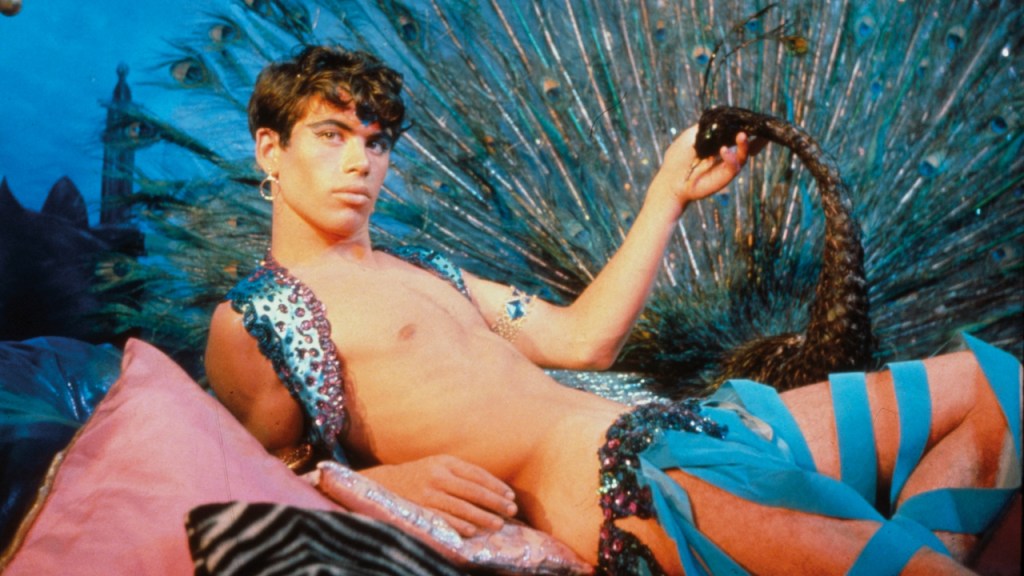
Among restored classics, the festival presents James Bidgood’s Pink Narcissus, a kaleidoscopic fantasy following a young male prostitute who escapes the bleak confines of his small apartment through surreal daydreams. His imagination blooms into ornate, stylised visions where he transforms into a sensual Roman slave, a celebrated matador, and other embodiments of beauty, power, and desire. Created over several painstaking years with almost no dialogue, the film relies on saturated colour, handcrafted sets, and carefully composed imagery to guide the viewer through the protagonist’s inner world. Each fantasy operates like a miniature stage, turning longing and erotic fascination into lavish spectacle. Starring Bobby Kendall, Don Brooks, and Charles Ludlam, Pink Narcissus remains a legendary landmark of experimental queer cinema, its opulent style transforming a single room into an endless theatre of fantasy.
Another highlight is Gregg Araki’s Mysterious Skin, digitally restored in 4K by the Academy Film Archive and UCLA Film & Television Archive in conjunction with Sundance Institute. Originally released in 2004, the film has lost none of its raw energy or ability to shock. Departing from Araki’s usual provocative and camp-leaning sensibilities, Mysterious Skin offers a dreamlike reflection on the aftermath of child sexual abuse, with bravura performances from Joseph Gordon-Levitt, Brady Corbet, and the late Michelle Trachtenberg. The film avoids sensationalising assault, resulting in a mature, nuanced, and deeply affecting portrait of survivors. It grips the audience with honesty, delicacy, and storytelling skill, maintaining an ambivalence about its characters and subject matter while exploring trauma with compassion.
Adding to the festival’s international range is Marcelo Caetano’s L Baby, following on from his acclaimed Body Electric. The film offers a tender portrait of a complex and loving relationship between two men, set against a dynamic exploration of São Paulo’s vibrant queer scene. By closing out alongside the festival’s other highlights, L Baby balances intimate personal storytelling with a celebration of urban queer culture, capturing both emotional depth and community energy.
BFI Flare is about more than screenings. Its events programme brings queer history and lived experience into conversation, with highlights including a Screen Talk with Russell T Davies, discussions of mainstream hits such as Heartstopper Forever!, and archival explorations like Reel Queer History and Cowboys, Darlings and Liars. Community stalls, workshops, and DJ nights turn BFI Southbank into a vibrant festival village where audiences and artists engage.
For its 40th year, BFI Flare continues its global reach through initiatives like Five Films For Freedom, sharing queer short films online with audiences in countries where freedom is limited. Across twelve days, the festival offers moments that are poignant too. BFI Flare 2026 remains essential cinema, reflecting the evolving stories of LGBTQIA+ life worldwide.
–
 ART IS ALIVE