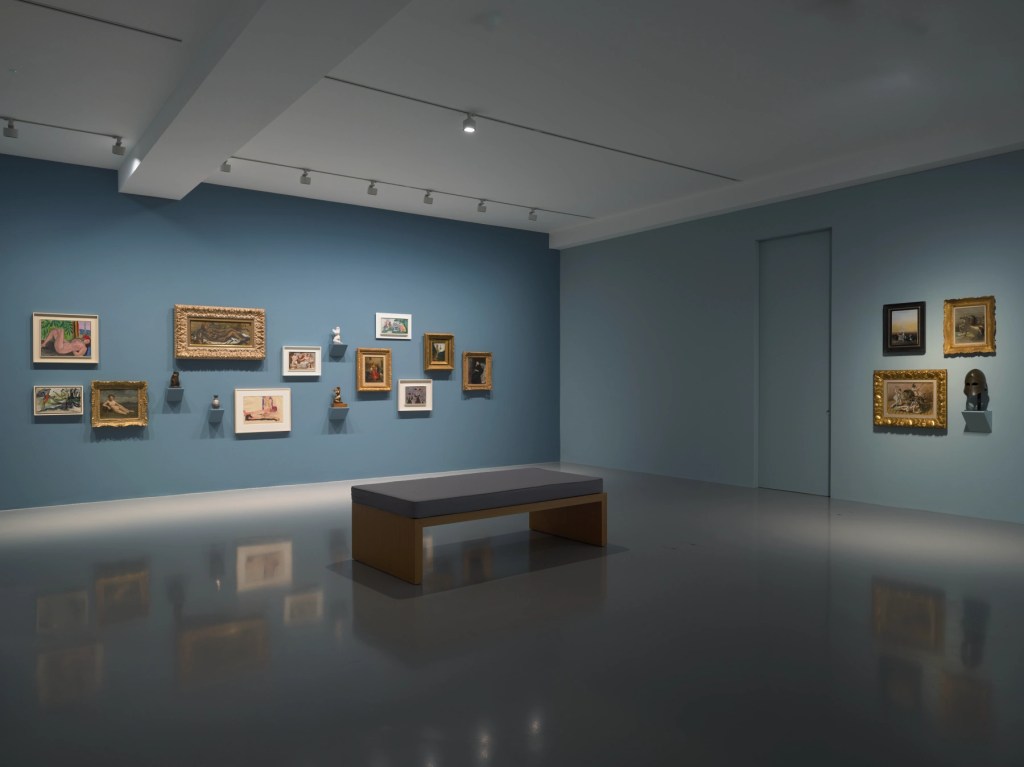
On view until 8 May at Nahmad Projects in London, Petits Bijoux brings together a selection of small-scale works by modern masters spanning nearly a century of artistic practice. Presented by Helly Nahmad Gallery, the exhibition proposes a shift from spectacle to intimacy, where modest dimensions encourage a slower and more attentive form of looking. It is also one of the most rewarding exhibitions currently on view in Mayfair, an area long associated with the history of modern art, where Peggy Guggenheim once ran her pioneering gallery, Guggenheim Jeune.
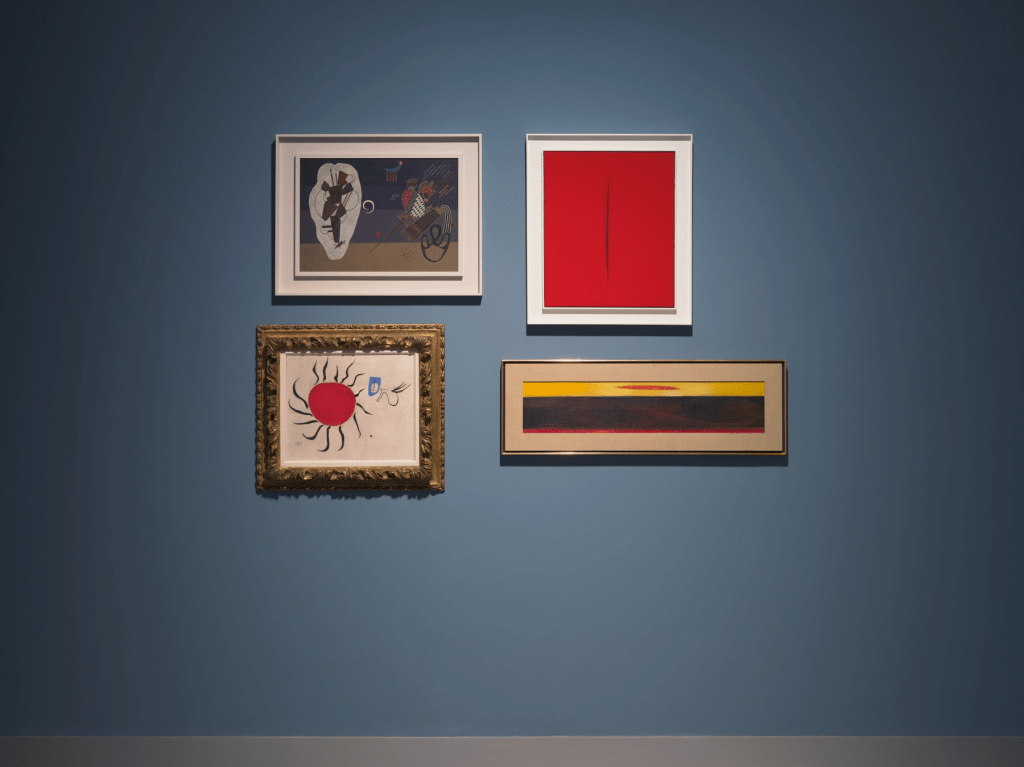
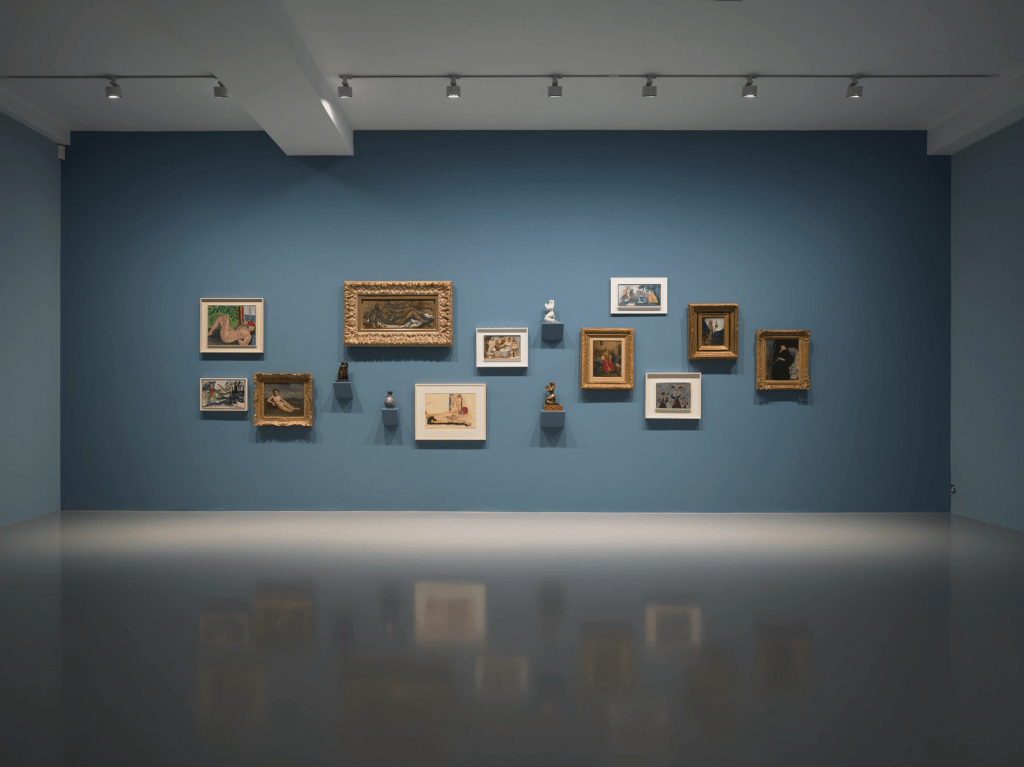
The exhibition cultivates a form of close observation that magnifies nuance rather than size. Blue walls, masterpieces. What might initially appear understated begins to unfold through proximity. Benches help contemplation of works by Braque, Calder, César, de Chirico, Christo, Corot, Ernest, Fontana, Gris, Kandinski, Klee, Laurencin, Matisse, Miró, Morandi, Moreau, Picasso, Renoir, Tanguy, Torres García and more.
Arranged in thematic constellations, the works invite quiet dialogue across time and subject. Among the highlights are Nu aux jambes croisées (1936) by Henri Matisse, Les trois baigneuses (1932) and Trois femmes à la fontaine (1921) by Pablo Picasso, La source (c.1850–55) by Jean-Baptiste-Camille Corot, and Nu couché (1926) by Georges Braque. The expressive intensity of Nacktes Paar (1911) by Egon Schiele appears alongside sculptural works by Henri Laurens, including Figure à la draperie, debout (1929) and La petite sirène (1945). Simply beautiful, you want to buy the whole wall.
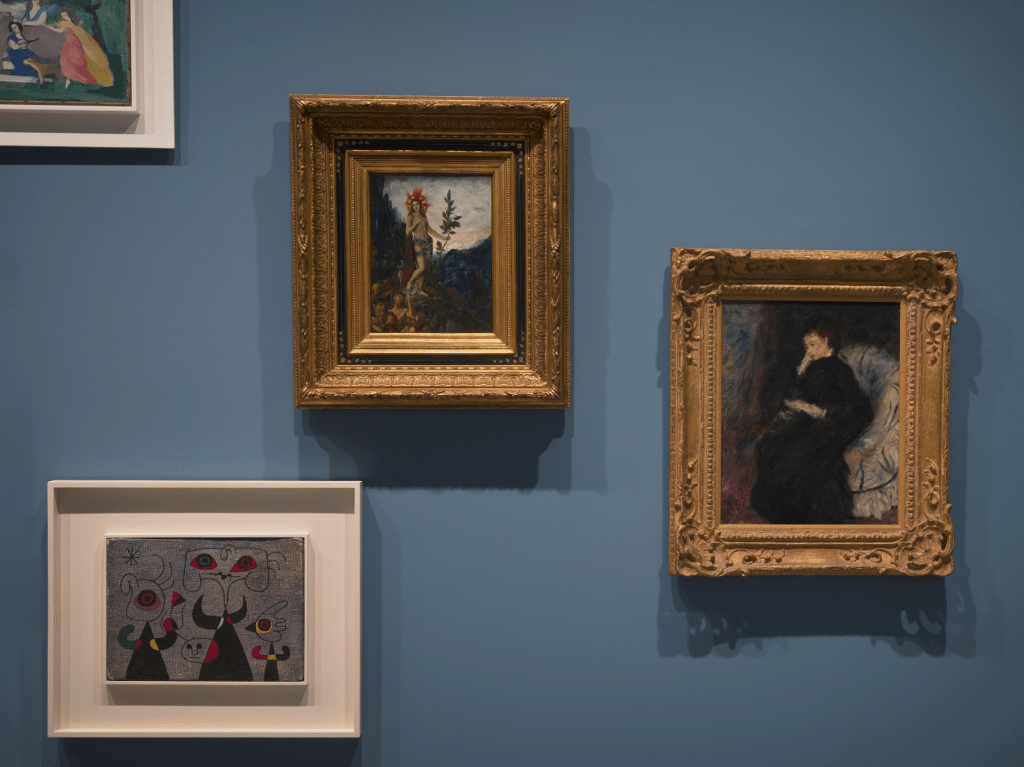
Elsewhere, the exhibition unfolds through intimate scenes and symbolic imagery: Juive de Tanger en costume d’apparat (1835) by Eugène Delacroix, La liseuse (1877) by Pierre-Auguste Renoir, Apollon recevant les offrandes des bergers (c.1893) by Gustave Moreau, and Jeunes filles et cavalière dans un parc (1950) by Marie Laurencin. A surrealist note is introduced through Femmes et oiseau dans la nuit (1946) by Joan Miró, while an exceptional Sasanian silver vase from 6th–7th century Iran offers a historical counterpoint within the display.
Collectively, the works trace subtle continuities across periods and movements, allowing affinities of subject, tone and gesture to emerge beyond strict stylistic boundaries. Freed from monumentality, they favour concentration over grandeur. In doing so, Petits Bijoux reveals the particular intensity of small-scale works, little jewels that reward intimacy, sensitivity and the enduring pleasure of looking closely.
–
 ART IS ALIVE