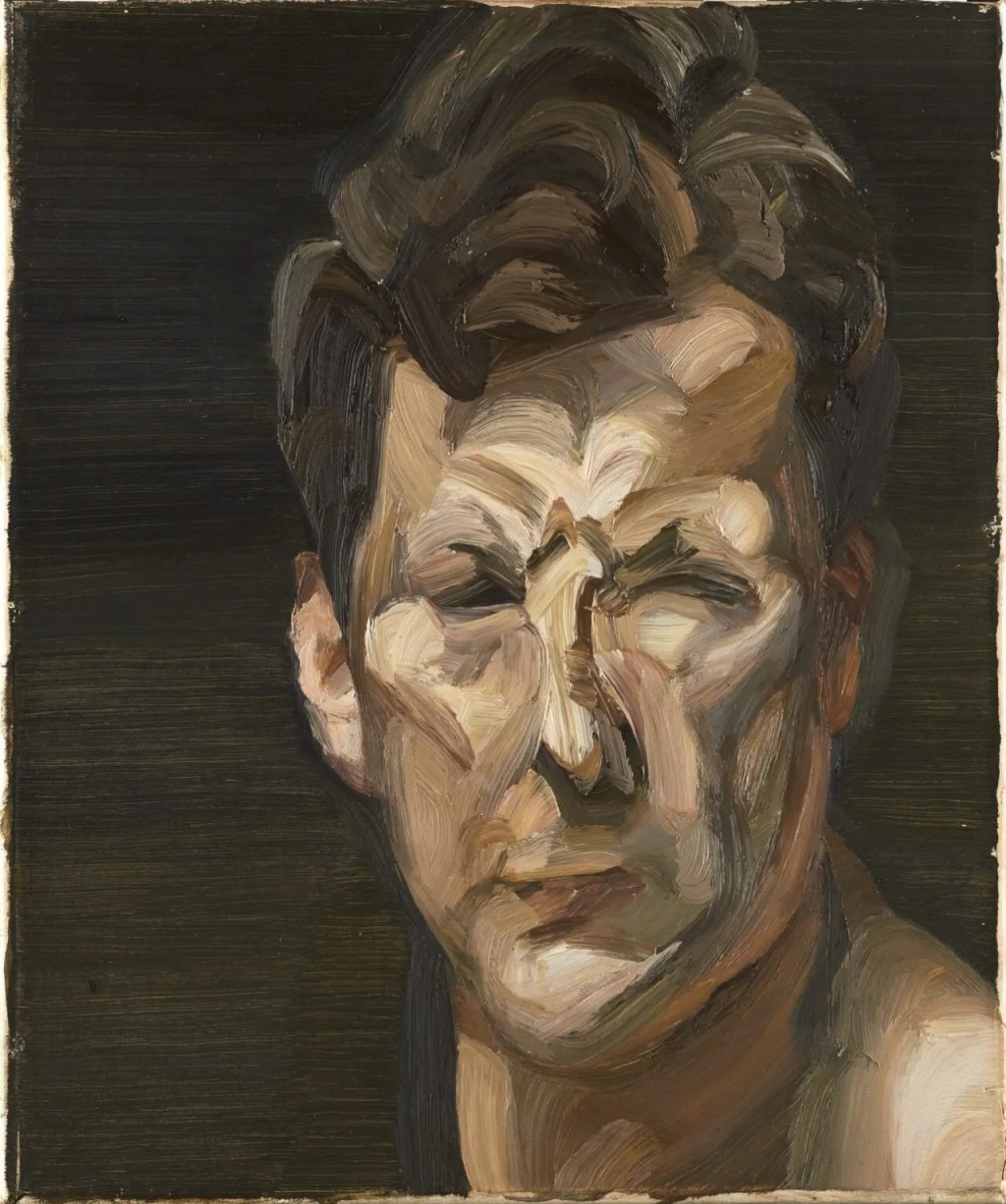
On view from 12 February to 4 May 2026, Lucian Freud: Drawing into Painting at the National Portrait Gallery is the UK’s most comprehensive museum exhibition devoted to the artist’s works on paper, with several pieces shown publicly for the first time. It is also the first Freud exhibition at the Gallery since the landmark Lucian Freud Portraits retrospective in 2012, mounted shortly after his death. It’s stunning!
Lucian Freud achieved recognition as one of Britain’s foremost figurative painters, celebrated for clinically raw, intensely observed portraits and nude studies. Yet this exhibition shifts the emphasis from the myth of impasto and flesh to the discipline underpinning it all: drawing. Spanning the 1930s to the early 21st century, it traces Freud’s lifelong preoccupation with the human face and figure through pencil, pen and ink, charcoal and etching, placing these works in dialogue with a carefully selected group of paintings. Some of his most important paintings are featured in this show too which doesn’t just focus on drawings.
Early portraits reveal a line that is taut and searching, faces emerging through fine, deliberate marks. Drawing here is not preparatory but foundational. A famously private man, Freud nonetheless allowed glimpses of his inner life to surface. An illustrated letter to Lady Caroline Blackwood from the early days of their relationship is among the most revealing works on display. Although Freud usually worked from life, the drawing in the letter was based on a photograph by Francis Bacon. Blackwood later recalled that she and Freud dined with Bacon “nearly every night for more or less the whole of my marriage to Lucian. We also had lunch.”
The exhibition also highlights Freud’s return to etching in 1982 after a 34-year hiatus. Twelve new acquisitions from the artist’s estate enter the Gallery’s collection ahead of the show, including eight etchings, the first of their kind by Freud to do so. Among them is a portrait of his daughter, the fashion designer Bella Freud, shown alongside archival research and previously unseen materials. Unlike his earlier prints, these later etchings are closely bound to his painterly concerns: dense, tactile and psychologically charged.
Self-portraiture emerges as another axis of inquiry. “The way you paint yourself, you’ve got to try and paint yourself as another person,” Freud observed. His self-portrait Reflection, painted in his early sixties under harsh overhead light, can be read as a meditation on mortality, produced at a time when he was also portraying his ageing mother. The head casts a dramatic shadow across his chest, doubling the figure in a moment of stark introspection.
In the late 1980s and 1990s, the “naked portrait”, as Freud described it, became his central focus. These were not academic nudes but unvarnished depictions of people he knew well, men (Leigh Bowery for instance) and women in almost equal number, allowed to settle into their own poses under natural or artificial light. “I’ve always wanted to create drama in my pictures,” he said. “The simplest human gestures tell stories.”
What emerges from Drawing into Painting is less a survey than one of the most talented artists: that Freud’s enduring power lies in sustained observation, including classical painters such as Chardin and Watteau with works by these artists also on view. One of the most important exhibitions of the season.
 ART IS ALIVE