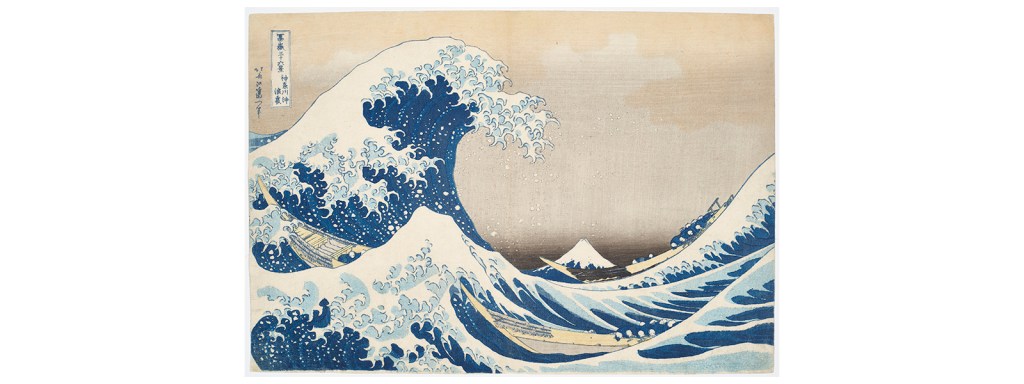
The Whitworth will present Beneath the Great Wave: Hokusai and Hiroshige, from 14 March to 15 November 2026, a major exhibition celebrating two of the most influential artists in art history. Drawing on rarely seen Japanese prints from the Whitworth’s significant collection and presented alongside key national loans, the exhibition examines how Katsushika Hokusai and Utagawa Hiroshige transformed ukiyo-e during Japan’s Edo period (1603–1868), reshaping the language of landscape and visual storytelling.
At the heart of the exhibition is Under the Wave off Kanagawa, widely known as The Great Wave, arguably the most recognisable image in Japanese art and one of the most reproduced images in the world. Created by Hokusai as part of his Thirty-Six Views of Mount Fuji, the print encapsulates the artist’s radical vision: dynamic composition, daring use of perspective, and a near-mythic relationship between humanity and nature. More than a masterpiece of 19th-century printmaking, The Great Wave has become a global visual icon, reverberating across fashion, graphic design, film, music, and popular culture.
While Hokusai’s work is marked by boldness, the exhibition places his practice in dialogue with that of his near contemporary, Utagawa Hiroshige. Where Hokusai is dramatic and muscular, Hiroshige emerges as a naturalist. Best known for series such as The Fifty-Three Stations of the Tōkaidō and One Hundred Famous Views of Edo, Hiroshige’s prints capture fleeting moments, rain slicing through a street, snow softening a bridge, dusk settling over water, with extraordinary sensitivity. His work offers a quieter, more immersive vision of landscape, attuned to mood, weather, and the rhythms of everyday life.
Together, Hokusai and Hiroshige redefined landscape. Their innovations in composition, colour, and spatial depth would travel far beyond Japan, profoundly influencing Western artists including Monet, Van Gogh, Whistler, and the Impressionists. Beneath the Great Wave traces this artistic revolution, revealing how two distinct yet complementary sensibilities helped shape a visual language that continues to resonate across cultures and a major British art collection.
 ART IS ALIVE