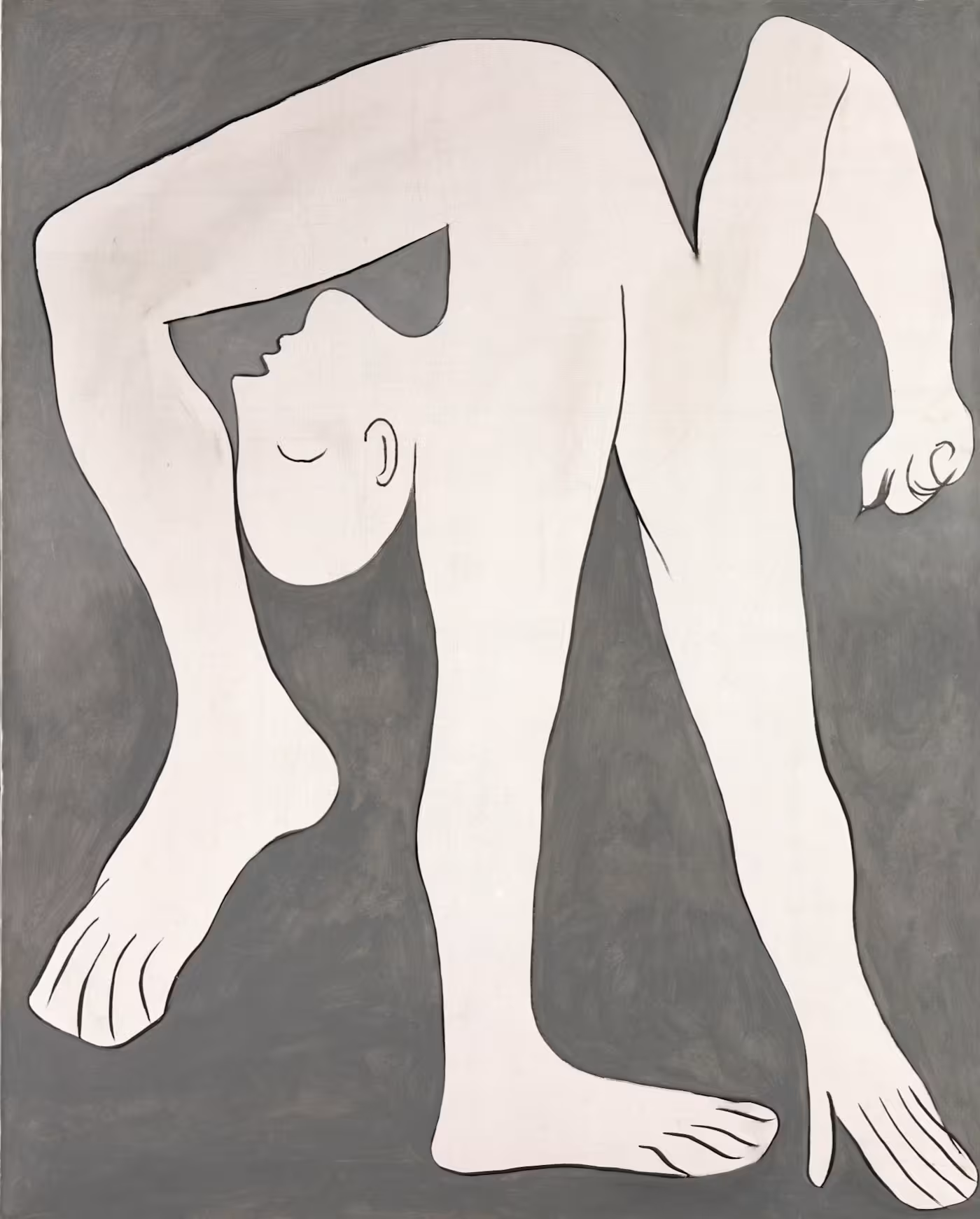
Tate Modern’s Theatre Picasso boldly brings together nearly all of the museum’s Picasso works under one roof for the first time in twenty-five years. The exhibition is a striking celebration of Pablo Picasso’s restless inventiveness, a visionary whose boundless imagination shattered conventional artistic boundaries and whose work continues to captivate with an almost magnetic force. But what is his relationship with performance or rather the performative?
The show spans the full sweep of Picasso’s career, from early geometric explorations to the raw intensity of his late creations. Sculptures such as Cock (1932) and intimately charged drawings like The Kiss (1967) share space with paintings including Bust of a Woman (1909), Weeping Woman (1937), and the expressive Nude Woman with Necklace (1968). Organized thematically rather than chronologically, the exhibition sparks dialogues across decades, revealing Picasso’s evolving fascination with form, the body, and the performative possibilities of art. Highlights include ‘The Acrobat’ (1930) from the collection of Musée National Picasso in Paris, and fantastic films made with Picasso and Clouzot, way before David Hockney’s ipad drawings.
The curatorial vision is amplified by the involvement of Wu Tsang, the award-winning filmmaker and visual artist known for blending documentary and narrative with imaginative detours, and Enrique Fuenteblanca, a writer, artist, and dramaturg whose work bridges contemporary dance, flamenco, and critical thought. Their contributions, alongside the editorial guidance of Rosalie Doubal and Natalia Sidlina, highlight Picasso’s theatrical interest and his enduring engagement with dance, music, and performance. Adding a rare historical dimension, the exhibition includes Robert Picault’s 1951 film capturing Picasso’s bullfight arena mise-en-scène: toreros, audiences, and little scenettes populate a grand, cinematic arena, bringing the artist’s staged worlds vividly to life.
Tate’s galleries have been transformed into a theatrical environment: dramatic lighting, stage-inspired structures, and fluid transitions evoke the energy of behind-the-scenes theatre rather than neutral white-cube spaces. In the smaller works, this immersive approach creates an intimate connection with Picasso’s creative psyche. Yet the ambitious staging can sometimes overwhelm the works themselves, with narrow aisles and competing sound elements distracting from their inherent power. Notably, masterpieces such as The Three Dancers (1925), central to Picasso’s legacy and the exhibition’s concept, are occasionally displayed in ways that diminish their visual impact.
The show remains on view until 13th April.
 ART IS ALIVE