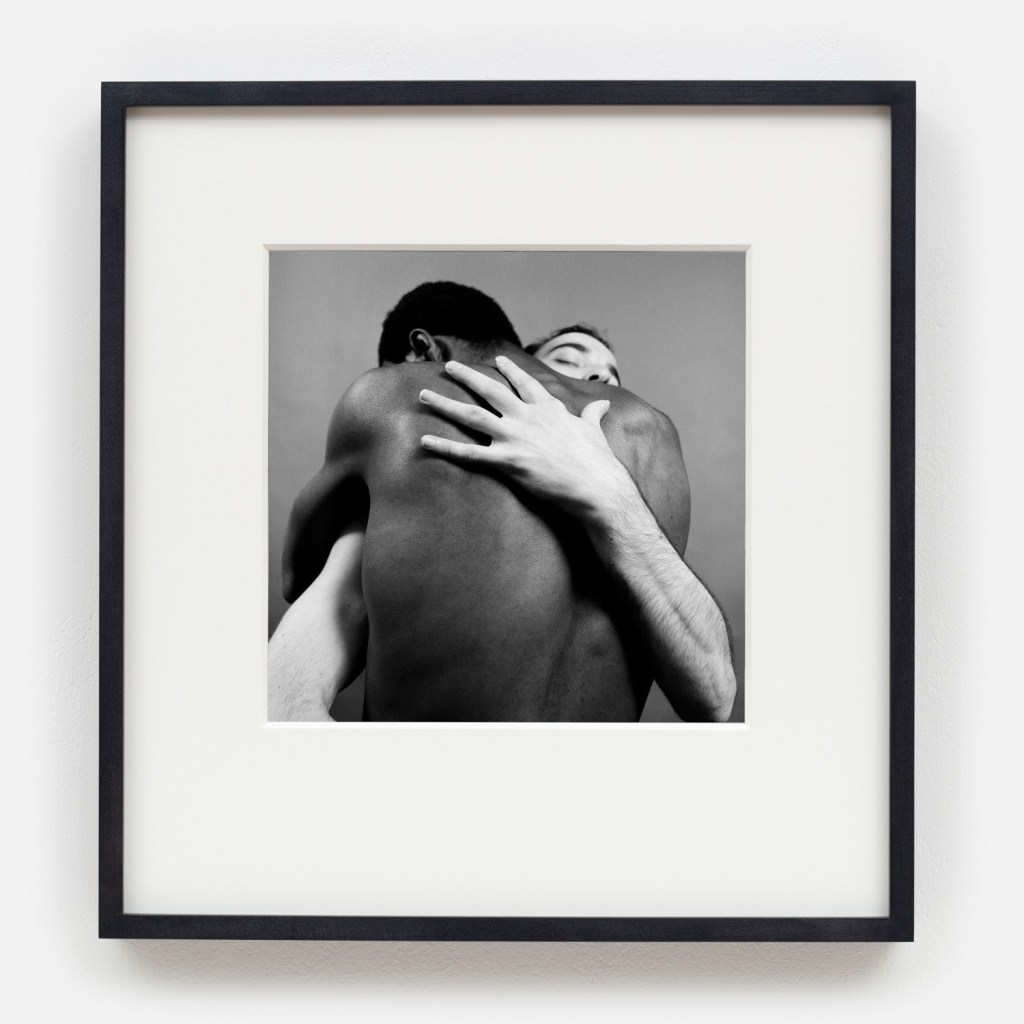
Hales in New York will open Forest of Metaphor on 24 January, marking Rotimi Fani-Kayode’s third solo exhibition with the gallery. The presentation focuses on a selection of black-and-white photographs made during the mid to late 1980s, including a number of works that have not previously been shown publicly.
The exhibition coincides with a period of strong institutional attention on Fani-Kayode’s practice. Over the past two years, his work has been the subject of a major retrospective at the Wexner Center for the Arts in Ohio (2024), which later travelled to The Polygon Gallery in Vancouver (2025), as well as a substantial solo exhibition at Autograph in London (2024).
Fani-Kayode was born in 1955 in Lagos, Nigeria, into a prominent Yoruba family. He relocated to the UK following the outbreak of the Nigerian civil war and later pursued his studies in the United States at Georgetown University and the Pratt Institute. In 1983, he settled in London, where he lived and worked until his death in 1989.
Although his career spanned little more than a decade, Fani-Kayode is recognised as a pivotal figure in late 20th-century photography. His work interrogates issues of race, sexuality, spirituality and identity, frequently addressing the experience of marginalisation. Experiences of displacement, both geographic and social, alongside the constraints imposed by his sexuality and artistic position, informed much of his practice and continue to shape interpretations of his work today.
The photographs on view were largely produced in Fani-Kayode’s home studio in Brixton, south London, a space that functioned as both a site of artistic production and a communal meeting point. Many of the sitters were drawn from his immediate surroundings, and the images reflect the social and cultural diversity of Brixton during the 1980s. The works are carefully staged, with an emphasis on sculptural form and compositional balance. While Black male bodies are central to many of the photographs, Fani-Kayode also incorporated white nude figures, using contrast to heighten visual and symbolic tension.
Drawing on a range of visual sources, including the history of queer physique photography, Fani-Kayode developed a distinctive formal language marked by restraint and control. His photographs resist the sensationalism that characterised much earlier imagery of the Black body. In his 1989 text Traces of Ecstasy, he articulated a desire to reclaim and reconfigure Western myths of Black virility, redirecting them towards images informed by ritual, reciprocity and desire.
The exhibition takes its title from Metaphysick: every moment counts, an essay co-written by Fani-Kayode with Alex Hirst, and points to the conceptual complexity underpinning his work. More than three decades after their creation, the photographs remain sharply resonant within ongoing debates around representation, identity and belonging.
Since the mid-1980s, Fani-Kayode’s work has been widely exhibited internationally, with solo presentations at institutions including the Wexner Center for the Arts, Autograph ABP in London, Syracuse University Art Galleries, Iziko South African National Gallery in Cape Town and Harvard University’s Hutchins Center. His work is held in major public collections such as the Guggenheim Museum in New York, Tate and the Victoria and Albert Museum in London, and the Museum of Fine Arts, Houston.
 ART IS ALIVE