
In Arles, the light lingers longer and brought one of the most famous artists: Vincent Van Gogh. That light spills across Roman amphitheatres, gilds honey-coloured rooftops, through the narrow streets where carved stone façades and wrought iron balconies keep centuries of stories.
This is a city of layers, where Roman history intersects with the footsteps of artists, writers, and visionaries who have long sought inspiration in its timeless beauty.
Here, history is ever-present, yet it lives alongside a vibrant culture: the Fondation Vincent van Gogh celebrates the painter’s transformative stay; LUMA Arles, designed by Frank Gehry, has reimagined the skyline with exhibition spaces, research rooms, and landscaped gardens; where Japanese-Korean artist Lee Ufan has a fascinating foundation. Cherry on the cake, Musée of Arles Antique is fantastic. The city is hyped by culture and arts, yet remains authentic and welcoming.
Exploring Arles is best done on foot, in rhythm with the city’s legacy. In spring, the fields beyond the Rhône bloom with poppies, lavender, and wild thyme, while the city’s plazas awaken with markets selling olives, cheese, and Provençal fruits and vegetables. A morning can begin with coffee on Place du Forum, before wandering the alleys to discover the cryptic medieval stones of the Thermae of Constantine.
Summer pulses with festival energy. The streets are buzzing with photography fans during Les Rencontres d’Arles, one of the world’s premier documentary and artistic festivals. Evening light calls for a wander along the Rhône’s riverbanks, painted by Van Gogh himself. The views over the Rhone river from Musée Réattu, which holds a solid collection including Lucien Clergue and Pablo Picasso, are amazing. Into this mix of Antiquity and creativity, Fragonard has quietly expanded.
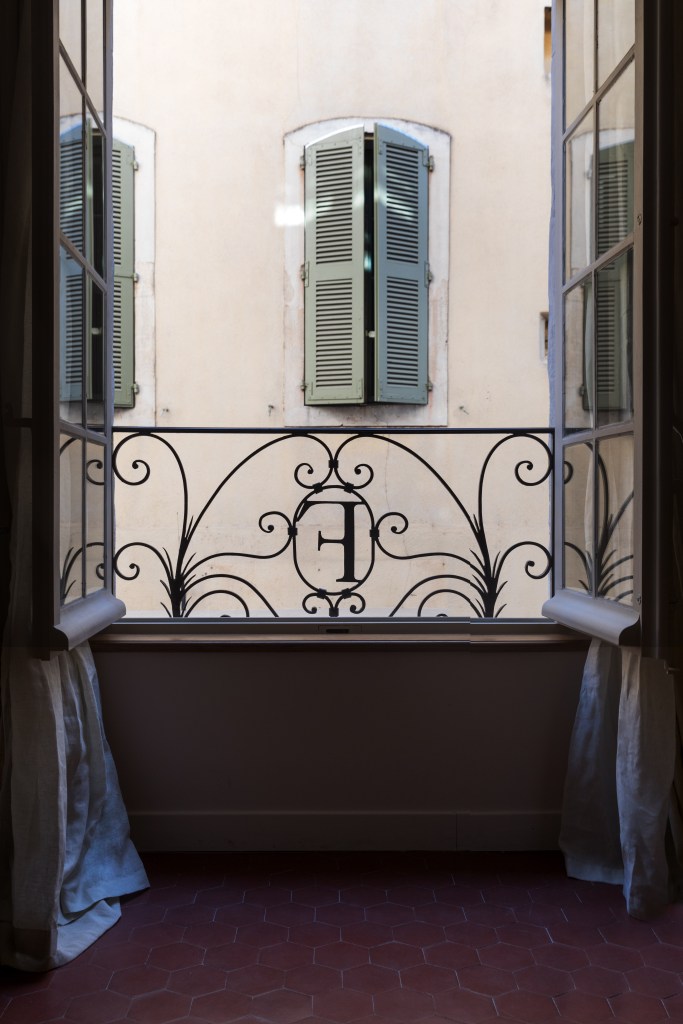
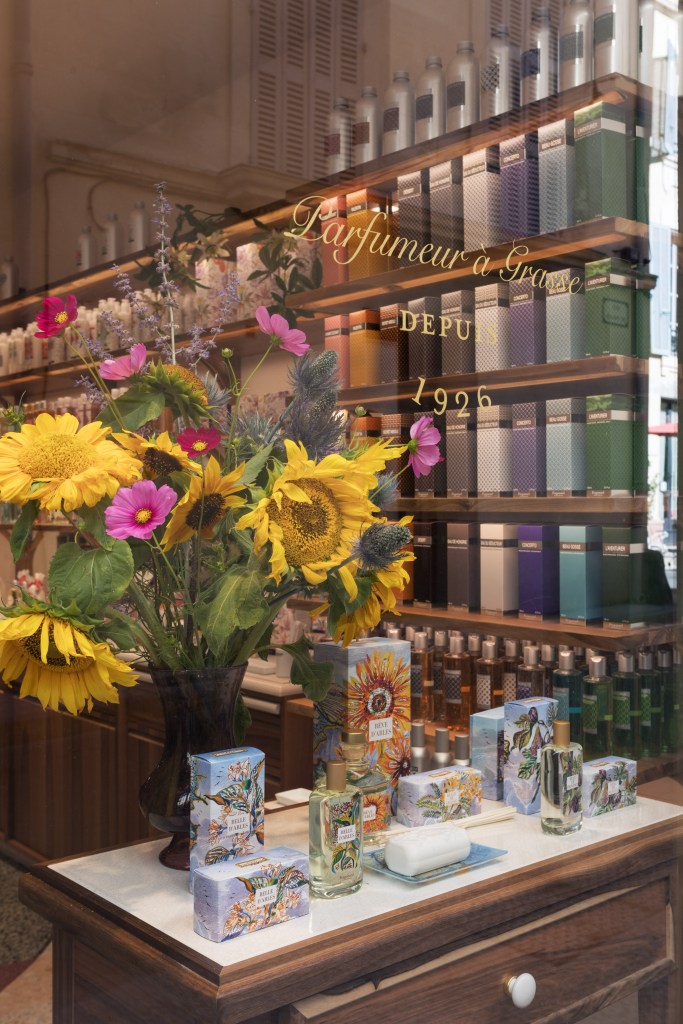
At 7–9 Rue du Palais, just steps from the Place du Forum and the Amphitheatre, the Fragonard guesthouse recently opened. A stunning dinner was held in the Roman Arena to celebrate the launch. Maison Fragonard is conceived as a lived-in Provençal home. The guesthouse beautifully blends Fragonard’s universe with six charming rooms, each curated with attention to style. The entrance to the guesthouse embodies southern French charm: large yellow Fragonard logo, carved stone façades, and delicate ironwork catch the sun.
Why Arles, and what is the link with your existing initiatives/spaces? Charlotte Urbain, Culture and Communication Director at Fragonard explains: “A city of art, history, and light, Arles resonates deeply with the DNA of Maison Fragonard. The opening of our guesthouse, followed by our Museum of Fashion and Costume in Arles, completes our presence in the south of France by offering a more intimate and immersive experience, at the crossroads of culture, design, and craftsmanship. Arles is a true cultural capital, recognized worldwide. Its rich past and its relationship to art and light echo the DNA of Maison Fragonard. The place occupied by the history of costume in this city is unique in Provence, and this museum project in Arles is not new. We have had it in mind for nearly ten years, with the ambition of offering both enthusiasts and newcomers an institution entirely dedicated to this subject, complementary to our Musée Provençal du Costume et du Bijou in Grasse.”
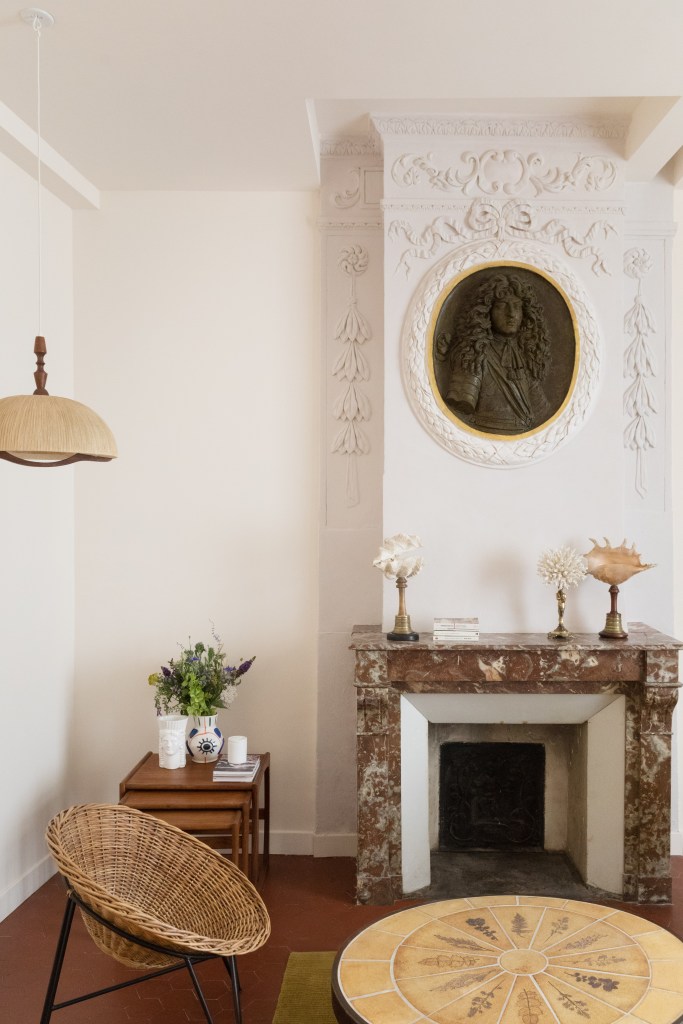
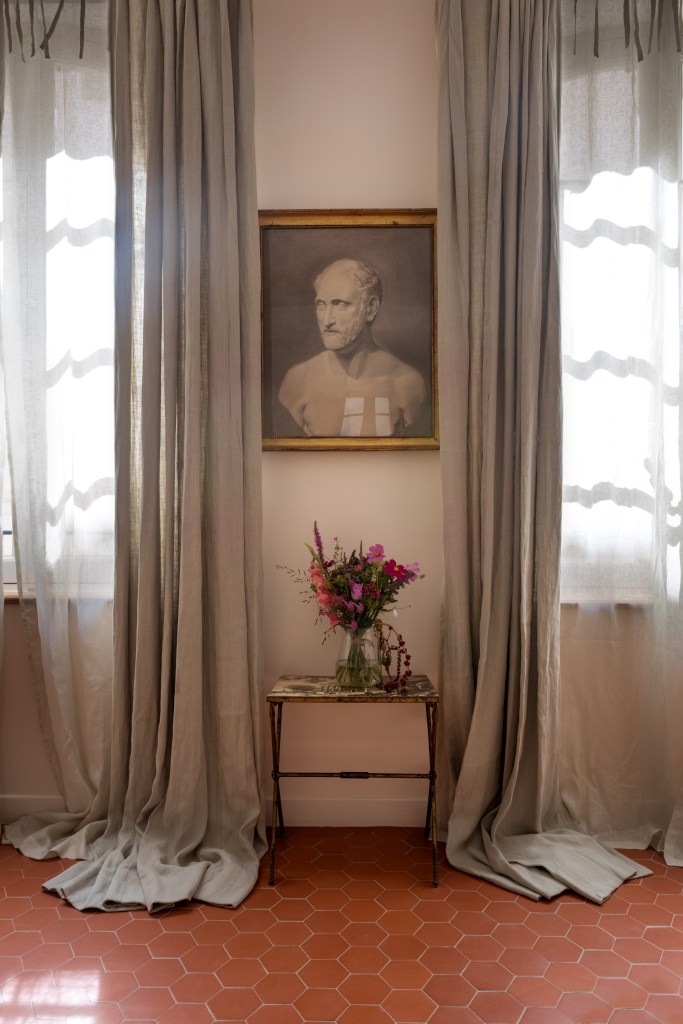
Upstairs, Maison Fragonard’s six rooms unfold across three floors, each carrying its own story through a majestic staircase or lift. Attention to details is high: Rêve d’Arles, on the first floor, exudes theatrical grandeur. A carved medallion thought to depict Louis XIV crowns the fireplace, while antique paintings are on view alongside playful Sixties wicker furniture. A large double bed and a 19th-century wrought-iron daybed (perfect for families) invite both comfort and rest. Sunlight streams through a Renaissance-era mullioned window, illuminating the bathroom and a hand-painted tile-fitted kitchen, perfect for a leisurely breakfast or a market-sourced supper (Arles has one of France’s most impressive Saturday markets).
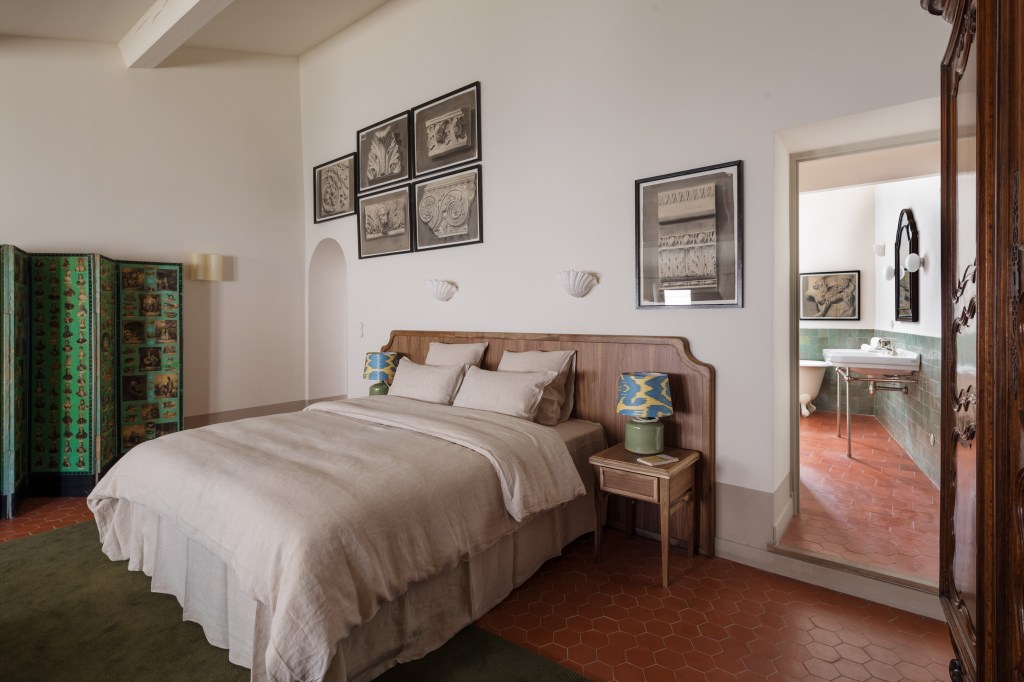
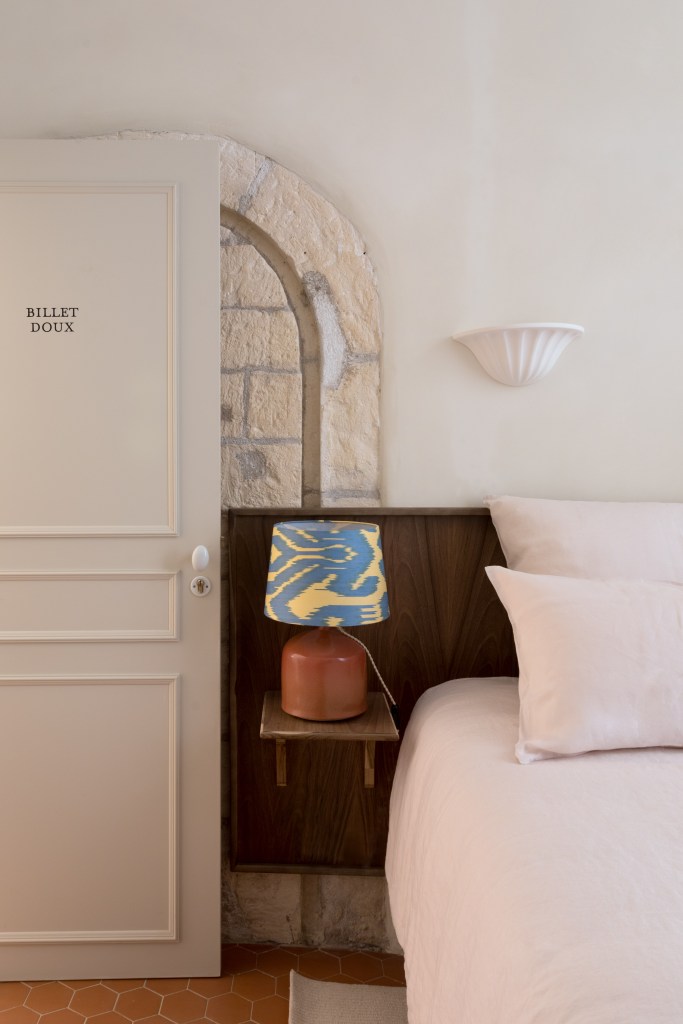
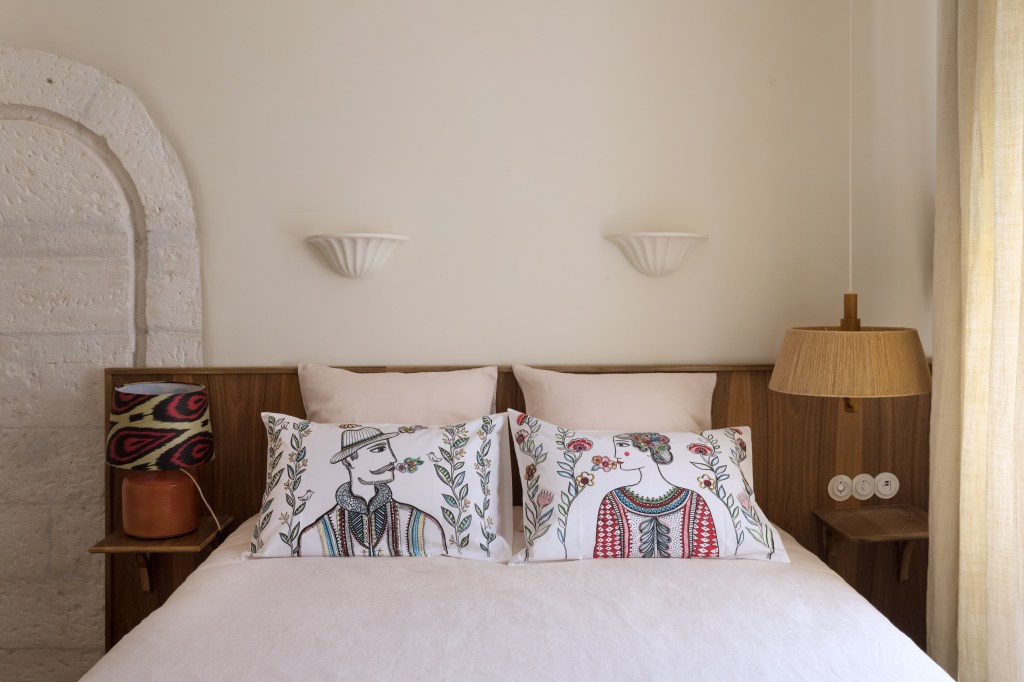
Billet Doux, also on this floor, is a compact, romantic retreat. Ikat-covered bedside lamps sourced along the Silk Road and delicate 19th-century engravings form an intimate cocoon around a comfortable double bed.
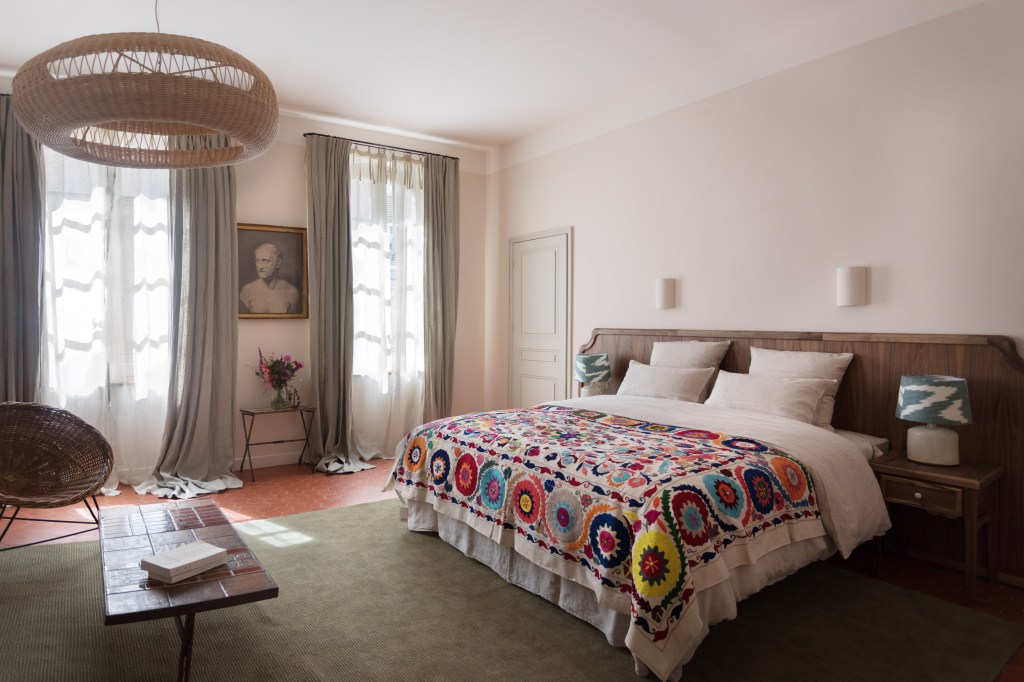
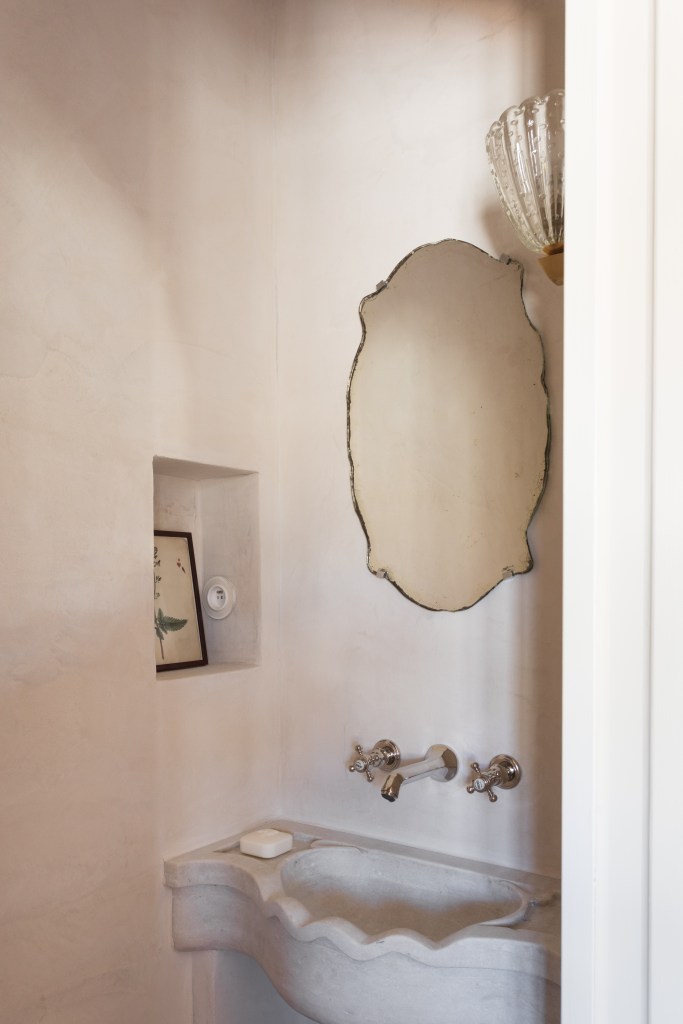
The second floor offers a contrast of light and scale. The Belle de Nuit Suite is airy and luminous, with two tall windows overlooking Rue du Palais and a hand-woven wicker chandelier from the sumptuous Ateliers Vimes based in Vallabrègue. The double bed is dressed with a hand-embroidered suzani, imported from Central Asia, and the walls are adorned with 19th-century drawings and engravings that echo Arles’ Roman past. A large armchair converts into a single bed, and the suite’s generous bathroom features both bath and shower, while the fully equipped kitchenette allows for relaxing mornings.
Étoile, tucked beneath the eaves, is a complete retreat. A block-print bedspread, antique ceiling light, and hand-crafted ceramic lamp with an ikat silk shade lend it a delicate charm.
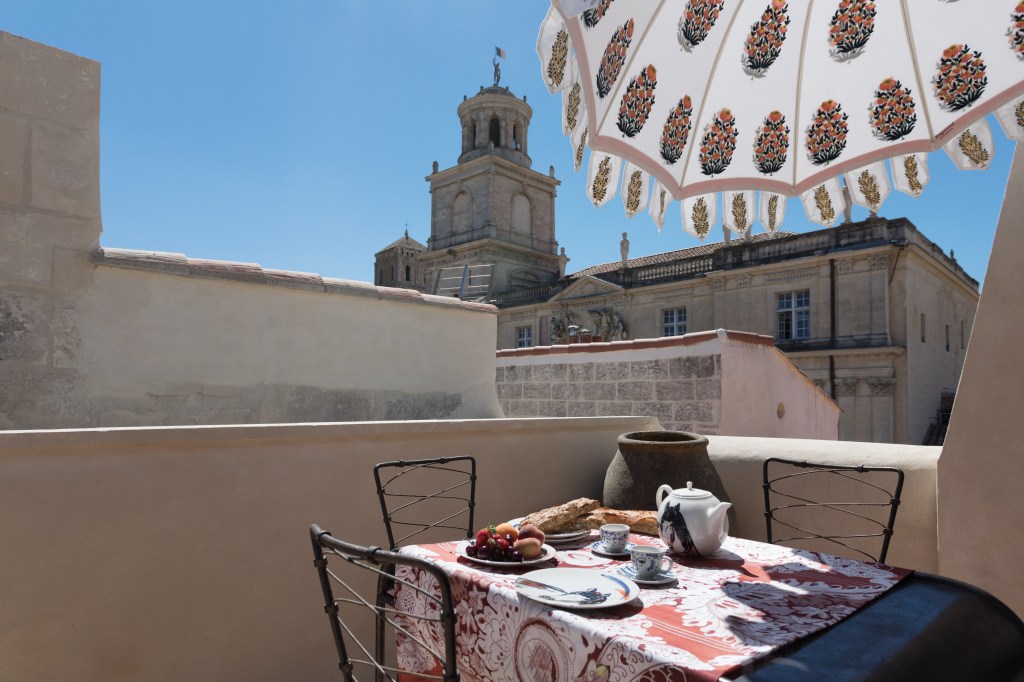
The third floor is where the maison’s narrative reaches its crescendo. Secret Absolu Suite blends antique Arlesian furniture, gilded overmantels, and Italian designer lamps in a layered, curated space. Guests enjoy exclusive access to a terrace overlooking the rooftops, the Hôtel de Ville, and the city’s iconic clock tower of the City Hall. It’s beautiful and fully immersive. The suite also includes an extra wrought-iron bed for a third guest, a large bathroom with double washbasin (and Fragonard toiletry products of course), bath and shower, and a fully equipped kitchen, perfect for an aperitif to enjoy outdoors as the sun sets.
Soleil, its smaller companion, is tucked under the eaves, overlooking sky and rooftops, a scholarly yet intimate space decorated with a 19th-century herbarium.
Throughout Maison Fragonard, linens, cotton towels, and air-conditioning provide discreet comfort, while Camille, housekeeper ensures that every stay is informed by the rhythms and secrets of Arles. Last but not least, the rooms feature local guides produced by the Maison, art magazines for further reading on the city.
Charlotte Urbain continues: “The idea was to offer an elegant setting true to the Fragonard spirit, highlighting the architectural heritage elements intrinsic to the house, alongside Provençal and contemporary furniture, paintings, and sourced objects. Inspirations range from Fragonard’s travels to the city of Arles’ ancient past, everything blends together seamlessly.”
Maison Fragonard offers a rare invitation to inhabit the Provençal spirit, with rooms that celebrate local craftsmanship through tomettes, decorative medallions, and carefully chosen antique furnishings.
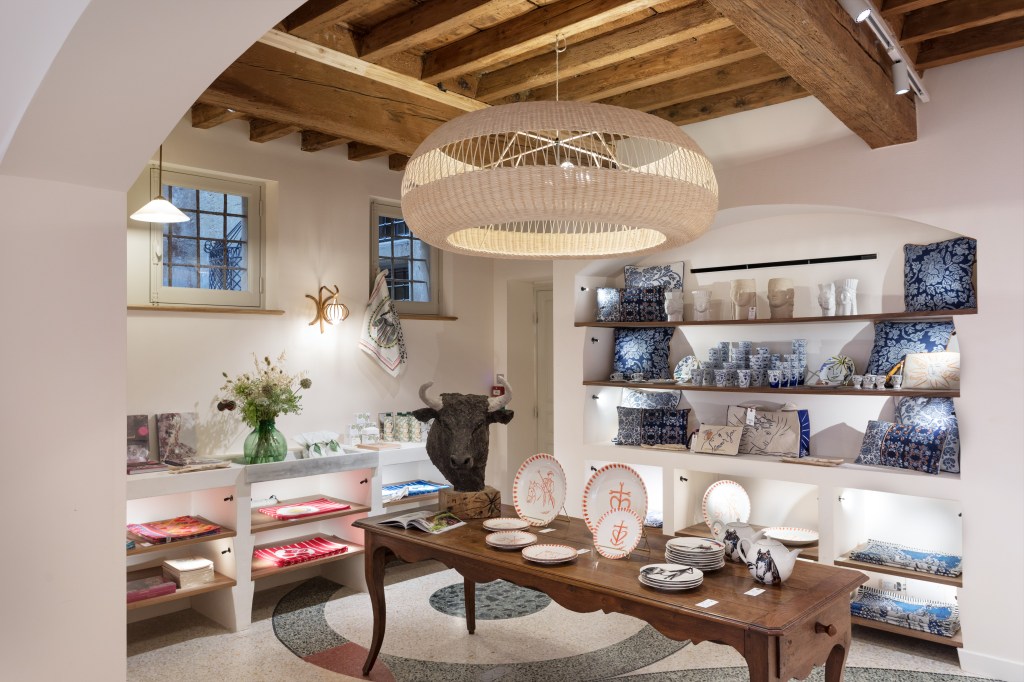
The boutique at street level, on Rue du Palais, teases the senses with floral compositions, terrazzo floors crafted by local artisans, and Fragonard’s signature perfumes and clothes. Its positioned alongside art galleries and cute book shops. It is an introduction to a world of smell and beauty, before guests ascend into a private resting space where history and domestic luxury intertwine.
While Maison Fragonard embodies living history, the Fragonard Musée de la Mode et du Costume opens a portal to the scholarly and artistic depths of the region. Another reason to travel to Arles and stay at the Fragonard guesthouse.
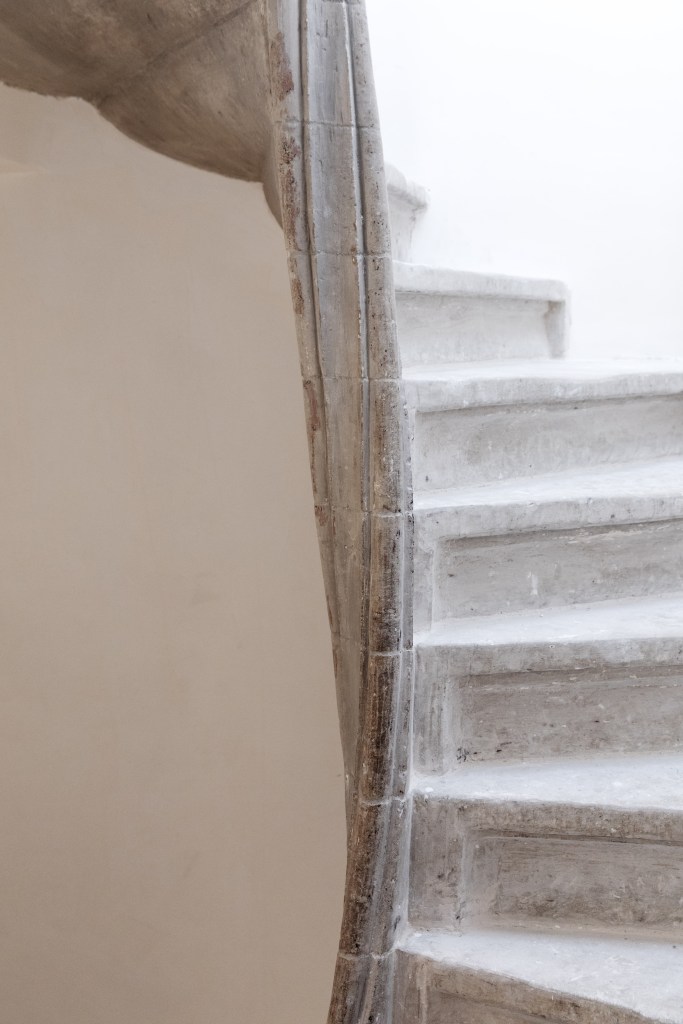
Opened in July this year, the museum is housed in the meticulously restored Hôtel Bouchaud de Bussy, a 17th-century townhouse whose layers of history, from royal councillors’ residence to maternity hospital, are revealed in careful, minimalist interventions by Paris- and Marrakech-based Studio KO. Stone staircases stripped to their original grain, vaulted rooms uncovered from decades of partitioning, and subtle new architectural flourishes make the building itself for a wonderful visit.
“We collaborated with several artisans and creators to bring this place to life, but the decoration was imagined and sourced directly by Agnès and Françoise Costa, who infused each space with the soul and elegance of the South. For the ground-floor boutique, the lighting was created by Atelier Vime, a benchmark in Provençal basketry and design, while the Venetian terrazzo floors were custom-made by Arles-based artisans Tonnello. Every detail was carefully considered: walnut shelving recalls apothecary shops, while the rooms combine sourced furniture, rattan seating, dark wood headboards, and immaculate arches. The result is a décor that is sober, warm, and deeply rooted in the Mediterranean art of living.”
The museum celebrates the Arlésienne, a cultural icon whose distinctive attire, pleated skirts, lace fichus, and elaborately coiffed hair, emerged from the Camargue over centuries. Curated by Clément Trouche, an Arles native and expert in Provençal costume, the inaugural exhibition “Collections-Collection” weaved together garments collected by Hélène Costa and Magali Pascal, offering a panorama of regional dress from the 18th to the early 20th century. Visitors encounter caracos, capes, men’s waistcoats, head-dress ribbons, and antique jewellery, alongside Parisian influences that reveal the dialogue between regional and capital fashion.
“Our visitors are, above all, curious individuals, sensitive to heritage, craftsmanship, and authenticity. Whether they are lovers of perfume, design, or culture, our guests share a deep appreciation for beauty and the Provençal spirit. We also welcome many fashion enthusiasts eager to discover our new Fragonard Museum of Fashion and Costume, as well as all those who come to Arles for the renowned Photography Encounters (Les Rencontres d’Arles), a must-see event that attracts an international audience every year.”
Studio KO’s scenography transforms the museum into a sensorial experience too. Mirrors and lighting amplify each textile and accessory, while display cases seemingly pass through the walls, allowing costumes to appear suspended in time. A commissioned video by Charles Fréger, projected in the former stables with a seven-metre-high ceiling, captures Arlésiennes preparing garments, connecting contemporary interpretation with historical craft. Paintings, engravings, and portraits by Jules Salles, Jean Joseph Balechou, and Antoine Raspal complement the collection, situating fashion within a broader artistic and social context.
The museum also honours The Reine d’Arles, elected every three years. This new cultural venue embodies the Arlésienne today, wearing the iconic costume during the Fête du Costume at the Théâtre Antique and acting as a cultural ambassador for the city’s heritage. Through museum exhibitions, workshops, and rotating displays, the institution situates the Arlésienne not as folklore, but as a continuing emblem of artisanal skill and regional pride. Worth visiting the shop too which has amazing products and books. – Maison Fragonard for a private tasting of perfumes and seasonal soaps, like the Belle d’Arles, which evokes the essence of the Camargue with neroli and citrus notes.
Rue du Palais itself is a microcosm of Arlesian craft. Beyond Fragonard’s boutique, artisans sell handwoven textiles, pottery, and Provençal linens.
Together, Maison Fragonard and the Fragonard Musée de la Mode et du Costume offer an unmatched immersion into Arlesian and Camargue life. Guests move seamlessly from living spaces steeped in Provençal character, scented with Fragonard’s floral compositions, to galleries. The Arlésienne emerges not as a relic but as a living, breathing figure, her costume a language of identity, social codes, and artistry.
What are the group’s future projects? “The Saint Mathieu project, the rehabilitation of the Musée des Capucines, the Museum of Perfumery at the historic Grasse factory, a new identity for the boutiques, and the rich programming of the museums in Grasse and Arles.”
In Arles, where Roman stones meet contemporary ambition, Maison Fragonard and its nearby museum invite visitors to linger. Whether through the boutique’s fragrant threshold, the maison’s antique-lined rooms, or the museum’s meticulously curated galleries, Fragonard has created an ecosystem where perfume, fashion, architecture, and history intertwine.
What are Charlotte’s must-see cultural recommendations and the surrounding region? “For a convivial break, settle on a terrace and try a pac à l’eau, the quintessential refreshing local drink. At aperitif time, let yourself be tempted by a mauresque or an Arles gin, true local specialties.”
Prepare your summer now and book your trip to Arles!
–






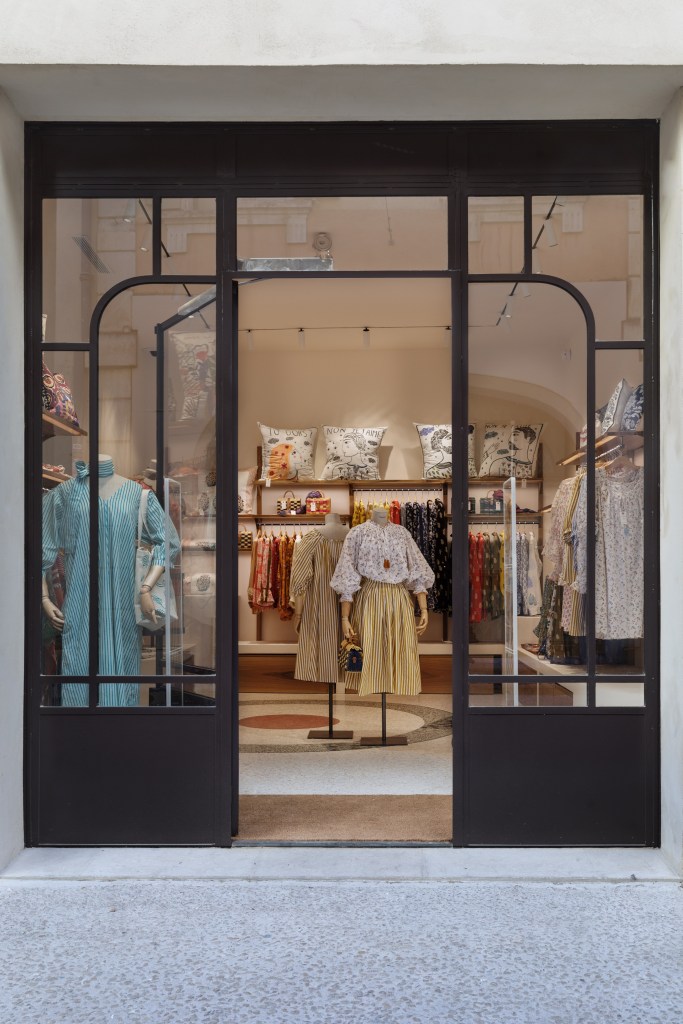
Images: Maison Fragonard, and Fragonard boutique in Arles, by Roberta Valerio. Thanks to Charlotte Urbain, Marie Lepreudy and Clément Trouche.
 ART IS ALIVE