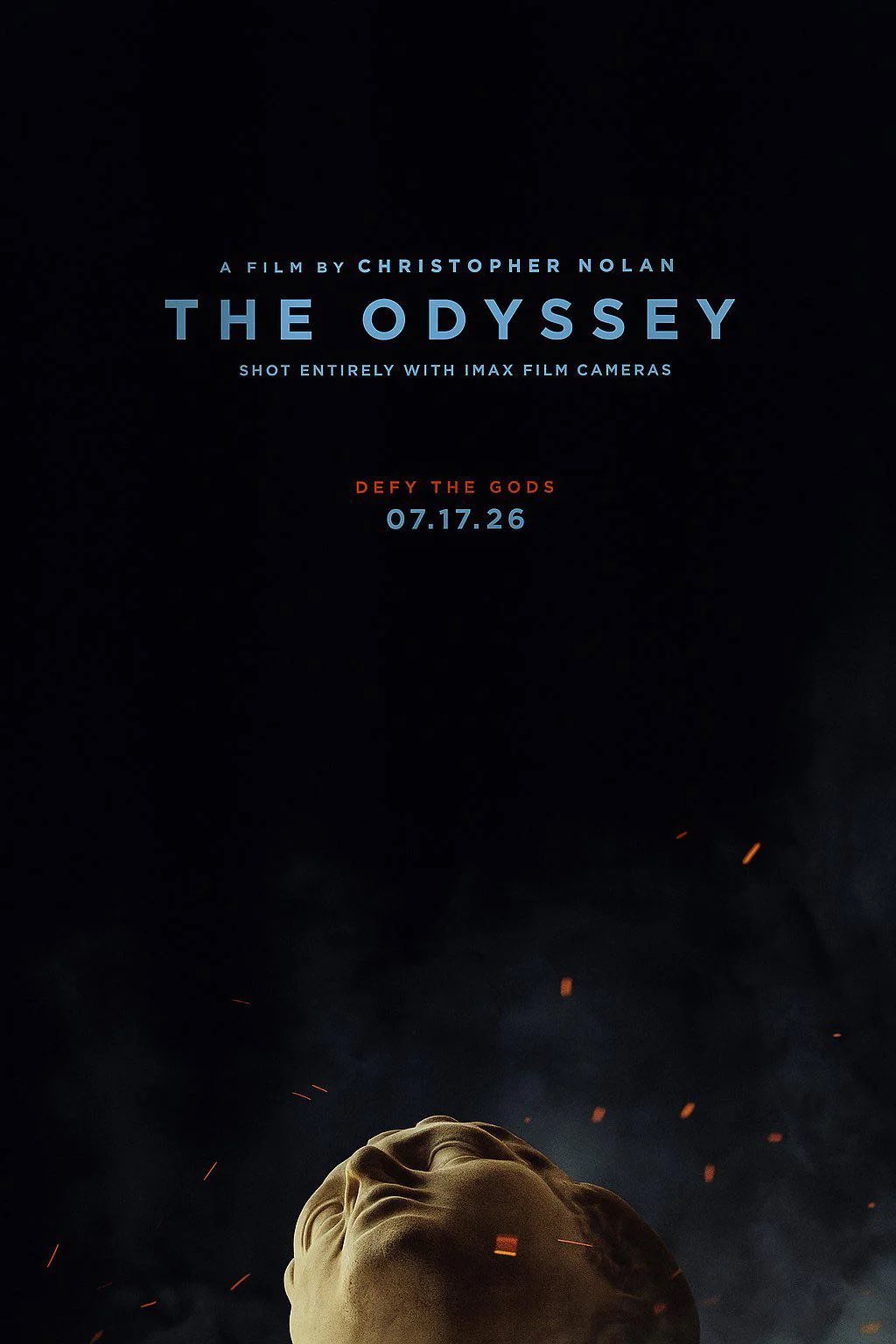
After the worldwide success of Oppenheimer, Christopher Nolan is preparing to release one of the most ambitious films of his career. Scheduled for July 2026, The Odyssey marks the director’s return with a monumental adaptation of Homer’s epic poem. A first trailer, unveiled on 22 December, offers a glimpse of what promises to be a sweeping, visceral reimagining of one of the foundational texts of Western literature.
Composed at the end of the eighth century BCE and traditionally attributed to Homer, The Odyssey recounts the long and perilous journey of Odysseus as he attempts to return to Ithaca after the Trojan War. Ten years of wandering, trials, and encounters with gods and monsters separate the hero from his wife Penelope and his son Telemachus. Though the epic has been adapted for the screen many times, including the recent 2025 film The Return, starring Juliette Binoche and Ralph Fiennes, Nolan’s version stands apart for its scale and ambition. Described as a mythic, globe-spanning action film, The Odyssey was long surrounded by rumors suggesting everything from a historical vampire story to a science-fiction espionage thriller. Ultimately, the project has revealed itself to be closer in spirit to Gladiator II than to gothic horror or speculative cinema.
Filming took place in real locations across the world, including the Sicilian island of Favignana, historically associated with Homeric legends. The film is set for release in the United States on July 17, 2026. At the center of the story is Matt Damon, cast as Odysseus, continuing his long collaboration with Nolan following Interstellar and Oppenheimer. Tom Holland plays Telemachus, while Anne Hathaway appears as Penelope. Zendaya takes on the role of the goddess Athena, Charlize Theron portrays the sorceress Circe, and Lupita Nyong’o and Benny Safdie appear as Agamemnon and Clytemnestra. According to Variety, the ensemble cast also includes Robert Pattinson, Mia Goth, Jon Bernthal, Elliot Page, Himesh Patel, and John Leguizamo.
Nolan, known for his loyalty to recurring collaborators, once again surrounds himself with actors he has previously directed, including Hathaway and Pattinson. The result is one of the most prestigious casts assembled for a contemporary literary adaptation. The production itself is equally remarkable. The Odyssey is the first feature film ever shot entirely in IMAX, using 70 mm cameras and relying as much as possible on practical effects rather than digital imagery. According to Empire, filming lasted 91 days and consumed approximately 60,000 meters of film. Several sequences were shot at sea under real conditions, reinforcing Nolan’s commitment to physical realism.
Speaking about the shoot, the director explained that he spent four months on location, navigating real waves with the cast portraying Odysseus’s crew. The experience, he said, was by turns terrifying and extraordinary, depending on the weather. His goal was to convey how arduous these journeys would have been in antiquity, and how venturing into an uncharted world required an immense act of faith. The trailer reflects this approach, favoring raw landscapes, elemental forces, and a somber, grounded portrayal of myth.
Produced by Universal Pictures with an estimated budget of $250 million, The Odyssey continues Nolan’s partnership with the studio after his departure from Warner Bros. in 2021. That split followed Warner’s controversial decision to release films simultaneously in theaters and on streaming platforms, a model Nolan has openly rejected. Universal has positioned the filmmaker as one of the few directors capable of delivering large-scale original cinema, a claim supported by the extraordinary success of Oppenheimer, which earned $950 million worldwide in 2023 and won seven Academy Awards the following year, including Best Picture and Best Director.
In an industry reassessing the limits of streaming-first strategies, The Odyssey stands as a reaffirmation of theatrical spectacle. It reflects Hollywood’s renewed confidence in cinema as a collective, immersive experience and underscores Christopher Nolan’s status as one of its most powerful advocates. Whether this return to epic filmmaking signals a lasting shift remains to be seen, but for now, The Odyssey appears poised to become one of the defining cinematic events of the decade.
 ART IS ALIVE