
In an era when fashion lurches from trend to trend with dizzying velocity, ISTO. feels like a counter-movement. This is a brand built to resist. The Lisbon-born label, now quietly expanding its footprint in Europe with stores in both Lisbon and Germany, has become a refuge for those tired of overdesigned basics, opaque pricing, and fast-fashion churn. Instead, ISTO. offers something rare in today’s landscape: clarity. Clarity of purpose, clarity of design, and above all, clarity of production.
That clarity began with a frustration shared among the founders. As co-founder and CEO Pedro Palha recalls, “ISTO. started from a simple frustration: finding timeless, high-quality clothing made responsibly at a fair price was harder than it should be. We decided to build a brand focused on quality, transparency, and Portuguese manufacturing, without the middleman markups or seasonal noise.” In other words, they didn’t want to reinvent menswear; they wanted to make it better.
From its earliest days, ISTO. positioned itself around the belief that wardrobe staples deserve the same attention as runway pieces. The team advocated for a slower pace of creation, one that honours the material instead of marketing. Their touchpoints of production became local by design. Palha describes it plainly: “‘Made in Portugal’ represents craftsmanship, integrity, and heritage. Portugal has extraordinary know-how in textiles and clothing, and we believe that ‘Made in Portugal’ can stand as a seal of both quality and conscience in today’s industry.”
It’s a philosophy that plays out in practice. ISTO.’s factories are almost neighbours, many only hours from the brand’s Lisbon base, which allows for a hands-on relationship with suppliers that few contemporary brands can claim. This proximity brings both intimacy and accountability: nearly 99 percent of ISTO.’s products are manufactured in Portugal, with fabrics sourced from certified partners in Europe. “We work closely with certified suppliers, mostly in Portugal and Italy, and only use 100% natural or recycled fibers,” Palha explains. “Our decisions are guided by touch, durability, and the lowest possible impact, never by trends.”
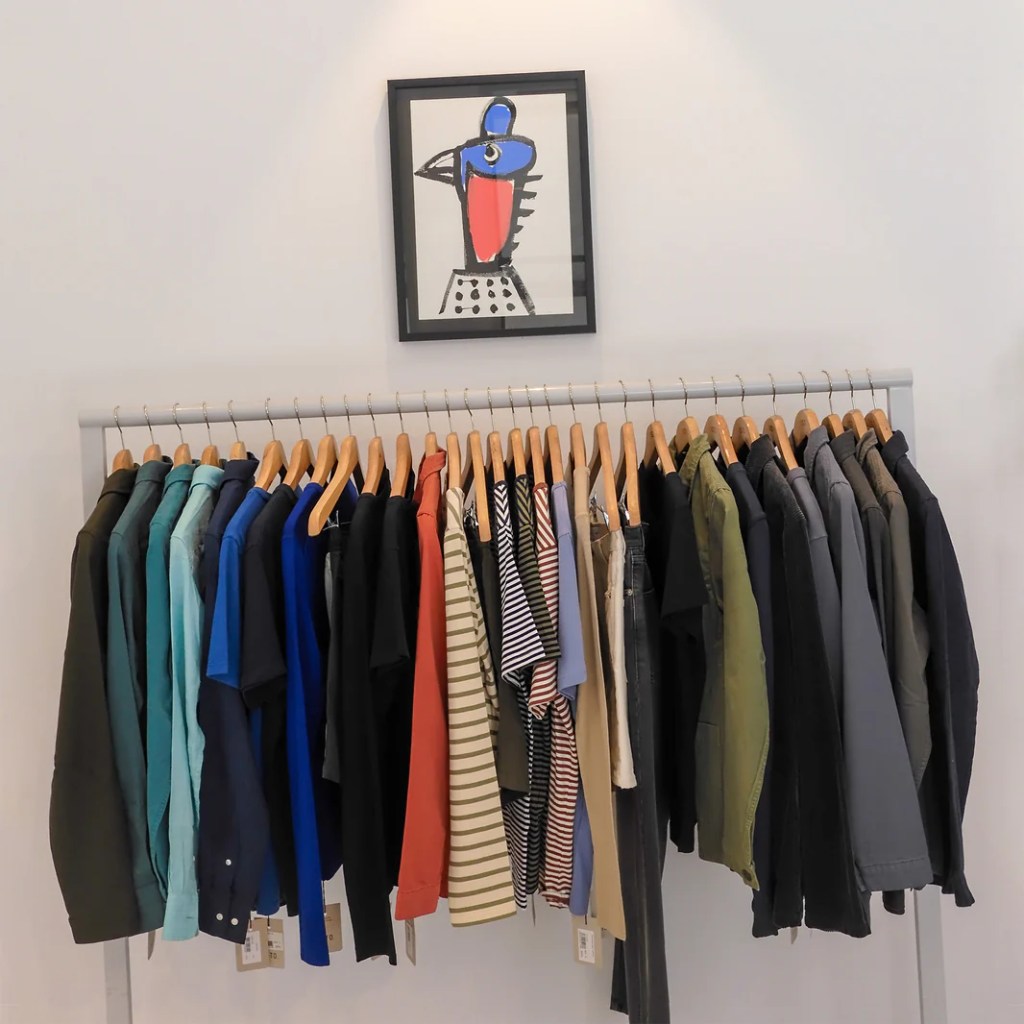
That guiding principle has helped define the pieces that now anchor the brand’s identity. The enduringly popular White T-Shirts, first the Classic, later the Heavyweight, are a kind of blueprint for how ISTO. thinks. Their Denim Blue essentials, the Work Jacket, and more recently, Merino Activewear form a constellation of favorites. “They combine timeless design with the best natural or recycled fibers, luxurious yet simple garments that people truly live in, every day,” says Palha.
But ISTO.’s belief in longevity extends far beyond a single silhouette. If the brand has a mission statement, it is quality as a worldview. The brand insists that the most sustainable garment is the one you wear, and keep wearing. This is why its pieces undergo rigorous quality control and wear-testing. For the launch of a recent winter jacket, the team staged an almost idealistic demonstration of their commitment: they exposed the garment to continuous winter conditions in the wild, livestreaming the experiment 24 hours a day throughout the season. No dramatic edits, no marketing gloss, just a jacket and a real winter.
The brand’s circularity programme extends this approach. “We design for longevity first,” Palha says, “using natural or recycled materials, timeless silhouettes, and transparent pricing. We also offer Archive & Repair, a platform to extend the life of our garments through repairs and resale.”
The Archive, in particular, has evolved into a cult corner of the brand. It offers items that tell small stories: pieces with slight colour variations, garments that didn’t make it into the permanent line, early editions of now-refined fits, or the final units from the women’s collection. Some have even appeared in photoshoots, adding a kind of behind-the-scenes story. But all share the same core: the same quality. They’re simply offered with reductions of 20–50%, making excellent clothing accessible without feeding overproduction.
To ISTO., sustainability begins and ends with respect: for materials, for the planet, for the people who make and wear the clothes. This extends to garment care. Understanding how to wash and preserve clothing, they argue, is powerful, a quiet yet radical act of responsibility, and ultimately the most effective way to prolong their life.
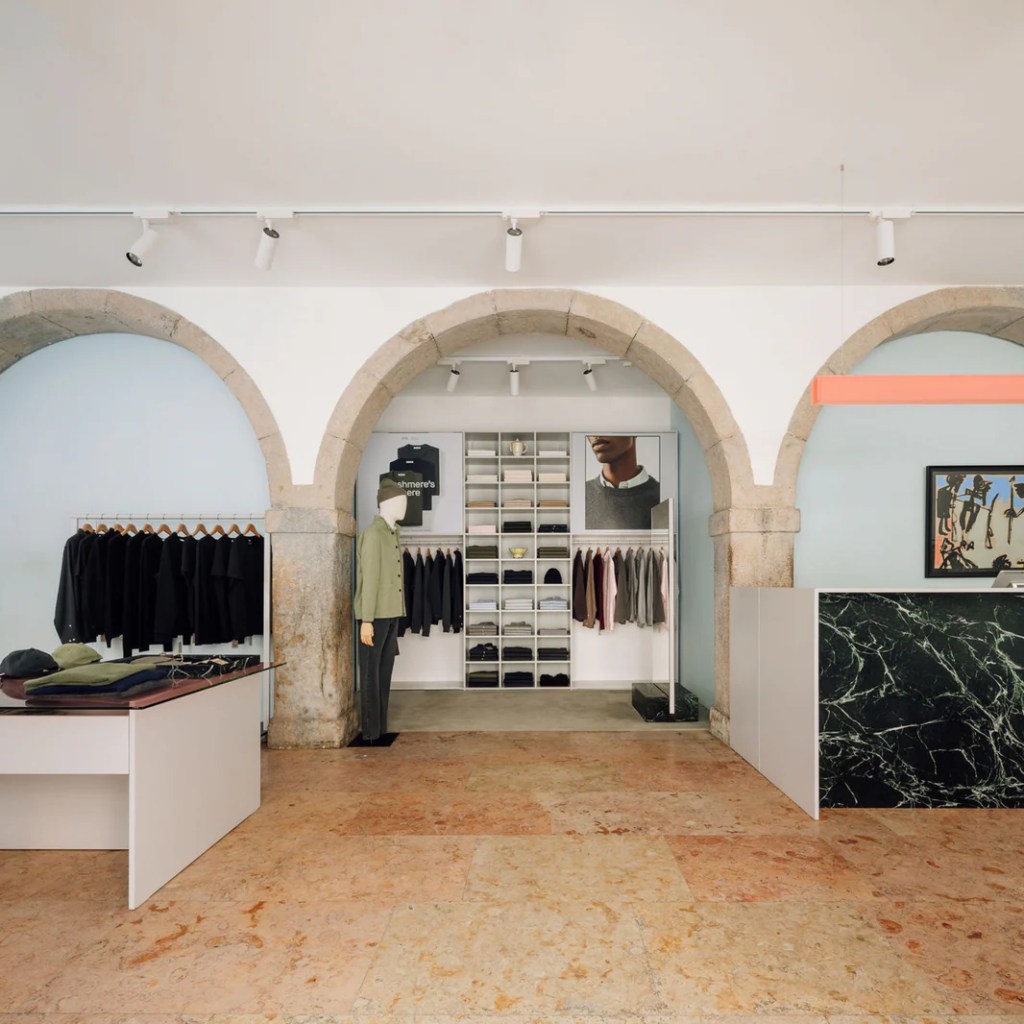
Perhaps this patient, grounded philosophy explains the loyalty ISTO. has cultivated. “Our clients value quality, simplicity, and honesty,” Palha says. “They know what they’re buying, where it’s made, and by whom. It’s a loyal and growing community that identifies with our principles as much as with our clothes.” Their audience reaches far beyond Portugal: today the brand’s strongest markets are Portugal, the UK, and Germany, followed by France and the United States, where ISTO.’s online following is accelerating. The retail shops, especially the ones in Lisbon (Chiado, Campo de Ourique, Amoeiras) and Berlin, anchor this digital community in physical spaces.
ISTO.’s next chapter looks expansive yet grounded. “We’re expanding internationally and deepening our creative projects, from new categories to circular initiatives,” says Palha. “The goal is to keep growing responsibly, staying true to our essence while reaching new people and cities.” It’s a path that speaks less to aggressive scaling than to careful widening, a maturity often missing from young labels.
Palha himself never expected to end up in fashion. His background is in business, a trajectory that, in retrospect, created the perfect vantage point to challenge the industry’s habits. “I come from a business background, not fashion,” he shares, “which helps me look at clothing through a different lens, one that values process, product, and purpose equally. I’m Portuguese, passionate about timeless design, and endlessly inspired by everyday beauty; and Roger Federer.”
There is a quiet confidence to ISTO. a sense that the brand knows exactly who it is and sees no need to shout. Its pieces are understated, but their impact accumulates: in the feel of the fabrics, in the clarity of the supply chain, in the deliberate restraint of the design. In a culture wired for immediacy, ISTO. has chosen patience. And in doing so, it has built something that feels like a rarity: clothing intended not for the moment, but for a lifetime.
–


 ART IS ALIVE