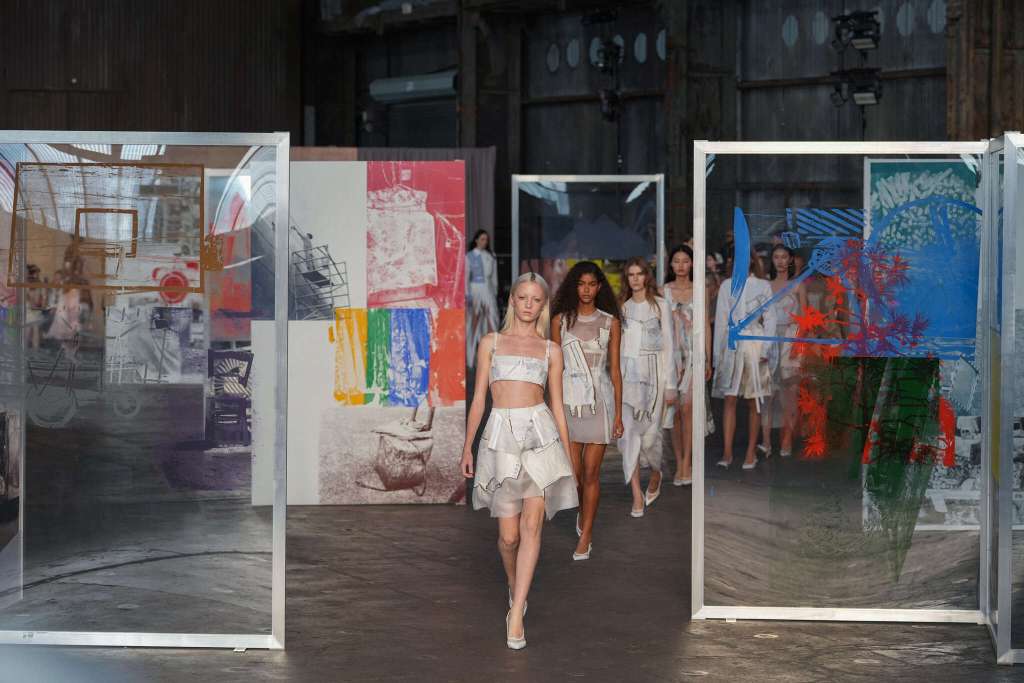
Jason Wu’s Spring 2026 collection, Collage, unfolded not on a conventional runway but inside Robert Rauschenberg’s own labyrinth of silkscreened panels at the Brooklyn Navy Yard, and the effect was fantastic. Yes this is NY Fashion Week. The choice of setting was deliberate: Rauschenberg’s A Quake in Paradise (Labyrinth), with its mirrored, translucent, and opaque surfaces, became a living architecture that models moved through, reflections colliding with prints.
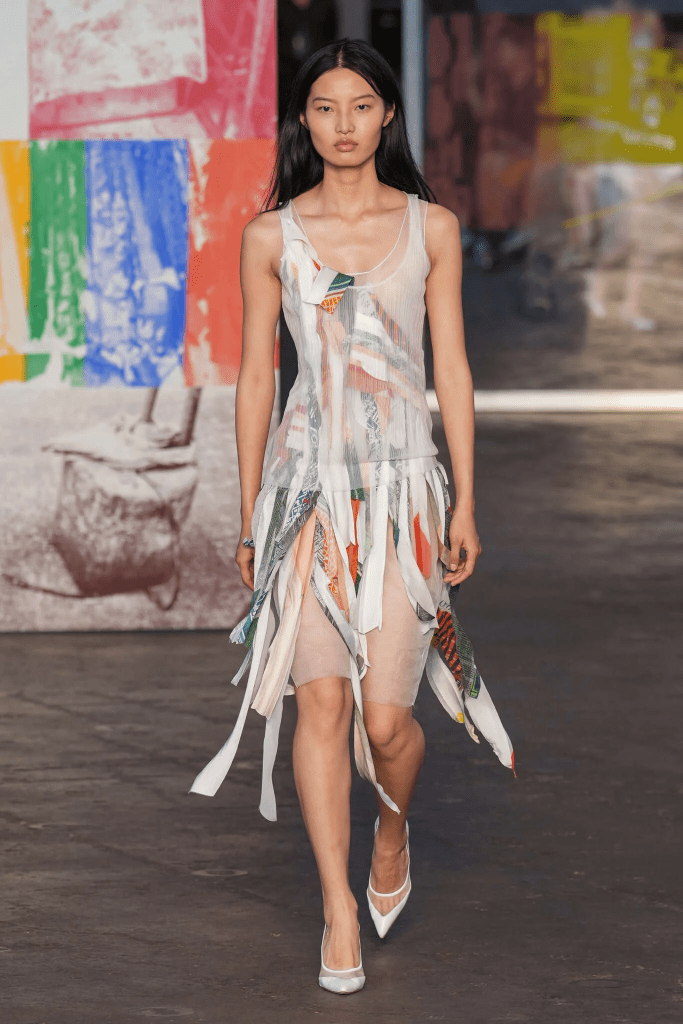
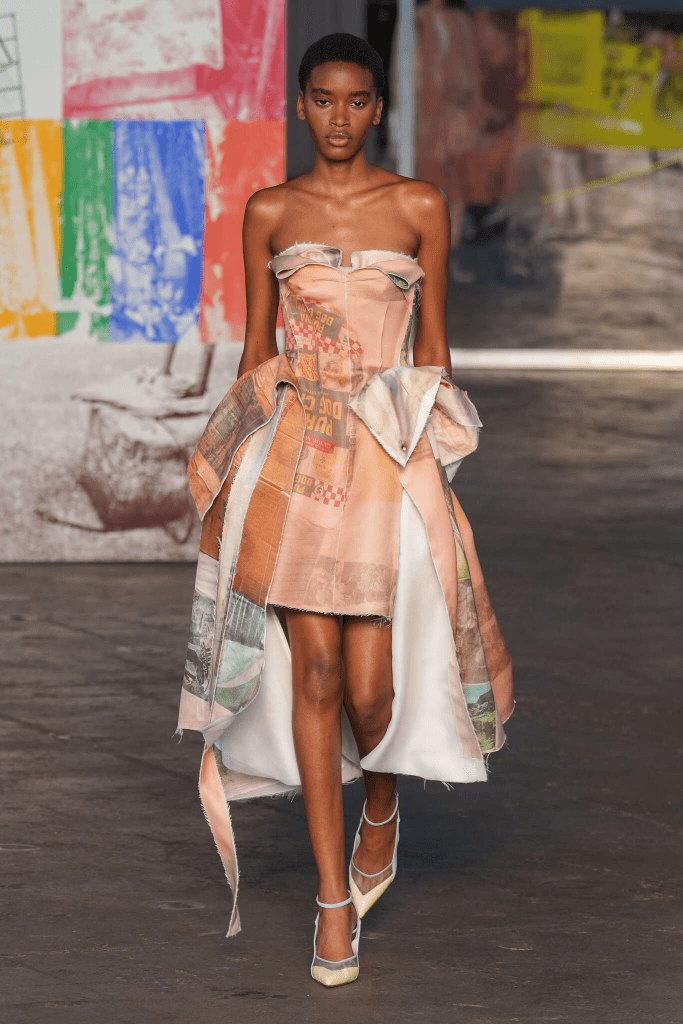
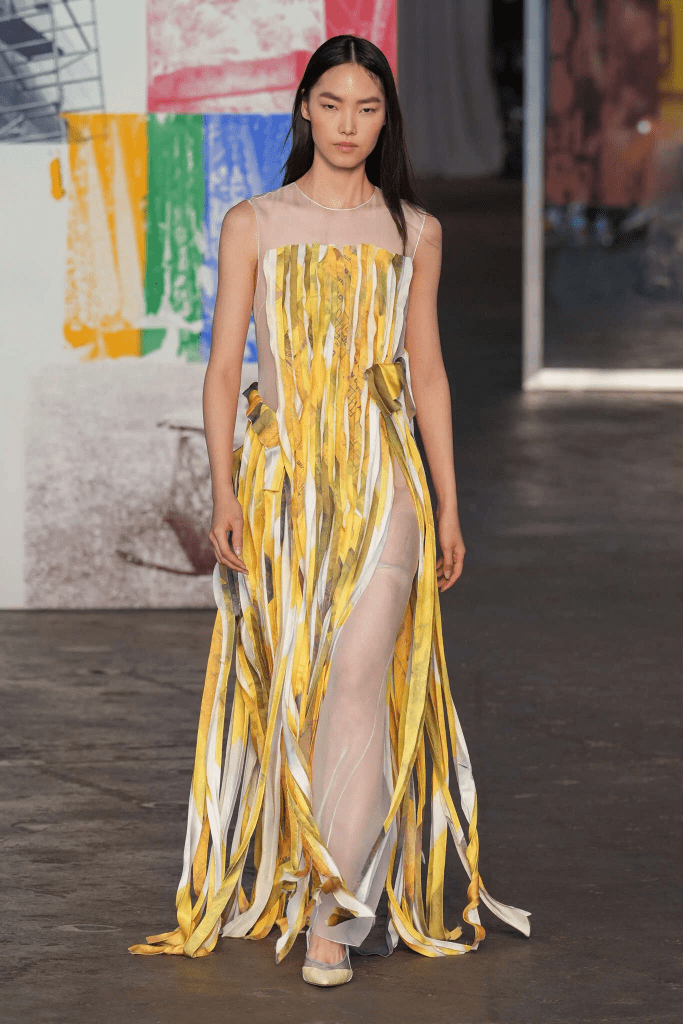
The collaboration with the Robert Rauschenberg Foundation marked the artist’s centenary, but more than a commemorative gesture, it was a dialogue across disciplines. Wu mined the archives, particularly the Hoarfrost series and Airport Suite of the 1970s, and translated their material experiments into garments layered in satin, organza, silk twill; dresses collaged with transfers and imagery; patchwork constructions that revealed as much as they concealed.
To understand the resonance of this staging, one must recall Rauschenberg’s role in reshaping 20th-century art. He dismantled the supposed hierarchy between painting and sculpture, collapsing them into his “Combines” that absorbed every possible material, newspaper, fabric, debris, paint, into unified but unstable wholes. His experimentations with printmaking, textiles, performance, and technology turned him into an artist between Abstract Expressionism and Pop, Minimalism and Conceptual art. Rauschenberg’s work is about possibility: of materials, of media, of meaning.
In his own words, Wu likens his process to collecting disparate references and binding them into coherence, an echo of Rauschenberg’s collages of materials. Sunlight streaming into the warehouse bounced across mirrored panels and fabric alike.
–


 ART IS ALIVE