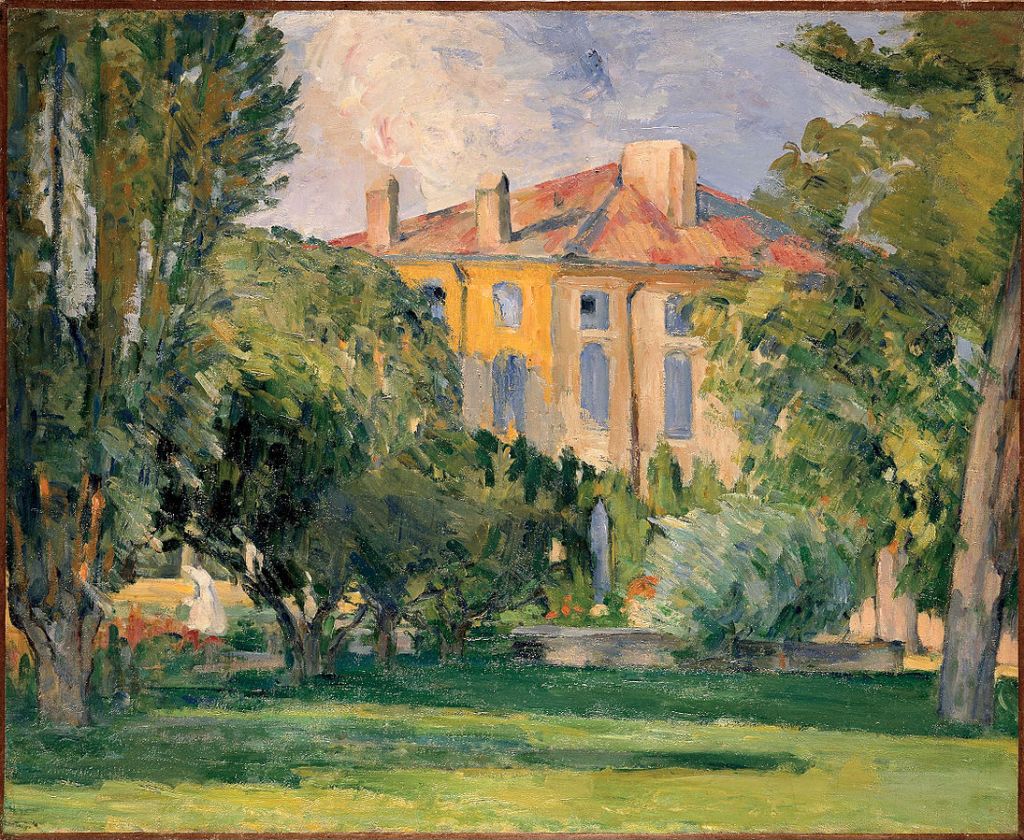
This year, Aix-en-Provence celebrates Paul Cezanne with two landmark events: the exhibition “Cezanne au Jas de Bouffan” staged at Musée Granet (on view until 12 October 2025) and the reopening of his estate, the Bastide du Jas de Bouffan, after extensive restoration. Located on the western edge of city, the bastide du Jas de Bouffan was Cezanne’s family home for four decades and the site of his earliest and most celebrated works.
Over 200,000 visitors have seen the exhibition at Musée Granet so far.
The exhibition brings together more than 130 works tracing Cezanne’s lifelong relationship with Jas de Bouffan, the country home where he lived and painted for four decades. Extraordinary loans from institutions including Musée d’Orsay, MoMA, the Getty, Kunstmuseum Basel, the Fitzwilliam Museum, Hakone Museum, and the Art Institute of Chicago among many others, give visitors the rare opportunity to see early murals, still lifes, portraits, and landscapes that shaped modern art.
The exhibition opens with excerpts from Cezanne’s birth certificate, registered ‘Louis-August Suzanne’ in Saint Zacharie on 3 December 1843. Cezanne never wrote his name with an accent as confirmed by the Aix-en-Provence registry. Authors and critics started using the accent, here by changing the reality of his name. The exhibition respects this historical context.
The show continues with early works including a striking portrait of the artist’s mother on one side and Marie Cezanne on the other side from 1866-1867, now in the collection of the Saint Louis Art Museum, US. The room, with walls painted in pink, displays Cezanne’s early portraits, in both drawings and paintings, including Uncle Dominique, 1866, now in the collection of the Fitzwilliam Museum in Cambridge, UK.
Upstairs, a very interesting map of Provence showcases the significant places in Cezanne’s formative years and life. This includes Aix-en-Provence and Sainte-Victoire obviously, but also places such as L’Estaque (with paintings of this view in later rooms) close to Marseille where the artist later had a studio, and the Sainte-Baume mountain.
The exhibition leads to paintings and drawings of Jas de Bouffan itself, entering right through the main substance of the show. A small-scale painting titled Trees at the Jas de Bouffan, from the Hiroshima Museum of Art, is stunning, while the exhibition also gives a rare occasion to see Marina Picasso’s oil on canvas with Jas de Bouffan. The House in Aix from the Prague National Gallery, features the most impressive view of the provencal bastide. The building seldom appears in Cezanne’s work, unlike the farm, which he painted more often. The artist’s brushstrokes depict the two buildings with rigorous geometry.
At Musée Granet, while The Bathers remain a hallmark of his mature style, blending classical composition with modernist innovation, Still Life with Cherries and Peaches, exemplifying his approach to colour, tone, and spatial composition in a subsequent room. Woman with a mirror, a donation from Musée d’Orsay to Musée Granet is wonderful and recalls Greek myth of Leda seduced by Zeus in the form of a swan. Widely depicted in art history, Cezanne created several versions of the myth. The artist recalled an 18th-century bas-relief in a first-floor room at Jas de Bouffan. In this drawing, he replaces the swan with a champagne glass, a reference to a new brand of alcohol, Champagne Nana, launched in 1880 to coincide with the publication of Émile Zola’s novel of the same name, Nana.
More highlights towards the end of the exhibition include The Four Seasons, The Card Players, Self-Portrait in Front of a Pink Background, and The Bathers, presented alongside works that once adorned the house’s walls. Portrait of Madame Cezanne, from 1885-1886 in the Orsay collection is remarkable. Man with a Pipe, from 1890-92 shows Cezanne at his peak of talent.
Nearby, the Jas de Bouffan bastide itself has reopened to the public. Visitors can explore the rooms, gardens, and studios that inspired Cezanne, including the chestnut tree avenue, the Orangerie pond, and surrounding landscapes. Walking through the estate offers a unique view of the environment that informed his vision of form, colour, and light as Cezanne’s paintings of the property are reproduced on ceramic and placed on easels throughout the grounds.
A studio on the second floor, lit by a skylight, saw the creation of portraits and most significant works, many inspired by the estate’s vineyards, orchards, and gardens. The adjoining bastide now hosts the Cezanne Research and Documentation Center too, the only institution authorised to authenticate his works, making the exhibition both a visual and scholarly journey into the world of Cezanne.
Forced to sell the Jas de Bouffan estate in 1899, Cezanne moved to the town hall district on rue Boulegon before acquiring a plot on a hill known as Les Lauves, overlooking the Cathedral of Aix-en-Provence. There, in 1902, he built a studio where he created his final paintings, including The Large Bathers, begun at Jas de Bouffan and now held at the Barnes Foundation in Philadelphia.
In 2016, the City of Aix-en-Provence purchased an adjoining plot to improve access to the site. This space, dedicated to the artist and his studio, preserved as it was, along with his restored possessions, form a lasting part of the Cezanne 2025 legacy. Some of his early works, including large panels funnily signed ‘Ingres’ but made by Cezanne, depicting romantic figures, are on view at Musée Granet and open the exhibition as a recreation of the house.
Another highlight is the opening of a new public trail to the Bibémus quarries east of the city, en route to Mont Sainte-Victoire. The trail, part of the city’s programme of events, offers visitors insight into the landscapes that inspired Cezanne, particularly his geometric compositions from the 1890s, which helped earn him the title “father of Modern Art” and, in Picasso’s words, “father to us all.”
Together, the exhibition, Cezanne’s last studio des Lauves, and the restored bastide reconnect Cezanne to the city that once overlooked him. Aix now celebrates him fully, offering a rare chance to experience both the works and the world that created them.
The exhibition is curated by Bruno Ely, Chief curator and director, Musée Granet and Denis Coutagne, President of the Société Cezanne and director of the Centre cézannien de recherche et de documentation. This Cezanne season is a must-see this year.
–
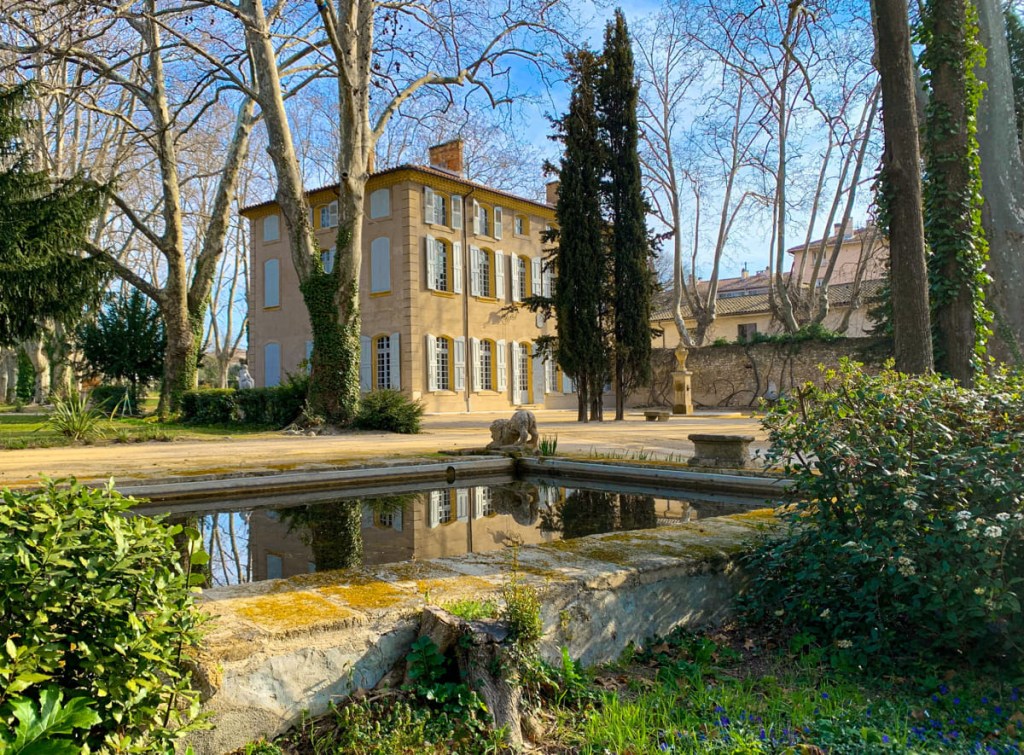
Images: The house at Jas de Bouffan, Private Collection, and view of Jas de Bouffan
 ART IS ALIVE