
From 1980 to 2004, The Face played a crucial role in shaping contemporary culture, launching a new wave of photographers, pioneering the role of the stylist, and showcasing the most cutting-edge artists on its covers. It was a time for creativity that saw the New Labour take power, the birth of London’s O2, and the rise of new digital means to create elaborate and vibrant imagery.
Staged at The National Portrait Gallery in London until 18th May 2025, The Face Magazine: Culture Shift explores the impact of the publication on the creative industry through its covers, most iconic images and chronology. The show features video, immersive rooms and bright red walls showcasing the magazine’s red and white typeface à la Barbara Kruger.
Senior curator of photographs at the National Portrait Gallery Sabina Jaskot-Gill said: “Within its pages, The Face has produced some of the most innovative fashion and portrait photography of its time – the magazine always allowed its contributors the creative freedom to react against the prevailing mood, to create a shift in culture.”
This fascinating exhibition showcases the work of over 80 photographers, including Stéphane Sednaoui, David Sims, Elaine Constantine, and Sølve Sundsbø shooting ‘super-designers’ Jean Paul Gaultier and Thierry Mugler in innovative settings. Featuring more than 200 photographs, it offers a rare chance to view many of these legendary images in a museum setting, beyond the pages of the magazine for the first time.
Founded by Nick Logan, The Face, resurrected in 2019, became a cult publication pioneering music, fashion, photography, and youth culture. It helped launch the careers of photographers like Juergen Teller and elevated figures such as Kate Moss, Boy George, Phoebe Philo, Naomi Campbell, Alexander McQueen and Brit Pop bands to icons. A celebration of British Culture.
“The bands of Britpop were championed by The Face, photographed in new and innovative ways – with distinctive styling, or utilising new newly-available digital technologies. This approach was unusual for the time, and ensured the magazine’s photography stood out.” Sheryl Garratt, Editor in the early nineties, elaborated “If a band was going to feature in The Face then they had to do something different. They weren’t just going to be lined up for five minutes against a wall for the photograph, but had to commit to a day in the studio. ” Despite increasingly fierce competition with other publications such as i-D and Vogue UK, The Face remained one of the most important platforms.
The magazine was known for its edgy aesthetic, bold design, and covers featuring rising cultural stars – David Bowie (shot in Japan in a beautiful and mundane pause), Madonna (then on the set of Dick Tracy), Björk featured the show, and countless others. It pushed boundaries in visual storytelling and was instrumental in bringing underground trends into the mainstream often through street casting, as explained in one of the early rooms in the show.
Storytelling is at the centre of the show with a multitude of cool and fun anecdotes around how each issue was coming to life. Vincent Peters writes this quirky story: “The story featured Phoebe Philo alongside Stella McCartney, Alexander McQueen and John Galliano. They each chose a superhero as a character: Phoebe was Catwoman, McQueen was the Silver Surfer, Stella was Superwoman. We had been waiting all day for Galliano – around 7pm a messenger delivered a top hat but John still didn’t show. We called his office, and they told us that he was there. We assured them that he hadn’t arrived, but they told us, “yes, he’s there… he’s The Invisible Man”. The editors were not amused.”
It ceased publication in 2004 but was revived in 2019, continuing its legacy in a digital and print format, a chapter which is explored in the exhibition through portraits of the latest stars such as Charlie Charlie XCX and Chappell Roan reminding audiences that it’s still in existence today (but nowhere to be found in the shop sadly).
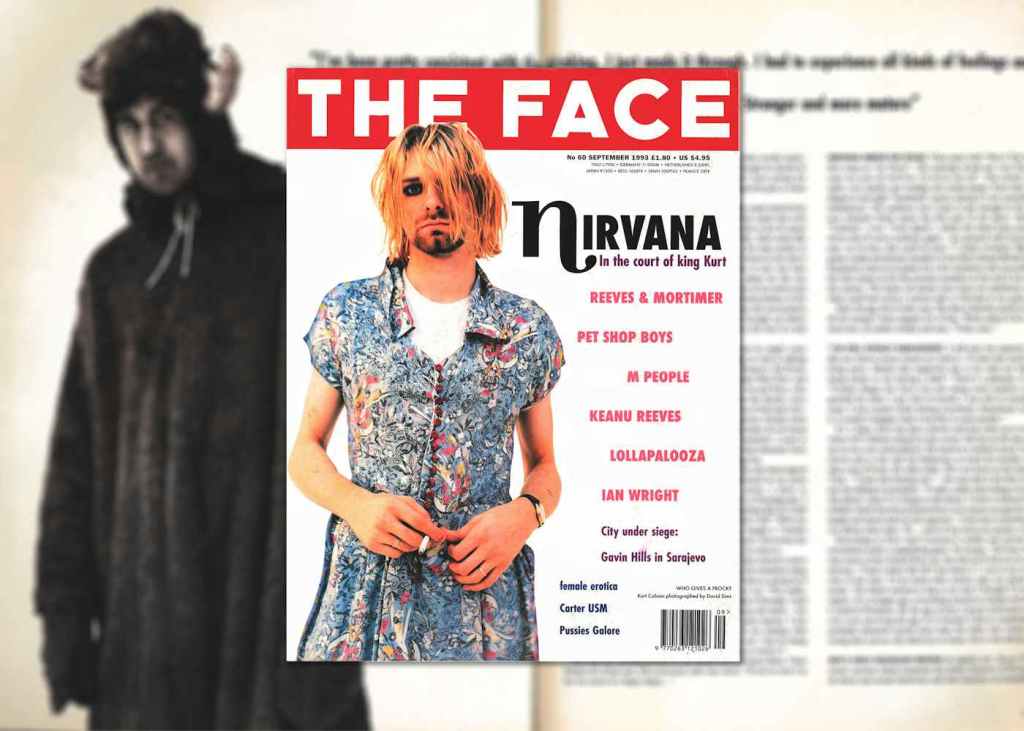
Further highlights include a vulnerable Kurt Cobain wearing a dress, the epitome of Grunge, as shot by David Sims, and remembered by Amy Raphael: “Because of the piece I’d done with Courtney I knew that he trusted me and that I could ask those difficult questions.”
The darkness of the noughties’ goth and industrial music also influenced the direction and artistry of the music. Art Director, Lee Swillingham also recalled, ‘Sean Ellis and Isabella Blow conjured up cinematic opium-soaked images of dark romance. Isabella was a close friend of Alexander McQueen, and his designs featured heavily in the duo’s fashion stories. Their gothic fantasias resonated with the culture, a contemporaneous soundtrack provided by bands such as Nine Inch Nails and Marilyn Manson.
–


 ART IS ALIVE