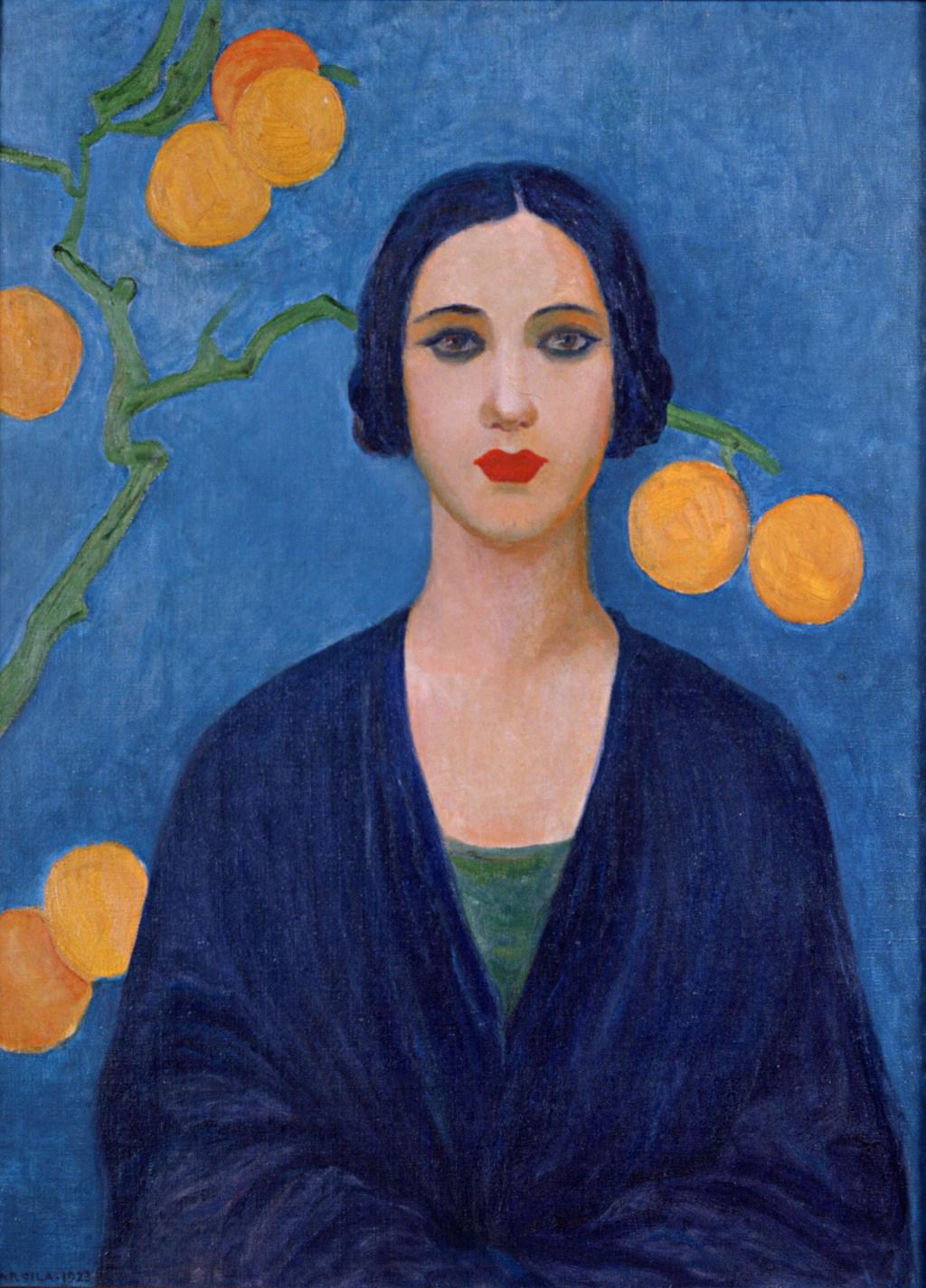
One of the most important artists in Brazil, Tarsila do Amaral (1886–1973), a key figure in Brazilian modernism is honoured with a vast and important exhibition at Musée du Luxembourg in Paris. Do Amaral used indigenous iconography and the modernising dimensions of a nation that was changing quickly at the beginning of the 20th century, to create an innovative and moving visual language.
“Before the Portuguese discovered Brazil, Brazil had discovered happiness.” Do Amaral said about her country.
The exhibition is on view until 2nd February 2025 in the exquisite Musée du Luxembourg in Paris. It spans the artist’s entire body of works. Beginning in the 1920s, Tarsila do Amaral moved between Paris and São Paulo, navigating the avant-garde cultures of both cities. Her painting served as the foundation for the “anthropophagic” movement, advocating the “devouring” by Brazilians of foreign and colonial cultures as a form of both assimilation and resistance. Many of these paintings are on view in the show. She created a “Brazilian” iconographic world in Paris, which was challenged by the Cubism and Primitivism that were so popular in the French capital.
Abstract geometry, surreal compositions, and vibrantly coloured landscapes all attest to the strength of a body of work that is both deeply anchored in its era and constantly poised to reinvent itself. Her work also challenges us to reevaluate the distinctions between high culture and popular culture, centres and outskirts, naive style and figuration, tradition and avant-garde, juxtaposed with social and identity politics. The exhibition brilliantly showcases the developments of the artists and the evolution of her art, through archival and multimedia documents.
Even when she represents characters, Do Amaral is faced with a double challenge: responding to the French capital’s demand for ‘exoticism’ and participating in the construction of a national and modern imagination based on the mix of Indigenous, Portuguese and African identities who historically make up the Brazilian people.
While Afro-descendants were represented in her 1924 and 1925 works, when Tarsila illustrated the collection of poems Pau Brasil by Oswald de Andrade, precolonial traditions were then the subject of her research. Idyllic descriptions of favelas and carnival scenes, combined with the bright colours that she describes as “popular” dominated her works.
Although she has had numerous shows in her home country, her work only had a small number of international exhibitions to far. In an effort to bring this amazing artist to the forefront, this first survey retrospective in France, which features over 150 paintings, explores the artists’ beginnings – though portraits – to the apogee of her career with Socialist paintings and vibrant geometric naive-like landscapes.
–

Images: Figura em Azul © Tarsila do Amaral Licenciamento e Empreendimentos S.A. and installation view of the exhibition
 ART IS ALIVE