Atelier Calder showcases Sarah Oppenheimer’s project in the 2nd edition of the Festival AR(t]CHIPEL, organised by the Région Centre—Nouvelles Renaissances.
Established in 1989 in the studio and home of Alexander Calder in the Indre-et-Loire Valley, Atelier Calder is the oldest residency program of its kind in France. Designed by Calder and built in 1962, the studio favors a simple and functional aesthetic, integrating the space with the natural environment. International artists are invited to live and work on the property for three months, receiving technical and financial support as well as a living stipend to realise artistic projects that might otherwise prove daunting.
Oppenheimer creates unexpected relays between bodies and buildings, transforming viewers into agents of spatial change. During the residency, Oppenheimer will develop a new work entitled N-04008. Functioning simultaneously as analogue artwork and kinesthetic network, N-04008 invites communication through tactile, luminous play. Viewers become active participants in the choreography of N-04008, which is anchored to Calder’s studio space. Light is the medium and structure of the experience, as well as its cause and effect.
Since its inception, the Atelier Calder has hosted over sixty international artists-in-residence, including Marina Abramović, Carlos Amorales, Abraham Cruzvillegas, Mark Dion, Trisha Donnelly, Tara Donovan, Jimmie Durham, Rochelle Goldberg, Rachel Harrison, Jeppe Hein, Haroon Mirza, Ernesto Neto, Martin Puryear, Tomás Saraceno, Jessica Stockholder, Sarah Sze, Aki Sasamoto, Monika Sosnowska, Haegue Yang and many more. Many of the artists have gone on to gain international acclaim and exhibit at major institutions following their residencies.
Atelier Calder is governed by a Board of Directors, which oversees the residency program and the artist selection process. Led by Laurent Le Bon, president of the Musée National d’Art Moderne, Centre Pompidou, the Board is comprised of art historians, curators, and members of the French Ministry of Culture (DRAC Centre), the Région Centre, and the Calder Foundation.
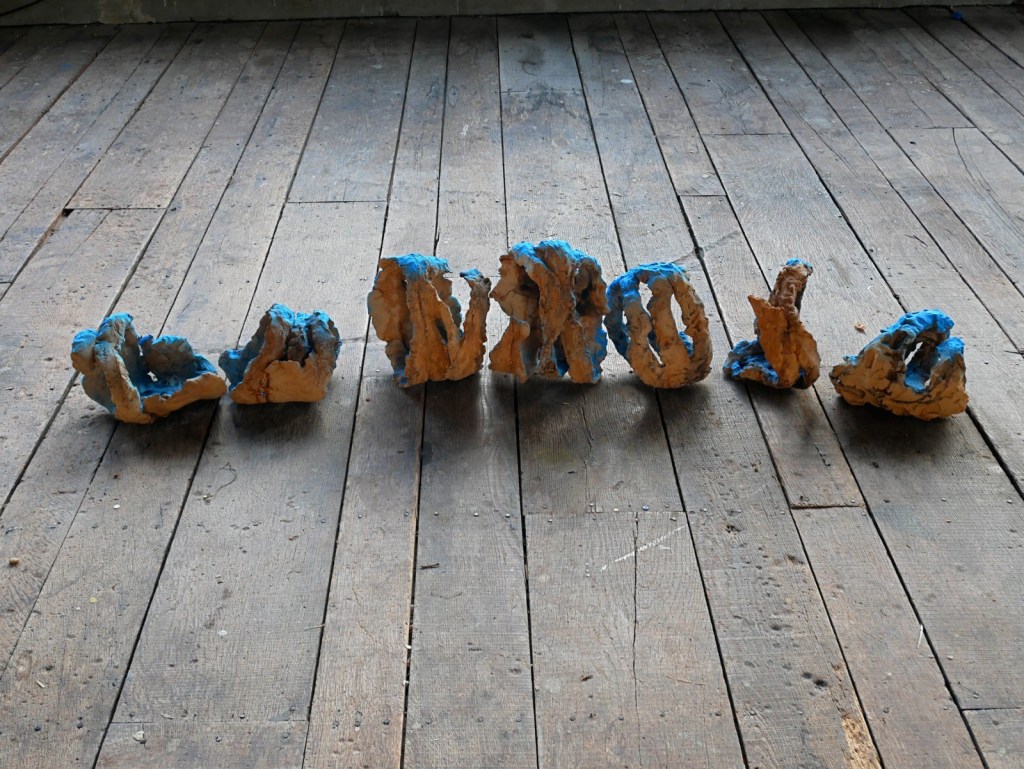
Image: Abbas Akhavan, 2017
 ART IS ALIVE