Research and experimentation have always been at the heart of Issey Miyake’s philosophy, which aims to “think outside the box” and not be constrained by traditional frameworks. By pushing his teams and himself to look beyond current trends and consider the concerns of society, Miyake always encouraged fresh ideas.
He first gained awareness of design from his encounter with two bridges in his home of Hiroshima that were designed by Isamu Noguchi: one named Ikiru (“to live”) and the other, Shinu (“to die”) (1952; later renamed Tsukuru (“to build”) and Yuku (“to depart”). He realized that the power of design lay both in empowering people to look at as well as to be able to use the bridges. He later worked with artists such as Christo and Jeanne-Claude and continued to foster dialogues with other creative fields.
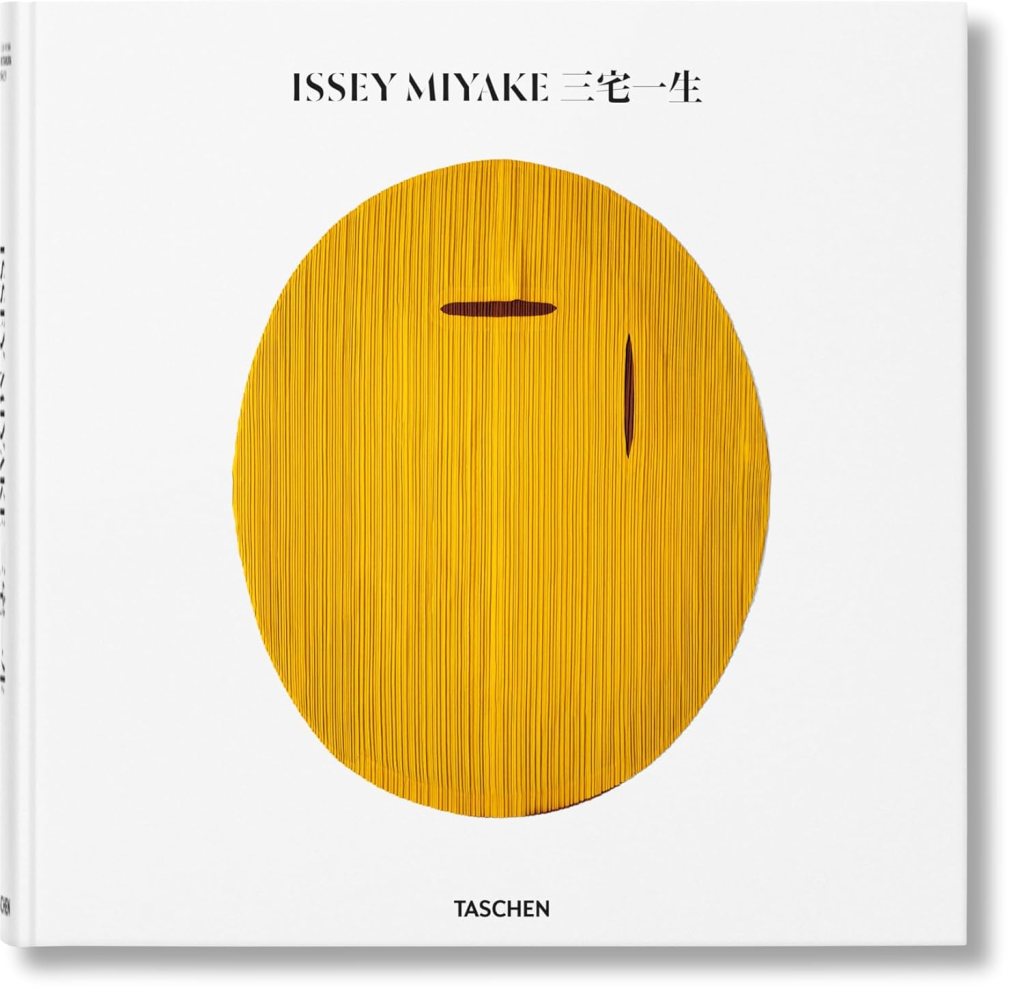
The designer’s incredible life (he passed away in 2022) is explored in a remarkable book published by TASCHEN. Nearly 500 illustrated pages examine the Japanese designer’s illustrious career. It provides a unique perspective on the designer’s vision and audacity.
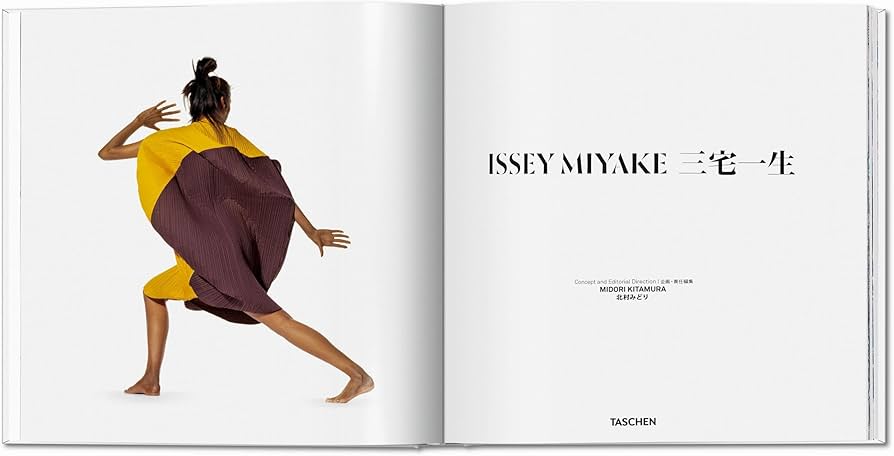
Under the direction of Midori Kitamura, the chairman of the Miyake Design Studio and a long-time collaborator of Miyake, the book offers an encyclopedic references to Miyake’s material and technical innovations from 1960 until 2022.
This is the definitive book on Issey Miyake and a must-have for anyone interested in fashion and craftsmanship. Miyake’s designs are known for their unique everyday distinctiveness, a dimension perfectly captured through the stunning selection of images, analytical texts, chronology and beautiful visuals.
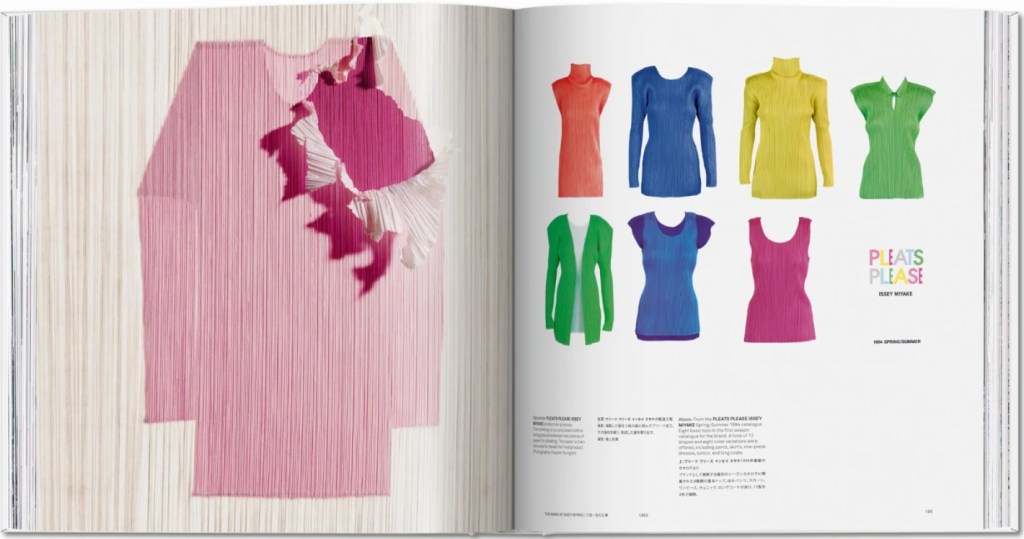
Initiated and conceived by Midori Kitamura, the book looks at the texture-driven originality of Miyake’s materials and techniques from the very earliest days of his career, before he had even established the Miyake Design Studio. Drawing on nearly 50 years of collaborative work with Miyake, Kitamura creates an encyclopedic piece highlighting important bodies of work such as A Piece of Cloth concept, Body Series of the 1980s, Miyake Pleats series, and such practical, everyday designs as Pleats Please garments.
Leading cultural figure Kazuko Koike also provides a comprehensive timeline of Miyake’s work as well as an unparalleled biographical profile in an extensive essay, looking at the aspirations and sources of inspiration that have shaped his repertoire since his early years.
Miyake consistently came up with universal and novel ideas, through his concept of manufacturing based upon the idea of “a piece of cloth”. This great book will make you want to run to the store.
–
 ART IS ALIVE