
Normandy is a beautiful region and one of France’s most fascinating spots. The term Normandy originates from the Vikings (also known as “Northmen”) who settled in the region at the beginning in the ninth century. Following the Norman invasion of England in 1066, the Duke of Normandy and the King of England shared a common ancestor for about 150 years, marking the relationship between the two countries.
Fast forward to the 20th century, Continental Normandy was an epicentre of the German-occupied zone of France during World War II, ending with the armistice on 22 June 1940. Under the code name Operation Overlord, the Allies (Britain, the United States, Canada, and Free France), organised a huge soldier and supply build-up to support a large-scale operation: The D-Day landing on 6 June 1944. The Battle of Normandy claimed many lives in Caen, Cherbourg, Carentan, Falaise, and other important Norman towns. The French Republic was able to be restored thanks to this crucial turning and deadly point in the conflict.
Today, visitors can learn more about these tragic and heroic historical events through the numerous Memorial museums, cemeteries, and points of interests dotted through Normandy. The 6th of June 2024 will mark the 80th anniversary of D-Day.
For those who enjoy art, Normandie Impressioniste is a wonderful festival, hosting art exhibitions in various places across the region. This 150th anniversary celebration of Impressionism has an eclectic and multidisciplinary programme that captures the spirit of creation unique to this revolutionary artistic movement. Honfleur, with its Eugene Boudin Museum and Eric Satie house for instance, is one of its beating heart. David Hockney, who designed the cover of the festival this year, doesn’t live far. An exhibition of his works is on view at Musée des Beaux-Arts de Rouen. Other highlights include Sean Scully at Église Saint-Nicolas de Caen and Daniel Buren at Abbaye du Voeu among many other great presentations.
Situated between Bayeux and the WWII landing beaches on the Normandy coast is the elegant five-star hotel La Chenevière. Port-en-Bessin is a lovely port that makes an interesting visit and the WWII American cemetery, 10km away, also make for an interesting stop.
Armand Lapierre, a résistant and Réseau Alliance member, successfully took part in the “Grande Coupure,” which sought to cut off the German lines of communication surrounding La Chenevière prior to the Allied landing, on the grounds of the Château during the night of June 4 to 5, 1944. In 2016, a memorial plaque honouring him was placed in the park of the Château.
Nestled in a picturesque park with an impressive alley way, this 18th-century manor house was completely renovated in 1988 and has since maintained its charm. Every year in September, La Chenevière invites France’s best artisans and nursery gardeners to its Flower Show.
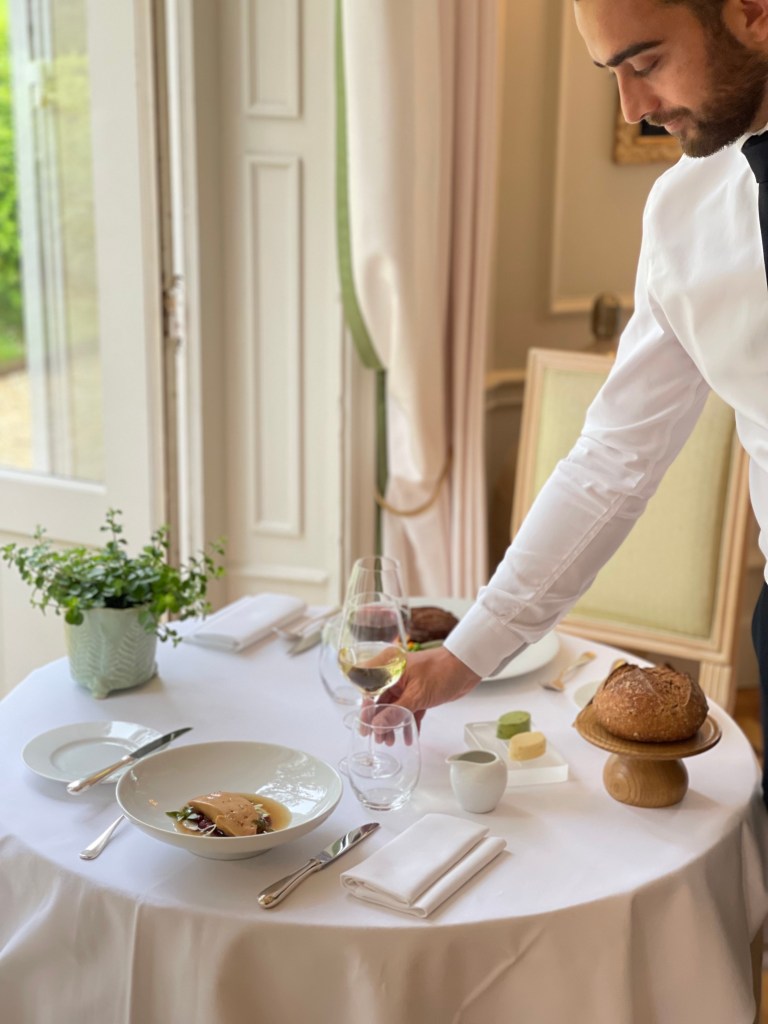
Overlooking the gorgeous terrace where many robins and other beautiful birds can be seen, the excellent restaurant le Botaniste, within the chateau, features la crème de la crème of French gastronomy.
The restaurant features upscale cuisine that draws inspiration from its garden and the organic. Le Botaniste’s grounds are adorned with an array of magnificent roses, while the walls of the former stables are covered with wisteria and climbing ivy. The view over the park is majestic.
The décor is bucolic, and interiors feature gorgeous wallpaper, herbaria, floral motifs and beautifully arranged dried flowers. With its plant-themed ceramics, and botanical wall engravings, the interior design brings the garden into the inside. It’s a true celebration of nature in a wonderful environment!
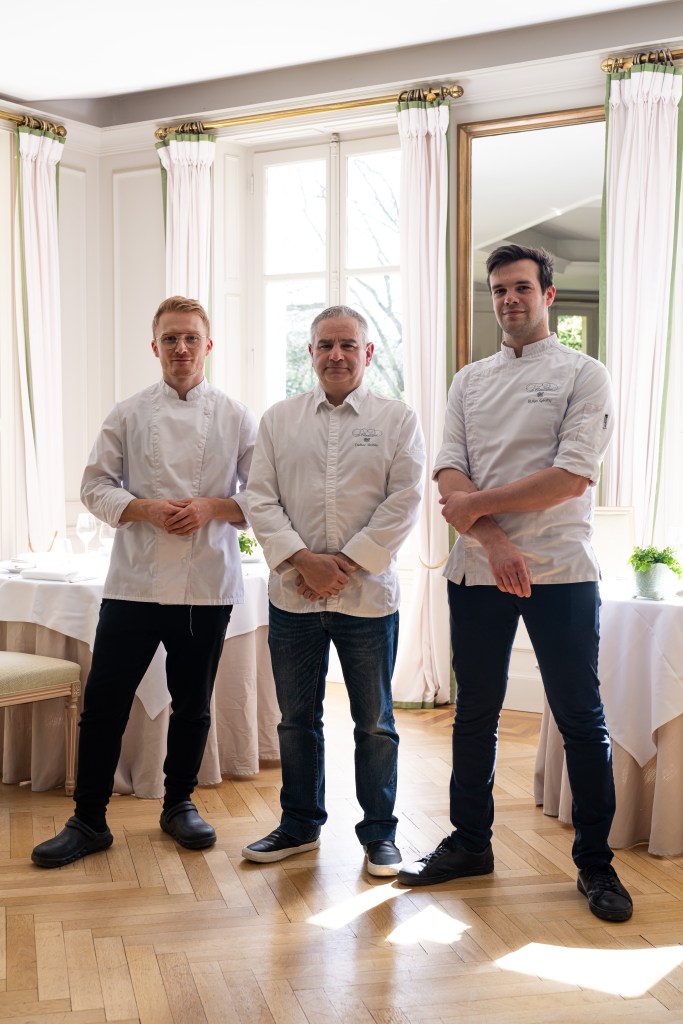
Didier Robin, Chef des cuisines, and Hugo Genty, Assistant Chef helm this hidden French gastronomy gem and deliver fantastic food. They exclusively collaborate with the greatest local farmers to source locally produced ingredients. They care for the environment, and Normandy traditions. The menus are reflective of this noble philosophy. He said: “I’ve been working at La Chenevière for over 20 years and Hugo and Simon for nearly 10. I speak on behalf of all of us when I say we feel at home here. I personally feel that I share the same values as the owners. We only cook and eat local and seasonal produce. Having our own market gardener is a blessing as we discover new herbs and vegetables every season!”
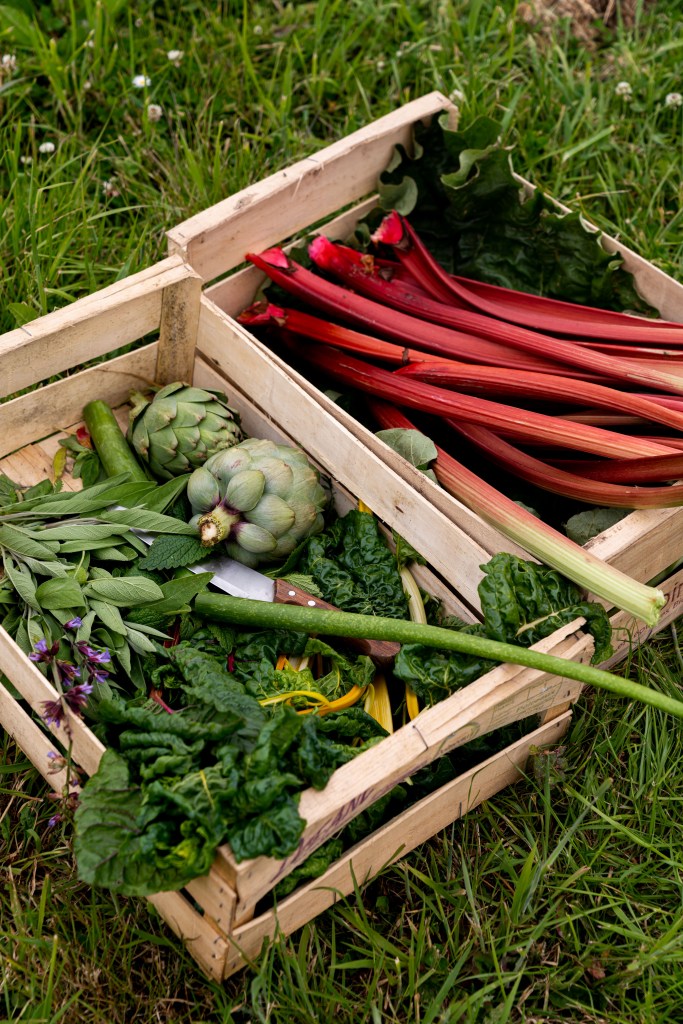
La Chenevière’s market gardener, Pierre Vandaële, grows the chateau’s permaculture garden which is over two hectares. To make the most of the produce from the permaculture vegetable garden, the three Chefs collaborate closely with the market gardeners at the Château. More than a hundred kinds of fruits, vegetables, flowers, and aromatic herbs, together with their subspecies, are housed in this natural laboratory, inspiring creative and diverse culinary creations: leeks, squash, artichokes, beans, asparagus, tomatoes and peas are delicious. The restaurant began serving honey in-house produced in its own hives in 2012. It is available to purchase at the reception and is used in many different recipes and beverages.
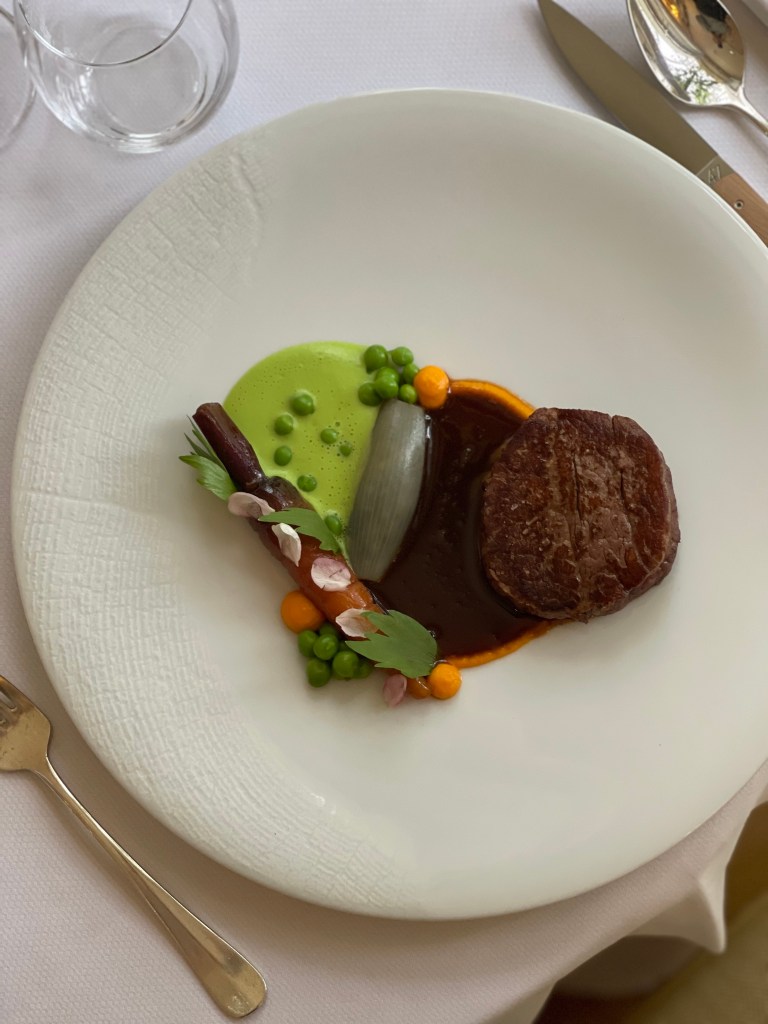
What’s on the menu? The result of the organic approach from these highly-skilled Chefs is a wonderful combination of tastes, arrangements and colours. The vegetarian menu features ‘organic soft-boiled egg in black tea, agastache foam’ and ‘rhubarb jelly, fresh goat’s cheese and spring onion, verbena dressing’. The seasonal menu has ‘esparagus and pesto, anchovy paste’ and ‘slow-cooked breast, shredded leg confit with oyster mushroom, elderflower jellied sauce and jus, white turnips and celery’ as main delicious courses for example. Didier Robin continues “We feel honoured to be able to cook such beautiful produce, from the vegetables from the garden, to the freshest fish from our port which is 5 min away, as well as the meat from Normandy’s best independent farmers.”
Nicolas Mauger from Le Bajocasse farm in Nonant and Xavier Godmet from La Boîte à Fromage in Orbois, work together to serve the best cheeses. Cheese is so important in France and Normandy, to be enjoyed between main course and dessert.
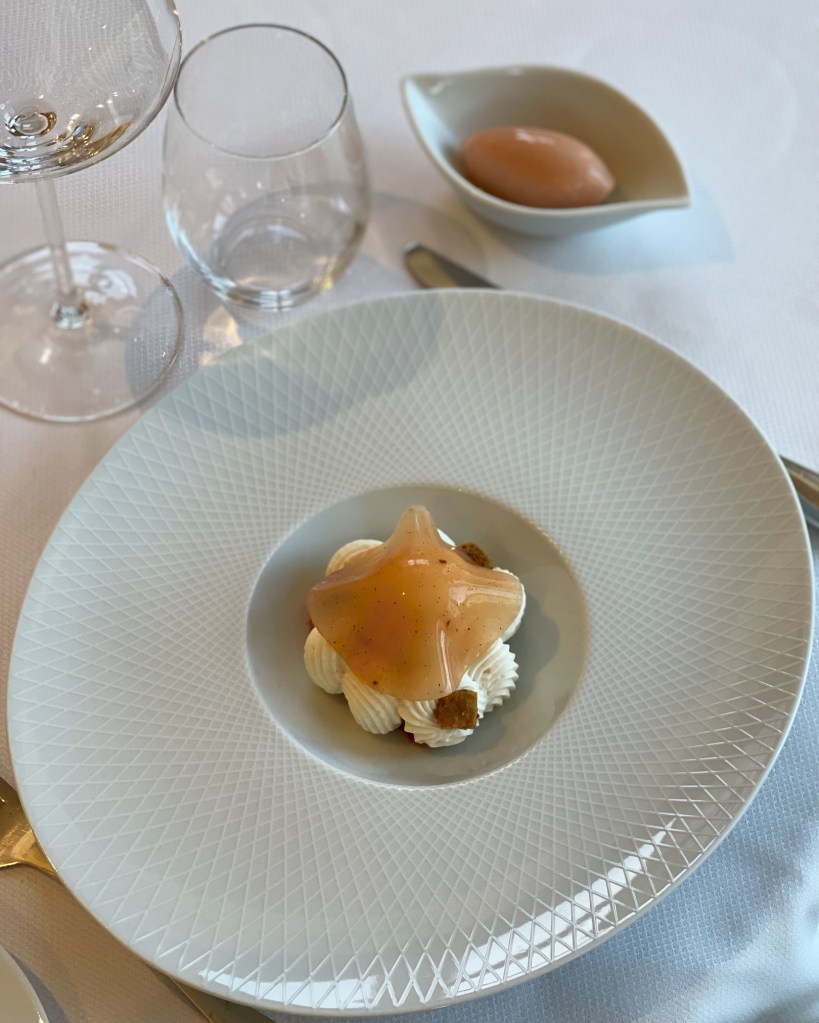
Pastry Chef Simon Beauruelle crafts opulent yet creative desserts, also ensuring that his menu offers a gluten-free, allergy-free, or vegan alternative. Strawberries and rhubarb are among the fruits of the garden that are prepared. In his experiments, he blends unusual but striking flavours, such black garlic and raspberry or even lemon and cauliflower.
Don’t miss the ‘hazelnut dacquoise cake black coffee cream, buckwheat caramel, arabica ganache’ which is truly fantastic. Celebrating Normandy’s apples, the ‘apple and cider tatin pastry chou, apple tatin compote, dulcey mousse, cider caramel’ is also amazing.
For World Ocean Day (June 8, 2024) there’ll be a selection of tasty cocktails. By only using local fisherman produce, the Chefs hope to protect short supply chains and local fishing in addition to their zero-waste practice. Simon Beauruelle was inspired to incorporate seaweed in his dessert for instance. Seaweed farming is essential to sustainable development.
The launch of new cocktails will also accompany the celebrations of the 80th anniversary of D-Day (June 6, 2024). Thibault Gosselin, barman and mixologist, has created a few symbolic drinks to event. They range in flavour from fruity to sweet and robust to bitter, all of which combine regional Normandy tastes. The Sword for instance, which is a spin on the well-known Pimm’s combined with Norman gin, pays homage to Sword Beach, which was under the control of the British Army.
Similarly, The Juno pays homage to Canada and Juno Beach, and includes maple syrup. The charcoal isomalt, symbolic of the poppy’s heart, is concealed at the base of the red cocktail that represents the poppy, a well-known British symbol honouring troops who have lost their lives in battle. Gosselin makes use of garden honey and herbs. In order to appreciate classic cocktails, he also loves to emphasise vintage or “forgotten” alcohols and modernise traditional recipes. Old French alcoholic beverages such as Chartreuse, Gentiane, and Mandarine Napoléon are available.
The excellent and attentive staff provide great tips and recommendations (the wine list is impressive) in a setting surrounded by bay windows, with a view of the garden and its century-old trees. Every wine area in France is explored by Sommelier Jean-Marcellin Yvon, who is always on the lookout for wines that will satisfy both the most knowledgeable customers and the less experienced palates.
Located in close proximity to the terroirs and winegrowers, he has crafted a wine list that encompasses over 300 references, showcasing some of the most esteemed labels and estates in France. Additionally, the selection represents his particular passion for natural and biodynamic wines. All the while, keeping a close eye on how well the wines pair with the dishes prepared by the Chefs. He offers tastings of wines by the glass and would gladly give you advice on wines by the bottle.
The restaurant is open for dinner Tuesday through Saturday and Art is Alive gives it its highest recommendation. Le Botaniste can be opened at noon for events and group dinners and has a private room and its bar can be enjoyed for a pre-drink at the second restaurant.
At La Chenevière, there are two dining options: Le Botaniste offers gastronomy, while Le Petit Jardin offers a bistrot-style meal. The conservatory roof of the restaurant, which is situated beside the pool, lets in plenty of natural light. Breakfast is a feast of regional cheeses, charcuteries, viennoiseries, homemade Normandy cakes, crêpes, and fresh fruit and juices served in the manor’s dining rooms.
There’s so much to explore in Normandy and the excellent Le Botaniste at the stunning Château la Chenevière should be on everyone’s itinerary.
–



Thank you so much to everyone at Le Botaniste and Château La Chenevière, and to Olivia Dicker and Leonore Dicker Le Mintier.
 ART IS ALIVE