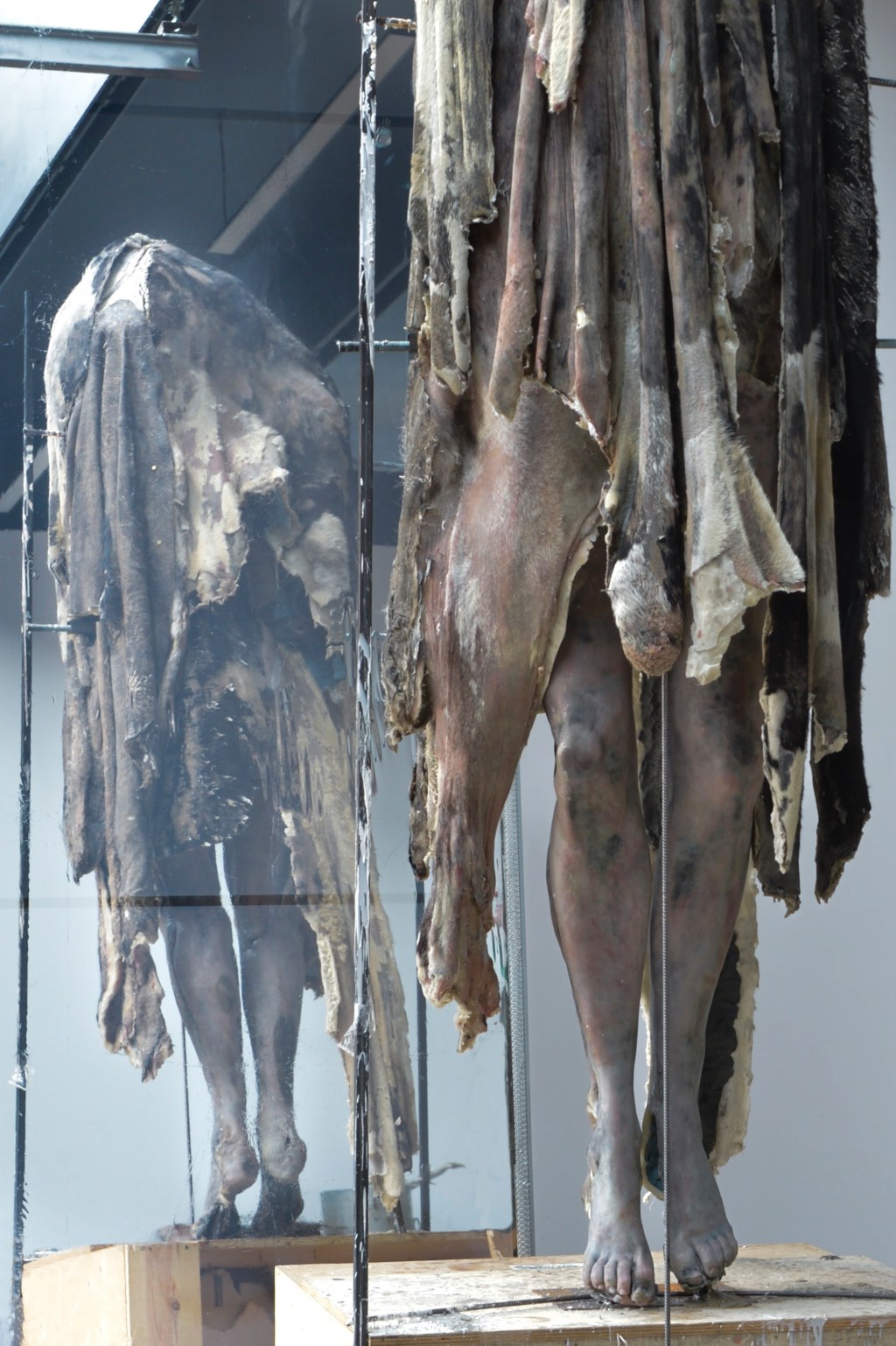
Opening 20 April 2024, an exhibition of new works by Belgian artist Berlinde De Bruyckere has been specifically conceived for the sacred spaces of the Abbazia di San Giorgio Maggiore, the 16th-century Benedictine church located on the Island of San Giorgio Maggiore in Venice and one of the city’s foremost examples of Palladian architecture. Titled ‘City of Refuge III’, the presentation has been realised in collaboration with the Benedicti Claustra Onlus—the non-profit branch of the Benedictine Community—and its Director, Carmelo A. Grasso, who alongside Ory Dessau and Peter Buggenhout, forms the curatorial team.
Oscillating between transcendence and material immanence, ‘City of Refuge III’ is based on three new groups of works by De Bruyckere which uniquely respond to the church’s monumental architecture, function, symbolism and history. On view will be an installation of Arcangeli sculptures in the nave and side aisles, a large-scale installation in the church’s Sacristy and sculptural wall-vitrine works in the hallway of the Monastery’s Gallery.
Taking its title from a Nick Cave song of the same name, ‘City of Refuge III’ is the third in a series of exhibitions by the artist thematizing art as a place of sanctuary and shelter, reinforced here by the venue’s spiritual intensity.
In 2013, De Bruyckere was selected to represent Belgium at the 55th International Art Exhibition – La Biennale di Venezia where, in collaboration with Nobel laureate J.M. Coetzee, she unveiled her monumental, site-specific work ‘Kreupelhout – Cripplewood’. Throughout her practice, De Bruyckere has rendered hybrid forms with human, animal and organic features. Drawing from the legacies of the European Old Masters, the Flemish Renaissance, Christian iconography, as well as mythology and cultural lore, the artist layers existing histories with new narratives suggested by current events to create a psychological terrain of pathos, tenderness and unease. Investigating the dualities of love and suffering, danger and protection, life and death, her works surpass theological connotations, transferring them to the realm of the universal and profane.
 ART IS ALIVE