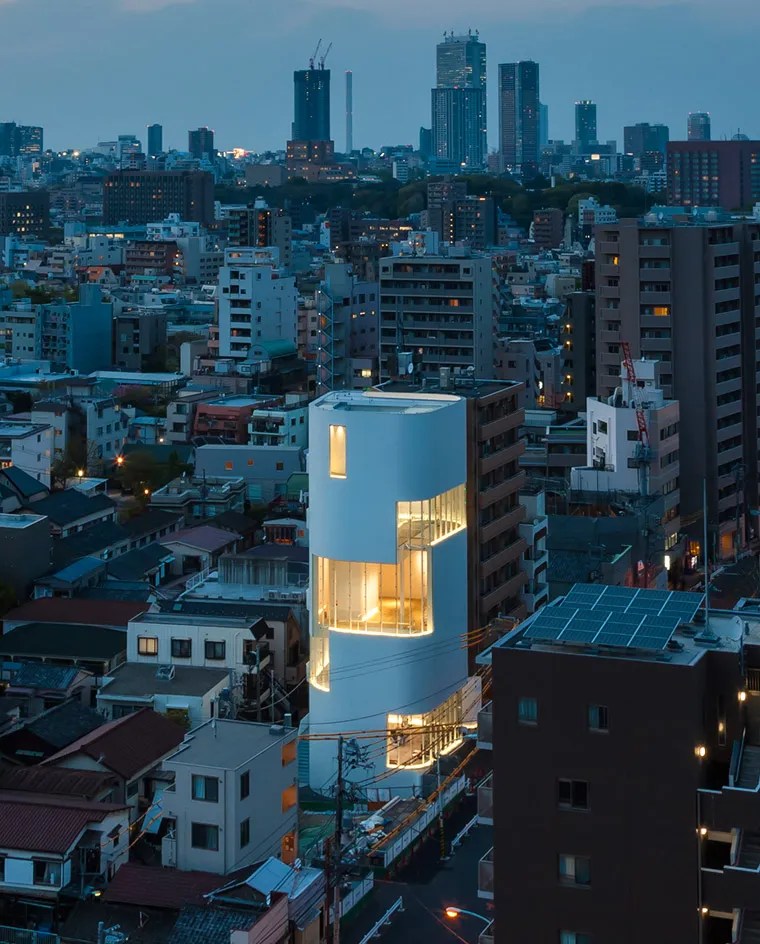
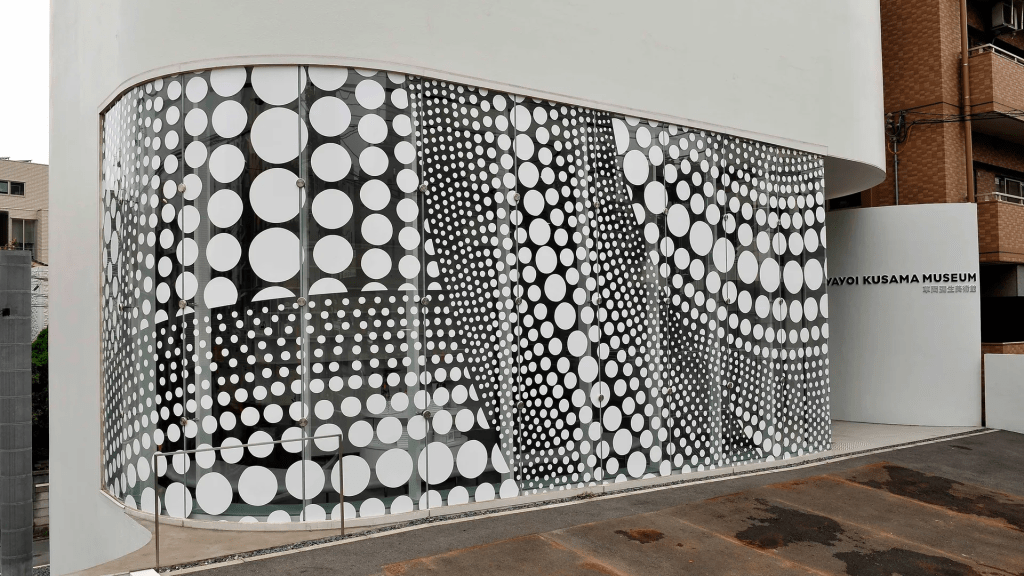
The Yayoi Kusama Foundation oversees the Yayoi Kusama Museum, which was established in Tokyo by avant-garde artist Yayoi Kusama. It opened in 2017 with the intention of promoting and disseminating Kusama’s artwork while showcasing her works and associated materials to advance the field of art history.
The architecture was developed by the studio Kume Sekkei across five white cubes stacked and slightly undulating to create five levels, each smaller than 131 square metres.
“Over many years the artist has received international acclaim and attention and now, as she strives to create vigorously, it could be said that it is Kusama’s second golden age. The museum has set aside a space to present her brand-new works so that visitors can witness the breadth of her vivid brush strokes. This museum will continue to pursue its mission of honoring Yayoi Kusama’s brilliant accomplishments by showcasing her work to Japan and to the rest of the world. I would like to finish by asking for your warm and continued support of our activities.” Akira Tatehata, Director of the museum said.
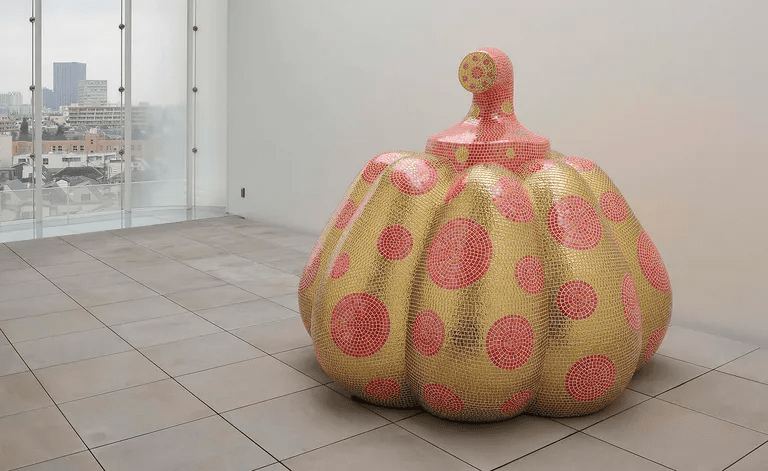
Highlights include an installation room, which is presently displaying Pumpkins Screaming About Love Beyond Infinity. The top floor features a pumpkin installation and a small, curved library that leads to a roof terrace with spectacular views of the Tokyo landscape.
In addition to introducing wide audiences to contemporary art, the museum seeks to disseminate Kusama’s message of global peace and love for mankind by showcasing the collection in two annual exhibitions that include talks and collateral events.
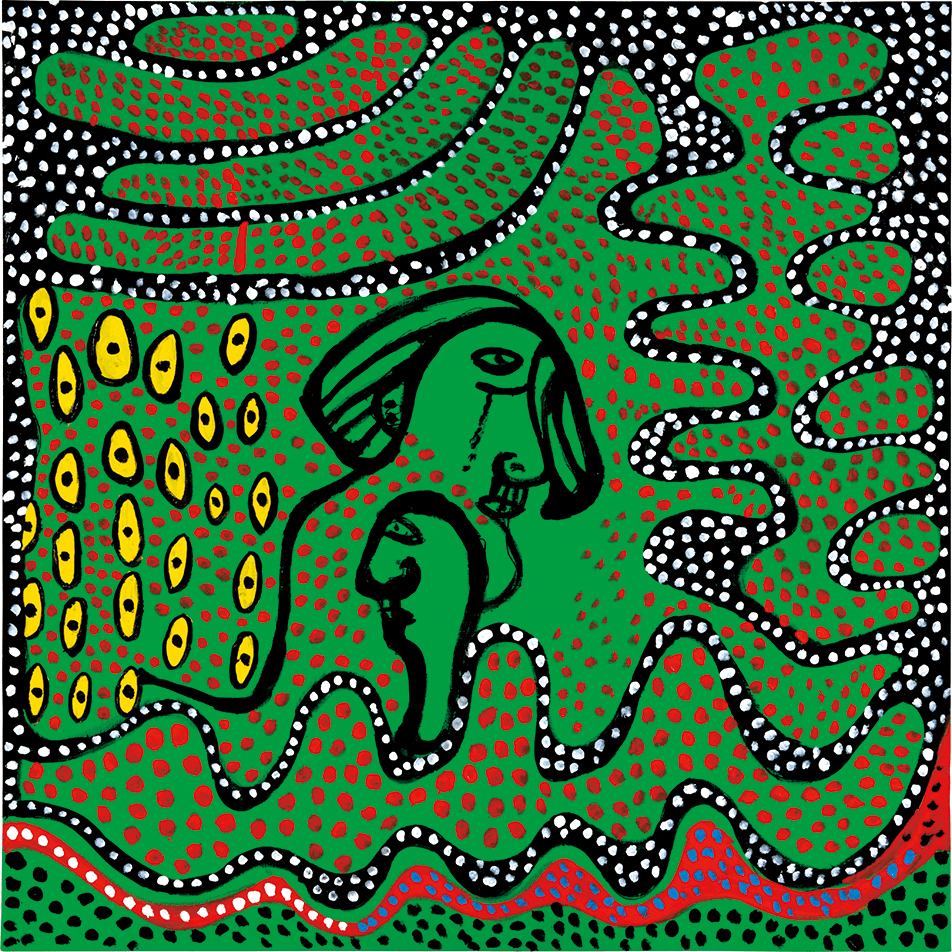
Running until 24th March 2024, is Visionary Colours, an exhibition which displays Kusama’s exploration of colours from an early period in her career to the present day. Dark and strange hues can be seen in Kusama’s 1949 early typical piece, Lingering Dream. But after relocating to the US in 1957 and pursuing novel artistic avenues, Kusama opted for austere colour schemes to achieve the effect of “self-obliteration.” She produced paintings with recurring patterns, such monochromatic nets and three-dimensional pieces with one colour covering every surface.
Both the architecture and the content of this recently-reopened museum make for a great visit in Tokyo’s Shinjuku-ku district.
–
 ART IS ALIVE