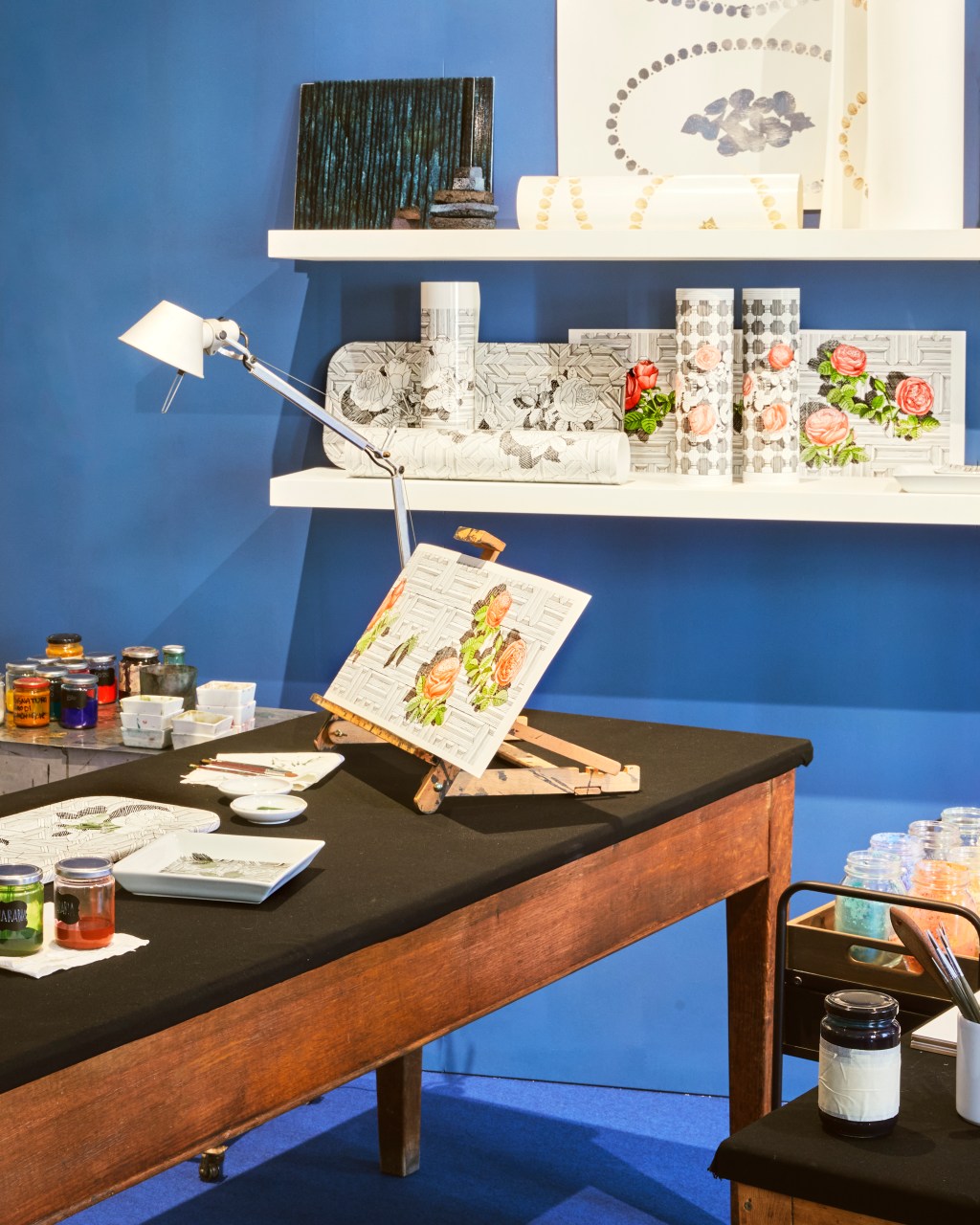
“The value of making things by hand has become very meaningful for me over time. Craftsmanship is a conscious way of working, fuelled by dynamic creativity, it embodies the extraordinary capacity to continuously combine abstract knowledge and experience: what I like to call ‘thinking with the hands’.” These are the interesting words of Barnaba Fornasetti, the Artistic Director of one of the most fascinating Italian brands in the world.
For Milan Design Week 2023, the house features The syntax of making, three new collections of furniture and accessories for the home. Like all Fornasetti creations, the furniture, accessories and porcelain presented in the new collections are the result of a long production process, where every step is carried out strictly by hand in the Atelier in Milan.
Milan Design Week has become the most significant European event to discover new talents and engage with established brands from the wide spectrum of creation.
Highlights in Milan include Giro di Conchiglie, a marine-themed decoration inspired by one of the rooms of the villa in Varenna, a home once owned by the Fornasetti family on Lake Como, recognised as one of the ultimate decorative expressions of Fornasetti’s language. Piero Fornasetti devoted himself tirelessly throughout his career to designing the spaces of the villa, from whole rooms down to tiny details. One of the rooms was entirely decorated on a marine theme, with real shells covering the walls, furniture and chandelier. In the Giro diConchiglie collection, the three-dimensionality of the design arises from the play of light of silver, applied manually in leaves by the Atelier’s craftsmen. The striking trompe l’oeil of the shells is accentuated by the blue background, created using a special painting technique with a dripping effect.
At Fornasetti, furniture and accessories are assembled, decorated and finished over the course of a production cycle lasting several months. The decoration is transferred to a lacquered surface by silk-screen printing, a technique invented in France in the 1910s and adopted by Piero Fornasetti in lieu of lithography. Performed manually, silkscreen printing are Fornasetti’s landmark visuals.
As well as the furniture and accessories, the porcelain items are also entirely decorated and painted by hand through the application of silkscreen decorations, which are then finished by firing. This artisanal process is to thank for the uniqueness of Fornasetti creations, which end up becoming true artist’s multiples. No two items,even those depicting the same subject, will ever be perfectly identical to each other.
–

 ART IS ALIVE